 NL
NL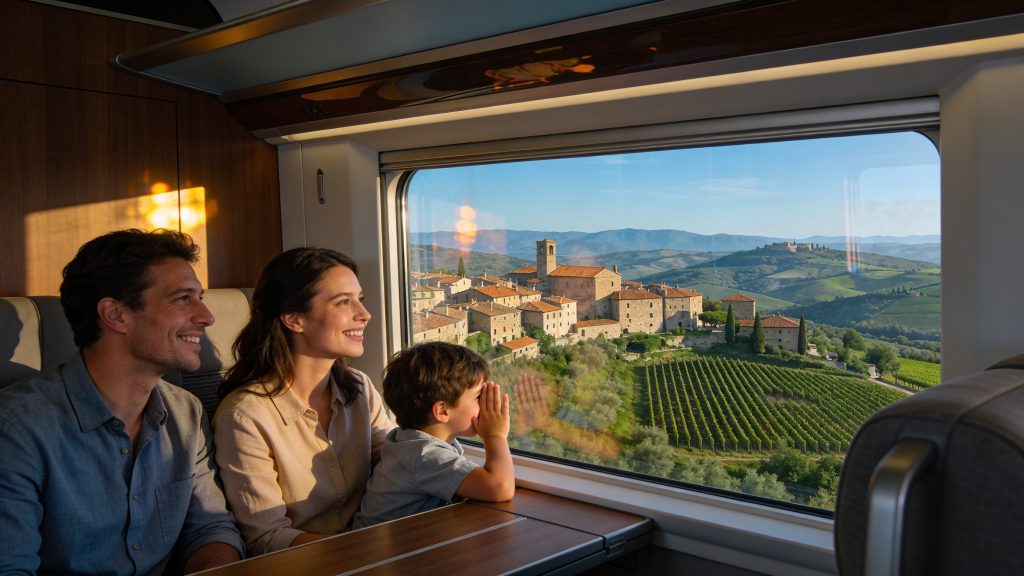
A train holiday through Italy with children means travelling in a relaxed way. You choose spectacular routes and child-friendly destinations. No hassle with car seats or endless drives: once you are seated you don’t have to do anything else. Children keep themselves busy with games or by looking at the scenery. You travel from the Bernina Express through the Alps to the colourful villages of the Cinque Terre. You plan a trip that alternates quiet beach days with water sports and culture. How do you choose routes that work for the whole family?
Why travelling by train is ideal for families
Travelling by train gives you, as a parent, peace of mind during the journey. You do not have to be constantly alert to traffic or navigation. Children can move around, walk to the toilet or stare out of the window. A train holiday in Italy also offers practical advantages. Children up to 14 years often travel for free or at a discount on night trains. This also applies on certain routes, such as to Venice. This helps you keep your budget under control.
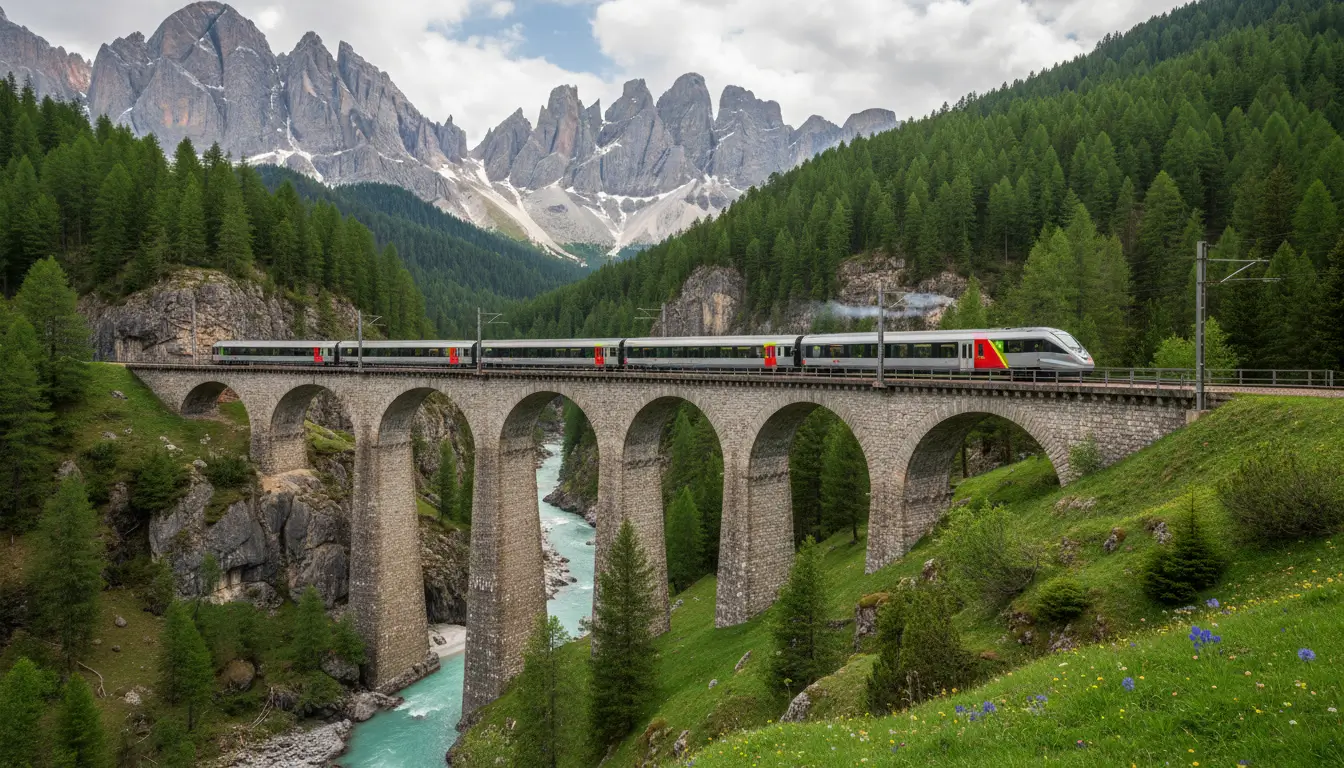
Scenic routes such as the Bernina Express are impressive. This train takes you via Switzerland to northern Italy. The train stops at an altitude of 2,091 metres at Alp Grüm. For children that is an experience they will remember. You can effortlessly alternate active days with calm stops at a lake or beach. This way you prevent your whole family from becoming overtired.
You can plan flexibly with an Interrail Pass. An Interrail Pass is a train ticket that allows you to travel for several days through different countries. This way you can combine several cities in 2 to 3 weeks. You also always have enough space for luggage, without having to worry about baggage limits as you do when flying.
‘ The short distances and easy coastal paths make this route suitable for young children. ’
Family-friendly train routes through Italy
Choose routes that are comfortable and match your family’s interests. Below you will find tried-and-tested routes that are suitable for children of different ages.
Bernina Express to Rome
Start from the Netherlands and travel via Switzerland to Rome. Along the way you enjoy Alpine panoramas and spectacular viaducts. In Rome you can combine culture with activity: visit Vatican City and St Peter’s Basilica. Also plan bike rides or visits to parks where children can let off steam. This route is a good fit for families with older children who are also interested in history.
Cinque Terre and the Ligurian coast
You can easily reach the colourful villages of the Cinque Terre by train. The villages are strung together along the coast. Each time you take a regional train to travel from one village to the next. The short distances and easy coastal paths make this route suitable for young children. This also applies to toddlers. Between walks you head to a beach or enjoy local ice cream.
Venice and Lake Garda
From Venice you travel to Lake Garda in about an hour. Public transport is good here. You will find plenty of opportunities for water sports, walking and playing by the water. Venice itself appeals to children with its gondolas and narrow streets. So try not to plan too many museum visits in a row. Alternate culture with a day at the lake.
Puglia for beaches and village life
The train journey to Puglia, in the heel of Italy, takes longer. The trip takes you to beaches and typically Italian villages with little mass tourism. The area is quieter than the better-known Tuscan routes, which is pleasant if you prefer less crowded places. Do expect longer journey times, so plan enough stops.
Interrail tour through several cities
With an Interrail Pass you travel through cities such as Rome, Florence and Milan. Use night trains to cover longer distances efficiently. Children sleep along the way. You do not lose daytime hours to travelling. Teenagers appreciate the independence and variety of such a city trip. Do plan enough free days between travel days.
Practical preparation for a stress-free journey
Prepare your trip well. Then your train holiday will run more smoothly. Start by reserving seats. This is especially important in high season and at weekends. Book 1 to 2 days in advance via apps or at the station. Check whether family tickets are available for night trains so that you can share a private couchette with your family.
Take these items with you for extra comfort:
- Extra blankets for night trains
- Dummies and cuddly toys for small children
- Sun cream and sunglasses
- Audiobooks or games for longer stretches
- Snacks and refillable water bottles
Plan beach days, water parks or stops at lakes into your schedule. These breaks prevent children from becoming restless because of too many city sights. When visiting museums, choose places with activities for children or interactive elements. That way it stays enjoyable for everyone.
Planning season and crowds smartly
Travel preferably in May or September. The weather is milder then than in the peak summer months. Trains and attractions are less busy. This way you avoid overcrowded carriages and long queues at attractions. Accommodation is also often cheaper outside July and August.
Book early if you are travelling in summer anyway. In July and August popular routes are quickly fully booked. You then run the risk of not finding seats with luggage and children in tow. By reserving seats in advance you know for sure that you can sit together as a family.
‘ This rhythm keeps the journey relaxed. ’
Adjusting your daily routine on the road
Alternate train journeys with swimming or playing. Do you want to see a new city every day? Then children will quickly become tired. So plan rest days. On those days you stay in one place and only do local activities. This rhythm keeps the journey relaxed.
Avoid long waiting times. Choose quieter trains. For example, travel early in the morning or later in the afternoon. Commuters and tourists travel less en masse then. This gives you more space and calm in the carriage.
Involve older children in the planning. Let them think along about activities. That increases their engagement and prevents them from getting bored during sights that only you find interesting.
What helps families on the way
Keep a spare day in hand for unexpected events. Train delays happen, especially in summer. Is your schedule too tight? Then every delay leads to stress. With a flexible plan you can handle unforeseen changes calmly.
Use regional trains for short distances. These trains stop more often, which is handy if you want to see something along the way or need a break. They are also often cheaper than high-speed trains. Reservations are not always compulsory.
Keep an eye on luggage. Make sure your suitcases are not too heavy. At stations you sometimes have to take stairs or walk longer distances. Give each child their own small rucksack with their favourite things. This way they are responsible for part of their own luggage.
Discover more on Traveler Tips
On the Traveler Tips website you will find much more information about train travel through Europe. You will find suitable routes for families and practical checklists to help you prepare. We offer tips on Interrail Passes and inspiration for new destinations. Discover what can make your next trip even better.
Frequently asked questions
The Bernina Express route via Switzerland to northern Italy and on to Rome is particularly child-friendly because of the spectacular Alpine landscapes and varied stops. The train routes along the Ligurian coast to the Cinque Terre and the coastal towns in Liguria are also ideal for families, with short journeys between colourful villages and beaches. A train holiday to Venice and Lake Garda offers good connections, plenty of water fun and walking opportunities. In addition, an Interrail tour taking in cities such as Rome, Florence and Milan is suitable, as you can combine city breaks with rest days by the sea or at lakes.
Book train tickets at a good price via the official Trenitalia or Italo websites and compare with a family Interrail Pass, especially if you are planning several journeys in one trip. Reserve seats early (especially in high season) and look out for special family offers, which sometimes apply on night trains and long-distance routes. On many (international) routes, children up to 14 years travel free or at a heavily reduced fare, depending on the operator and the type of train. Check the current child discounts and family tickets for each connection, as conditions vary by route and season.
Take plenty of food and snacks that do not spoil quickly (rice cakes, fruit, sandwiches) and a refillable water bottle so you are not dependent on the restaurant car. For sleeping it helps to copy a fixed bedtime routine from home (pyjamas, story, cuddly toy) and, if you like, to take a blanket or pillow. Make sure children wear layers so they do not get too hot or cold, and alternate sitting with walking up and down the aisle and short breaks at stations. For entertainment, colouring books, small games, audiobooks and a well-charged tablet with headphones work best, ideally alternated with looking out of the window and playing games together such as “I spy with my little eye”.
Take one large bag (rucksack or suitcase) and one small daypack per person, and make sure your rucksacks leave your hands free so you can guide children; always put snacks, games and spare clothes in the bag that is easiest to reach. Distribute the luggage between adults and older children, board calmly (let one adult board first with the children and hand luggage, the other follows with the suitcases) and put suitcases straight into the luggage racks by the doors or above the seats. On Italian high-speed trains (Frecciarossa/Frecciargento/Italo) there are often sockets, air conditioning, toilets with changing table, Wi‑Fi, catering or a bistro and reserved seats. On regional trains the facilities are simpler, but there are usually toilets, luggage racks and sometimes special areas for pushchairs or bikes.
Child-friendly accommodation that is easy to reach by train can be found, among others, in Rome (city apartments and family hotels near the centre), on the Ligurian coast and in the Cinque Terre (small-scale family hotels and apartments near the beach and walking paths), around Lake Garda (campsites and holiday parks with a swimming pool) and in Puglia (beach accommodation in villages along the coast). Must‑do activities for families include a bike ride through Rome and a visit to Vatican City and St Peter’s, days on the beach and swimming on the Ligurian coast or at Lake Garda, easy walks between the colourful villages of the Cinque Terre and relaxed beach days in Puglia.