 NL
NL
Everything you need to know for your driving holiday in the mountains
A successful driving holiday in the mountains stands or falls with good preparation and the right driving technique. It’s the combination of a well‑maintained car, smart route planning and an understanding of driving on gradients that ensures you can enjoy the impressive scenery safely and calmly. This article gives you the practical tools you need to set off with confidence. Read on and discover how to turn your mountain drive into a smooth and memorable experience.
The perfect preparation for your car and yourself
A thorough check of your vehicle is the foundation of every safe mountain drive. Well before departure, check your car’s vital components. Make sure your tyres have the correct pressure and sufficient tread depth. In many mountainous areas, such as the Alpine countries, winter tyres or all‑season tyres with the snowflake symbol are compulsory during certain periods. Also have your brakes and coolant checked. Descending puts heavy strain on the brakes, and the engine demands more from the cooling system when climbing. A visit to the garage for a holiday check is far from a luxury. Well‑prepared car journeys start with a vehicle in top condition.
In addition to the technical preparation, it is important that you yourself start the trip fit and well rested. Long drives through the mountains are mentally more demanding than driving on flat motorways. You constantly have to anticipate sharp bends, narrow stretches and changeable weather conditions. Make sure you get enough rest, plan realistic daily distances and take regular breaks to stretch your legs and enjoy the view. This way you stay alert and handle the challenges of mountain landscapes much better.
‘ A careful weighing‑up is therefore called for. ’
Smart route planning: mountain passes versus tunnels
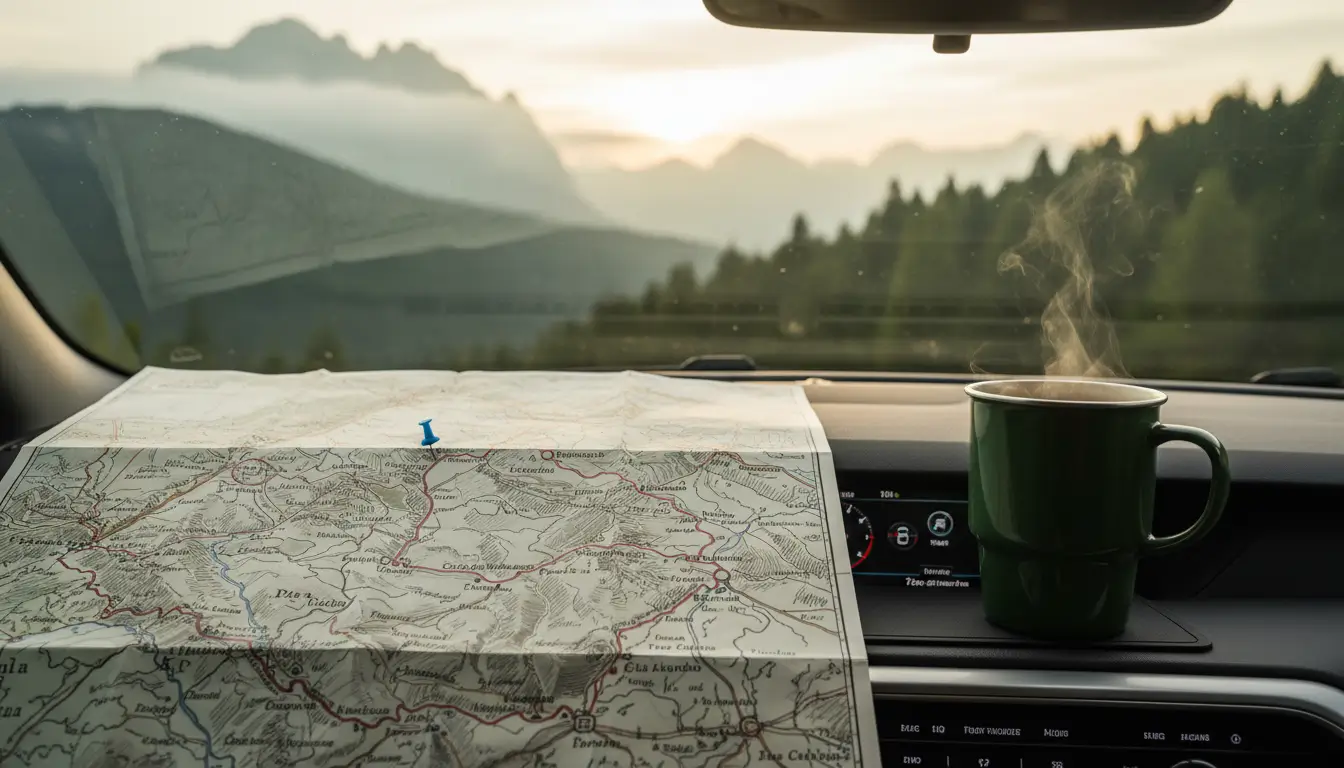
When planning your route through the mountains you often face a choice: do you take the scenic mountain pass or the fast tunnel? The decision depends on your priorities, the time you have available and the weather conditions. Mountain passes often offer spectacular views and the chance to stop at the most beautiful spots along the way. They turn the journey itself into an experience. Bear in mind, however, that passes are sometimes closed seasonally, especially in winter and early spring. Always check the current status in advance via local traffic information services.
Tunnels are the efficient choice if you want to reach your destination quickly. They bypass the highest and often most challenging parts of a mountain range and are generally open all year round. The downside is that you miss out on the scenery and often have to deal with tolls. For some tunnels, such as the Fréjus Tunnel or the Gotthard Tunnel, you pay a substantial amount. A careful weighing‑up is therefore called for. A combination works too: on the outward journey choose a fast tunnel route and on the way back, when you have more time, take a beautiful pass to wind down the trip.
Controlled driving in the mountains: technique and awareness
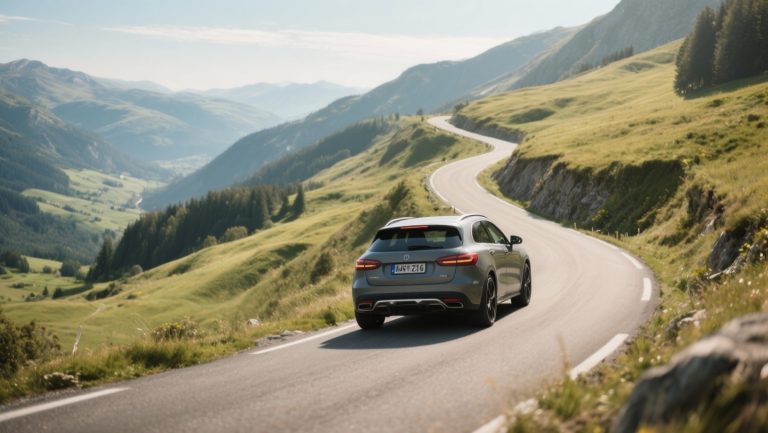
Driving in the mountains requires an adapted driving style. Both climbing and descending put different strains on the car than you are used to. We’ve listed the most important techniques for you.
Climbing and choosing the right gear
When going uphill it is important to keep the engine in the right rev range. Shift back to a lower gear in good time. A good rule of thumb is to select the gear in which the car still accelerates smoothly without the engine overheating. If you drive in too high a gear, the engine loses power and becomes overloaded. Modern automatics often handle this well, but with older models or when heavily loaded, manual intervention is sometimes necessary. Keep an eye on the engine temperature gauge, especially on long, steep climbs.
Descending and engine braking
The technique for descending is perhaps even more important. Avoid using your footbrake constantly, as this can overheat the brakes and cause them to lose their braking power. The principle is simple: descend in the same low gear that you would use for climbing. This way, the car is slowed by the engine. This relieves the brakes and gives you more control. Brake briefly and firmly from time to time, instead of keeping light pressure on the brake continuously. If you feel the brakes becoming less effective, stop in a safe place and let them cool down.
Approaching hairpin bends
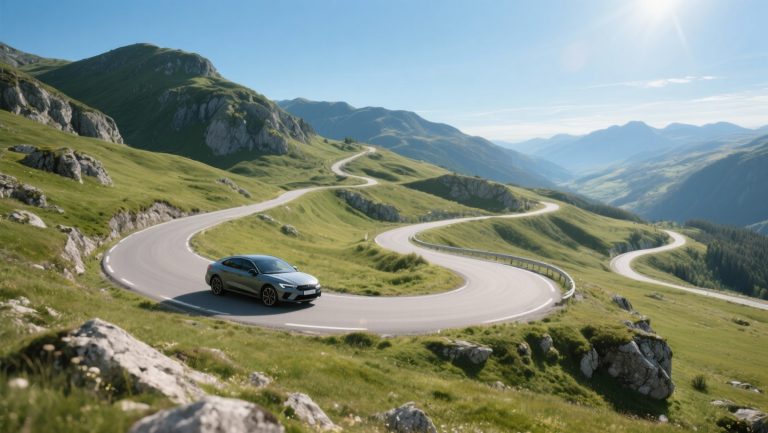
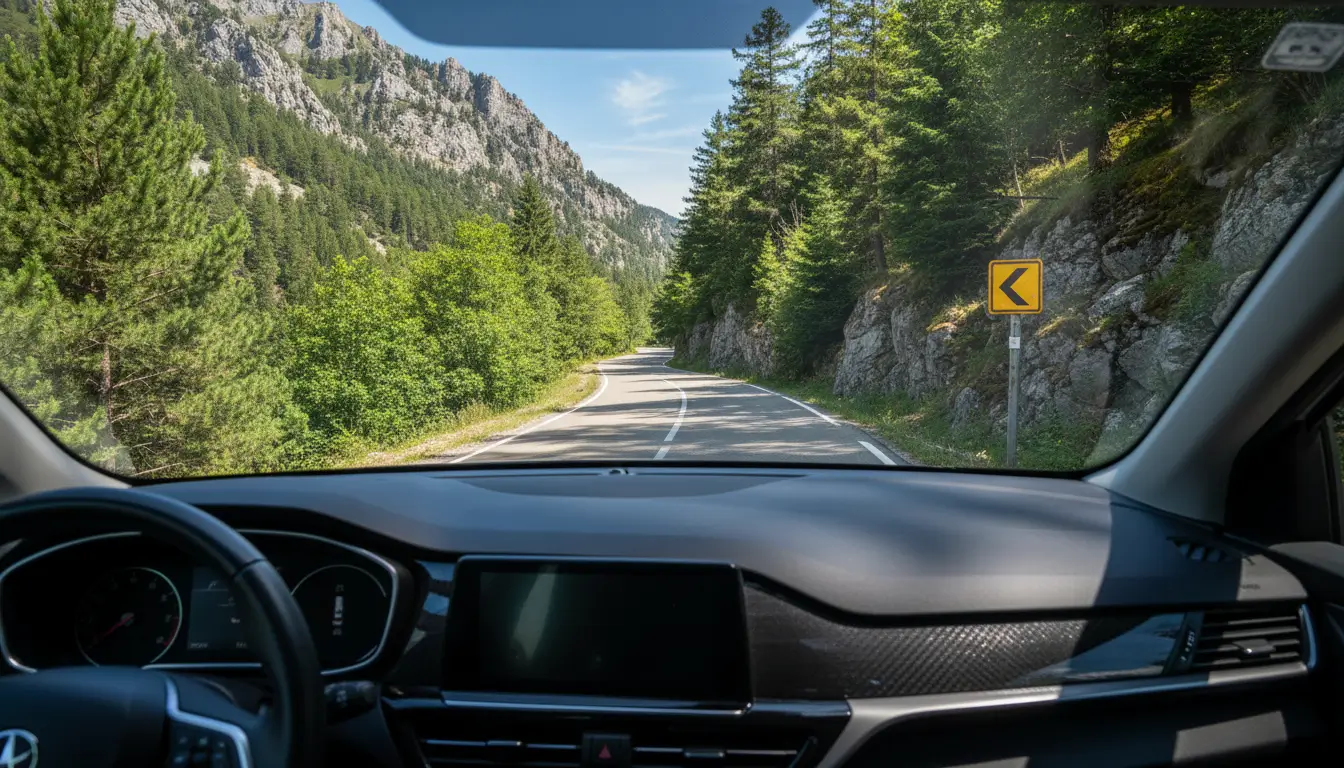
Hairpin bends are characteristic of mountain roads. Approach them at low speed and change down before you steer into the bend. Take the bend as wide as possible, watch carefully for oncoming traffic and look well ahead. On narrow roads, uphill traffic often has priority over downhill traffic, because it is harder for a vehicle that is climbing to pull away again. However, always be prepared to stop and make room.
Dealing with altitude and sudden weather changes
At higher altitudes the thinner air affects both you and your car. The engine may lose a little power because there is less oxygen available for combustion. In modern cars with a turbo this is often barely noticeable, but in older cars without a turbo the difference can sometimes be felt. You yourself may also suffer slightly from the altitude, for example in the form of a mild headache or shortness of breath. Take it easy and give your body time to adjust.
The weather in the mountains is unpredictable and can change quickly. A sunny valley can turn into dense fog or a rain shower at the top of a pass within an hour. Always check the local weather forecast before you start a mountain drive. Be prepared for all conditions by, for example, keeping an extra jumper, a rain jacket and sunglasses within easy reach. Also make sure your windscreen wipers and lights are in perfect working order.
‘ In remote mountain areas, mobile coverage is not always reliable. ’
Essential items and preparing for emergencies
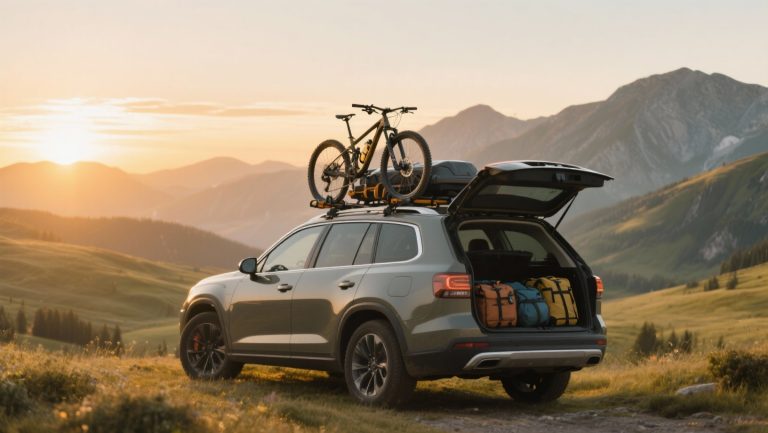
The right equipment makes all the difference if you encounter an unexpected situation on the road. Depending on the season and your destination, make sure you have the right items with you. Think of:
- High‑visibility vests, warning triangle and first aid kit: Compulsory in many European countries.
- Snow chains: In winter, in many mountain areas you are required to carry them with you, even if there is no snow. Practise fitting them at home beforehand.
- Warm blankets and extra water: In case you get stuck in the cold.
- A good ice scraper and windscreen washer fluid with antifreeze: Indispensable in winter.
- Offline navigation maps: In remote mountain areas, mobile coverage is not always reliable. Download the maps of your route in advance.
If you do still break down, make sure you know what to do. Park the car in a safe place, switch on your hazard warning lights and place the warning triangle at a sufficient distance behind the car. Put on a high‑visibility vest before you get out. Make sure you have your breakdown assistance number to hand. The European emergency number is 112.
Enjoying it to the full: tips for on the road
A driving holiday in the mountains is about more than just driving. It’s about the experience. Take the time to stop at viewpoints, in small mountain villages or for a short walk. The best memories often arise in those unexpected moments. Respect local customs and traffic rules. In the mountains people often greet each other on narrow roads; a small gesture of courtesy.
Keep a close eye on your fuel gauge as well. Petrol stations can be few and far between in mountainous regions. Fill up in good time, preferably when the gauge is at half. Climbing uses significantly more fuel than driving on a flat road. By planning smartly, you avoid stress and can fully enjoy the freedom and magnificent surroundings that a trip through the mountains has to offer.
Your journey starts here
With the right knowledge and preparation, a driving holiday in the mountains is a fantastic way to travel. It gives you the freedom to discover impressive landscapes at your own pace. By thoroughly checking your car, planning your route smartly and adapting your driving style, you lay the foundations for a safe and relaxing trip. This way you turn both the destination and the journey itself into an unforgettable experience.