 NL
NL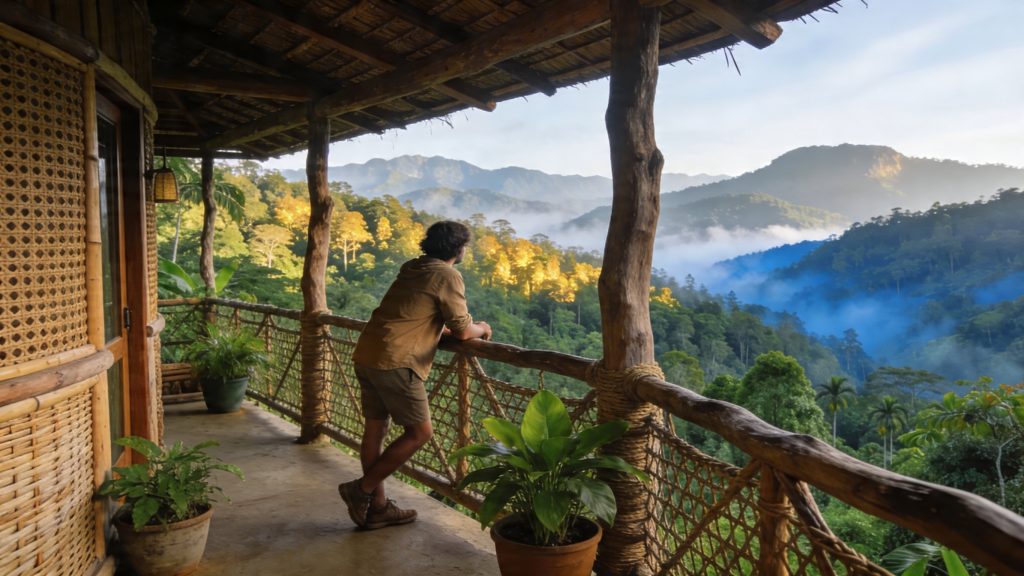
Kingdom Ecolodge in Sri Lanka proves that you can experience nature intensely without mass tourism or luxury frills. On 30 hectares next to Yala National Park, you combine elephant spotting, kayaking, home-grown vegetables and cooking workshops into a trip that is all about simplicity and ecological farming. Discover why this is the best place for travellers who want to experience how nature and sustainability come together.
Staying on an off-grid estate by Yala
Kingdom Ecolodge is located on the edge of Yala National Park, one of Sri Lanka’s best-known wildlife areas. The estate covers 30 hectares and is completely self-sufficient in energy, with no connection to the power grid. That means no link to the electricity network and minimal impact on the ecosystem. You stay in simple accommodation powered by solar energy, with candlelight for atmosphere and calm.
The lodge is accessible from Colombo, but allow for a substantial journey. The distance is roughly 270 kilometres and the route takes you through the interior. The drive takes 4 to 5 hours, depending on traffic and road conditions. A hire car or private transport is the most practical, especially because the last kilometres may be on unpaved roads. Preferably rent a jeep or a car with good ground clearance.
You notice the silence and space as soon as you arrive. Kingdom Ecolodge only hosts a limited number of guests at a time, which makes an intimate nature experience possible. The focus is on slowing down, self-sufficiency and direct experiences in nature. This is not a resort with swimming pools and a pool bar, but a place where you actively take part in the daily rhythm of the estate. For travellers who deliberately choose ecolodges, small-scale accommodation with a focus on sustainability, this offers a chance to fully immerse yourself in the landscape and local way of life.
‘ This keeps you away from the busy routes and makes it possible to see animals in their natural behaviour, without the constant roar of engines. ’
Spotting elephants without the crowds of safari jeeps
Yala National Park is known for having the highest density of leopards in the world and for its large herds of elephants. The downside of this popularity is that traditional safari jeeps enter the park by the dozens, especially in the dry season. At Kingdom Ecolodge, observing wild animals – also called wildlife spotting – is different.
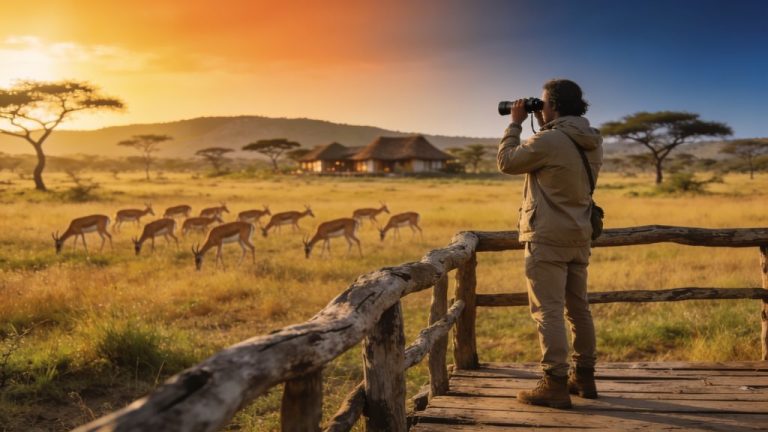
The estate borders directly on the park. Elephants regularly pass through the grounds, so you can watch them from your own accommodation. The lodge also organises private walks and observation trips on its own land instead of group safaris in the national park itself. This keeps you away from the busy routes and makes it possible to see animals in their natural behaviour, without the constant roar of engines.
The best times to observe animals are early in the morning and late in the afternoon. Bring binoculars and wear neutral colours to avoid standing out. Lodge staff guide the excursions and share local knowledge about wild animal behaviour and the structure of the ecosystem.
Growing your own vegetables and preparing your meals
Kingdom Ecolodge sources food mainly from its own land. A large part of the estate is set up as an organic kitchen garden, with seasonal crops such as papaya, cucumber, spinach and various herbs. Guests are invited to help with harvesting, weeding and caring for the plants.
This approach aligns with the concept of regenerative agriculture, a form of farming that actively restores soil quality. The soil recovers through natural compost, crop rotation and avoiding chemical agents. You receive explanations about local growing methods and learn which plants thrive in the tropical climate. It is a hands-on experience that goes beyond a simple tour of a vegetable garden.
After the harvest come cooking workshops, practical lessons in which you learn to cook. Together with the lodge staff you prepare traditional Sri Lankan dishes such as dhal curry, coconut sambal and vegetable dishes served with rice. The lessons are informal and practical. You learn about combining spices, preparing coconut and the role of tempering with curry leaves and mustard seed. You eat the result together, often outside under the trees.
Kayak trips and other activities on the estate
Alongside farming and wildlife, Kingdom Ecolodge offers space for activities on and around the water. The estate has ponds and waterways where you can kayak. The trips are calm and relaxed. You watch water birds, amphibians and insects. Do not expect rapids or distance records, but rather a gentle opportunity to experience the ecosystem from a different perspective.
Other possibilities include nature walks on the estate, birdwatching in the early morning and joining in maintenance work such as clearing paths or repairing structures. The lodge encourages guests to set their own pace. There is no fixed programme or pressure to schedule everything. For travellers used to structured trips this takes some getting used to, but it fits with the philosophy of slowing down and being consciously present.
‘ That means no air conditioning, no Wi-Fi and no hot showers at any time of day. ’
What to expect from simplicity and basic comfort
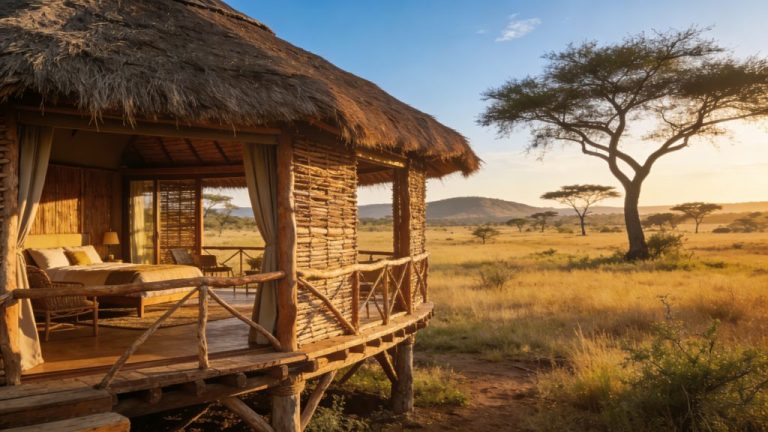
Kingdom Ecolodge presents itself as simple accommodation. That means no air conditioning, no Wi-Fi and no hot showers at any time of day. Electricity comes from solar panels and is available in limited amounts. Candles and oil lamps provide light in the evenings.
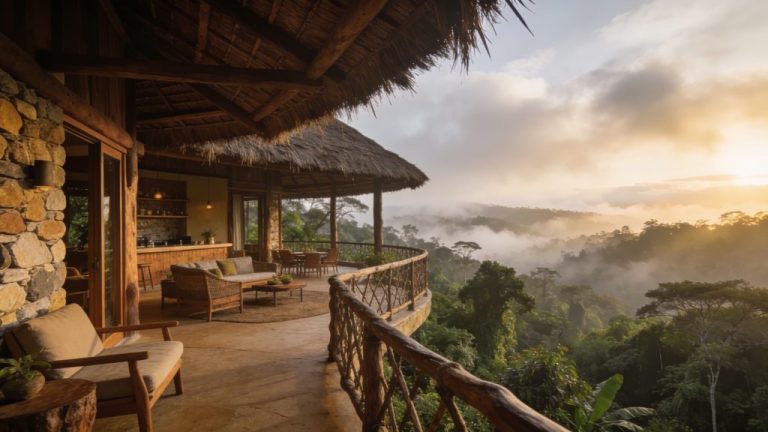
The sleeping areas are functional, with a bed, mosquito net and ventilation through open windows. At night you hear the sounds of the rainforest and surrounding nature. Are you sensitive to light or do you struggle with insects? Then this kind of stay requires a bit of extra preparation. Bring insect repellent, a torch and possibly earplugs if you wake easily from noise.
Meals are vegetarian or vegan, based on what the land produces. Do not expect a menu with lots of options, but fresh, seasonal dishes that match the harvest at that moment. For guests with specific dietary requirements it is sensible to mention this in advance, so the lodge can take it into account.
When is the best time to visit Kingdom Ecolodge
The climate in southern Sri Lanka has a dry and a wet season. The dry period runs from December to April and offers the best conditions for wildlife spotting. Animals gather at water sources, which makes observing them easier. The roads are also more passable and there is less rain.
The wet season, from May to November, brings more rain and mud, but also lusher vegetation and fewer tourists. Are you looking for peace and do you not mind the occasional rain shower? Then this is a good period. Prices are lower and nature is at its greenest.
Bear in mind that Kingdom Ecolodge only hosts a limited number of guests. Book well in advance, especially if you want to come in the high season. The lodge works with small groups and aims for personal contact, which means places are quickly fully booked.
What sets Kingdom Ecolodge apart from other lodges
Sri Lanka has several ecolodges, from luxury bungalows in Gal Oya to rustic tents in Sinharaja. Kingdom Ecolodge consciously opts for an approach without luxury and extras. No polished hospitality or designer furniture, but direct involvement in farming, self-sufficiency and simplicity.
Other lodges focus on wildlife safaris as their main attraction. Here, the emphasis is on the interplay between nature, food production and everyday work. You are not just a guest, but a temporary part of life on the estate. That makes it interesting for travellers who want to learn about sustainability in practice and who like to get hands-on themselves.
The location also plays a role. Being directly next to Yala means you literally have wildlife on your doorstep, without having to rely on organised tours. The privacy and tranquillity make it ideal for anyone wanting to avoid mass tourism and looking for more freedom to explore at their own pace.
‘ Kingdom Ecolodge is relatively remote, so make sure you bring basic first-aid supplies and your personal medication. ’
Practical preparation for your stay
A stay at Kingdom Ecolodge requires specific preparation. The journey from Colombo also deserves attention. Bring sturdy walking shoes for unpaved paths and muddy conditions. A head torch or flashlight is essential for evenings without electricity. Also think of a reusable water bottle, biodegradable toiletries and clothing in earthy tones.
A small backpack for day trips is useful, as is a rain cover or waterproof cover for your belongings. Binoculars greatly enhance birdwatching and wildlife observation. For photographers: bear in mind that charging options are limited and bring spare batteries or a power bank.
Check that your travel insurance is active and that it covers activities in wildlife areas. Ask the lodge about any specific health advice, such as protection against mosquitoes and hygiene facilities. Kingdom Ecolodge is relatively remote, so make sure you have basic first-aid supplies and your personal medication with you.
Discover more about nature holidays and Sri Lanka
Kingdom Ecolodge is an example of how you can experience nature without causing major damage to the ecosystem. The principle of energy self-sufficiency, being self-supporting and the close connection with the landscape make it a special place for conscious travellers. On the Traveler Tips website you will find much more information about nature holidays, sustainable travel and practical tips for regions such as Sri Lanka. Explore the various articles and discover how to plan your next trip even smarter and more consciously.
Frequently asked questions
You can look out for international certifications such as Travelife, Green Globe or EarthCheck, and national standards such as Sri Lanka Tourism’s “Sustainable Tourism” or “Eco Friendly” accreditation. Some ecolodges also follow the principles of the Global Sustainable Tourism Council (GSTC), even if this is not always mentioned as an official label. In addition, concrete practices are important: use of solar energy, waste and water management, reforestation projects and protection of surrounding nature reserves. Finally, involvement of local communities (local staff, fair pay, support for farmers or Vedda communities) is a strong sign that you are making a responsible choice.
Most ecolodges are located 4–5 hours’ drive from Colombo or the airport and are easily reached by car, although the last few kilometres are often on unpaved or bumpy roads, for which a jeep or higher vehicle is recommended; there are rarely direct train connections to the lodges themselves, but you can travel large stretches by train (for example Colombo–Kandy or Colombo–Ella) and then continue by taxi/jeep to your ecolodge. For a practical road trip you can make a loop such as: Colombo/Negombo – Kandy/Knuckles – Sigiriya/Dambulla – Polonnaruwa – Minneriya/Wasgamuwa – back via the highlands. Another logical route is: Colombo – Udawalawe/Banyan Camp – Yala (Yala Jungle Lodge/Extraordinaire Dambeyaya) – Gal Oya – back via Ella or the south coast. Combine long distances by train (for example Colombo–Kandy or Colombo–Ella) with local drivers to reach your ecolodges in more remote nature areas efficiently.
Sri Lankan ecolodges offer unique experiences such as jungle sleep-outs in off-grid lodges, night-time wildlife safaris, guided walks in rainforest and national parks, and encounters with indigenous communities or participation in tree planting and rewilding projects. In addition, you gain extra experience through activities such as birdwatching, elephant safaris, waterfall excursions, jungle yoga and participation in nature and species research. The comfortable facilities often consist of small-scale bungalows or tents with private verandas, basic but atmospheric comfort powered by solar energy and candlelight, and plenty of privacy and nature views. Ecolodges usually serve fresh, local and often vegetarian/vegan meals, sometimes entirely from their own (organic) garden.
The best period to book an ecolodge in Sri Lanka for optimal weather and lots of activities is roughly from December through to April, when it is drier in large parts of the country. These months are particularly favourable for wildlife safaris and nature activities. For ecolodges, the regions around Yala and Udawalawe National Park, Sinharaja Forest Reserve, Gal Oya National Park and the green hills near Kandy and the Knuckles Range are especially recommended. Do book early in the dry season, as small-scale ecolodges are quickly fully booked.
In Sri Lanka, ecolodges range roughly from simple jungle huts with basic comfort to mid-range lodges and luxury bungalows or villas. In the lower and mid-price ranges, the following are often included: guided nature walks, basic vegetarian/vegan meals made from local products, off-grid stays (solar power, candlelight) and simple wildlife activities. In the higher price range, this often includes private bungalows, more extensive safaris (jeep or boat trips), specialised birdwatching and research excursions, and more comfort (for example a private veranda or swimming pool). Extra services and sustainability initiatives in all classes can include tree-planting programmes, rewilding and wetland restoration, funding of species research, support for local communities and training in organic/chemical-free farming.