
 NL
NL
Taking the correct medical documents and health insurance card on a driving holiday is the foundation for a worry-free trip. This is especially true if you are taking medication. Good preparation prevents unexpected problems at the border or if you suddenly need medical assistance. Which papers do you need exactly, and when is your health insurance card not enough? Below, you’ll find the facts and practical steps outlined. This way, you can hit the road with peace of mind.
The EHIC: Your basis for medical care in Europe
The back of your Dutch health insurance card usually features the European Health Insurance Card (EHIC). This card entitles you to necessary medical care during a temporary stay in other EU countries. Liechtenstein, Norway, Iceland, and Switzerland are also covered. If you unexpectedly need a doctor or hospital during your road trip, the EHIC ensures you receive the same care under the same conditions as residents of that country. Health insurers settle the costs among themselves.
However, the EHIC is not a substitute for travel insurance. The card only covers unforeseen and necessary medical care. Planned treatments abroad are not covered. The EHIC also does not reimburse the costs for repatriation, i.e., returning home for medical reasons. For a driving holiday within Europe, the EHIC is an important document, but it doesn’t cover all risks. Therefore, supplementary travel insurance with medical cover remains sensible.
‘ Without this declaration, you risk your medicines being confiscated by customs. ’
Bringing medicines on a trip: when do you need a declaration?
If you are travelling with medicines, extra attention is required. For most standard medication, such as paracetamol or remedies for motion sickness, you don’t need any special documents. However, it’s different when you use medicines covered by the Opium Act. This includes strong painkillers, sleeping and calming medication, ADHD medication (such as Ritalin), or medicinal cannabis. These substances are strictly regulated in many countries, and without the correct paperwork, you could face problems at customs.
The Schengen Declaration for travel within the Schengen area
For travel with Opium Act medicines within the 26 Schengen countries, you need an official Schengen Declaration. Your doctor signs this document, after which the CAK (Central Administration Office) certifies it. The declaration is valid for 30 days and confirms that you are taking the medicines for personal use as medically prescribed.
Applying for a Schengen Declaration takes time. Start the procedure at least four weeks before departure. You can download the form from the CAK website and have it completed by your doctor. Then you send it in. After approval, you will receive the certified document back. Without this declaration, you risk your medicines being confiscated by customs.
Medical declaration for countries outside the Schengen area
If your driving holiday is to a country outside the Schengen area, or if you are driving through a non-Schengen country, different rules apply. Often, you will need an English-language medical declaration, issued by your doctor. For some countries, you may also need to have this declaration legalised. You do this via the Ministry of Foreign Affairs and the embassy of the country you are travelling to. The rules vary greatly by country. Use the ‘Medicines for travel’ tool on the CAK website to check which steps you need to follow for your destination and the countries you are driving through.
The medical passport: a handy overview for emergencies
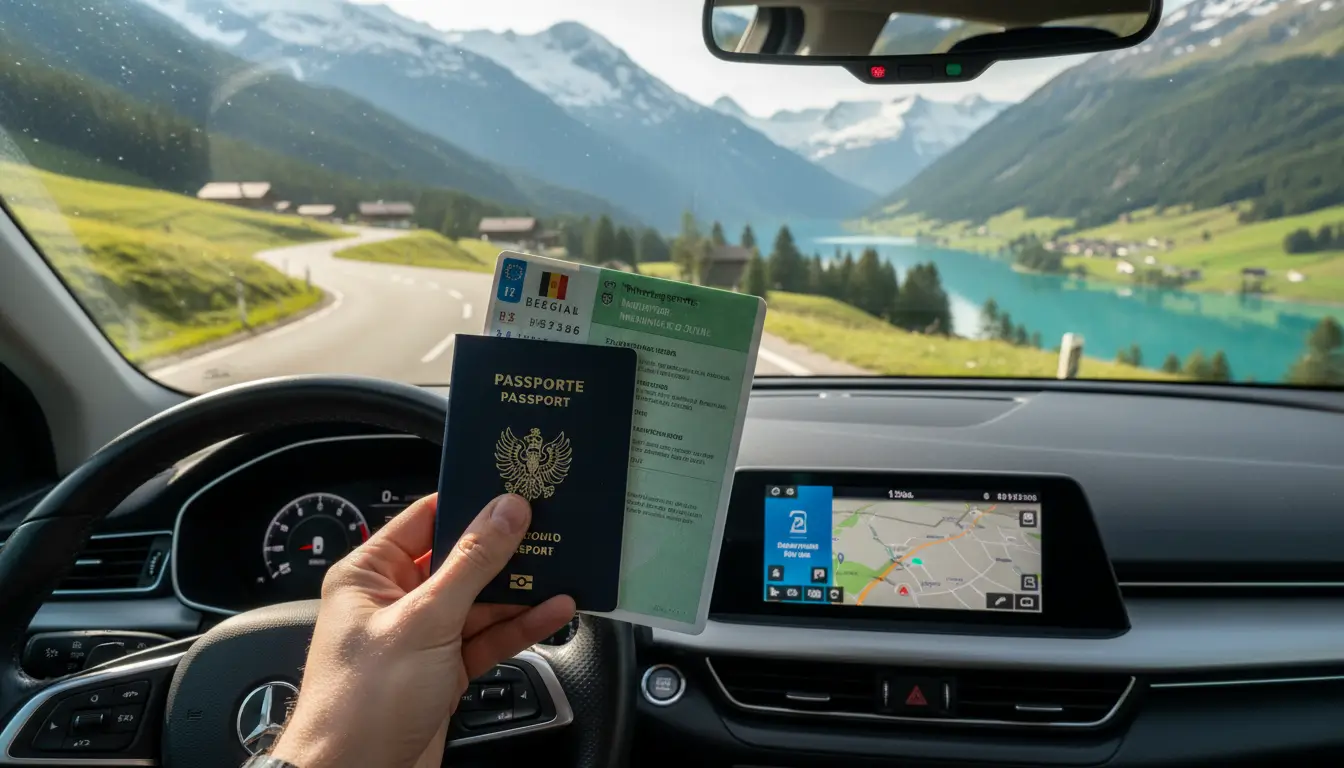
In addition to official declarations, it is advisable to carry a European Medical Passport (EMP). This document is not an official travel document but a convenient overview of your medical information. It contains details about your conditions, medication use, allergies, and contact information for your doctor and next of kin. In an emergency, it quickly provides a foreign doctor or pharmacist with insight into your health situation, even with a language barrier. You can request a medical passport from your GP or pharmacy.
The complete checklist for your medical documents
A well-organised preparation provides peace of mind. Use this checklist to ensure you have all the necessary medical papers for your driving holiday.
- Health insurance card with EHIC: Check that the card is valid for the entire duration of your trip.
- Medicine declarations: Apply in good time for a Schengen Declaration or an English-language medical declaration if you are taking medicines covered by the Opium Act.
- Medical Passport: Ensure you have an up-to-date overview of your medical details, completed by a doctor or pharmacist.
- Copy of prescriptions: It can be useful to carry a copy of your doctor’s prescriptions.
- Original packaging: Always keep your medicines in their original packaging with the pharmacy label on them.
- Digital and physical copies: Take photos of all your documents and save them on your phone. In addition, place a set of physical copies in your car’s glove compartment, separate from the originals.
‘ Good medical preparation ensures peace of mind during your journey. ’
Practical tips for on the road in your car
Travelling by car places specific demands on carrying medication. The right storage place and an extra supply can prevent much inconvenience.
- Take a generous supply: Ensure you have enough medication for the entire trip, plus an extra supply for a few days. Car breakdowns or unexpected delays can disrupt your travel plans.
- Pay attention to storage temperature: The temperature in a car can rise considerably. Some medicines, such as insulin, must be kept cool. A cool bag with ice packs offers a solution here.
- Keep medicines and documents at hand: Store your daily medication and associated documents in your hand luggage, not in a suitcase in the boot. Should you need to leave the car or quickly access something, you’ll have everything immediately available.
Good medical preparation provides peace of mind during your journey. It ensures you won’t encounter any surprises. Moreover, in an emergency, you will receive quick and adequate assistance. At Traveler Tips, you’ll find more detailed guides on routes, traffic rules abroad, and useful packing lists. This way, you’ll always be well-prepared for your trip.
Frequently Asked Questions
When going on a driving holiday, it is essential to carry medical documents. Ensure you have a copy of your health insurance card (EHIC), a medical passport with important details, and medicine declarations, especially if you use medicines covered by the Opium Act. For travel within Schengen countries, a Schengen Declaration is required, obtainable via the CAK. For non-Schengen countries or transit, an English-language declaration is necessary.
Take a copy of your health insurance card (EHIC) and a medical passport, available from your GP, containing information about your conditions, allergies, and medication use. For medicines covered by the Opium Act, an official, multilingual medicine declaration is essential. Always check the specific requirements of the country using the CAK’s ‘Medicines for travel’ tool and consult your GP if in doubt. Keep all documents both digitally and in print, preferably in your hand luggage or glove compartment.
It is advisable to take both digital copies and original medical documents on a driving holiday. Digital copies on your phone are handy for quick access and as a backup. However, for medicine declarations (especially Opium Act medicines), the EHIC, and medical passports, original documents or official declarations are often required to prevent problems at customs or with emergency services. Store originals and copies separately, for example, in your hand luggage and glove compartment.
Store originals and copies of your health insurance card and medical documents in an easily accessible, secure place in the car, such as the glove compartment or with your driving licence. Print out relevant medicine declarations and keep them handy for customs checks or emergency services. Take photos of all important documents on your phone as an extra backup. For certainty, take a double quantity of medication for unexpected situations.
If you need medical assistance abroad, always ensure you have a copy of your health insurance card (EHIC) with you, along with relevant medical declarations and a medical passport. The EHIC is often sufficient for acute care within Europe. For medicines covered by the Opium Act, a medicine declaration is essential, obtainable via the CAK and your GP. Keep all documents both digitally and printed for quick access.