 NL
NL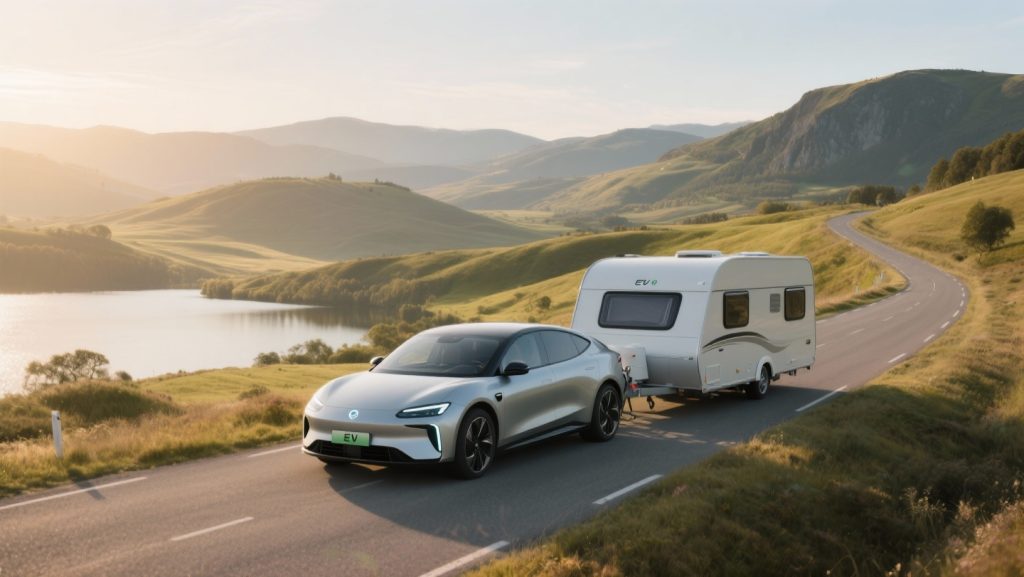
Travelling with an electric car and a caravan or trailer requires a different approach, but it is certainly possible. The main rule of thumb is that the extra weight and air resistance will approximately halve your car’s range. Your holiday dreams won’t be shattered, but smart planning is key to a relaxed journey. Curious how to avoid charging stress and arrive comfortably at your destination? Read on for practical tips and considerations.
\n\nThe influence of a caravan on your range
\n\n\n\nWhen you hitch a caravan, folding camper, or trailer behind your electric car, energy consumption increases significantly. The range you’re used to can decrease by 40 to 60 percent. This is due to two main factors: the extra weight the car has to pull and the increased air resistance. After all, a caravan is not exactly aerodynamic. Even a bike rack on the back has an impact, although it’s much smaller than with a caravan.
\n\n\n\nBear in mind that the manufacturer’s stated range (the WLTP value) is an estimate under ideal conditions. In practice, your driving speed, weather conditions, and terrain (hills or mountains) also play a significant role. With a trailer, these effects are only amplified.
\n\n\n\n\n‘ Not every electric car can tow a heavy load. ’
\n
Which electric car is suitable?
\n\n\n\nNot every electric car can tow a heavy load. Therefore, check the maximum permissible towing weight of your vehicle. You can find this information in the car’s specifications or on its registration certificate. For an average caravan, you’ll quickly need a car that can tow at least 1,500 to 1,800 kg.
\n\n\n\nWhat to look for when choosing a car?
\n\n\n\nIf you regularly go out with a caravan, these car features are extra important:
\n\n\n\n- \n
- High towing capacity: Choose a model that is well above the weight of your loaded caravan. This ensures safety and stability. \n\n\n\n
- Large battery capacity: A larger battery (expressed in kWh) gives you a more comfortable range, meaning you’ll need to stop less often to charge. \n\n\n\n
- Car’s own weight: A heavier car provides a more stable combination on the road. SUV models are therefore often a popular choice for towing caravans. \n
The Tesla Model X, Kia EV6, Hyundai Ioniq 5, and Volvo XC40 Recharge are known for their good towing capabilities. Always check the specific trim level, as towing capacity can vary by model variant.
\n\n
Route planning and charging: the core of your preparation
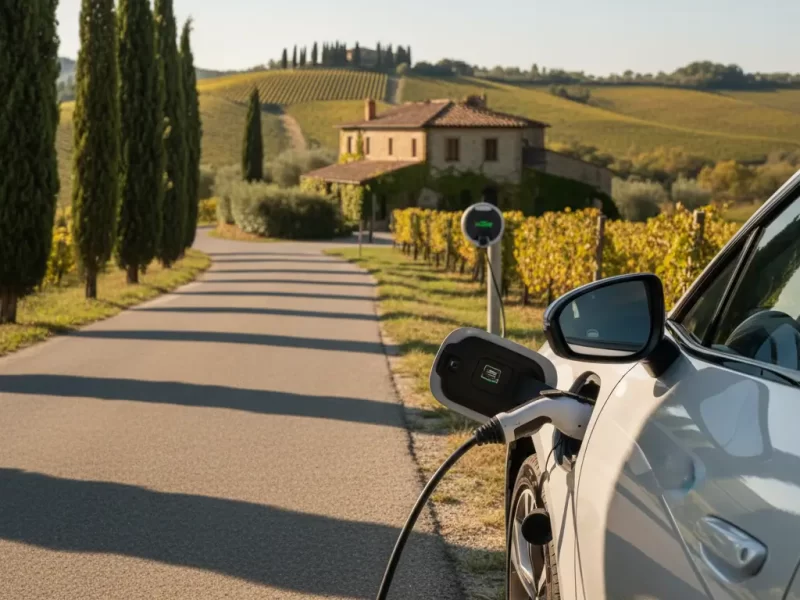
\n\n\n\nA successful trip with an electric car and caravan depends entirely on well-thought-out route planning. The spontaneity of ‘we’ll see where we end up’ gives way to a strategy of planned charging stops. This isn’t as complicated as it sounds, as long as you use the right tools.
\n\n\n\nBreak your journey into shorter stages. Without a caravan, you might drive 300 to 400 kilometres. Therefore, plan trips of 150 to 200 kilometres. This gives you ample margin and prevents you from having to search for a charging station with a nearly depleted battery.
\n\n\n\nChallenges when charging en route
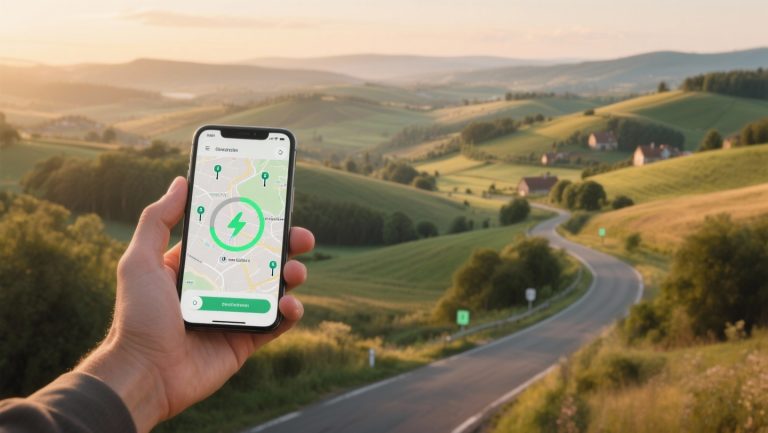
\n\n\n\nAlso, pay attention to the accessibility of charging stations. Many rapid chargers are located in spots that are difficult to access with a hitched caravan. The charging bays often have the layout of a standard parking space, meaning you’ll have to unhitch the caravan before you can charge. Fortunately, there are increasingly more charging hubs along motorways that are more spacious, sometimes with dedicated drive-through charging points. Use apps like A Better Routeplanner (ABRP) or Chargemap, where you can indicate the use of a trailer. These tools account for higher consumption and can help you find suitable charging locations.
\n\nTips for an efficient and relaxed journey
\n\n\n\nWith the right driving style and preparation, you can limit energy consumption and make your journey more pleasant.
\n\n\n\n- \n
- Adjust your speed: The greatest gains are made by moderating your speed. Consistently drive 80 to 90 kilometres per hour on the motorway. Driving faster increases air resistance exponentially and pushes up consumption. \n\n\n\n
- Use regenerative braking: Electric cars can recover energy during braking. Anticipate traffic, let your car coast, and brake gently. In the mountains, this system can even help you regain some range while descending. \n\n\n\n
- Take a test drive: Take a longer test drive nearby with the fully loaded car and caravan. This will give you a realistic idea of the consumption and driving characteristics of the combination. \n\n\n\n
- Check tyre pressure: Ensure that the tyres of both the car and the caravan are at the correct pressure. Under-inflation increases rolling resistance and thus energy consumption. \n\n\n\n
- Charging strategy: Use rapid chargers (DC) en route and charge the battery to about 80%. The last 20% charges significantly slower. At your final destination, such as a campsite with a charging point, you can calmly fully charge the car (AC). \n
A holiday with an electric car and caravan is a different way of travelling. It forces you to drive more calmly and take more frequent breaks, which can make the journey itself more relaxed. Good planning is essential here. On the Traveler Tips website, you will find more articles about route planning, travel preparation, and the best destinations for your road trip. Discover how to travel smarter and more consciously.
\n\nFrequently asked questions
\n\n\nThe realistic range of an electric car with a caravan or trailer often halves, meaning an original range of 400 km can drop to 200-280 km. Plan your route by accounting for more frequent and longer charging stops. Use charging apps that show suitable charging points for car-caravan combinations. Ensure charging stops coincide with your rest breaks and consider your vehicle’s charging speed.
\n\nThe available information does not provide specific locations for suitable charging points for an electric car with a caravan or trailer, nor detailed smart navigation strategies for this.
\n\nNo information is available regarding the most suitable electric cars for towing a caravan or trailer and the important factors.
\n\nI cannot answer the question about how towing a caravan or trailer affects the driving behaviour, consumption, and overall travel experience with an electric car, as the necessary information is not available in the consulted documents.
\n\nInsufficient information is available to determine the financial considerations and potential savings when travelling with an electric car and caravan compared to a traditional car. The available sources are limited to 9 Dutch-language documents and do not meet the requirements for a complete answer, such as a minimum of 10 sources in multiple languages, including user-generated content and regional information.
\n\n