
 NL
NL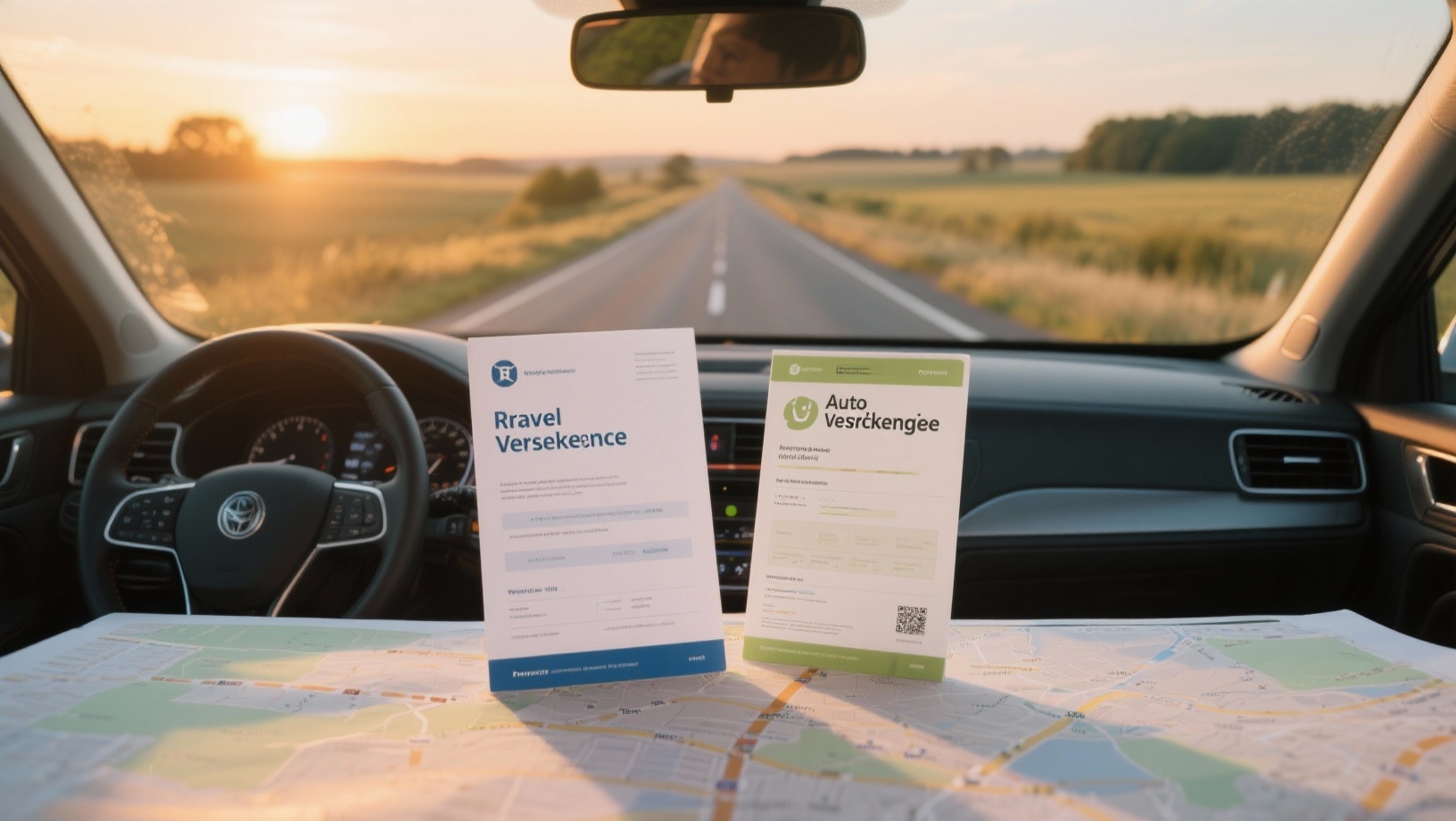
For a worry-free driving holiday, you need the right combination of insurance policies. A car insurance policy covers the car itself, while a travel insurance policy protects you as a traveller. The difference between travel insurance and car insurance is essential to prevent unexpected costs and ensure you don’t face any surprises. Discover how to make the best choices and avoid being double-insured.
The core difference: the vehicle versus the traveller
The dividing line between the two insurance policies is the object of coverage. Car insurance is linked to your vehicle’s registration plate. This insurance covers damage to or caused by your car. Travel insurance is personal and covers inconveniences that happen to you as a traveller, from medical expenses to lost luggage.
What does your car insurance cover?
Your car insurance is primarily for the vehicle. Coverage applies in most European countries, which you can check on your green card. The basic coverage is Third-Party Liability (WA), which is mandatory and covers damage to others. In addition, there are more extensive coverages:
- WA+ (Third-Party, Fire and Theft): In addition to damage to others, also covers specific damages to your own car, such as those caused by fire, theft, or broken windows.
- Fully Comprehensive (All Risk): Offers the most complete coverage, including damage to your own car that you have caused yourself.
Roadside assistance abroad is never included as standard. You must purchase this as an additional module with your car insurance. This assistance is then specifically for the car with the insured registration plate.
What does your travel insurance cover?
Travel insurance focuses on you and your travel companions. Basic coverage often includes unexpected events unrelated to the car, such as theft of your luggage or unforeseen medical expenses that your health insurance does not fully reimburse. For driving holidays, you purchase a specific additional module, often called ‘Motorist Assistance’ or ‘Vehicle Breakdown Assistance’. This module covers, for example:
- Towing costs to the nearest garage.
- Costs for a replacement vehicle if repairs take a long time.
- Extra overnight stays if you have to wait for repairs.
- Repatriation of the vehicle and passengers in case of major damage.
An advantage of this module is that the coverage often applies to any vehicle you drive, not just your own car. However, check the conditions for rental cars, as they are sometimes excluded.
‘ Without travel insurance, you pay these costs entirely yourself. ’
The necessity of both insurance policies
Yes, for full coverage on a driving holiday, both insurance policies are essential. They complement each other. Imagine you have an accident in France. Your car insurance handles the damage to your own car and that of the third party. But what if the accident means you have to go to a hospital, cut your holiday short, or your luggage is damaged? These are the situations for which travel insurance is intended. Without travel insurance, you pay these costs entirely yourself.


Avoid double coverage: smartly arranging breakdown assistance
The most common overlap between car and travel insurance is coverage for breakdown assistance abroad. Both your car insurer and your travel insurer can offer an additional module that covers this. It’s a waste of money to pay for both, as you can only claim assistance once. Therefore, compare the terms and premium of your car insurance breakdown assistance module with your travel insurance motorist assistance. Choose the option that best suits your situation and cancel the other. Don’t forget to also consider breakdown services like the ANWB Wegenwacht Europa, which are an alternative.
The best combination for a budget-friendly road trip
Those who plan smartly can save money without compromising on security. For an affordable yet well-insured road trip, make a conscious decision. Third-Party Liability (WA) insurance for your car is mandatory. Whether a more expensive Fully Comprehensive (All Risk) coverage is sensible depends on your car’s age and value. For an older car, it’s often not cost-effective. Supplement this with travel insurance. If you only go on holiday once a year, short-term travel insurance is usually cheaper than an annual policy. Then choose the breakdown assistance module with the best value for money, either with your car insurance or your travel insurance. By consciously choosing your coverages, you put together a package that suits your trip and budget.
‘ Preparation determines how worry-free your trip will be. ’
Practical checklist before you depart
Preparation determines how worry-free your trip will be. Before you leave, go through these points to ensure you are well-insured for your journey.
- Check your coverage area: Make sure both your car and travel insurance are valid in the countries you visit. This is usually Europe, but check the details.
- Take your green card with you: Although no longer mandatory everywhere, it is an internationally recognised proof of insurance that comes in handy.
- Check conditions for trailer or caravan: If you are travelling with a trailer or caravan, check if they are covered under your breakdown assistance.
- Save essential numbers: Make sure you have the emergency centre number of your insurer(s) saved on your phone and keep it handy.
- Rental cars: Are you renting a car locally? Then different rules apply. The breakdown assistance via your travel insurance is often not valid. Therefore, always take out a full insurance policy with breakdown cover through the rental company.
Thorough preparation provides peace of mind and confidence for your journey. Sorting out your insurance policies is an essential part of this. On the Traveler Tips website, you will find many more articles to help you prepare for your driving holiday. Discover our comprehensive articles on the most beautiful routes, traffic rules abroad, and useful packing lists to make your trip even more enjoyable.
Frequently Asked Questions
Car insurance typically covers Third-Party Liability (WA) and optionally own damage to the insured car, requiring a separate module for breakdown assistance abroad, and often excluding rental cars. Travel insurance does not cover direct damage to the car itself but, with a ‘Vehicle Breakdown Assistance’ module, offers help with any car (with the exception of certain rental cars). This travel insurance module includes services such as recovery and replacement transport, which are often broader than those provided by car insurance. The difference lies in car insurance focusing on the insured car and direct damage, while travel insurance focuses on assistance and incidental costs in case of a breakdown while travelling.
During a driving holiday, unexpected costs such as breakdown assistance, replacement transport during lengthy repairs, and overnight stays due to a breakdown are often not covered by standard car or travel insurance. This also usually applies to rental cars. You can get additional coverage for these by adding a breakdown assistance module to your travel insurance or an extension to your car insurance for breakdown assistance abroad.
Travel insurance typically includes luggage cover. However, specific conditions regarding theft or damage to personal luggage and valuables from the car, including any limitations or exclusions for this scenario, are not detailed in the provided information.
Car insurance does not typically cover breakdown assistance or medical costs after an accident abroad; an additional module is needed for this. Travel insurance does offer broader assistance for breakdowns and replacement transport, including medical costs, but also often requires a module for car breakdown. It is crucial to check the policy conditions of both insurance policies and avoid overlap, as travel insurance is often more active during the trip, and car insurance is linked to the vehicle’s registration. In case of doubt or an accident, the emergency centre should be called immediately to determine which insurance is primarily responsible.
For a road trip with a rental car, it is advisable to take out local fully comprehensive insurance in addition to the standard rental car insurance. Your travel insurance generally does not cover damage to a rental car abroad, although there are exceptions for Dutch rental cars with Dutch registration for travel abroad. The breakdown assistance module of a travel insurance sometimes covers breakdowns with a rental car, but this varies per policy. Always check the specific conditions of your travel insurance.