 NL
NL
A successful winter holiday with an electric car hinges on realistic planning that takes into account cold, luggage, and charging options. Forget the tales of halved range; with the right approach, you’ll go further than you think. Discover how to reach your destination comfortably and without charging anxiety.
The Impact of Winter on Your Driving Range
Driving in winter demands more from your car, especially an electric model. Low temperatures affect the chemical processes in the battery, making it temporarily less efficient. This results in a smaller driving range. Expect a realistic loss of approximately 20% to 30% of your normal range. This is caused not only by the battery itself, but also by other wintry factors.
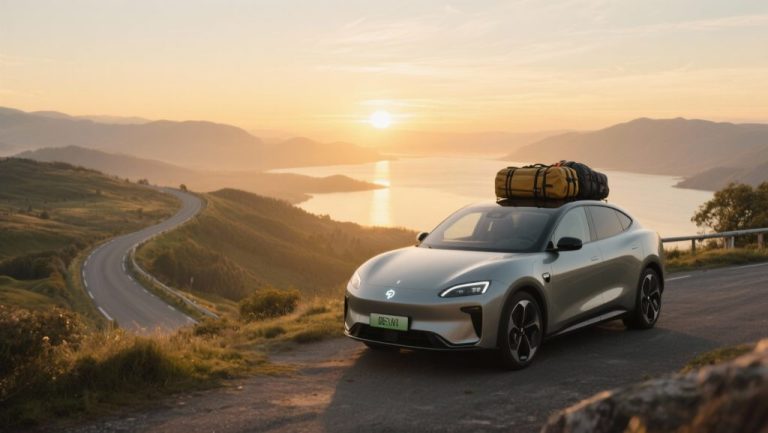
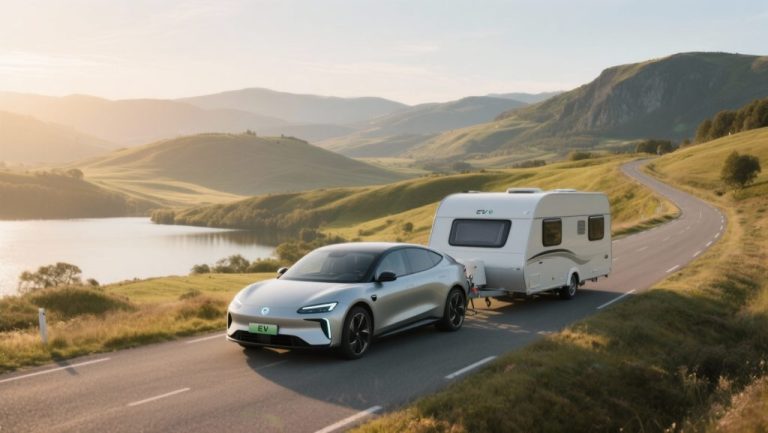
Heating the interior is one of the biggest energy consumers. Unlike a combustion engine, which uses residual heat, an electric car must draw all its heat entirely from the battery. Winter tyres create more rolling resistance, and heavy luggage with skis and extra bags also consumes more energy. A roof box can further increase consumption by another 10% to 15% due to increased air resistance.
‘ By carefully planning your trip, you can avoid surprises and start your holiday relaxed. ’
Preparing for your trip: the foundation for a carefree journey
Good preparation is half the battle. By carefully planning your trip, you can avoid surprises and start your holiday relaxed. This goes beyond just mapping out the route; it includes your car, your charging strategy, and your equipment.
Planning your route and charging stops
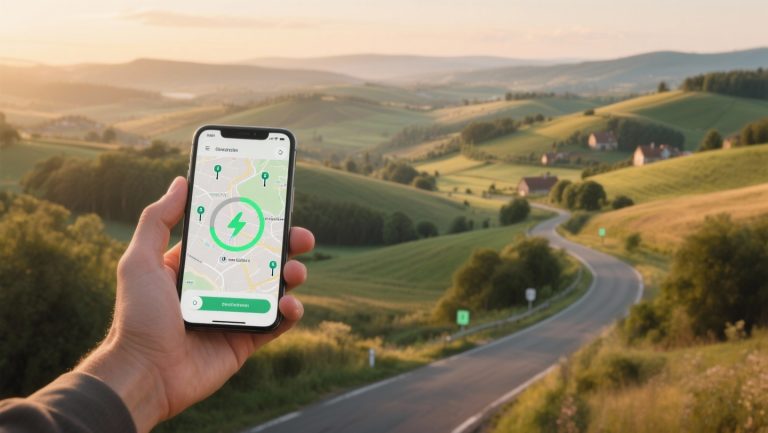
Use a route planner specifically designed for electric cars, such as the ANWB route planner or A Better Routeplanner (ABRP). These tools take into account your car type, expected consumption in winter conditions, and the availability of charging stations. Indicate in the planner that you wish to arrive with a buffer, for example, with a minimum of 20% battery charge. This builds in a safety margin for unexpected situations like traffic jams or an occupied charging point.
Plan your charging stops at logical times, such as during a lunch break or coffee stop. It’s often quicker to do two shorter charging sessions up to 80% than one long session to 100%. This is because rapid charging slows down considerably once the battery is past 80%.
Charging cards and the right equipment
Ensure you are prepared for various charging networks. Not all Dutch charging cards work abroad. Therefore, take a selection of cards that offer broad coverage in the countries you will be travelling through. Consider cards from providers like Shell Recharge, Fastned, or a specific card from a large network such as Ionity. Also, check if you can use Tesla Superchargers, as more and more locations are opening up to other brands.
Prepare your car well for winter conditions. Ensure you have:
- Good winter tyres with sufficient tread. This is not only safer but also mandatory in many winter sports countries.
- Snow chains suitable for your car type and wheels. Practice fitting them at home beforehand.
- An ice scraper and windscreen de-icer. A frozen charging flap can be an annoying problem.
Smart driving and charging on the go
Once on the road, a few simple adjustments to your driving behaviour and comfort settings can save a lot of energy. This helps you to actually achieve your planned range and perhaps even skip an extra charging stop.
Efficient heating for more range
Heating is a major power consumer. The most efficient way to stay comfortable is to use seat and steering wheel heating. These heat your body directly and consume significantly less energy than warming up the entire cabin. Set the interior heating to a lower temperature and let the seat heating do the work.
Another important tip is preheating, also known as preconditioning. Do this while the car is still connected to the charging point. Via your car’s app, you can bring the interior and battery up to temperature. This way, you not only get into a warm car with defrosted windows, but your battery is also immediately at its optimal operating temperature. This doesn’t cost you any range, as the power comes directly from the grid.
Arriving at your destination: charging in the ski resort
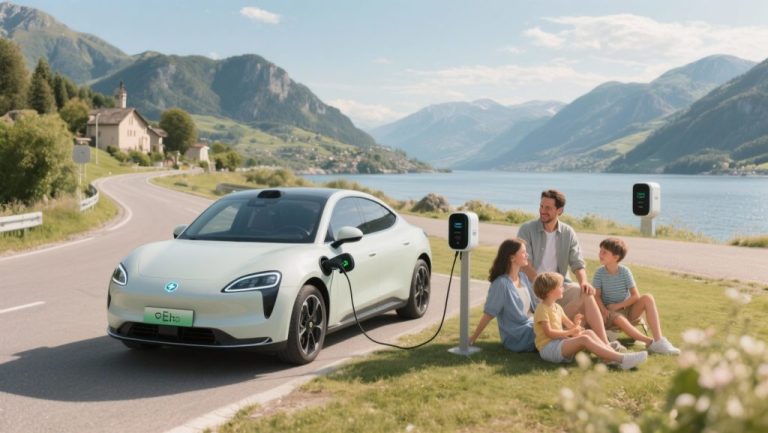
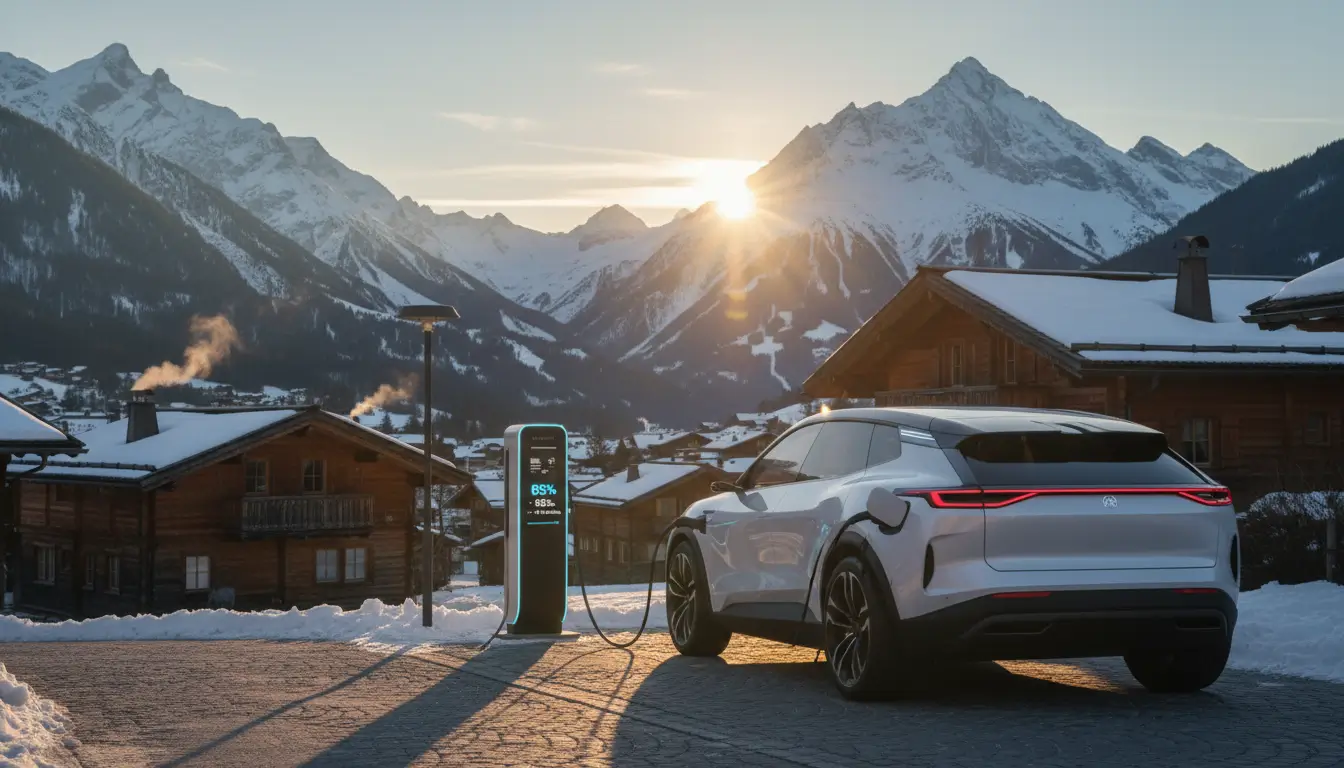
Even at your holiday destination, it’s useful to think ahead about charging. The charging infrastructure in popular ski resorts, such as in Austria and Switzerland, is rapidly improving. Many hotels and apartment complexes now offer their own charging points for guests. Enquire about this when booking your accommodation. This is the most relaxed way to charge your car, for example, overnight. This way, you can drive to the slopes every morning with a full battery.
If there are no charging points at your accommodation, research nearby public charging options. Ski villages often have public charging squares, sometimes even with rapid chargers. Use an app to check locations and availability. Be aware that on changeover days, such as Saturdays, charging points can be busier. Preferably charge your car at a quieter time during the week.
Good preparation is the key to a successful car holiday, and this certainly applies to a trip with an electric car in winter. On the Traveler Tips website, you will find many more practical articles. These cover route planning, travel equipment, and the most beautiful destinations for your next road trip. Discover more and travel smarter.
Frequently Asked Questions
Cold weather can reduce your electric car’s range by up to 30% due to the effects of cold, luggage, and winter conditions. To plan your route, use a route planner that considers your model, battery status, and charging points, and adjust the specified battery capacity to 80-90% to simulate extra stops. Activate preheating via the app to keep the battery at optimal temperature and charge efficiently during breaks. Additionally, consider taking multiple charging cards and winter tyres.
Plan your route using apps such as the ANWB Routeplanner for electric cars, ABRP, or Plugsurfing to find reliable charging points and schedule charging stops. Bring multiple charging cards, such as ANWB, Shell Recharge, or Fastned, which provide access to networks like Ionity and Tesla Superchargers. Check accommodations for charging points and consider a lower battery capacity in your planning to compensate for unexpected range drops due to cold and luggage. Optimise your driving style and precondition the battery to prevent charging anxiety.
To travel safely and comfortably through winter with an electric car, plan your route with charging stops using tools like the ANWB Routeplanner, considering a possible range decrease of 30%. Bring at least two charging cards and extra cables, and activate preheating via an app. Minimise luggage and drive between 50-60 mph (80-100 km/h) for the most economical consumption, with seat and steering wheel heating preferred over interior heating.
For a winter holiday with your electric car, the ANWB Routeplanner for electric cars and apps like ABRP or Plugsurfing are essential for route and charging planning. Ensure you have at least two charging cards and extra charging cables, and activate your car’s preheating via the app for an optimal battery temperature. On the road, it’s best to maintain 50-60 mph (80-100 km/h) and use seat/steering wheel heating, and at your destination, it’s best to look for accommodations with charging points and use apps to find charging stations in ski resorts. Be aware of a range decrease of up to 30% due to cold and luggage, and plan for extra charging stops.