NL
NL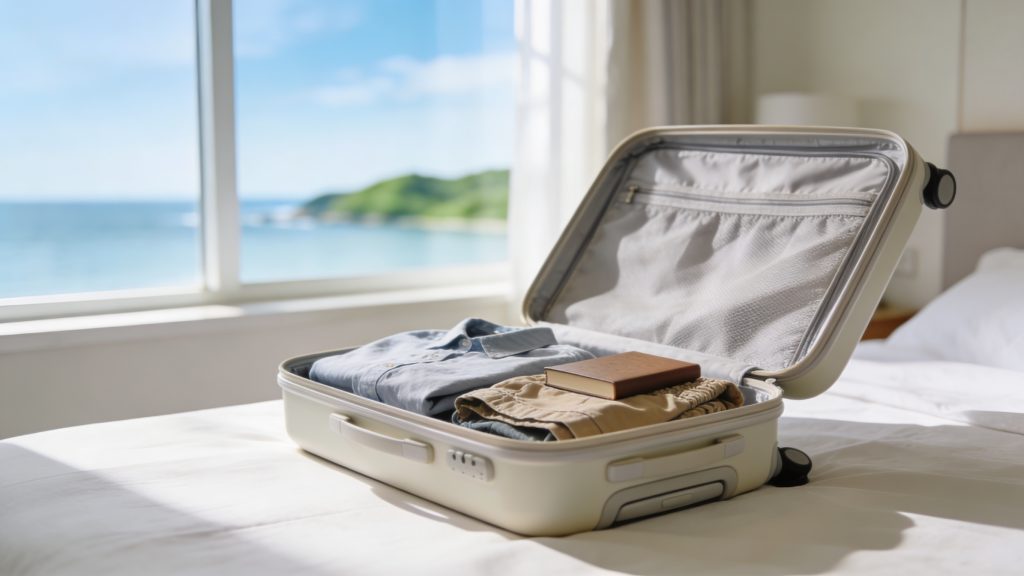
Taking less means enjoying more. Packing minimally for your driving holiday leads to a lighter car, less stress and more flexibility on the road. By making conscious choices based on the weather forecast, choosing multifunctional items and washing clothes along the way, you get more out of your trip. Discover how, with smart luggage organisation and simple principles, you can road trip in comfort without unnecessary ballast.
Why travelling light improves your driving holiday
A lighter car is more economical and saves fuel costs. Studies show that every 50 kilograms of extra weight increases fuel consumption by around 2%. On a two-week road trip this makes a significant difference to your wallet. In addition, the car’s handling and braking distance improve when you take less luggage with you.
Fewer belongings also mean quicker stops and more spontaneous choices along the way. Parking is easier, unpacking at stopovers is quicker and it is easier to keep an overview in the boot. For practical tips on how best to organise your luggage in the car, read more about packing and luggage organisation in the car.
Minimalist travellers experience less stress. There is no searching for things in an overfull boot, no hassle with heavy suitcases and more space for passengers to sit comfortably during long drives.
‘ Often it turns out you need far less than you thought. ’
Start with a realistic luggage plan
Choose a smaller suitcase or rucksack with a capacity of 35 to 45 litres. This limitation forces you to make conscious choices and prevents overpacking. First lay all the items you want to take on the bed and then remove half of them. This method is surprisingly effective.
Pack the day before and do a trial journey. What do you really miss during that drive? Often it turns out you need far less than you thought. A folding shopping bag or jute bag in the car is useful for unexpected purchases such as local products or souvenirs.
Choose based on weather forecast and destination
Check the weather forecast for your entire route and adjust your luggage accordingly. For a summer road trip through southern Europe, light shorts, T-shirts and one pair of flip-flops in addition to your trainers are enough. For a trip through the Alps or Scandinavia, focus on warm layers and a waterproof jacket.
This targeted approach saves unnecessary clothing. You do not take a thick winter coat to Spain, nor a beach towel to Norway in October. Regional differences determine your packing list, not what you might possibly need.
Wear your heaviest clothes while travelling
Put on your thickest coat, sturdy walking shoes and hoodie while driving. This saves valuable luggage space in the boot and keeps you warm with air conditioning or on cool morning drives. As soon as it gets warmer, simply put the coat on the back seat.
This simple trick can keep a full coat or pair of boots out of your suitcase. That means more space for other items or a tidier boot that you can access more easily.
Apply the layering principle for maximum flexibility
Build your outfits in layers. A base layer with T-shirts, a mid-layer with versatile long trousers or a jumper, and an outer layer with a light jacket or hoodie. For a week-long driving holiday, the following is sufficient:
- 3 to 4 T-shirts in neutral colours that can be mixed and matched
- 2 pairs of trousers (1 pair of long trousers, 1 pair of shorts or a skirt)
- 1 hoodie or thin jumper
- 7 pairs of underwear and socks
- 1 or 2 pairs of shoes
Choose neutral colours such as grey, blue and black that mix easily. That way you create several outfits with fewer items of clothing. Do some washing on the road at stops or in your accommodation so you can reuse clothes.
Invest in multifunctional items
Every item that has several functions saves space and weight. A sarong or scarf serves as a beach towel, blanket during the drive, pillow or even sunshade at the window. A foldable aluminium water bottle fits into any corner and prevents plastic waste.
A small daypack is indispensable for trips from your car. You leave the large luggage in the boot and only take what you need for a day trip. Other handy multifunctional items are:
- Microfibre towel that dries quickly and takes up little space
- Universal travel adapter for different countries
- Reusable cup for coffee stops and picnics
- Dry snacks in resealable bags
Organise with packing cubes and compression bags
Packing cubes and compression bags keep your luggage organised and save space. Sort your belongings logically: one cube for clothes, one for toiletries and one for electronics and cables. This prevents loose items from rolling around the boot in corners or when braking suddenly.
Roll clothes instead of folding them. This saves space and prevents creasing. Fill empty shoes with socks, underwear or small electronics such as cables and chargers. That way you use every centimetre efficiently.
Use transparent bags for toiletries so you can see immediately what is inside. This saves searching time at stops and prevents leaks in your luggage.
‘ Wherever possible, opt for solid alternatives such as shampoo bars, solid soap and toothpaste tablets. ’
Limit liquids and choose solid alternatives
Liquids take up a lot of space and can leak during the journey. Wherever possible, choose solid alternatives such as shampoo bars, solid soap and toothpaste tablets. These products are compact, do not leak and often last longer than the liquid versions.
For products that you do take in liquid form, use small bottles of up to 100 millilitres. Top them up in supermarkets along the way instead of taking large bottles that make your boot unnecessarily heavy.
Go digital wherever possible
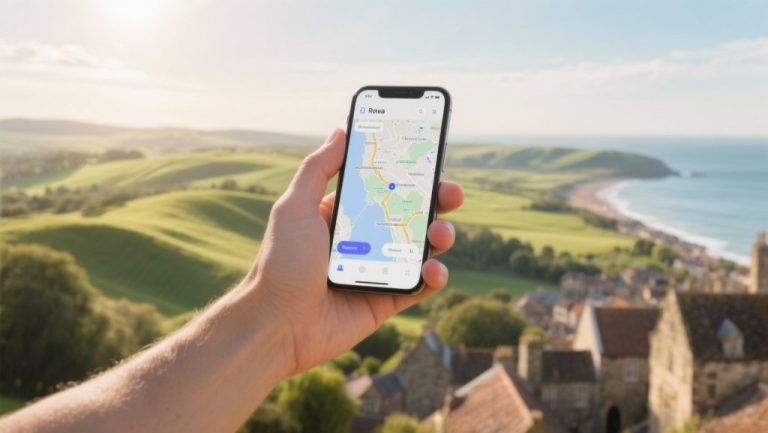
Books, travel guides and maps take up a lot of space. Download digital versions onto your smartphone or tablet. Offline navigation apps such as Google Maps or Maps.me work without an internet connection and replace bulky road atlases.
Scan important documents such as passports, driving licences and insurance papers and store copies in the cloud. This way you always have a back-up in case of loss or theft, without having to take along stacks of paper.
Do laundry on the road for longer trips
For trips longer than a week, plan laundry stops into your route. Many campsites, hotels and towns have launderettes where you can wash and dry clothes for a few euros. This halves the amount of clothing you need to take.
Take a small pouch of washing powder or laundry sheets with you. You can also quickly do some handwashing in the sink of your accommodation in the evening. Microfibre clothing dries within a few hours and is ready to wear again the next morning.
‘ If you arrive late, you do not have to unpack the whole boot, just grab this one bag. ’
Optimise your boot layout
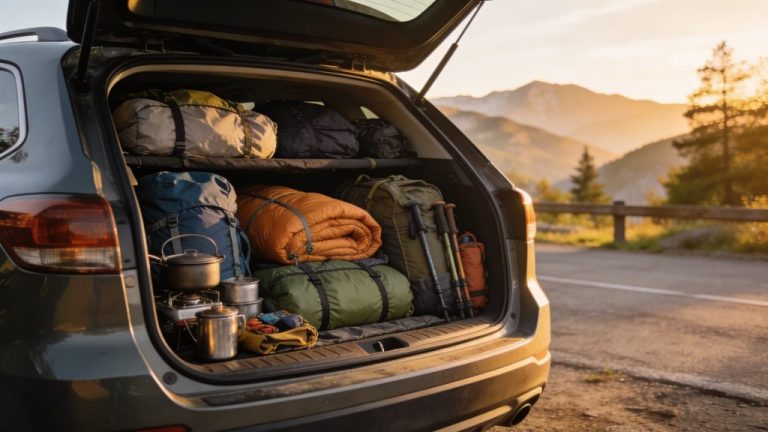
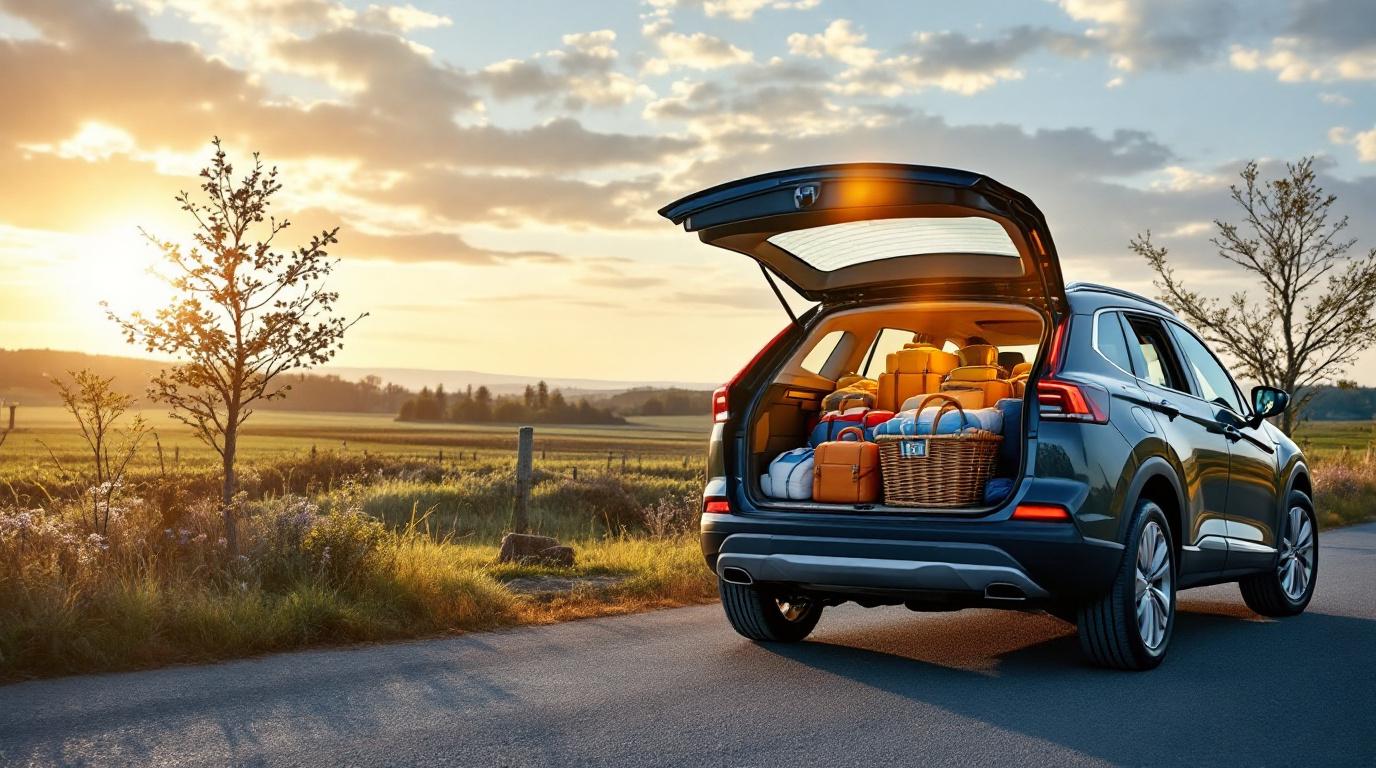
Place heavy items low down and centrally in the boot for optimal balance and handling. Light items such as pillows and clothing go on top. Use bungee cords, nets or luggage rails to secure items and prevent them from shifting while driving.
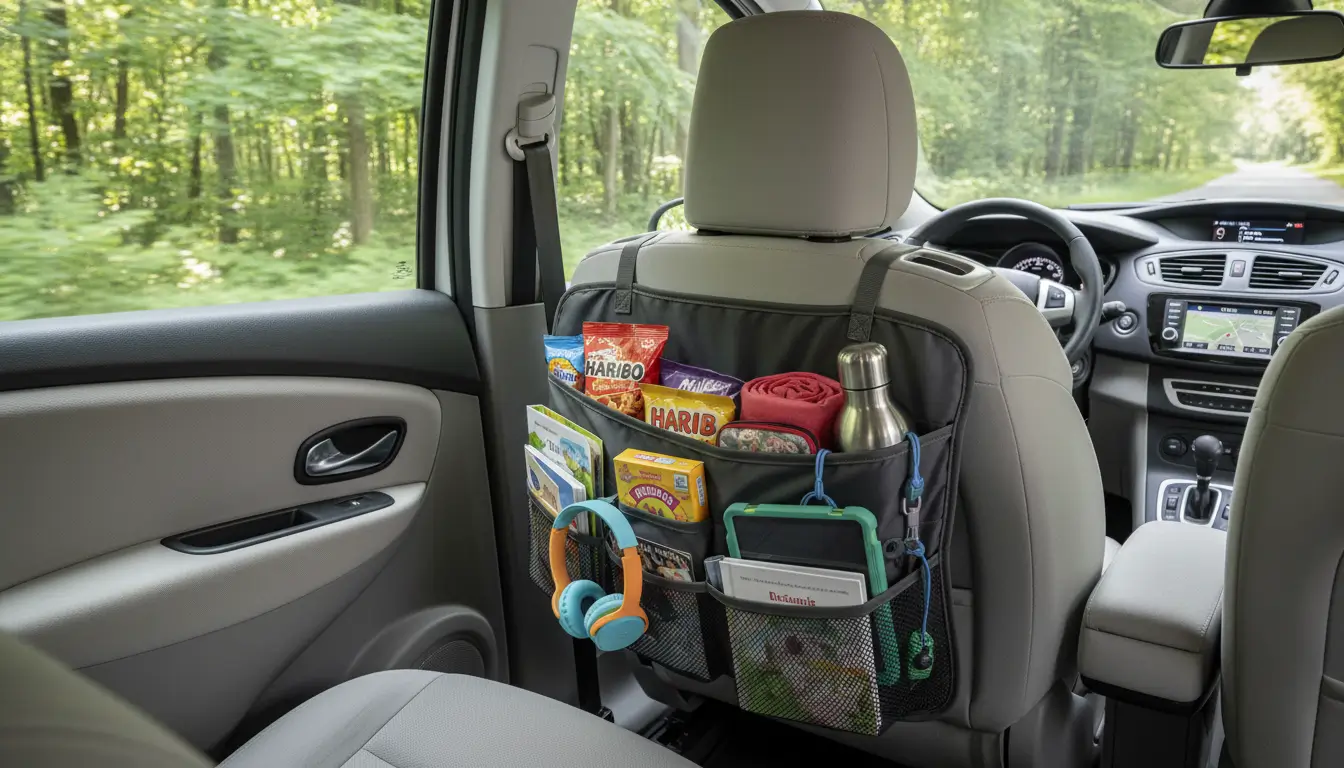
Hang organisers on the headrests of the front seats for snacks, maps, tissues and other small items you regularly need on the road. This keeps the boot tidy and ensures you have important things immediately to hand.
Keep one small bag within easy reach with items for the first night: toiletries, clean clothes and chargers. If you arrive late, you do not have to unpack the entire boot, just grab this one bag.

Test your packing strategy in advance
Do a test drive with your packed car before you set off. Drive a short route and pay attention to balance, visibility and how accessible your belongings are. Are you missing anything or have you actually taken too much? Adjust your luggage based on this experience.
For every item, ask yourself: do I really need this, or am I taking it out of habit? Often it turns out you need far less than you think. Items you rarely use at home are not going to be used on the road either.
Discover more on Traveller Tips
Packing minimally is just one aspect of travelling smarter. On the Traveller Tips website you will find extensive information on routes, destinations, regulations and practical preparation for your driving holiday. Discover more tips to plan your trip even more comfortably and consciously, and get the most out of every mile.
Frequently asked questions
Use one compact bag or rucksack (35–45 litres) and force yourself to choose: only take what you can combine into outfits and leave “just in case” items at home. Roll your clothes, fill shoes with socks or cables and use packing cubes or pouches to separate clothes, toiletries and electronics. Wear your largest shoes and thickest clothes while travelling to save space in your bag. Put light, frequently used items on top or in a small daypack so you do not have to unpack everything all the time.
Take only multifunctional basics: layered clothing (T-shirts, one warm jumper/hoodie, 2 pairs of trousers), a maximum of two pairs of shoes (one pair on, one in the bag) and a scarf that also serves as blanket or pillow. Add a compact toiletry bag with solid products or small sizes, plus a foldable water bottle and some energy-rich snacks. Use a small rucksack or packing cube for electronics, chargers, documents and medicines so everything is easy to find. Keep one extra foldable bag to hand for dirty laundry or unexpected purchases.
Pack layers instead of thick, separate garments so that with a few basic layers (T-shirts, jumper, light jacket) you can manage both warmth and cooling. Choose multifunctional items such as a scarf that can serve as blanket, pillow or sunshade, and a compact raincoat that also works as a windbreaker. Limit shoes to one sturdy pair on your feet and one light pair in your bag, and fill shoes with socks or small items. Use a small rucksack or packing cubes to have a compact grab-and-go set ready with a mini first-aid kit, torch, snacks and a foldable water bottle for unexpected situations.
Hang clothes outside after wearing, or in the bathroom during a hot shower so the steam reduces odours. Use a small travel spray bottle with water and a splash of vinegar or fabric spray to freshen clothes between washes. Choose quick-drying synthetic or merino wool clothing that you can easily handwash in the evening and that will be dry again by morning. Limit cotton items and take universal pieces (for example one pair of trousers and several shirts) that can easily be worn again.
Packing minimally gives you a better overview, so you find what you need more quickly and experience less stress when packing and unpacking. With less and more compact luggage, the car or train space stays tidy and you keep room to sit comfortably or spontaneously take something with you. A light, well-organised suitcase or bag makes transfers, walking sections and short stops much easier and smoother. That way you can focus on the journey itself instead of on your belongings.