 NL
NL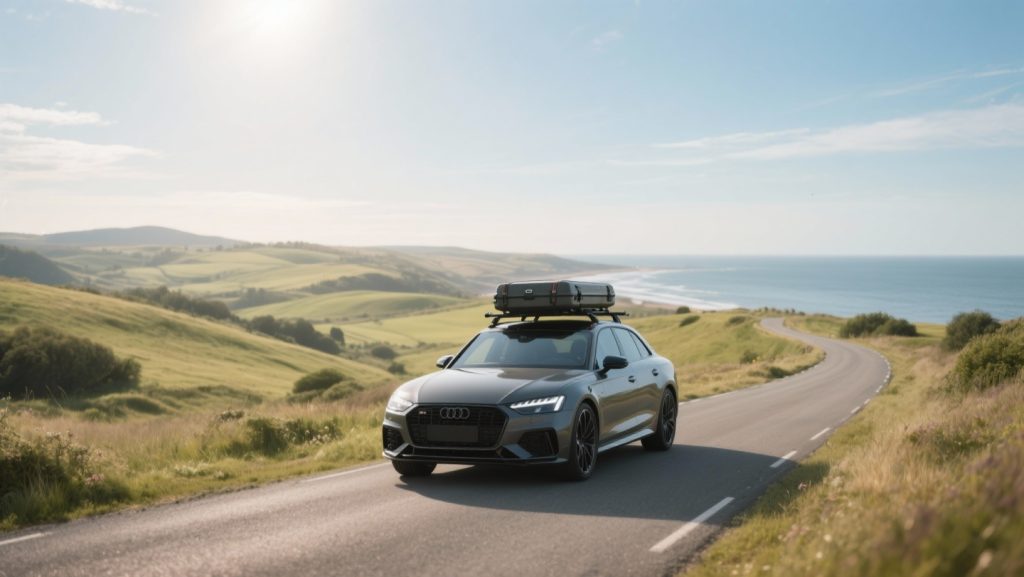
Roof boxes and roof bars are an ideal solution for those looking to cleverly create extra luggage space. However, the advantages come with clear drawbacks regarding fuel consumption and driving behaviour. Good preparation is crucial for a safe and comfortable journey. Here are the key considerations.
The main advantages: ample extra volume
The most obvious advantage of a roof box is the additional loading space. For families with children, campers or winter sports enthusiasts, this extra space is often not an unnecessary luxury. A roof box quickly offers an extra 300 to 500 litres of volume, comparable to the boot of a mid-range car. This solves a practical problem and contributes to safety and comfort in the car. The cabin remains free of loose bags and items, providing more legroom and a calmer travel experience. Moreover, it is safer, as no luggage will fly through the car during an unexpected braking action.
Roof bars, the foundation for any roof box, offer flexibility in themselves. They make it possible to transport specific items that would otherwise not fit in the car. These include:
- Skis and snowboards
- Bicycles (with special roof-mounted bike racks)
- Surfboards or canoes
- Other long and awkward items
‘ Not every roof bar fits every roof. ’
Which roof box and roof bars suit your car?
Before you can mount a roof box, you need roof bars suitable for your car type. Not every roof bar fits every roof. There are systems for cars with open or closed roof rails, for cars with fixed mounting points (fixpoints), and for cars with a completely ‘bare’ roof. The fit is of great importance for safety, so carefully check which system is prescribed for your car.
Another point of attention is the maximum roof load. This is the maximum weight that your car’s roof can carry. You will find this information in your car’s owner’s manual, and it is paramount. Most cars have a maximum roof load between 70 and 100 kilograms. Keep in mind that this is the total weight: the roof bars (approximately 5 kg), the roof box (15-25 kg), and the luggage you put inside. Exceeding this weight can damage the car’s structure. Additionally, it negatively affects driving characteristics.
The disadvantages: what you need to consider
While the extra space offers many advantages, there are also drawbacks associated with driving with a roof box. A mindful traveller takes these into account beforehand.
Higher fuel consumption and wind noise
A roof box significantly increases the car’s air resistance. This inevitably leads to higher fuel consumption, which can be up to 20% extra. Aerodynamic, slimmer models perform better than wide, angular boxes, but the effect remains noticeable. A practical tip is to dismantle the roof box at your holiday destination if you plan to make many local trips. In addition to consumption, a roof box, and even just the roof bars, causes extra wind noise, especially at higher speeds.
Changed driving characteristics and safety
The extra weight at the highest point of the car raises the centre of gravity. This has direct consequences for driving behaviour. The car becomes more susceptible to side winds, leans more in corners, and the braking distance increases. Adjust your driving style accordingly: drive more defensively, take corners more gently, and anticipate traffic earlier. Roof box manufacturers generally advise a maximum speed of 130 km/h (approx. 80 mph). It is wise to adhere to this limit, even if the legal speed limit is higher.
Loading and assembly: a precise job
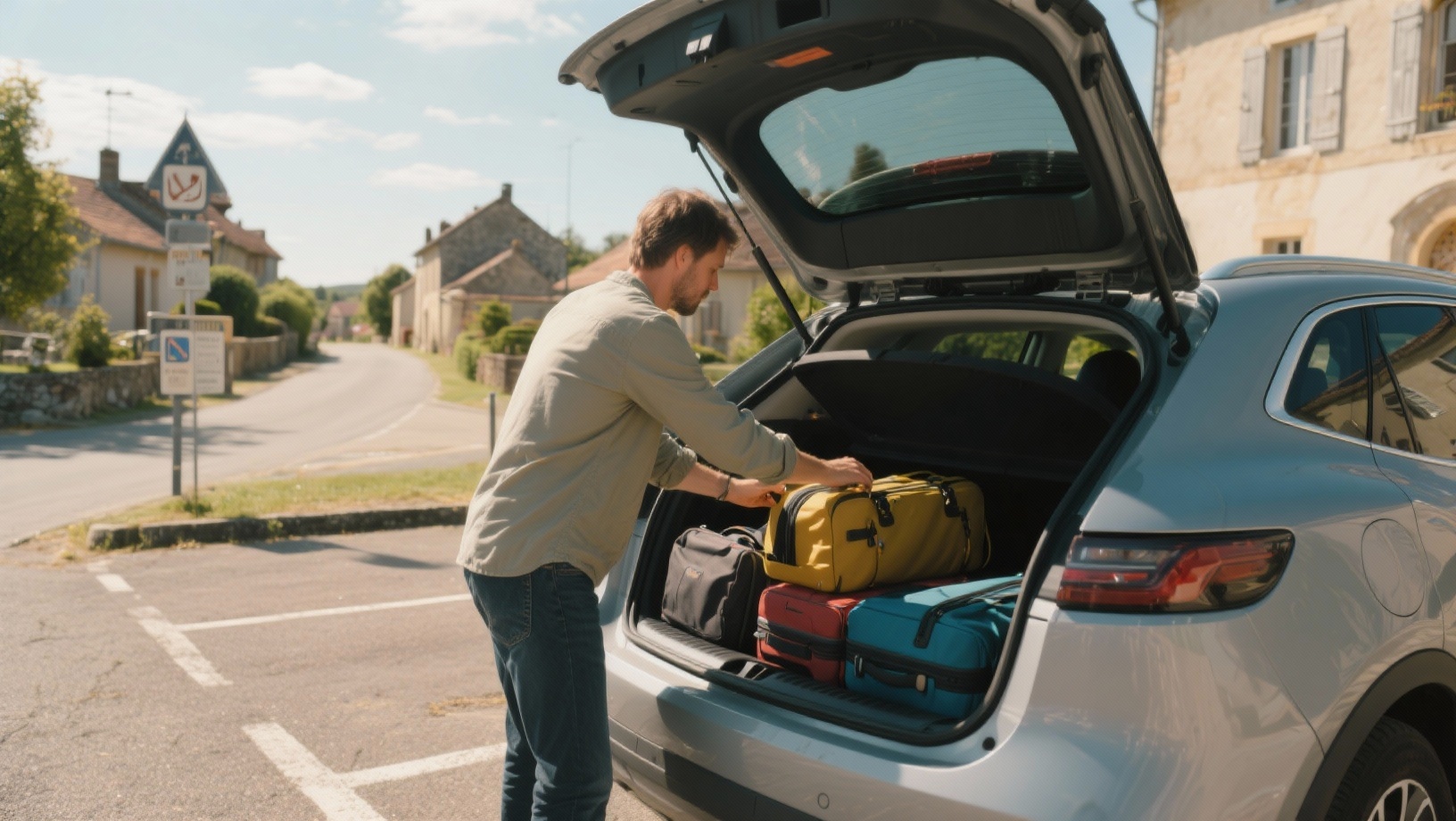
Correct assembly of the roof bars and roof box is crucial for safety. Follow the manufacturer’s instructions precisely to prevent the load from shifting or, in the worst case, coming loose. Also, distribute the weight of the luggage intelligently within the roof box. Place the heaviest items in the middle, as low as possible, and between the roof bars. Lighter items, such as sleeping bags or clothing, can be placed at the front and back and along the sides. Ensure that the load in the box cannot shift by filling empty spaces.
Rules and legislation in Europe
The most important rule is that you must not exceed your car’s maximum roof load. During a police check, the police can enforce this, with fines that can run into hundreds of euros. Additionally, there are general rules for luggage. The load must not protrude at the front and a maximum of one metre at the rear without a marker board. In width, the load must not extend beyond the mirrors in most countries. Although the basic rules are similar in many European countries, it is always good to adhere to your car’s specifications and the roof box manufacturer’s recommendations.
‘ Good travel preparation goes beyond just packing your luggage. ’
Buy or rent: what’s the smartest choice?
The choice between buying or renting roof boxes and roof bars depends on how often you expect to use them.
- Buying: If you go on an annual driving holiday or regularly need extra loading space, buying is more cost-effective in the long run. It requires a higher upfront investment, and you need suitable storage space for the roof box, which takes up quite a bit of room.
- Renting: For occasional use, for example, a one-off winter sports holiday, renting is an excellent option. You don’t have to worry about storage, and the costs are lower for a single instance. However, make sure to book in advance, as demand is high during peak periods such as the summer holidays.
Good travel preparation goes beyond just packing your luggage. On Traveler Tips, you’ll find comprehensive guides and articles on the best driving routes, traffic regulations abroad, and other essential checklists for your holiday. Discover more and ensure you’re fully prepared before you set off.
Frequently asked questions
Roof boxes and roof bars offer extra luggage space for holidays but increase fuel consumption and affect driving characteristics. A roof box is ideal for bulky luggage, while roof bars are better for specific items like bicycles or skis. For occasional use, renting is more cost-effective, while buying pays off for frequent travel. Clever alternatives include carefully planning packing lists and considering internal storage solutions.
A roof box or roof bars affect driving comfort by raising the centre of gravity, leading to a longer braking distance and uncertainty in corners, and making the car more susceptible to wind. Fuel consumption increases due to the extra weight and increased air resistance, with an aerodynamic model being preferred. Total travel costs may increase due to higher fuel consumption, but this can be offset by renting for occasional use instead of buying, which saves on storage costs. Removing the box at the destination can save fuel and reduce the risk of theft.
Choose the right roof box or roof bars by considering your car’s maximum roof load, the amount and type of items you want to bring, and the frequency of use. For occasional use, renting is cost-effective, while buying is more convenient for frequent travel. Distribute the weight evenly, secure everything firmly, and be mindful of increased fuel consumption and changed driving characteristics.
For safely mounting, loading, and driving with a roof box or roof bars, it is essential to check your car’s maximum load capacity and place the heaviest items low and centrally for stability. Drive more defensively and adhere to a maximum speed of 130 km/h (approx. 80 mph) due to the higher centre of gravity and wind susceptibility. Remove the roof box upon arrival to save fuel and prevent theft. Regularly check the load and tailor your choice (renting/buying) to the frequency and duration of your travels.