 NL
NL
High-speed trains in Europe: travel smarter and faster
Travelling by high-speed train in Europe is the benchmark for efficient and comfortable medium to long-distance journeys, optimising travel time and allowing passengers to arrive directly in the heart of their destination. These modern trains connect the continent’s major cities in a way that is both practical and pleasant. This article shows how to make the most of this network for your next trip.
Choosing a high-speed train (HST, high-speed line) is a logical step for the discerning traveller who values time, comfort and sustainability. Unlike air travel, with long waiting times and transfers to and from airports far outside the city, the train takes travellers from city centre to city centre. This direct convenience makes train travel through Europe a smart alternative. The journey itself becomes part of the experience, with the landscape passing by from a comfortable seat.
Why choose the high-speed train?
The advantages of high-speed train travel are numerous and perfectly align with the desires of the modern, independent traveller. The key benefits make HST a serious competitor for both cars and planes on many European routes.
- Speed: With commercial speeds exceeding 300 km/h, HST is faster than flying on many routes when factoring in check-in time, security checks, and airport transfers. For example, a journey from Paris to Brussels takes just over an hour.
- Comfort: Seats are generally more spacious than on a plane, with more legroom. Passengers can move freely, stretch their legs, walk to the buffet car, or work at a table. Most trains offer Wi-Fi and power outlets, allowing travel time to be used productively.
- Sustainability: Train travel has significantly lower CO2 emissions per passenger than flying. For the environmentally conscious traveller, the train is therefore a responsible choice that helps reduce the ecological footprint of a journey.
- Central Locations: High-speed train stations are almost always located in city centres. Travellers disembark and are immediately at their desired location, without expensive and time-consuming transfers. This saves not only time, but also money and effort.
‘ New projects, such as the Koralmbahn in Austria which drastically shortens travel time between Graz and Klagenfurt, and future accelerated routes between Paris and Munich, continue to improve the network and reduce travel times. ’
Overview of the European High-Speed Network
Europe boasts an extensive HST network of over 10,000 kilometres of specially built track, which is continuously evolving. Countries like France, Spain, Germany, and Italy were pioneers and possess thousands of kilometres of infrastructure. Spain has the most extensive HST network in Europe with over 3,400 kilometres, followed by France with approximately 2,800 kilometres of LGV lines (Lignes à Grande Vitesse).
The network is becoming increasingly integrated, simplifying cross-border travel. Major cities such as Paris, Brussels, Amsterdam, Frankfurt, Milan, and Barcelona serve as hubs that enable countless connections. New projects, such as the Koralmbahn in Austria which drastically shortens travel time between Graz and Klagenfurt, and future accelerated routes between Paris and Munich, continue to improve the network and reduce travel times.
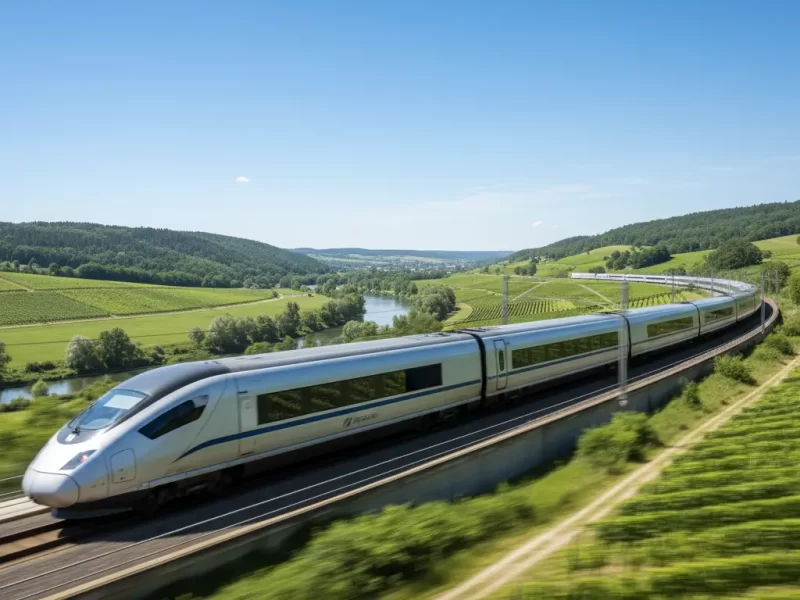
The different HST train types and their routes
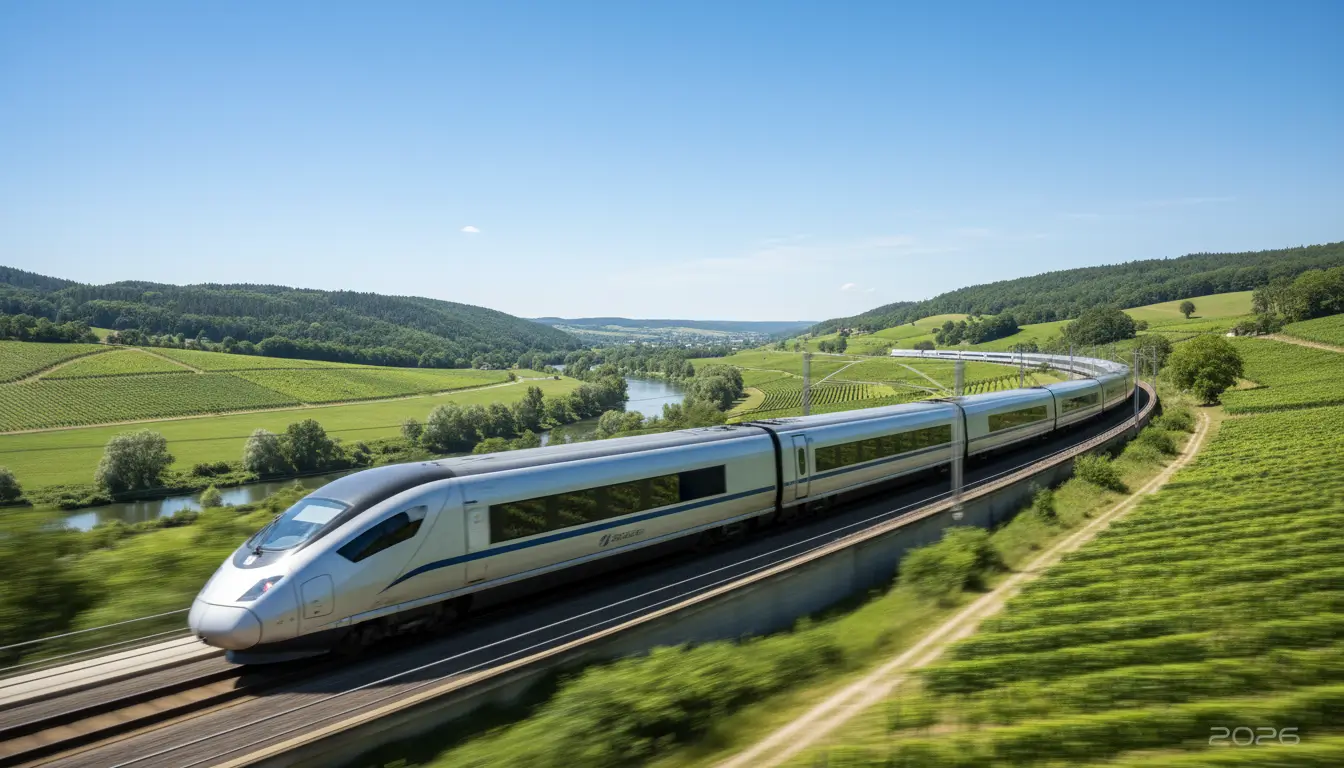
Each country has its own iconic high-speed trains, often with unique characteristics and their own network. Below is an overview of the main players on Europe’s railways.
Eurostar
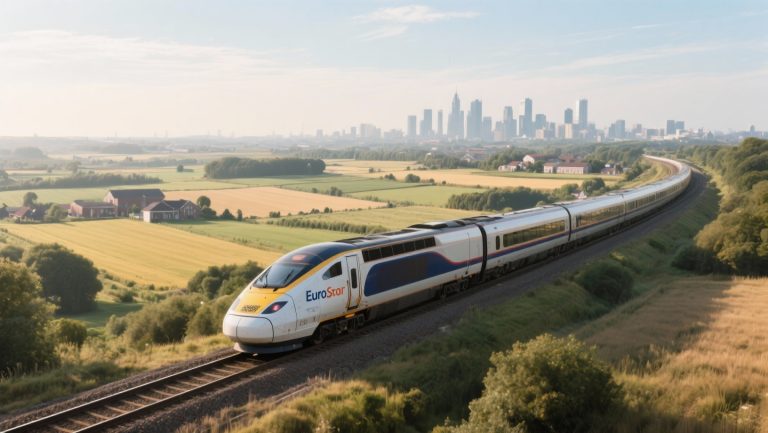
Eurostar is best known for its connections through the Channel Tunnel between the United Kingdom and mainland Europe. The train directly connects London with cities such as Paris, Brussels, Amsterdam, and Rotterdam. Since its merger with Thalys, Eurostar also operates on the routes of the former red trains, such as from Paris to Germany and the Netherlands.
TGV (Train à Grande Vitesse)
The TGV is the French pioneer in high-speed trains and forms the backbone of the French railway network. From Paris, travellers can reach all corners of France with the TGV, from Marseille and Nice on the Mediterranean to Bordeaux and Strasbourg. The TGV also operates on international routes to neighbouring countries such as Spain, Italy, and Switzerland.
ICE (InterCity Express)
The German ICE is the flagship of Deutsche Bahn. These trains are known for their comfort and design, connecting all major German cities such as Berlin, Hamburg, Munich, and Cologne. The ICE network also extends far beyond Germany’s borders, with direct connections to Amsterdam, Brussels, Paris, Vienna, and Zurich.
AVE (Alta Velocidad Española)
The AVE is the Spanish high-speed train that connects cities such as Madrid, Barcelona, Seville, and Valencia. Thanks to its extensive network, the train is an excellent way to quickly cover long distances in Spain. The AVE S103 train even holds speed records.
Frecciarossa
Italy’s “Red Arrow”, the Frecciarossa, is the pride of Trenitalia. This train connects the main Italian cities from north to south, such as Turin, Milan, Venice, Florence, Rome, and Naples. It is a fast and comfortable way to visit the classic Italian cities.
Railjet
The Railjet is the high-speed train of the Austrian Federal Railways (ÖBB). Although its top speed is slightly lower than that of the TGV or ICE, the Railjet offers a high level of comfort. The trains operate on domestic routes between cities such as Vienna, Salzburg, and Innsbruck, and on international lines to Prague, Budapest, Munich, and Zurich.
Planning: when is an HST the smartest choice?
A high-speed train is not always the best option for every journey. Its advantages are best realised in specific situations. For distances between 400 and 800 kilometres, the HST is often the fastest door-to-door option. For shorter distances, a regular intercity train is more practical, while for very long distances, flying sometimes remains more efficient.
Consider the HST especially for travel between major cities with a direct, frequent connection. Think of routes such as Amsterdam-Paris, Frankfurt-Brussels, or Madrid-Barcelona. Also, for journeys combining multiple cities, the HST network provides an excellent basis for a well-planned itinerary.
‘ Booking early almost always pays off. ’
Buying and reserving tickets: prices and practicalities
Booking tickets for high-speed trains works similarly to booking a flight ticket. Prices are dynamic and depend on the time of booking, the travel date, and how busy it is. Booking early almost always pays off. Sales usually start 3 to 6 months in advance.
For most high-speed trains, a seat reservation is mandatory and included in the ticket price. This guarantees passengers a seat. There are usually different classes available, such as standard class and first class. First class offers extra comfort, such as more space, a quieter environment, and sometimes at-seat service. Compare prices, as the difference can sometimes be surprisingly small when booking early.
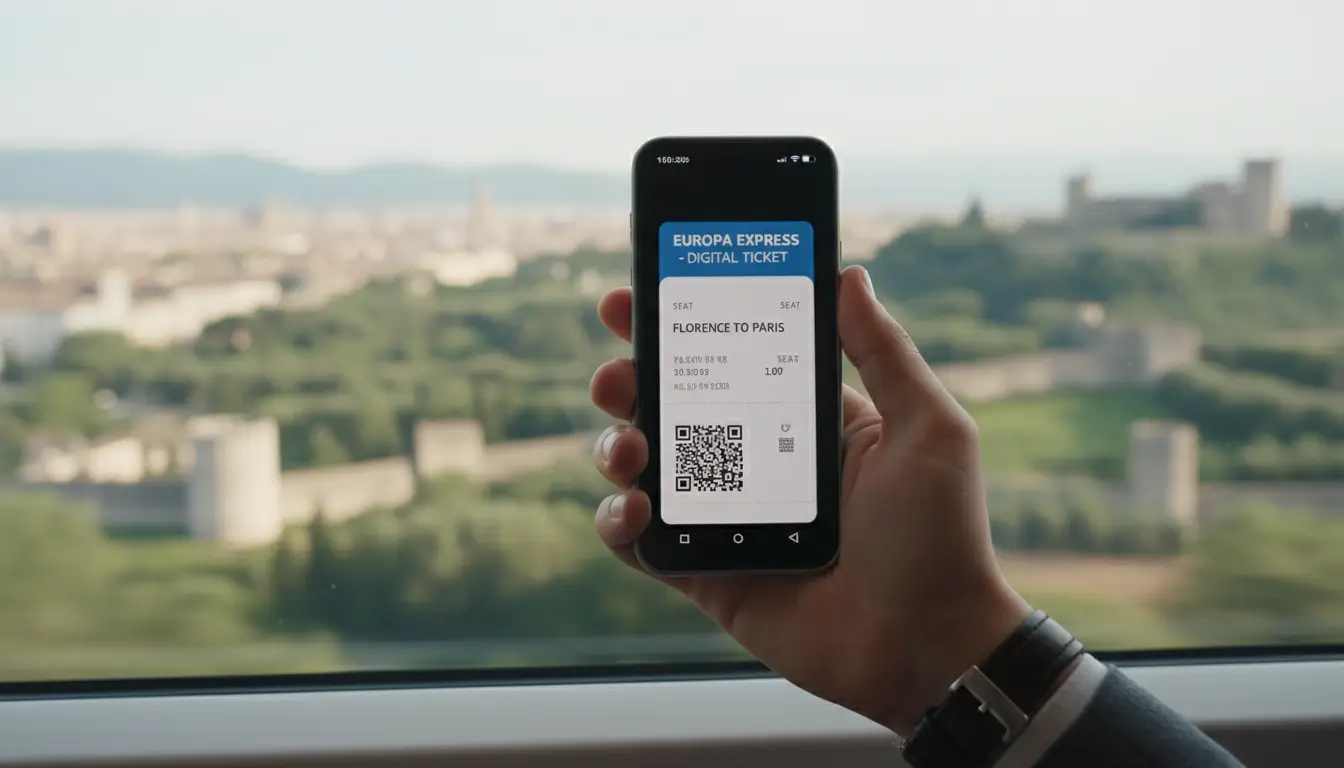

On board: expectations and experiences
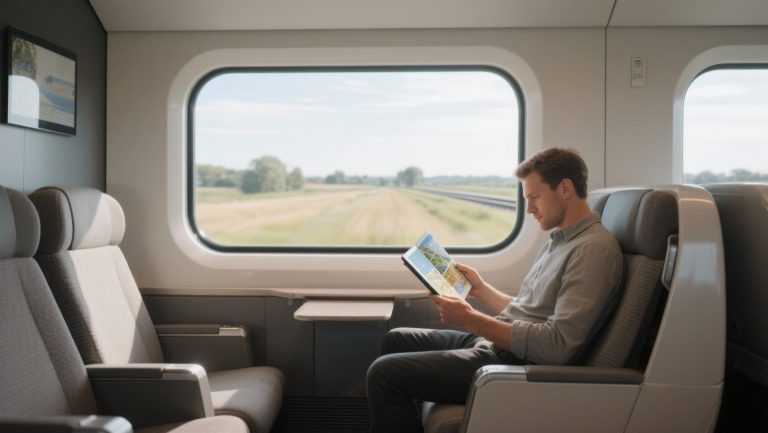
Once on board an HST, a comfortable journey awaits. Seats are adjustable, and there is space for luggage, both above the seat and in special racks at the ends of the carriages. Most trains have a bar or restaurant car offering drinks, snacks, or a meal. The windows are large, providing panoramic views of the passing landscape. It’s a relaxed way to travel, without the turbulence or hassle of air travel.
Practical travel tips for an optimal HST experience
For a smooth journey, good preparation is useful. Check baggage rules in advance, although these are usually more generous than with airlines. Check which platform the train departs from and arrive at the station approximately 15-20 minutes before departure. For international Eurostar journeys, there is a security and passport check, so allow extra time for this.
Also consider connecting transport. Major stations have excellent connections to public transport, such as metro, tram, and bus. This way, travellers can easily continue their journey to their hotel or final destination immediately upon arrival.