 NL
NL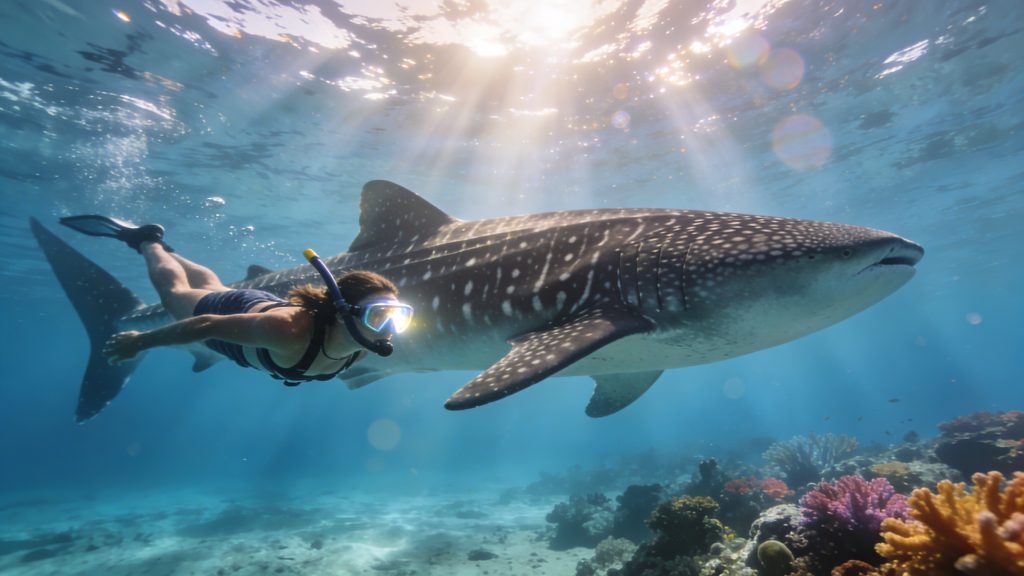
Whale sharks, the largest fish in the world, offer a unique wildlife experience on organised snorkelling trips in the Philippines and Mexico. These gigantic filter feeders are completely harmless to humans and calmly swim through plankton-rich waters, reaching lengths of up to 18 metres and weights of up to 20 tonnes. With the right preparation and timing, you can significantly increase your chances of a sustainable encounter. You can opt for the Yucatán coast or the coves of the Philippines. This article helps you choose the best places, seasons and responsible operators.
Why whale sharks offer a special wildlife experience
Whale sharks migrate thousands of kilometres in search of plankton and krill. They congregate in warm waters where nutrient-rich currents meet. These gentle giants have no natural predators and often swim just below the surface, which makes snorkelling possible without deep diving. On a tour you will see them slowly glide past, paying very little attention to snorkellers. The experience is described as calm and impressive at the same time. For fans of wildlife holidays, this is a chance to connect with one of the largest animals on earth, without stressful interactions.
Because whale sharks are filter feeders, they pose no danger. They eat only plankton and small fish. Their behaviour makes snorkelling tours suitable for beginners and confident swimmers alike. The best operators enforce strict rules to avoid disturbing the animals. They keep their distance, never touch the animals and limit the number of boats per shark. This keeps the experience respectful and sustainable.
‘ Choose non-feeding tours for ethical reasons. ’
Best places and seasons for whale shark snorkelling
Mexico: Isla Mujeres, Isla Holbox and La Paz
In Mexico, the Yucatán coast and the Sea of Cortez (a sea area between the Mexican mainland and Baja California) are the main destinations. Isla Mujeres and Isla Holbox lie near a deep-water area about 35 kilometres east of Isla Contoy. During peak season, hundreds of whale sharks gather here. The official season runs from mid-May to mid-September, with a peak in July and August. Sunny days are ideal because plankton then rises to the surface, improving visibility. Tours cost around 200 dollars and last several hours, with spotters on the boat.
Since 2018, the Whale Shark Biosphere Reserve has been in force with strict rules: always wear a life jacket, stay with a guide and a maximum of one boat per whale shark. Scuba diving and freediving are prohibited. Tours may only take place if there are at least five whale sharks in the area. Outside the official dates (for example between 1 June and 15 September), commercial tours are illegal. Choose a certified operator to avoid fines and negative impact.
In the Sea of Cortez near La Paz and Cabo Pulmo you can snorkel with whale sharks all year round. The best period is October to February. This area is rich in plankton and protected. You can combine tours with sea lions or liveaboards for multiple chances. The experience is calmer than at busy Isla Mujeres, with fewer boats and smaller groups.
Philippines: Southern Leyte, Donsol and Tubbataha Reefs
In the Philippines you will find whale sharks in several locations. Southern Leyte, especially Sogod Bay, offers an authentic experience with boat spotters (local guides who search for the animals from small boats) who locate the sharks. The best period is from November to May, during migration. The tours are smaller scale than in Mexico and the surroundings are less touristy. This attracts travellers who are looking for peace and nature.
Donsol is a popular spot with regulated tours. A strict code applies here. Feeding is not allowed. You keep your distance from the animals. The number of boats per area is limited. The period is similar to Southern Leyte. Oslob is known for whale shark snorkelling, but some operators feed the animals to lure them. This causes stress and disrupts natural behaviour. Choose non-feeding tours for ethical reasons.
Tubbataha Reefs is a UNESCO site that is only accessible by liveaboard (a houseboat with multi-day stays) from mid-March to mid-June. This remote area offers an exclusive experience with top snorkelling conditions and the chance to see other large fish. Costs are higher due to logistics, but the natural experience is unmatched.
Practical preparation and what to arrange
Book your tour with a certified operator with experienced guides. Check reviews and ask about compliance with local regulations. In Mexico this means registration with the biosphere reserve and the use of authorised boats. In the Philippines, look for operators that follow sustainable practices, without feeding programmes. Price is an indication: tours that are too cheap often point to poor supervision or unsafe conditions.
Take the following items with you:
- Reef-safe sunscreen without harmful chemicals
- Motion sickness tablets if you are sensitive to swell
- Waterproof camera or GoPro for recordings
- Light wetsuit or rash guard for protection from the sun and jellyfish
Plan your tour on sunny afternoons for better visibility. Rainy days bring murky water and less plankton at the surface. The chance of success is around 90 per cent in peak months, provided the weather cooperates. Combine the whale shark experience with other activities such as coral reefs, island visits or visits to local communities. This way you create a complete itinerary that goes beyond a single activity.
Snorkelling sustainably and respecting the animals
Sustainable tours limit the number of boats per whale shark. They also limit the time that snorkellers spend in the water. Operators often work with shifts of 10 to 15 minutes per group. This prevents stress for the animals and gives several groups a chance for an encounter. Keep at least two metres away and never swim in front of a whale shark’s mouth. Touching is strictly prohibited and can lead to fines or being banned from the tour.
In protected areas such as the Whale Shark Biosphere Reserve and Tubbataha Reefs, regulated tours contribute to the local economy and to funding nature conservation. This revenue model only works if operators and travellers follow the rules. Report violations to local authorities or conservation organisations. Your choice of a responsible operator supports this system.
Avoid tours that use food to lure whale sharks. This practice disrupts natural behaviour and can lead to dependence on human food. Animals that become used to feeding exhibit different swimming behaviour. They gather in unnatural places. This increases the risk of collisions with boats and stress from crowds. Choose operators that work with natural migration routes and plankton concentrations.
‘ It is a calm experience that contrasts with expectations of action. ’
What travellers report about their experience
Many travellers describe the boat trip as long, with spotters actively scanning for fins at the surface. As soon as a whale shark is found, small groups enter the water. The animals swim past slowly, without paying attention. It is a calm experience that contrasts with expectations of action. In Mexico, travellers praise the large numbers in July and August, sometimes dozens of whale sharks at once. Towards the end of the season it can get busier with more boats, which affects the quality.
In Donsol and Southern Leyte, travellers report quieter encounters with less crowding. The Philippine locations often offer clear waters and combinations with other snorkelling activities such as coral gardens and turtles. Tubbataha Reefs is praised for its exclusivity, but the distance and costs make it less accessible for budget travellers.

Tips for a successful whale shark snorkelling trip
Timing is important. Book your trip around the peak months for the highest chance of whale sharks. In Mexico these are July and August, in the Philippines November to April. Take weather conditions into account and book flexibly if possible. Tours are sometimes cancelled in bad weather or when whale shark activity is low.
Prepare physically if you do not have much snorkelling experience. Practise in calm water with your mask and snorkel. Whale shark tours do not require diving experience. Basic confidence in the water does increase your comfort. The sea can be choppy and some spotting locations are further from the coast.
Combine the snorkelling trip with other destinations. In Mexico, you can visit the Riviera Maya, Tulum or Playa del Carmen. In the Philippines, there are options for island hopping, wreck diving or visiting local markets. This way you create an itinerary that goes beyond a single activity and gives you a more complete picture of the region.
Respect local rules and follow your guide’s instructions. This not only increases the chances of a safe experience, but also of future opportunities for other travellers. Whale shark snorkelling will only remain sustainable if everyone sticks to the agreements.
On the Traveler Tips website you will find much more information about wildlife holidays, nature destinations and planning sustainable trips. Discover itineraries, preparation tips and points of interest that match your travel plans.
Frequently asked questions
The best time to see whale sharks in Mexico is roughly May–September at Isla Holbox/Isla Mujeres (with a peak in July–August), and October–February around La Paz in the Sea of Cortez; in the Philippines your best chances are roughly November–May in places such as Southern Leyte (Sogod Bay), and in the Tubbataha area from mid-March to mid-June via liveaboard. Always choose operators that work within official seasons, do not use food and enforce strict rules (keeping distance, max. number of swimmers per shark, mandatory life jacket). Plan your trip “smartly” by first choosing your main location and season, then booking flights and accommodation around this well in advance, and allowing several days so you can absorb a bad-weather day or an unlucky day. Combine whale sharks with nearby highlights (e.g. Yucatán cenotes or Philippine islands) to make your route efficient and varied.
In the Philippines (especially Southern Leyte/Donsol) the logistics are more small-scale and local, often with simple bangka boats and spotters, whereas Mexico (Isla Mujeres/Holbox) tends to have larger-scale, commercially organised day tours with speedboats departing from tourist hubs. Costs in Mexico are usually higher (around 200 USD per tour) than in the Philippines, where local trips are often cheaper. In terms of sustainability, strict rules apply in Mexico (including limits on boats per shark, mandatory life jackets, regulated seasons), whereas in the Philippines the impact varies per location and feeding practices such as in Oslob are seen as less sustainable and ethical. This is why areas such as Southern Leyte and Donsol are often regarded as more sustainable alternatives in the Philippines.
Prepare optimally by packing a snug-fitting snorkel mask, snorkel, short fins, UV-protective rash guard or wetsuit, seasickness tablets, a reusable water bottle and an easy-to-hold (preferably red-filter) underwater camera; use reef-safe sunscreen and leave jewellery or loose items at home. Follow the safety rules from your guide: swim calmly, stay alongside the whale shark (never in front of or underneath it), do not touch the animal or its tail, keep at least 3–4 metres’ distance and wear a life jacket if required. For an ethical experience, choose an operator that does not feed, limits group sizes, sets a maximum number of boats per animal and operates within the official season and protected zones. Always respect the animals: no flash, no diving onto the animals, no rubbish overboard, and end the encounter as soon as the whale shark shows signs of avoidance or stress.
Yes, there are plenty of smart combinations possible around whale shark snorkel spots. In Mexico, you can easily combine Isla Mujeres or Holbox with a Yucatán road trip along highlights such as cenotes, Mayan ruins (e.g. Chichén Itzá, Tulum) and other snorkel or dive sites on the Riviera Maya. Around La Paz (Sea of Cortez) you can combine whale sharks with snorkelling with sea lions, island tours and possibly a Baja California road trip. In the Philippines, combinations are possible with island hopping, coral reefs and other dive or snorkel spots, often included in multi-day itineraries or liveaboard trips.