
 NL
NL
International train travel across Europe: routes, hubs and planning
A well-planned international train journey through Europe stands or falls with an understanding of the rail network. Knowledge of the routes, the main interchange stations and the logic of the system makes it possible to travel comfortably and efficiently, with a richer travel experience along the way. The structure of the European rail network is surprisingly logical once the traveller knows what to look for. This knowledge helps in putting together an ideal route.
Starting points: heading into Europe from the Netherlands and Belgium
For travellers from the Netherlands and Belgium, an international train journey often begins at one of the major stations such as Amsterdam Centraal, Utrecht Centraal, Rotterdam Centraal, Antwerpen-Centraal or Bruxelles-Midi (Brussel-Zuid). From here the high-speed trains depart that take you further into Europe. These stations are directly connected to the European rail lines, allowing travellers to reach neighbouring countries and beyond with little effort. Good preparation is the basis for successful planned rail holidays. It is worthwhile starting the journey at a station with direct international connections to keep the number of changes to a minimum.
‘ High-speed trains such as Eurostar (formerly Thalys) make this route fast and comfortable. ’
Core corridors: the backbone of the European rail network
A number of core corridors support the European rail network: major rail lines along which most international trains run. From the Benelux these are the following axes:
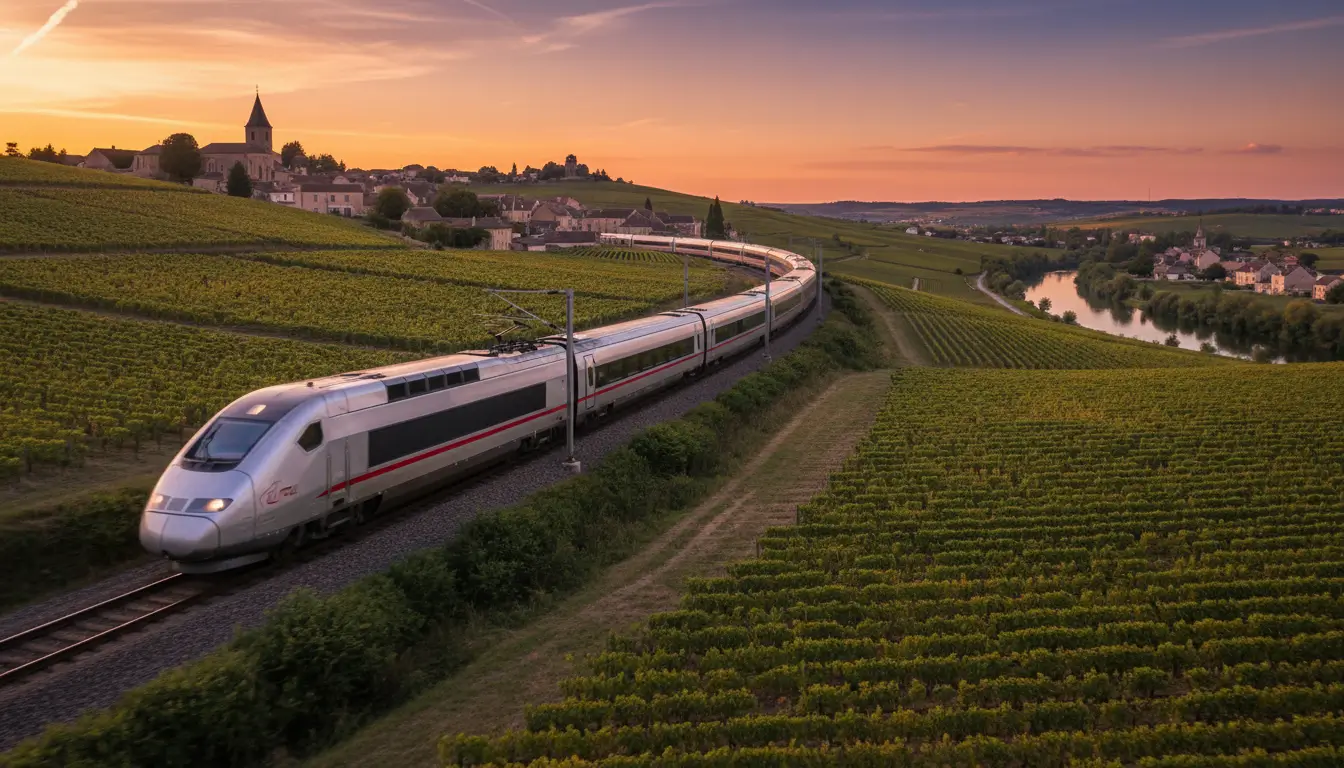
- The western corridor: this line connects Amsterdam, Rotterdam and Antwerp with Brussels and Paris. High-speed trains such as Eurostar (formerly Thalys) make this route fast and comfortable. From Paris the network fans out further towards the south and west.
- The eastern corridor: from Amsterdam and Utrecht this route runs via the Ruhr region to cities such as Cologne, Frankfurt and beyond. ICE International is the train on this route, connecting the traveller with the extensive German rail network and destinations in Switzerland, Austria and Eastern Europe.
- The south-eastern corridor: although less direct, there is a connection from Brussels via Luxembourg and Strasbourg towards southern Germany and Switzerland.
Europe’s main interchange hubs
Where the major corridors meet lie the central interchange stations or hubs. These cities form the key junctions of the European rail network. A journey to more distant destinations in Europe almost always requires a planned change in one of these cities. Understanding their role helps in mapping out a logical route. The hubs for travellers from the Benelux are Brussels, Paris, Frankfurt and the Swiss cities of Basel and Zurich.
Hub in focus: Brussels, the central pivot
Bruxelles-Midi (Brussel-Zuid) is one of the best-connected stations in Europe. For travellers from the Netherlands it is often the first stop abroad on the way to France or the United Kingdom. From Brussels direct high-speed trains depart in almost every direction.
- Towards France: Eurostar (formerly Thalys) connects Brussels with Paris in less than an hour and a half. There are also TGV services to southern French cities such as Lyon, Avignon and Marseille.
- Towards Germany: ICE International runs several times a day from Brussels to Cologne and Frankfurt, where travellers can change to trains to all parts of Germany.
- Towards the United Kingdom: the Eurostar to London St Pancras International makes Brussels a direct gateway to the United Kingdom.
‘ “This is an important detail for planning, because a change in Paris often means a metro ride between two stations.” ’
Hub in focus: Paris, gateway to the south and west
Paris is not one station, but a collection of six major terminus stations, each with its own focus on a compass direction. This is an important detail for planning, because a change in Paris often means a metro ride between two stations.
- Gare du Nord: this is where trains from Brussels, Amsterdam and London arrive.
- Gare de Lyon: this is the departure point for TGV trains to Lyon, Provence, the French Alps and Switzerland (Geneva, Lausanne).
- Gare Montparnasse: from here the traveller continues to the Atlantic coast (Brittany, Bordeaux) and further on to Spain.
- Gare de l’Est: this station serves destinations in eastern France (Strasbourg), Luxembourg and Germany (Frankfurt, Stuttgart).
Hub in focus: Frankfurt, the heart of central Europe
Frankfurt am Main Hauptbahnhof is one of Germany’s busiest stations and a central point for travel within Germany and to neighbouring countries. The ICE from Amsterdam and Brussels stops here, making it a logical interchange point for many destinations.
- Within Germany: from Frankfurt there are fast connections to Munich, Berlin and Hamburg.
- Towards Austria and Eastern Europe: there are direct trains to Vienna and connections towards Prague and Budapest.
- Towards Switzerland and Italy: regular trains connect Frankfurt with Basel, Zurich and Milan, often via a route through the Alps.
Hub in focus: Basel and Zurich, gateway to the Alps and Italy
The Swiss cities of Basel and Zurich act as gateways to the Alps and Italy. Basel SBB, located on the border of Switzerland, France and Germany, is a unique international station. Zurich Hauptbahnhof is a central hub within Switzerland.
- From Germany: ICE trains from Frankfurt and other German cities often terminate in Basel or Zurich.
- To Italy: from both cities there are direct EuroCity services through the Alps to Milan, from where the Italian high-speed network takes the traveller on to cities such as Florence, Rome and Venice.
- Panoramic routes: for travellers who see the journey itself as the destination, famous routes such as the Glacier Express and Bernina Express start here.
‘ Booking systems take a minimum feasible time into account, but more leeway is more relaxing. ’
Changing smartly: navigating the hubs
Changing efficiently at a major station requires preparation. It is advisable to plan in sufficient time, especially for those unfamiliar with the station. A margin of 45 to 60 minutes is usually safe. It is useful to check the station map in advance. Large hubs have clear signage, but the distances between platforms can be considerable. When booking a ticket it is worth paying attention to the proposed transfer time; booking systems take a minimum feasible time into account, but more leeway is more relaxing.
Route options and travel experiences: putting together the ideal route
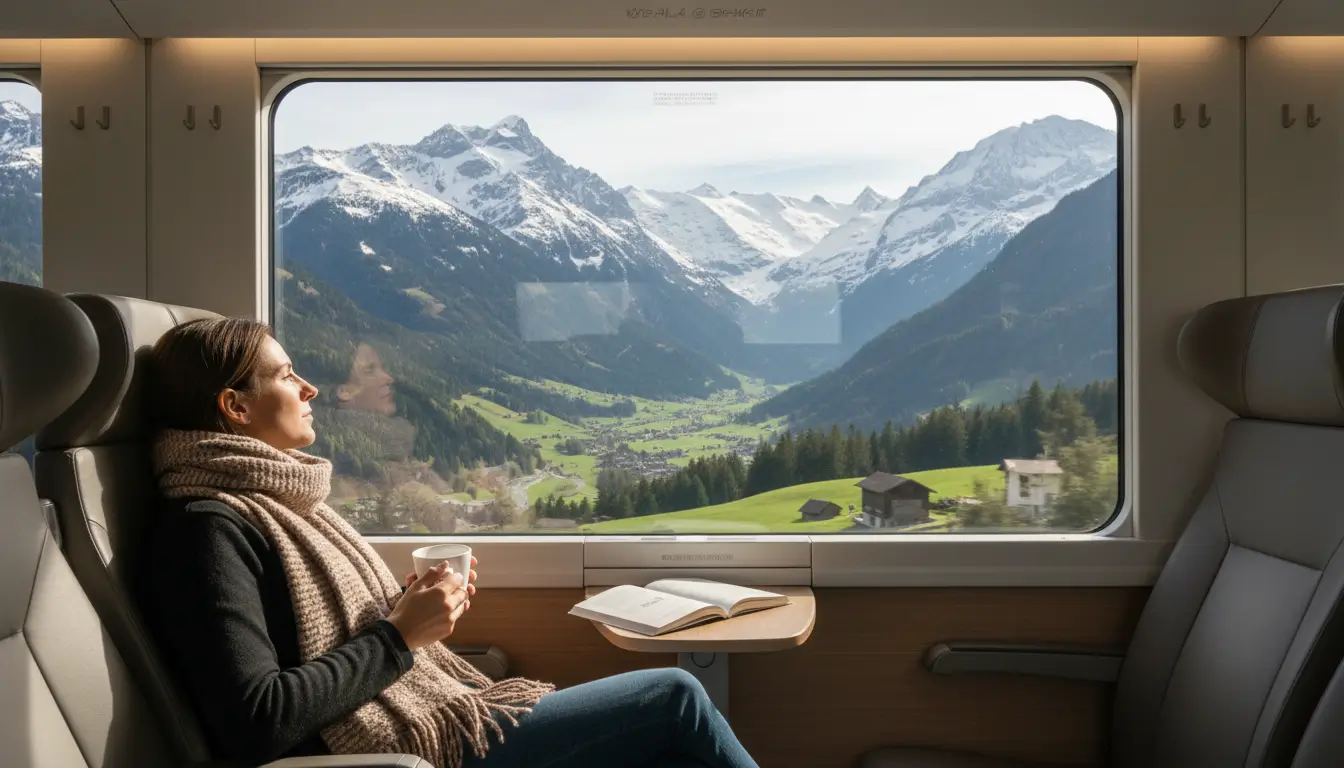
The traveller does not always have to choose the fastest connection. Depending on your wishes, different types of routes can be considered. High-speed trains are ideal for covering long distances quickly. For a more relaxed journey with a focus on the scenery, there are Intercity or EuroCity trains that stop more frequently. A night train is also an option, such as the Nightjet to Vienna or Zurich. This saves a hotel night and the traveller wakes up at the destination, ready to start the day.
Planning the journey: from ticket to departure
Planning an international train journey is simpler than it seems. An international journey planner such as that of NS International or Deutsche Bahn helps compare connections and ticket prices. Booking tickets for popular routes and periods well in advance saves considerably on costs. Seat reservations are compulsory or strongly recommended on many high-speed trains. It is also useful to check the luggage rules, although these are generally more flexible on trains than on planes. With good preparation the traveller ensures a pleasant journey.
‘ The European rail network offers a reliable and pleasant way to explore the continent, with the journey becoming a full part of the holiday. ’
The next journey begins on the rails
With insight into the corridors and hubs, planning an international train journey becomes a manageable task. The traveller can consciously choose routes that match the desired pace and interests, whether that is speed, comfort or the travel experience itself. The European rail network offers a reliable and pleasant way to explore the continent, with the journey becoming a full part of the holiday.