NL
NL
For a successful hiking holiday, a car is no longer a given. Combining train and bus is an effective and sustainable way to reach popular hiking areas. The journey itself becomes a valuable part of the experience. Discover how good planning can lead to a comfortable and conscious trip.
What is a slow travel hiking holiday?
Slow travel is about consciously slowing down and choosing quality over quantity. Instead of ticking off a long list of places, take time to get to know a region thoroughly. Travelling by train and bus fits seamlessly with this philosophy. The pace is slower, the landscape glides by, and travellers support the local economy. The ecological footprint is significantly reduced; a train journey emits up to eighty per cent less CO2 than a short flight.
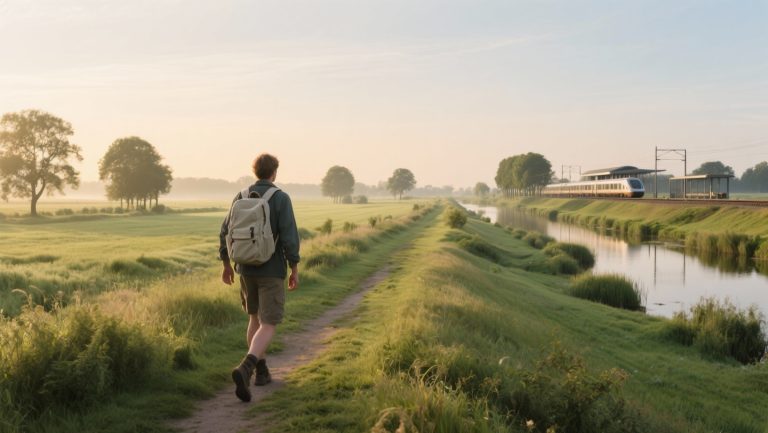
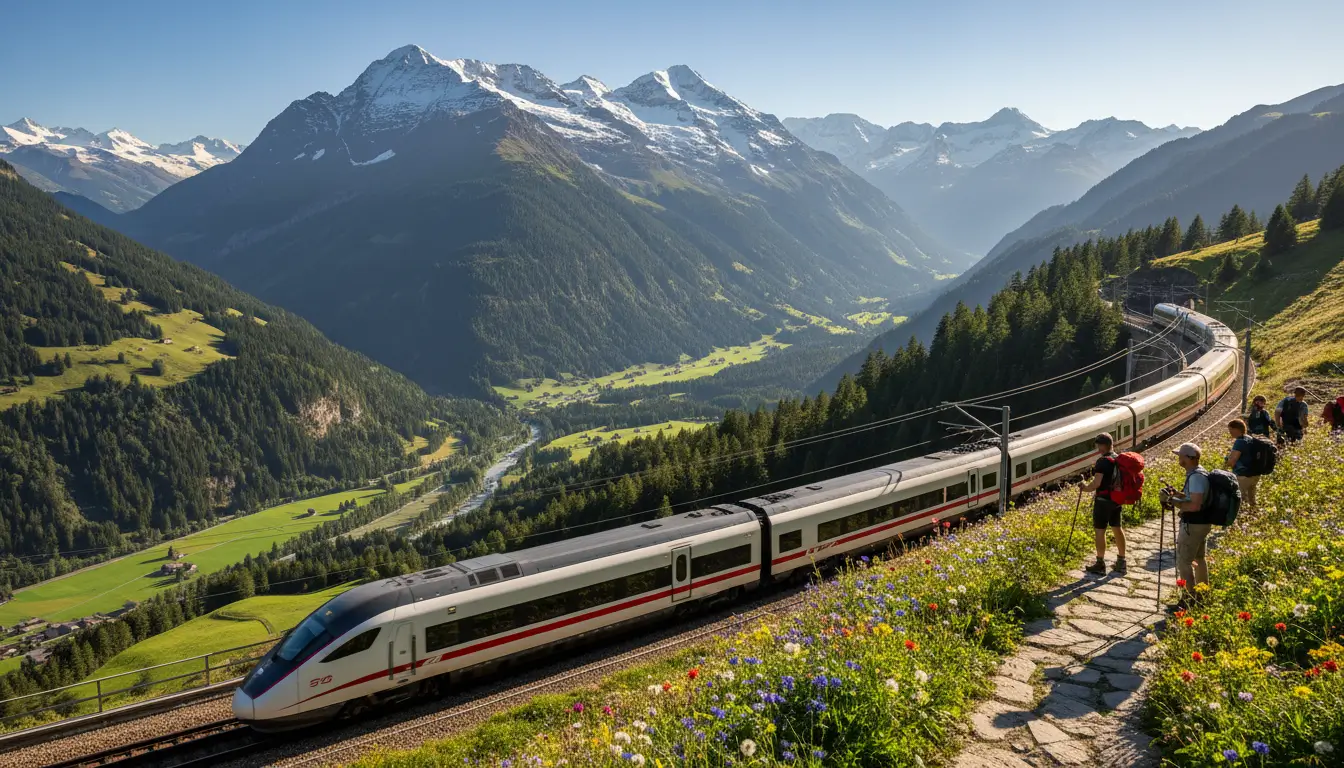
The journey begins as soon as the front door closes behind you. Traffic jams and parking stress give way to relaxation. Time for a book or a good conversation, while the train comfortably travels to the destination. The local bus then takes you from the station to the start of the hiking trail, a mountain hut, or a valley station.
‘ The journey is more than just a means of transport. ’
The benefits of train and bus for hikers
Public transport offers hikers a range of practical benefits that go beyond just sustainability. Route planning becomes more flexible and the journey experience richer.
- Sustainability: Train travel is one of the most environmentally friendly ways to cover long distances. The bus is an efficient addition for the last few kilometres to more remote areas.
- Experience: The journey is more than just a means of transport. Enjoy the views of the Rhine Valley or the Bavarian lakes without focusing on traffic.
- Cost: With careful choices, travelling by public transport can be affordable. Consider the Deutschland-Ticket in Germany, which allows travellers unlimited use of regional transport for a fixed monthly fee.
- Convenience: The hike starts directly from the station or bus stop. No need to worry about parking spaces, and you can easily walk from A to B without having to return to the car.
How to plan a hiking holiday using public transport?
Good preparation is half the battle. Choose a destination where public transport is well connected to hiking networks. Apps like DB Navigator for Germany or 9292 in the Netherlands help to plan your journey from door to door. Book international train tickets well in advance for the best price. For the final leg, local buses often provide good connections to valley stations and starting points for routes.
Ensure you have the right equipment, such as waterproof hiking boots and a reliable app for hiking maps and weather. By travelling outside the high season, you can enjoy more tranquillity and often lower prices.
Hiking destinations with good train-bus combinations
In the Netherlands and beyond, there are countless hiking areas that are easily accessible without a car. Below are some examples known for their excellent public transport connections.
Hiking in the Netherlands
In the Netherlands, you will find various NS (Dutch Railways) walks that lead from station to station. This makes planning a day trip particularly easy.
- Veluwezoom (Posbank): Travel by train to Dieren, Rheden or Velp. From there, you can walk directly into the hilly moorlands of this national park.
- Zuid-Kennemerland National Park: The train to Santpoort Noord station is a suitable starting point for a walk of approximately seven and a half kilometres through the dunes and forests.
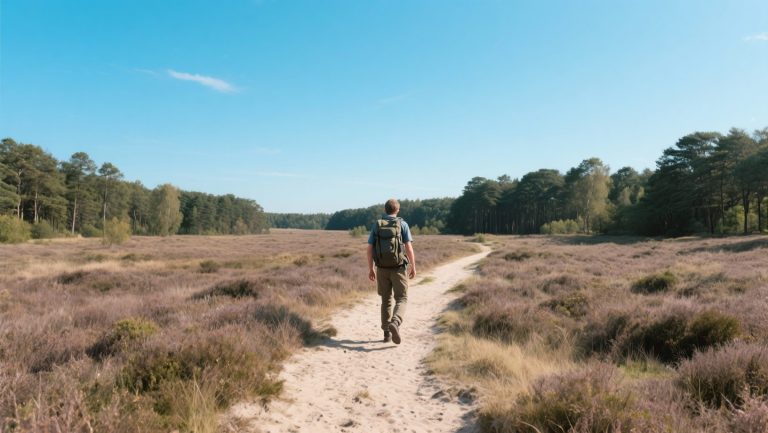
- Sallandse Heuvelrug: Between the stations of Nijverdal and Holten lies an expansive hilly area with forest and heathland. From Nijverdal station, it’s just a short walk to the visitor centre.
Hiking areas in Europe
The European rail network takes you to well-known hiking paradises, where regional buses complete the connection to nature.
- Bavarian Alps (Germany): From Munich, take the train (RB55) to Schliersee or Tegernsee. From the station, you can walk straight into the mountains for a challenging hike with lake views.
- Mittelrhein (Germany): The MittelrheinBahn runs from Cologne to Koblenz and stops in picturesque villages like Boppard. Suitable for walks through the wine slopes along the Rhine.
- Black Forest (Germany): Travel by train to Freiburg and explore the region via the Höllentalbahn. This railway line takes you to various starting points for hikes through the dense forests and hills.
- Eifel (Germany): The Eifel is a sparsely populated region that is easily accessible by train. From stations like Kall, you can start stages of, for example, the Escapardenne Trail.
‘ This provides the freedom to cover longer distances and thoroughly explore the surroundings, without logistical worries about a parked car. ’
Suitable for multi-day treks
The combination of train and bus is ideally suited for multi-day hiking trips. Travellers are not bound to a fixed start and end location. Plan a hut-to-hut tour or a route from one place to another. At the end of the trek, you can simply board public transport again. This provides the freedom to cover longer distances and thoroughly explore the surroundings, without logistical worries about a parked car.
Inspired to plan your next trip more consciously and effectively? On the Traveler Tips website, you will find much more practical information about slow travel, train journeys, and popular destinations in Europe. Discover our guides and get ready for your next adventure.
Frequently Asked Questions
To find hiking destinations optimally accessible by train and bus, focus on “slow travel” and use apps like 9292 (NL) or DB Navigator (DE) for real-time public transport information. Many NS (Dutch Railways) walks are specifically designed as station-to-station routes, which is ideal for this purpose. Consider locations such as Veluwezoom, Sallandse Heuvelrug, or Zuid-Kennemerland National Park in the Netherlands. In Europe, the Bavarian Alps, the Mittelrhein, or the Eifel are also excellent options, where regional buses often connect to train services for remote areas.
For planning and booking combined train and bus journeys to hiking areas, platforms such as NS International and Deutsche Bahn (DB) are suitable for booking train tickets. For real-time public transport information in the Netherlands, you can use the 9292 app, while the DB Navigator app is useful for Germany. The Wandel.nl app can assist with hiking maps and weather.
Plan your transfer by opting for longer train journeys and buses for local connections, possibly supplemented with an OV-fiets (public transport bicycle) for flexibility. Use apps such as 9292 (NL) or DB Navigator (DE) for real-time public transport information to ensure efficiency. For comfort with luggage, it is advisable to travel light, as you can walk into nature directly from stations. Consider travelling outside the high season for more peace and lower costs, contributing to a more comfortable travel experience.
For longer train and bus journeys in popular hiking regions, there are specific passes that can be advantageous. An example of this is the Deutschland-Ticket, which allows unlimited travel in Germany with regional trains and buses for €58 per month. This ticket is ideal for accessing areas such as the Bavarian Alps, the Mittelrhein, and the Eifel. Although no other specific passes are mentioned, the flexibility of public transport networks and the focus on slow travel generally make these types of journeys more sustainable and affordable.
Plan your travel days by combining trains for long distances and buses for local connections, possibly supplemented with an OV-fiets for flexibility. Use apps such as 9292 (NL) or DB Navigator (DE) for real-time public transport information and choose NS (Dutch Railways) walks for station-to-station routes. Travel outside the high season for more peace and lower costs, and support local businesses. Carefully plan station-to-station routes to ensure seamless transfers and ample time for hiking enjoyment.