 NL
NL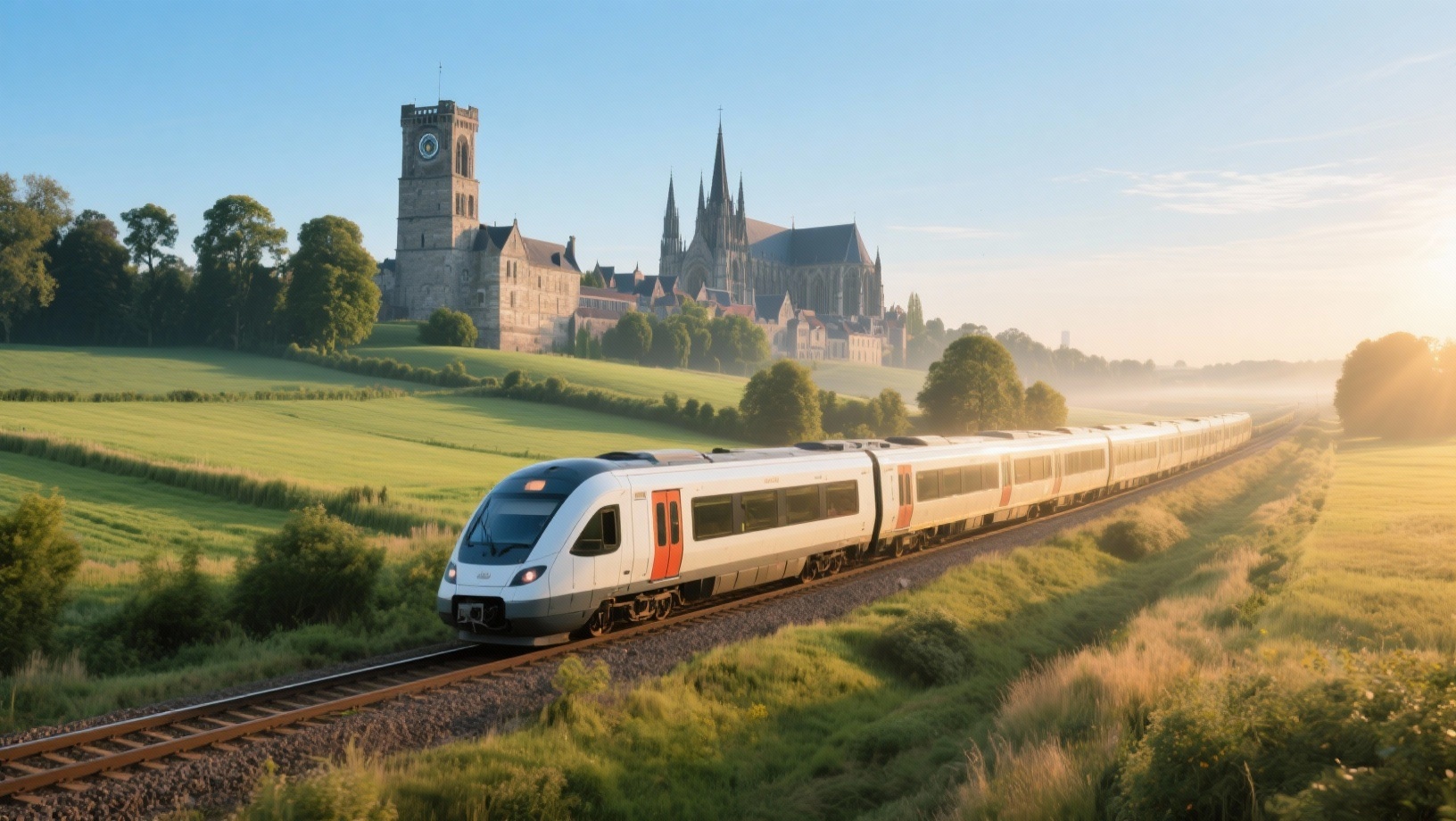
A tour of Belgium by train is the most efficient way to discover several cities in a short time. The dense rail network and short distances make the country ideal for a trip where you can combine the atmosphere of various Flemish gems without a car. A city break by train through Belgium is not only a sustainable choice, but also a smart way to travel in comfort. Find out how to plan this trip in practical terms and get the most out of your city break.
The advantages of a train tour through Belgium
Travelling by train through Belgium offers a relaxing experience. The stations are almost always in the heart of the city, so you can start exploring straight away. You avoid traffic congestion and parking problems. The Belgian rail network is excellent and the connections between the major cities are frequent. This gives you the flexibility to adjust your itinerary on the spot. You travel from one historic centre to another while enjoying the passing landscape.
‘ Bruges, also known as the “Venice of the North”, is world-famous for its historic centre. ’
How to plan a 3-day train tour
A long weekend is perfect for an introduction to the best-known Flemish cities. With good planning you can make optimal use of your time. Below you will find a sample itinerary that you can use as a basis for your own trip.
Day 1: start in Antwerp
Your journey begins at the impressive Antwerpen-Centraal station, also known as the “railway cathedral”. From here you can walk straight into the city centre. Antwerp is a city of fashion, art and history. Visit the Rubens House, explore the charming streets around the Grote Markt and the Cathedral of Our Lady. For shopping enthusiasts, the Meir is the main shopping street. An overnight stay in Antwerp gives you time to experience the city in the evening as well.
Day 2: historic Ghent and atmospheric Bruges
After breakfast, take the train to Ghent. The journey takes about an hour. Gent-Sint-Pieters station is located slightly outside the centre, but a short tram ride or a walk of about twenty minutes will take you to the heart of the city. Ghent is a city with a slightly rough edge and a rich past. Admire the Gravensteen castle, take a walk along the Graslei and Korenlei and climb the Belfry for a beautiful view.
In the afternoon you continue to Bruges, a short train ride of about 30 minutes. Check in at your accommodation and in the evening explore the illuminated canals and medieval streets.
Day 3: Bruges and the return journey via Leuven
Bruges, also known as the “Venice of the North”, is world-famous for its historic centre. Start your day with a boat trip on the canals, taste chocolate at one of the many artisan chocolatiers and enjoy the atmosphere on the Markt. Depending on your itinerary, you might consider making a stop in Leuven on your way back. From Bruges, with a change of trains in Brussels, you can reach this vibrant student city in about an hour and a half. Visit the Oude Markt, known as the “longest bar in Europe”, and the town hall. From Leuven there are good connections back to the Netherlands.
The best order for your city break
For travellers from the Netherlands, the most logical and efficient route is to start in Antwerp. This city is directly and quickly accessible by Intercity or Eurocity. From there, the ideal order is Antwerp – Ghent – Bruges. The train connections on this route are direct and the journey times short.
- Antwerp to Ghent: A direct journey of about 55 minutes.
- Ghent to Bruges: A short, direct connection of around 30 minutes.
- Bruges to the Netherlands: You can travel directly back or plan an extra stop, for example in Leuven or Mechelen.
This route follows a logical line through Flanders, allowing you to minimise travel time and have more time left for the cities themselves. Planning overnight stays in cities such as Antwerp, Ghent and Bruges is an option, but you can also choose to make day trips from a single base.
Travelling with an Interrail pass in Belgium
For a multi-day train journey through Belgium, an Interrail pass can be an interesting option. With an Interrail Benelux Pass or a Global Pass you can travel unlimited on the trains of SNCB, the Belgian national railway company. For domestic Intercity (IC) trains between the Flemish cities you do not need to reserve a seat. This offers a great deal of freedom and flexibility. You can decide on the day itself which train you take.
Whether an Interrail pass is cheaper than individual tickets depends on your travel plans. Compare the cost of the pass with the price of single tickets. SNCB often offers good-value weekend return tickets or other discounted tickets. Plan your route and compare prices to make the best choice for your trip.
This guide to a tour of Belgium by train is just a starting point. On the Traveler Tips website you will find more practical information about train travel, detailed city guides and tips for planning your ideal holiday. Discover more and turn your next trip into an unforgettable experience.
Frequently asked questions
An efficient and rewarding train tour through Belgium could start in Antwerp, followed by Ghent, Bruges, Leuven and Mechelen. Plan around 1.5 to 2 days each for Antwerp, Ghent and Bruges to experience the highlights, including canals and Christmas markets. Leuven and Mechelen are ideal for day trips, where you can explore the student atmosphere and historic centres. Use the frequent train connections to travel flexibly between the cities and make use of a “Flanders ticket” for unlimited regional travel.
For a tour of Belgium with multiple stops, off-peak tickets from the SNCB/B-Trein app are more affordable. Interrail pass holders travel free of charge in Belgium without reservation for IC/EC. A “Flanders ticket” for unlimited regional travel (€15-30/day) is perfect for hops between Ghent, Bruges and Leuven. Booking early via NS International can also yield savings on return journeys.
To travel comfortably with luggage in Belgium, even though specific tips are lacking, the frequent train connections and extensive rail network are an advantage. For transfers and finding the right platforms, it is advisable to download the SNCB/B-Trein app for live travel information. Major hubs such as Brussels-South or Antwerpen-Centraal are ideal for changing trains. Trains generally run every hour, which makes planning transfers easier.
For a train journey through Belgium you can integrate authentic experiences by using a Flanders ticket for unlimited travel between cities such as Ghent, Bruges and Leuven, known for their walkable centres and affordable cafés. Consider a visit to the Oude Markt in Leuven for the “longest bar”, or explore less touristy, authentic Ghent with its canals and Christmas markets. Also take a short train ride from Bruges to Ostend for beach walks and saunas. Don’t forget to admire Antwerpen-Centraal, a “railway cathedral”, as an architectural highlight on your route.
For planning and navigation during a train tour through Belgium, the SNCB/B-Trein app is essential for live departure times and off-peak tickets. For unlimited regional travel between cities such as Ghent, Bruges and Leuven, a “Flanders ticket” is recommended. Booking early via NS International can save money on return journeys. Luxembourg also offers free public transport, including train travel.