 NL
NL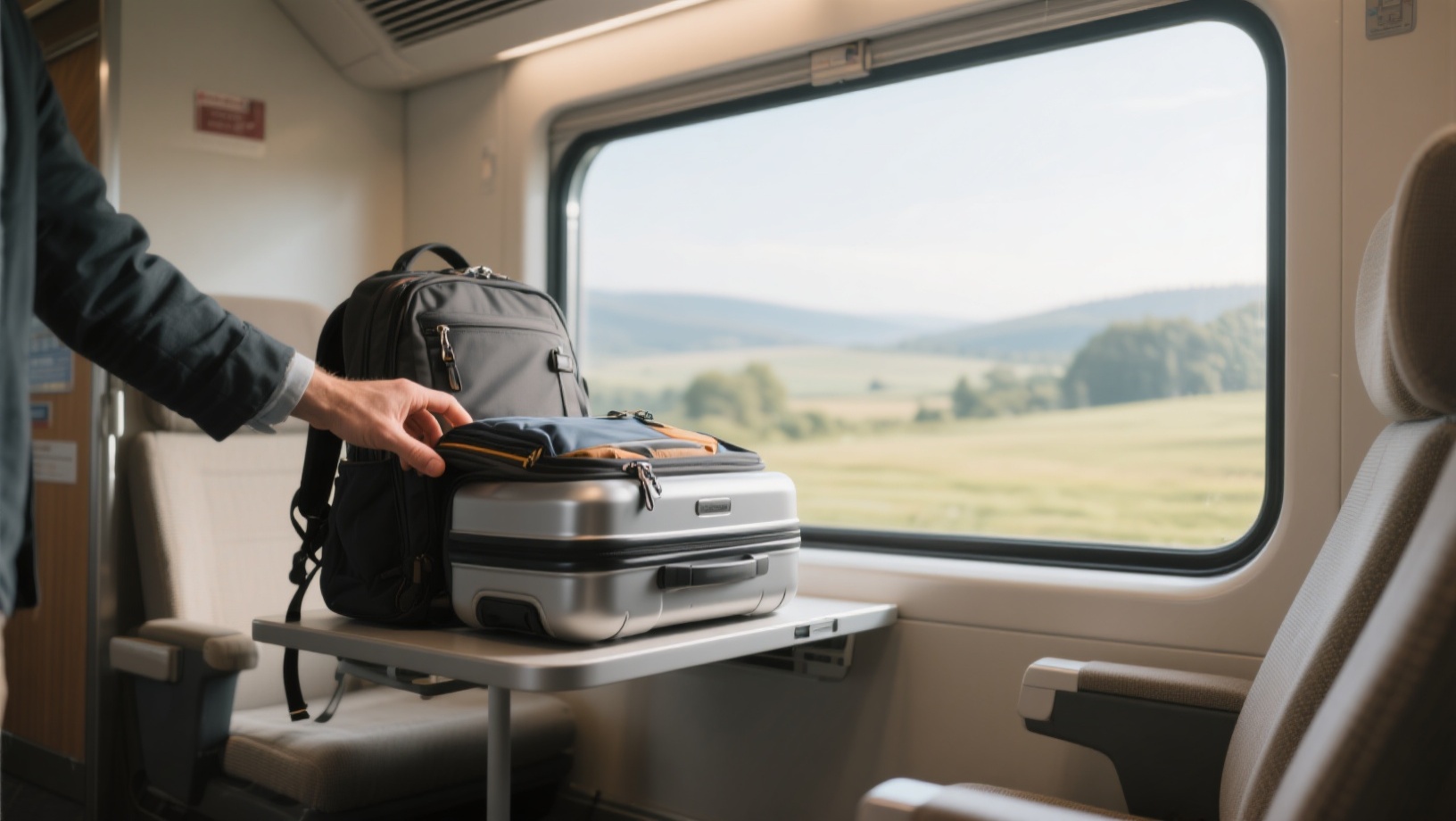
Those who travel through Europe by train tend to take more with them than air passengers and keep their luggage within easy reach along the way. The key to a comfortable rail tour lies in choosing compact luggage and using a well thought-out packing strategy. In addition, check the rules for each leg of your journey well in advance. That way, connections remain manageable and you make optimal use of the luggage space. You also avoid stress at busy stations.
Luggage rules differ per rail operator
European trains do not apply uniform luggage rules. What applies with NS International differs from the conditions at Deutsche Bahn or Trenitalia. Most operators do not impose weight limits, but they do set requirements for dimensions. You may take luggage with you as long as you can carry it yourself and it does not inconvenience other passengers.
With NS International you may take a maximum of 2 pieces of regular luggage (75x53x30 cm) and 1 piece of hand luggage. TGV in France uses similar rules with 2 regular pieces or 1 non-standard size up to 85 cm. Deutsche Bahn is more flexible: you may take 1 large suitcase or backpack without a fixed maximum size, as long as you can lift it yourself. On night trains such as Nightjet by ÖBB, stricter rules often apply due to the more limited space in sleeping compartments.
Always check the luggage rules before departure via the operator’s mobile app or website. Rules may change, and on cross-border routes there are sometimes additional customs checks.
‘ Avoid hard suitcases at stations without lifts, as they are difficult to manoeuvre on stairs. ’
How to pack smartly for multiple changes
On tours with frequent changes, mobility is more important than volume. Aim for a maximum of 3 pieces of luggage in total: 1 trolley or backpack of 55 to 75 cm, 1 small backpack and possibly 1 extra bag for souvenirs. Keep the total weight under 25 kg and test whether you can lift everything into and out of the train on your own within 2 minutes.
- Use a trolley with multiple compartments for quick access
- Pack clothing in compression bags to save space
- Choose a soft bag instead of a hard suitcase for more flexibility
- Carry essentials such as documents and valuables in your small backpack
- For trips of 7 to 14 days, a backpack of 40 to 50 litres is sufficient
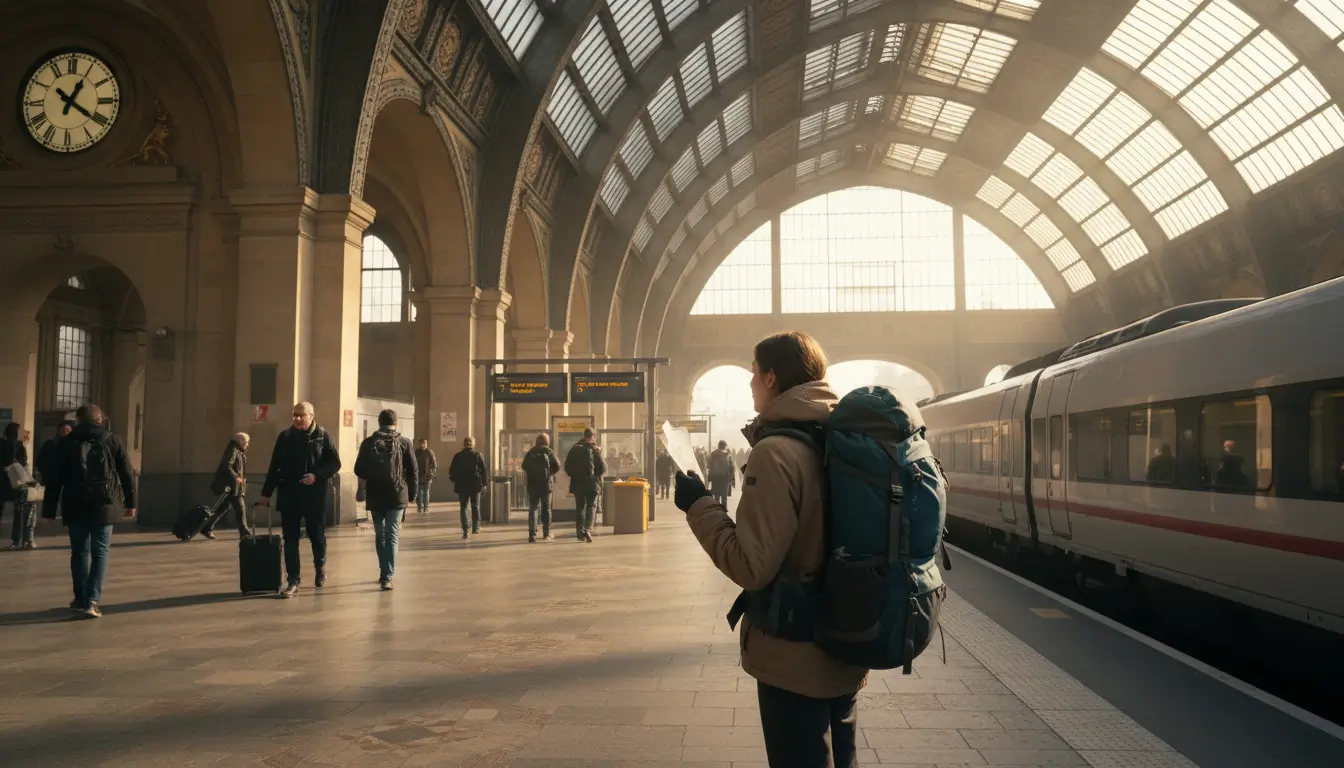
Pack your luggage in modules, so you can access each category of items straight away. Keep frequently used items at the top or in a separate compartment. Avoid hard suitcases at stations without lifts, as they are difficult to manoeuvre on stairs. A wheeled suitcase with four wheels turns smoothly on level platforms, but at busy stations such as Paris Gare du Nord a backpack is more convenient.
Where to store your luggage during stopovers
Many European stations offer luggage lockers or staffed left-luggage counters. You will mainly find these facilities at larger hubs such as Amsterdam Centraal and München Hauptbahnhof. Costs vary from 5 to 12 euros per day, depending on suitcase size. Some stations have digital lockers with PIN code or NFC access.
Where possible, book luggage storage online if you want to explore the city during a stopover. Smaller stations often do not have storage facilities, so plan this in advance. On night trains some compartments offer luggage racks with locks, but always bring your own padlock for extra security.
Alternative: luggage transport services
For longer tours with heavy luggage there is the option of sending suitcases on ahead to your next destination. Commercial luggage transport services such as Luggage Forward move luggage between hotels. This costs between 50 and 150 euros per suitcase, depending on distance and weight. The service is particularly useful on routes with many changes or for trips with sports equipment.
Allow for delivery times of 2 to 5 days and take out insurance for valuables. This option offers freedom during the journey, but requires forward planning and comes with additional costs.
Checks prevent problems on the way
Luggage rules change without notice, especially on cross-border routes. Use apps such as NS International or DB Navigator for up-to-date information. Ideally, search in the local language on the operator’s official website, as translated pages sometimes contain outdated information.
Label every bag with your name, phone number and a copy of your passport. Insurance policies often cover luggage loss up to 250 euros, but report any loss immediately to the lost property department of the rail operator. Travel outside peak hours if you are taking a lot of luggage, as the luggage racks are emptier and you have more space.
- Arrive 30 to 45 minutes before departure on busy routes
- Ask about luggage options when booking, especially on night trains
- Book first class for more spacious luggage racks on longer routes
- Avoid peak times between 7:00 and 9:00 and between 17:00 and 19:00
‘ Trains give you the freedom to take more than on flights, but still limit yourself to what you actually use. ’
Practical tips for the journey
Always place luggage in the designated racks above your seat, at the ends of the carriage or under seats. Never leave suitcases in the aisles or on seats. When changing platforms, a light bag is easier to handle than a heavy trolley. Practise lifting your luggage at home to check whether you can manage everything on your own.
Take reusable bags for daily shopping and make use of laundry facilities at stations or in hotels to reduce the amount of clothing you need. For low-season travel you can manage with fewer clothes if you choose layers you can mix and match. Trains give you the freedom to take more than on flights, but still limit your luggage to what you actually use.
On Traveler Tips you will find more information about train travel across Europe, from route planning to ticket choice and overnight stays on night trains. Discover how to prepare your tour even better.
Frequently asked questions
Luggage rules on European trains are generous: you can usually take several pieces as long as you can carry them yourself and they are not larger than roughly 85 cm per side. Luggage goes in racks above the seats, in larger racks by the doors or under the seat; never in the aisle or on a seat. This means that compact, soft suitcases or backpacks (one large + one daypack) are more practical than large hard suitcases. Base your packing strategy on mobility when changing trains: a maximum of 2–3 pieces, with a total weight you can lift into and out of the train in one go.
Use at most one medium-sized backpack or soft suitcase and one small daypack, and make sure you can comfortably lift everything yourself when using stairs and during short changes. Pack in modules using compression bags per category (tops, underwear, toiletries) so you don’t have to unpack your whole bag every time. Put heavy items at the bottom and frequently used ones (travel documents, snacks, jumper) in your daypack, which you keep within reach on the train. At home, test a “train simulation”: with all your luggage, go up and down a flight of stairs and through a doorway within 2 minutes; anything that gets in the way stays at home.
For a rail tour, a medium-sized backpack is usually the most practical. You have both hands free for boarding, stairs, quick sprints when connections are tight and busy platforms. A soft backpack fits more easily into luggage racks and under seats than a hard suitcase. Trolleys work fine at large, level stations, but are less convenient on stairs, in narrow corridors and on older platforms.
Use one large suitcase or backpack and one small daypack, and test at home whether you can quickly lift everything into and out of the train on your own. Work with packing cubes or compartments (clothing, toiletries, electronics) so that at each change you only need to grab the pouch you need. Always keep important documents, money and electronics in your daypack on your person, and label all your luggage with your name and telephone number. Put suitcases in the designated racks and, in busy trains, keep your luggage within sight by sitting as close by as possible.
Use a fixed “train kit” of essentials in a small daypack (passport, ticket/phone + charger, wallet, medication, water bottle, jumper, earphones) that always stays with you or under your seat. Pack the rest in modules in a larger suitcase/backpack using packing cubes or compression bags, so you rarely need to open your main luggage. At home, test whether you can carry all your luggage on your own in one go and simulate getting on and off within two minutes. Put heavy or wheeled luggage in the door or end racks and keep only what you really need during the journey within arm’s reach.