 NL
NL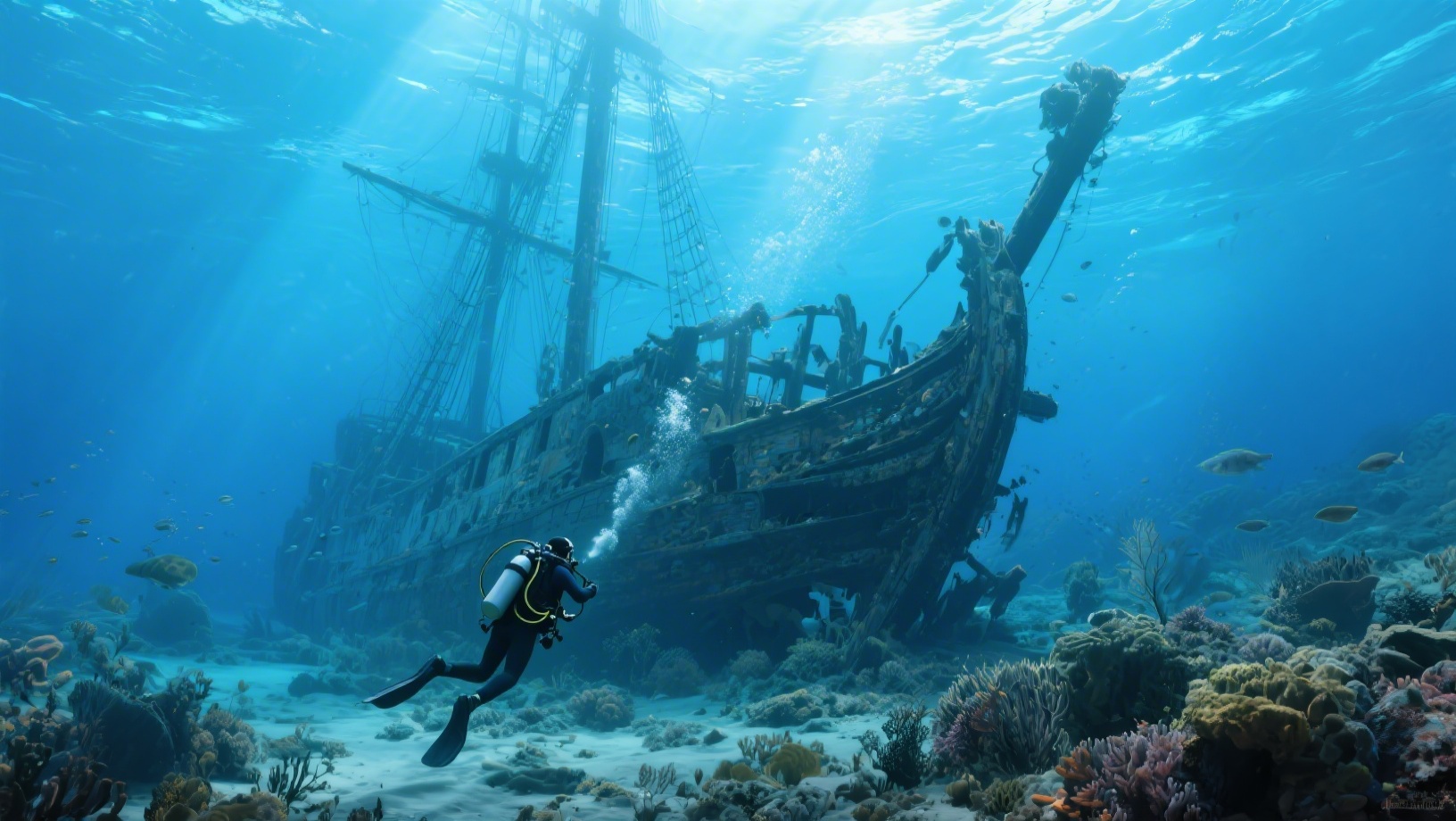
Wreck diving combines history with technical diving skills and gives you access to impressive underwater structures. But diving to shipwrecks is not an ordinary coral dive: it requires specific preparation, respect for safety and a realistic assessment of your own abilities. Discover what you need to know before you descend to these fascinating dive sites.
Why wreck diving requires different skills
Shipwrecks differ fundamentally from coral reefs. Most wrecks are made of metal that has lain for years in salt water. This creates razor-sharp edges that can damage your wetsuit and gloves. In addition, wrecks often lie at unnatural angles on the seabed, which can quickly lead to disorientation.
Entering a wreck involves considerable risks. You cannot swim straight to the surface if something goes wrong. Cables, obstacles and confined spaces create potential hazards. Most diving associations, including PADI (Professional Association of Diving Instructors, an international diving organisation), therefore strongly discourage penetration for unprepared divers.
‘ Only after specialist training combined with appropriate equipment should you even consider penetration. ’
Which certification you need
You do not always need a special certification for wreck diving, as long as you stick to the depth limits of your diving level. With an Open Water certificate you may dive to a depth of 18 metres. The Advanced Open Water certificate allows you to go to a depth of 30 metres.
From a safety perspective, however, an Advanced certificate is recommended. Two specialities are particularly relevant for wreck diving:
- Deep Diver – teaches you to dive safely to a maximum of 40 metres, making deeper wrecks accessible
- Wreck Diver – teaches you how to plan a wreck dive safely, study the wreck and, after obtaining your certification, even explore certain interior sections of the wreck
Only after specialist training combined with appropriate equipment should you even consider penetration. This always requires extensive risk analysis.
Perfect basic skills prevent problems
Perfect trim is essential before you enter a wreck. The PADI Peak Performance Buoyancy speciality offers a good start, but practice in the water is indispensable afterwards.
Wrecks often contain a lot of silt that can disturb visibility within seconds. Controlled finning techniques such as the frog kick are therefore essential. Move slowly and calmly to minimise disturbance and protect yourself from sharp objects.
When passing through openings, rotate 90 degrees. This protects your first stage from damage, which is important because wrecks have sharp edges.
Always dive with a buddy
Always dive with a regular dive partner (in diving terms: your buddy). This significantly increases your chances of getting help in an emergency. Carry out a buddy check before every dive: make sure both divers have their equipment set up correctly, the air turned on and the cylinders full.
Listen carefully to the dive briefing and follow your dive guide’s plan. The guide knows the site, understands local conditions and knows where interesting marine life can be found.
‘ Becoming complacent leads to accidents. ’
Alertness on every dive
Even if you have done a route a hundred times, you must stay fresh and alert on every dive. Becoming complacent leads to accidents. Stay prepared and apply your knowledge anew on every dive.
Check your pressure gauge and dive computer regularly so that you always know how much air you have and what depth you are at. Be careful with trim: current, sharp objects, nets and fishing lines all pose potential problems on wrecks.
Do not touch the wreck. Just as with coral, you must respect wrecks and avoid damaging them.
Disorientation caused by unusual wreck positions
Shipwrecks rarely lie upright on the seabed. Their sloping or even upside-down position can be confusing. This strange orientation can even cause some divers physical discomfort or nausea. The cause lies in the unusual posture your body is in as you “hang” inside the wreck.
Pay extra attention to your orientation and, if in doubt, rely on your compass and your buddy. Wrecks with many corridors and compartments increase the risk of becoming lost.
Fascinating wreck sites worldwide
Your choice of wrecks depends on your certification and depth limit:
- Up to 18 metres – suitable for Open Water divers
- 18–30 metres – requires Advanced Open Water certification
- 30 metres and deeper – requires Deep Diver speciality or higher
Popular wreck diving destinations can be found in Egypt, Vanuatu and Palau. Abu Nuhas in the Red Sea is home to seven wrecks, four of which are accessible to recreational divers. These sites require at least an Advanced certificate and offer rich historical experiences.
Many popular wrecks are regularly monitored for stability by local authorities. This helps ensure that wrecks remain safely accessible for well-prepared divers.
‘ Knowing the historical context makes your dive more meaningful. ’
Historical background enriches your dive
Famous wrecks often have fascinating stories. Some are warships that sank during battles; others are cargo vessels that met their end through storms or navigational errors. Many dive guides share these stories during the briefing.
Knowing the historical context makes your dive more meaningful. You are not just looking at a rusty structure, but understanding the voyage, the crew and the events that led to the sinking.
Realistic preparation makes the difference
A certificate alone is not enough. If something goes wrong, you need solid skills that are ingrained in your behaviour. Dive as much as possible to perfect your techniques and build your confidence.
Put your ego aside for the sake of safety. If you are unsure about your abilities, opt for an external wreck exploration rather than penetration. The outside of wrecks also offers spectacular sights and marine life.
Start with shallow, accessible wrecks before visiting deeper sites. Build up your experience gradually and take the time to master each skill.
Find out more about planning a diving holiday
Wreck diving offers a unique combination of history and underwater beauty. Through preparation, respect for safety protocols and a realistic self-assessment, you can experience these special dive destinations safely and in a meaningful way.
On the Traveler Tips website you will find additional information about planning dive trips, choosing dive destinations and practical tips for travelling to dive sites worldwide. Find out more and plan your next diving experience with confidence.
Frequently asked questions
For safe and comfortable wreck diving you need at least an Open Water certification (up to 18 m) and preferably Advanced Open Water with Deep Diver and Wreck Diver specialities, plus well-mastered buoyancy, finning and buddy skills. Choose wrecks that match your certification depth (up to 18 m, 18–30 m or deeper with a Deep Diver certification) and avoid penetration without specific training and equipment. Plan your itinerary around dive regions with multiple wrecks at similar depths, so you can build up experience over a few days without having to travel long distances each time. Book in advance with recognised dive centres, coordinate your dive days with rest days and flights, and take local conditions such as current and visibility into account.
The most impressive and relatively easily accessible wrecks for car, train or road trips can be found, among others, in the Red Sea (for example Abu Nuhas), around popular Mediterranean destinations and in well-known dive regions with tourist infrastructure. Choose locations where dive centres are experienced with wrecks and where recreational depths (up to 30–40 metres) are standard. Maximise the experience by obtaining at least an Advanced Open Water certification beforehand (and preferably a wreck speciality), refining your trim and finning, and always diving with a local guide. Take the dive briefing seriously, follow the planned route, do not touch the wreck and stay outside if you are unsure about penetration.
The costs for wreck diving are usually around €80–€150 per diving day (including boat trip, air and guide), with extras for equipment hire and any wreck speciality courses. Compare packages in advance (multiple dives or multi-day trips) at well-reviewed dive schools, as these are often better value without sacrificing quality. Reserve a specific safety margin in your travel budget for dive insurance, medical examination and high-quality equipment (such as a well-maintained regulator and computer). Never choose the cheapest provider on price alone: always check certifications, group size, equipment maintenance and safety procedures before you book.
Choose a dive centre that is affiliated with a recognised organisation (such as PADI) and check whether they have experience with the specific wreck and with groups at your certification level (Open Water, Advanced, Deep, Wreck). Look for small group sizes, clear safety procedures (buddy checks, briefing, emergency plan) and well-maintained equipment. Ask about the maximum depth, current conditions and whether penetration of the wreck only takes place with appropriate training and equipment. Finally, coordinate their departure times and dive planning with your travel schedule, so there is room for rest, repeat dives and any no-fly time.