NL
NL
From the age of 10, children can obtain a full diving certificate and safely explore the underwater world. Junior diving programmes from the Professional Association of Diving Instructors (PADI) make diving accessible with adjusted depth limits, restricted dive duration and professional supervision. Family-friendly destinations offer structured programmes where safety comes first and children can progress at their own pace. What is involved in a diving holiday with the family?
From what age can your child start diving?
There is no official age limit for snorkelling. It is an excellent preparation, allowing children to get used to the water, the mask and breathing through a snorkel. You can already practise this at home in the swimming pool or even in the bath.
For structured diving programmes, strict age requirements apply. From the age of 6, children can take part in introductory programmes that allow them to experience the underwater world under supervision. From the age of 10, children can follow a full Open Water course and obtain their first diving certificate.
The restrictions differ per age category. Children aged 10–11 are only allowed to dive under the supervision of a certified PADI Professional and the maximum dive depth is 12 metres. From 12 up to 15 years, children may also dive with their parent or guardian and the maximum depth is 18 metres.
‘ Children should always be allowed to stop if they are not enjoying it, without any pressure or expectations. ’
How safe are diving holidays for children?
At a good dive school, diving is a safe activity. Instructors who work with children have followed special training and know how to put young divers at ease. The training follows a gradual, step-by-step process.
Children start by practising with a mask in the swimming pool. This is followed by practice with a snorkel in shallow water. Only once your child feels completely safe do they move on to the next phase. Children should always be allowed to stop if they are not enjoying it, without any pressure or expectations.
Professional dive schools apply strict safety protocols. They use well-maintained equipment, limit group sizes and always give the first lessons in the swimming pool or calm bays without currents. Supervision in shallow water continues until the child is ready for the next step.
What training programmes are there for children?
The PADI (Professional Association of Diving Instructors) Open Water Diver course is the most widely used programme worldwide. In this course, children learn the basics of safe diving and how to handle diving equipment correctly. The certificate they obtain can be used worldwide.
For families, a family-based approach is recommended. Start with a trial dive so that the family can try diving together first without long-term commitments. If everyone is enthusiastic, you can then all follow the full PADI Open Water Diver course together.
You can go through the theory together via e-learning, but also give children space to work on it independently. This strengthens their self-confidence and makes the learning process more effective. Share the fun and progress with each other during the practical sessions.
Best destinations for family diving
A suitable destination for diving with children has shallow reefs close to the beach, family-friendly resorts and clear, warm water. Variety in marine life keeps children engaged and makes every dive worthwhile.
European destinations
Lanzarote offers both shore and boat dives, with several dive schools operating different start times. This makes it possible to schedule just one or two dives in the morning and spend the rest of the day with the family. The Canary Islands have a stable climate all year round.
Ibiza offers more variety than many travellers expect. In addition to reef dives, there are options for boat dives, wreck dives and cave dives. Combined with a beach holiday, it is attractive for families with children who do not all want to dive.
The Costa Brava in Spain has the Medes Islands off the coast of L’Estartit. This area is known for its rich underwater life and offers a range of accommodation options, from campsites to luxury hotels. The distance from the Netherlands also makes it accessible by car.
Croatia has several diving areas spread along the coast and islands. The island of Brač is suitable for family holidays with slightly older children and teenagers. Besides diving, there are opportunities for mountain biking, rock climbing and kitesurfing.
Destinations outside Europe
Egypt on the Red Sea offers crystal-clear water that is ideal for children learning to dive. Families can admire vibrant corals, tropical fish and sometimes even dolphins. For older children and teenagers there are also wreck dives and night dives available.
Some destinations have all-inclusive resorts with activities and facilities tailored to children. Warm-water destinations with shallow reefs right off the beach are ideal, where you can enter the water with just a few steps and do not need long boat trips.
Liveaboard adventures for families
For a more intense experience, you can book a family-friendly liveaboard trip. These boats take you to different dive sites while you stay on board for several days. This is ideal if you want to see as much marine life as possible and do not want to travel every day.
Popular liveaboard destinations include the Maldives and Indonesia. Do check in advance whether there are age restrictions and specific safety protocols for travelling with children. Not all liveaboards are suitable for young children because of the distance from the coast and the available medical facilities.
‘ It should mainly be about fun and discovery, not about performance. ’
How do you prepare children for diving?
Mental preparation is at least as important as physical preparation. Give children space to get started independently, without pressure or high expectations. It should mainly be about fun and discovery, not about performance.
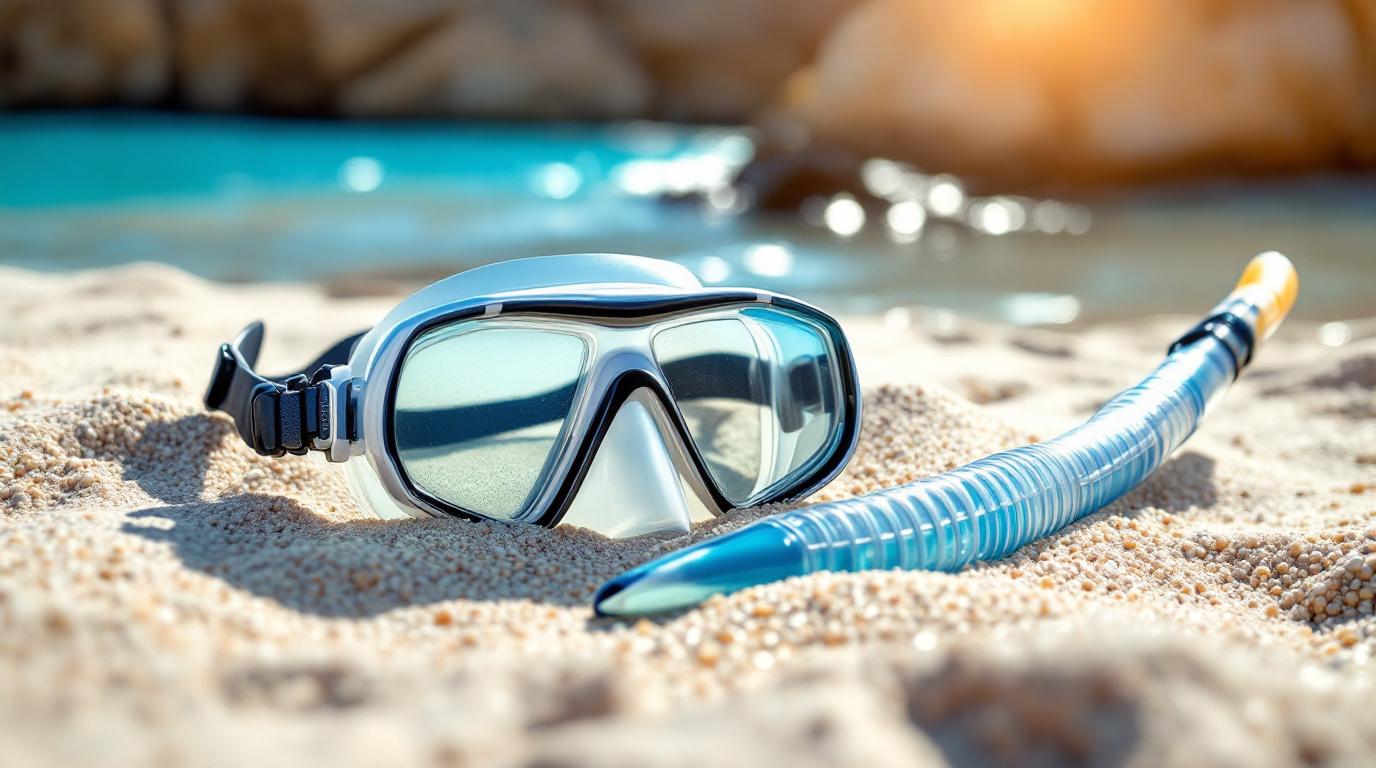
Start at home with exercises to familiarise your child with diving equipment. Practise with a mask in the swimming pool and later with a snorkel. This ensures that everything already feels familiar on holiday and children are not overwhelmed by new sensations.
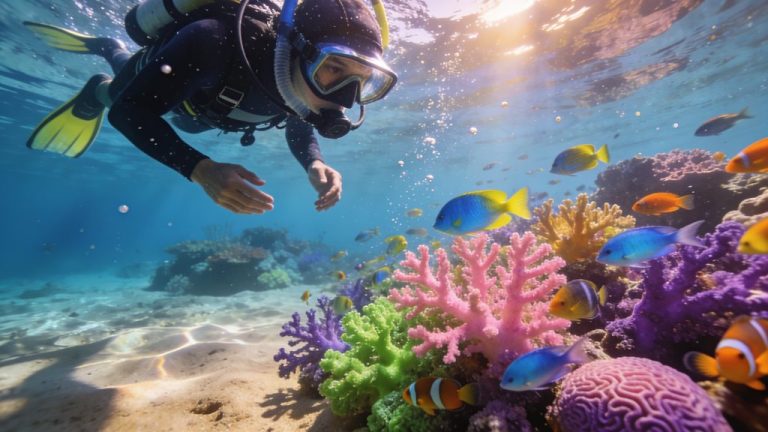
Many children become completely absorbed in what there is to see underwater after a few minutes of practice. They forget their initial tension as soon as they see their first fish or colourful corals. Stay calm and patient, even if it takes some time before your child feels at ease.
Practical planning of diving activities
Most dive schools offer programmes that do not take up the whole day. A typical day starts with two dives in the morning, after which the rest of the day is free for other family activities. This prevents diving from dominating the entire holiday.
Timing is important when combining diving with other activities. Take into account rest periods after diving before flying. The general guideline is to wait at least 18 hours after a single dive and 24 hours after multiple dives or several days of diving.
Choose destinations where non-divers can also enjoy themselves. Not every family member needs to dive to enjoy the holiday. Combine diving activities with time on the beach, excursions or cultural outings so that everyone gets what they want from the trip.
Budget considerations for diving holidays
The costs of a diving holiday consist of several components. Budget for course fees for the PADI Open Water certification, rental of diving equipment and the dives themselves. In Europe, course fees are generally between 300 and 450 euros per person.
Outside Europe, the costs are sometimes lower, but flight costs must be factored in. Egypt is often cheaper for the course and dives themselves, but the total trip works out more expensive than a destination such as Spain or Croatia, which you can reach by car.
Consider whether you want to buy your own equipment or continue to hire it. For a single holiday, hiring is usually more cost-effective. If you plan to dive more often, buying your own mask, snorkel and fins pays off. Heavier equipment such as a wetsuit and buoyancy control device is better hired until you are sure that diving will be a lasting hobby.
‘ An additional diving insurance policy through organisations such as Divers Alert Network (DAN) offers extensive cover for diving-related incidents. ’
Medical considerations and insurance
Before children start a diving course, dive schools often request a medical declaration. This is a questionnaire about medical conditions that affect diving. In case of doubt, a medical examination by a doctor is necessary.
Conditions that require extra attention include asthma, heart problems, diabetes and ear problems. This does not automatically mean that diving is ruled out, but it does mean that medical advice is required. Be honest about your child’s medical history to avoid risks.
Check whether your travel insurance policy covers diving activities. Standard travel insurance sometimes excludes diving or only covers dives to certain depths. An additional diving insurance policy through organisations such as Divers Alert Network (DAN) offers extensive cover for diving-related incidents.
On the Traveler Tips website you can find more information about travelling with children, active holidays and nature destinations. Discover all the options for your next family trip and plan your adventure with reliable, practical tips.
Frequently asked questions
For European diving destinations that are easy to reach by car or train and suitable for families, the Costa Brava (including L’Estartit and the Medes Islands) and the Croatian coast (for example around the island of Brač) are particularly ideal. These regions offer shallow, sheltered diving and snorkelling spots, many family-friendly campsites and hotels, and are easy to combine with a road trip. Lanzarote and Ibiza are also very suitable for children in terms of diving, but in practice usually require a flight rather than travelling by car or train.
Children can take part in introductory diving programmes from about 6 years old, and from 10 years they can follow a full Open Water course and obtain their diving certificate. For family members who do not dive, snorkelling, swimming in the pool or sea and playing or exploring in shallow water are suitable alternatives. In addition, boat trips, kayaking or paddleboarding (SUP), beach walks and other outdoor activities are often easy to combine with dive trips.
First choose a child-friendly diving destination with shallow, calm reefs, short travel times and a resort that also offers non-diving activities for the family. Select a dive school with experience of working with children, flexible start times and morning dives so that afternoons remain free for activities together. Prepare the children at home by snorkelling and practising with mask and snorkel, so they can join in more quickly and confidently on holiday. Always take age and depth limits into account and make sure no one feels obliged to (join in) dive so that fun and comfort remain the top priorities.
Take only essential, well-fitting items with you (for example your own mask, snorkel and dive computer) and hire heavy or bulky items such as cylinders and weights on site to save space and weight. Use sturdy, stackable boxes or wheeled bags, label everything clearly and protect delicate parts with clothing or neoprene. Check in advance with the dive shop which sizes and types of equipment are available and reserve hire gear in good time, especially in high season. Plan your route and timing so that you can load and unload your gear calmly, and prevent wet or salty items from lying in the car or train for long periods by taking a waterproof “wet bag” with you.