NL
NL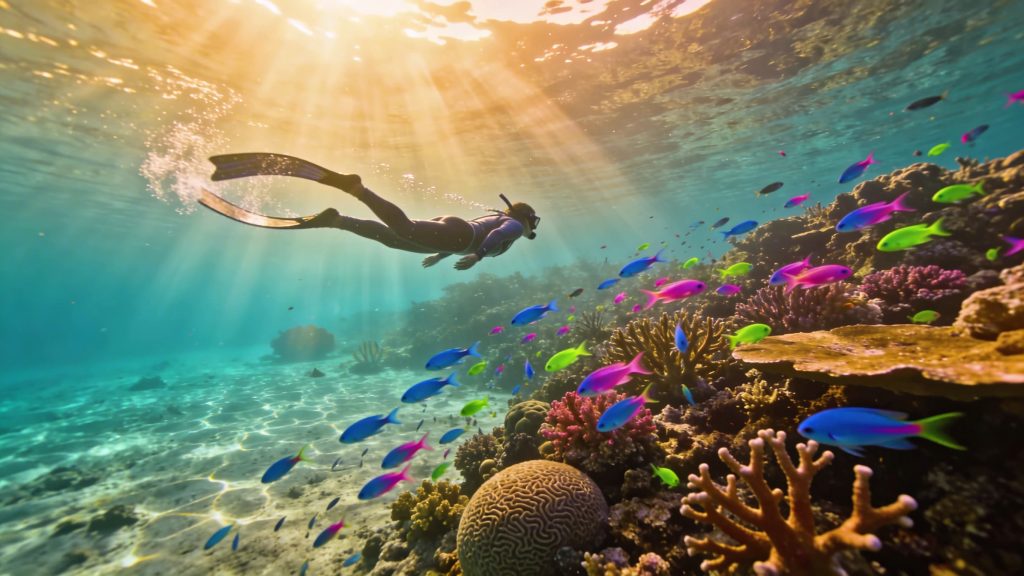
The right season determines whether you get crystal-clear water or murky visibility on your dive trip. Visibility varies by location and month, with dry seasons – periods with little rainfall and calm weather – usually giving crystal-clear water, while the rainy season (the wet season with lots of rainfall) limits your view to just a few metres. When should you book which period for optimal underwater conditions? That depends on your destination and the local seasons. Read on and discover when to travel to which destination for the clearest dive moments of your holiday.
Why the season makes or breaks your dive experience
The season directly affects what you see and experience underwater. In one month the water can offer 30 metres of visibility, while a season later you can barely distinguish your own fins. Three factors play a leading role in these differences.
Drought and rain first determine the clarity of the water. Tropical rainy seasons wash mud and sediment into the sea, reducing visibility to sometimes 5 metres. Dry seasons keep the water calm and clear, ideal for diving holidays with maximum visibility.
Water temperature also varies by season and influences what thickness suit you need. Colder water calls for a dry suit, while warmer water lets you dive comfortably in a shorty or even without exposure protection. In addition, specific temperatures attract certain marine animals, such as whale sharks in warmer months or humpbacks in cooler water.
Currents and waves become stronger in storm or transition seasons. Strong currents make diving more challenging and suitable for advanced divers, while calm seas invite beginners. Always check the peak months of your chosen destination.
‘ Colourful coral reefs, tropical fish and historic shipwrecks make the Red Sea suitable for both beginners and experienced divers. ’
The Red Sea offers clear conditions all year round
Egypt is known for its consistently good diving conditions. You can dive there from January to December, but May to October brings the highest water temperatures and the best visibility. The water then reaches 26 to 28 degrees Celsius, and visibility often extends to 30 metres or more.
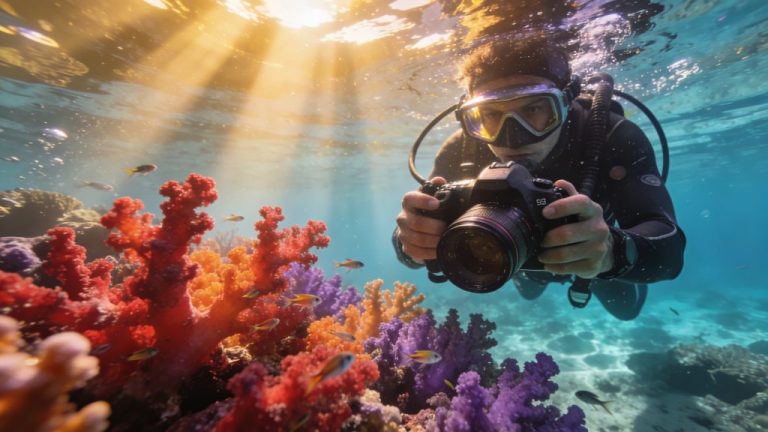
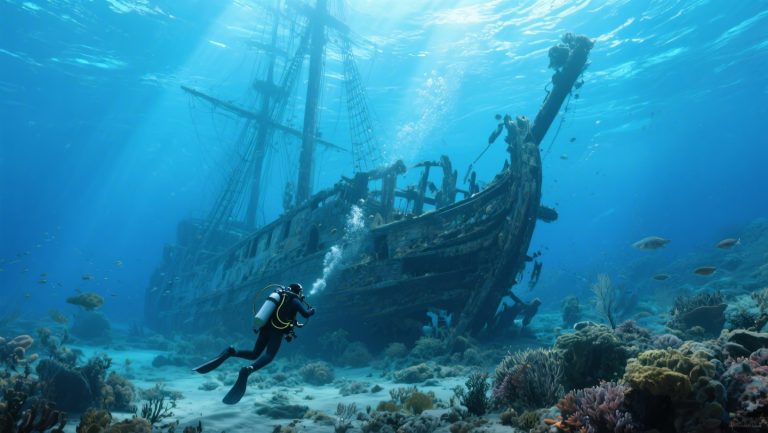
Colourful coral reefs, tropical fish and historic shipwrecks make the Red Sea suitable for both beginners and experienced divers. Popular departure points are Hurghada and Sharm El Sheikh, where you can book day trips or liveaboards – multi-day dive trips where you stay on a boat – for drift dives along the reefs. Avoid Ramadan periods if you want quiet resorts, as local crowds increase then.
The Maldives shine from January to April
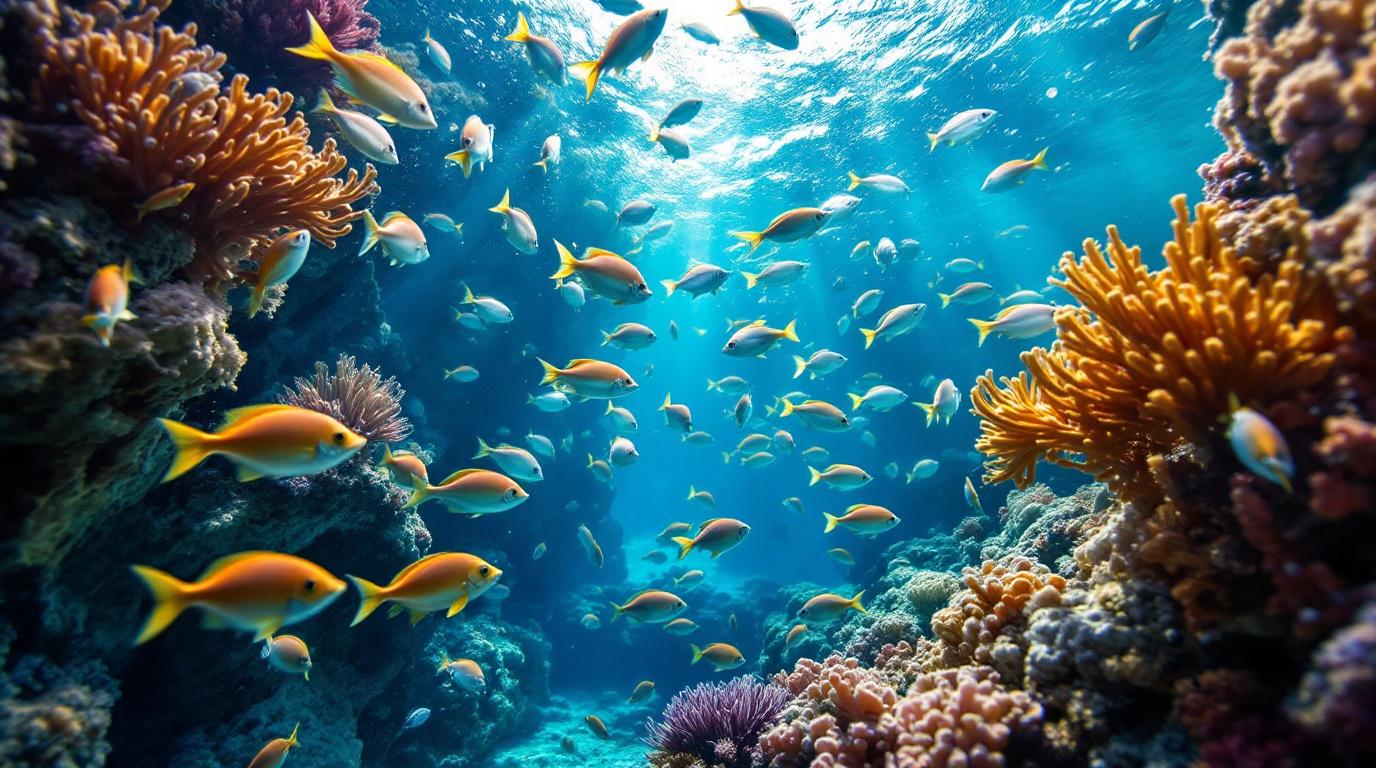
The dry season in the Maldives runs from January to April. These months guarantee calm seas and visibility down to 30 metres. Manta rays and several shark species pass by regularly, while clownfish and parrotfish inhabit the atolls.
Luxury resorts organise day trips to remote atolls where you are almost guaranteed to spot special marine life. Autumn brings calmer currents and fewer tourists, which is ideal if you want to avoid crowds. The water temperature stays above 27 degrees all year, so a thin wetsuit is enough.
Thailand welcomes divers in the dry spring
Koh Tao and other Thai dive spots perform best from January to April. The dry season brings clear water with minimal rain and waves, perfect for shore dives (diving from the coast or beach) and beginner courses. Rays and colourful reefs lie within easy reach of the shore, and PADI centres – recognised dive schools of the international diving organisation Professional Association of Diving Instructors – offer affordable training courses.
Combine your dive trip with island-hopping for extra variety. The months May to October bring the rainy season, which reduces visibility and increases waves. Beginners are better off choosing the dry spring, while advanced divers manage fine in the wetter months if they can handle strong currents.
‘ Warm water and optimal visibility attract manta rays, while wrecks and coral gardens fill the underwater world. ’
Indonesia flourishes in the dry season
April to November is the best period for diving in Indonesia, including the Gili Islands, Bali and Lombok. Warm water and optimal visibility attract manta rays, while wrecks and coral gardens fill the underwater world. Japanese Gardens – a popular shallow dive site near Gili Trawangan – offers calm dives with limited current, suitable for all levels.
Gili Air has stronger currents and suits advanced divers better, while the shallow reefs around Gili Trawangan appeal to beginners. Local operators offer affordable packages and day trips. Only book in the rainy season if you are flexible with weather and visibility.
The Philippines perform from March to June
The period from March to June opens access to top locations such as Tubbataha, Apo Island and Dauin. Liveaboards sail to remote reefs where turtles and sharks swim in perfect conditions. Tubbataha has UNESCO World Heritage status, which means that the area is protected and the number of boats is limited for sustainable dive experiences.
Reefs are in top condition during the dry season, with visibility that often exceeds 25 metres. All levels can find suitable dive spots, from shallow coral gardens to deep drop-offs (steep walls in the reef where the bottom suddenly becomes much deeper). Book early, because liveaboard places fill up quickly in peak months.
The Caribbean has different patterns
Bonaire offers calm seas and whale shark sightings from May to October. Shore diving from your hire car makes the destination accessible, with barracudas and rays close by. The northern side features drop-offs that make drift diving possible.
Belize attracts divers from March to June for the iconic Blue Hole and whale sharks. The sinkhole plunges to a depth of 125 metres and reveals unique stalactites, a UNESCO site that challenges advanced divers. Beginners are better off starting at the surrounding reefs with less depth and current.
Mexico combines dry weather from November to April with cenote diving in fresh water. Cenotes are natural caves or sinkholes in the limestone bedrock, filled with water. The Riviera Maya offers magical light effects in underground caves, while reef dives along the coast add variety. Barracudas and rays swim in both environments, so consider a mix of both styles.
‘ Heart-shaped reefs, turtles and countless fish species fill the UNESCO site. ’
Australia and the Pacific require timing
The Great Barrier Reef performs best from June to October, when winter brings cooler water and fewer jellyfish. Heart-shaped reefs, turtles and countless fish species fill the UNESCO site. Liveaboards head out to remote parts such as Heart Reef, which you can also reach on day trips from the north-east coast.
On Hawaii’s Maui, humpback whales arrive from February to March, while the west coast offers coral reefs all year round. Shark dives and drop-offs at the West Maui Mountains attract adventurers. Palau remains suitable all year, with December to April as the peak period for Jellyfish Lake and Blue Corner, full of manta rays.
Fiji focuses on May to October for shark dives with up to nine species per trip. Clownfish and seahorses are always present, but choose certified operators for safe shark feeds. Iceland’s Silfra Fissure opens from June to September with 100 metres of visibility between tectonic plates – the large plates of the Earth’s crust that press against each other and sometimes form a fissure. This location requires dry suits due to water temperatures between 2 and 4 degrees Celsius.
How to decide the best months for your trip
First, check the dry season at your chosen destination. Dry months usually offer 20 to 40 metres of visibility, while the rainy season can halve this. Also look at the peak months for specific animals such as whale sharks, manta rays or humpbacks if you want to spot them.
Match your dive level to the conditions. Beginners choose shore dives in Thailand or Bonaire during calm months. Advanced divers seek out drift dives in Palau or Fiji, where currents provide challenge. Always check the latest weather forecasts and sea conditions before you book.
Budget also plays a role. Dry seasons come with higher prices due to increased demand. Shoulder seasons just before or after the peak often offer deals with still very good diving conditions. Flexible travel dates help you cut costs without compromising much on quality.
Preparation ensures optimal dive experiences
Choose PADI- or SSI-certified dive centres for reliable guidance and safe equipment. SSI (Scuba Schools International) is, like PADI, an international diving organisation that certifies courses and instructors. Bring your own gear if you want to guarantee comfort and fit, or hire locally if you prefer to travel light. Check whether your insurance covers diving, especially at deeper or more challenging locations.
Plan your dives around protected areas such as UNESCO sites, which follow sustainable management and protect coral. Never touch coral and keep your distance from marine animals to preserve ecosystems. Book liveaboards early in peak months to avoid disappointment.
Align your expectations with the season. Dry months offer predictable conditions, but wet seasons can bring surprises with unique wildlife sightings. Read the experiences of other divers online and ask local operators for up-to-date information on visibility and currents.
‘ Explore the website and get the most out of your next diving adventure. ’
Find more diving tips on Traveler Tips
On the Traveler Tips website you will find extensive information on dive destinations, practical travel preparation and routes that combine diving with other activities. Discover more articles on when to go where, what equipment you need and how to plan your trip optimally. Explore the website and get the most out of your next diving adventure.
Frequently asked questions
The most optimal diving conditions with at the same time a pleasant temperature above water are usually found in the local dry season. In many tropical destinations this roughly means: our winter and early spring (January–April) or the period just after (April–June), when the water is clear and it is warm above water but not yet extremely hot or rainy. For a road trip or train journey around the Mediterranean and Red Sea, late spring and early autumn are ideal (around May–June and September–October), because you then have good sea conditions and mild to warm temperatures on land.
Yes, there are periods when you have a greater chance of seeing special underwater life. These often coincide with the local dry season, because the water is clearer then and marine life is more visibly active. In addition, there are specific “peak months” per destination, for example for whale sharks (Belize March–June, Bonaire May–October) or humpbacks (Hawaii February–March). It is therefore worth checking per region when migrations, spawning season or seasonal currents occur.
Choose the ‘shoulder season’: just before or after the official high season, when the weather and visibility are often still excellent but the number of divers is noticeably lower. Avoid school holidays, national holidays and local festival periods, as dive centres then experience peak crowds. Focus on destinations with a long, stable dry season (e.g. Red Sea, Indonesia, Bonaire), so that you still have good visibility outside the busiest months. Plan to dive during weekdays and early in the day, when boats and popular sites are at their quietest.
The so-called “shoulder seasons” offer the best balance between stable weather, clear water and lower prices. For many tropical destinations these fall around April–May and September–November, just outside the busy high season but still in (or close to) the dry season. In the Red Sea, May and October are ideal, while in the Maldives March and April often give top conditions without the very highest rates. Always check locally per destination when the rainy season starts and ends in order to plan precisely.
The best diving season often also determines the weather (dry or rainy season), which in turn affects road conditions, boat connections and the accessibility of other sights along your route. In the dry season, roads and day trips to, for example, national parks, beaches or islands are usually better and more frequently available, but it is busier and more expensive. Plan your route so that the main dive spots fall in their top season and fill the rest of the trip with highlights that are not season-dependent. In shoulder seasons you can sometimes still have good diving conditions and, at the same time, more peace and flexibility to visit other places.