 NL
NL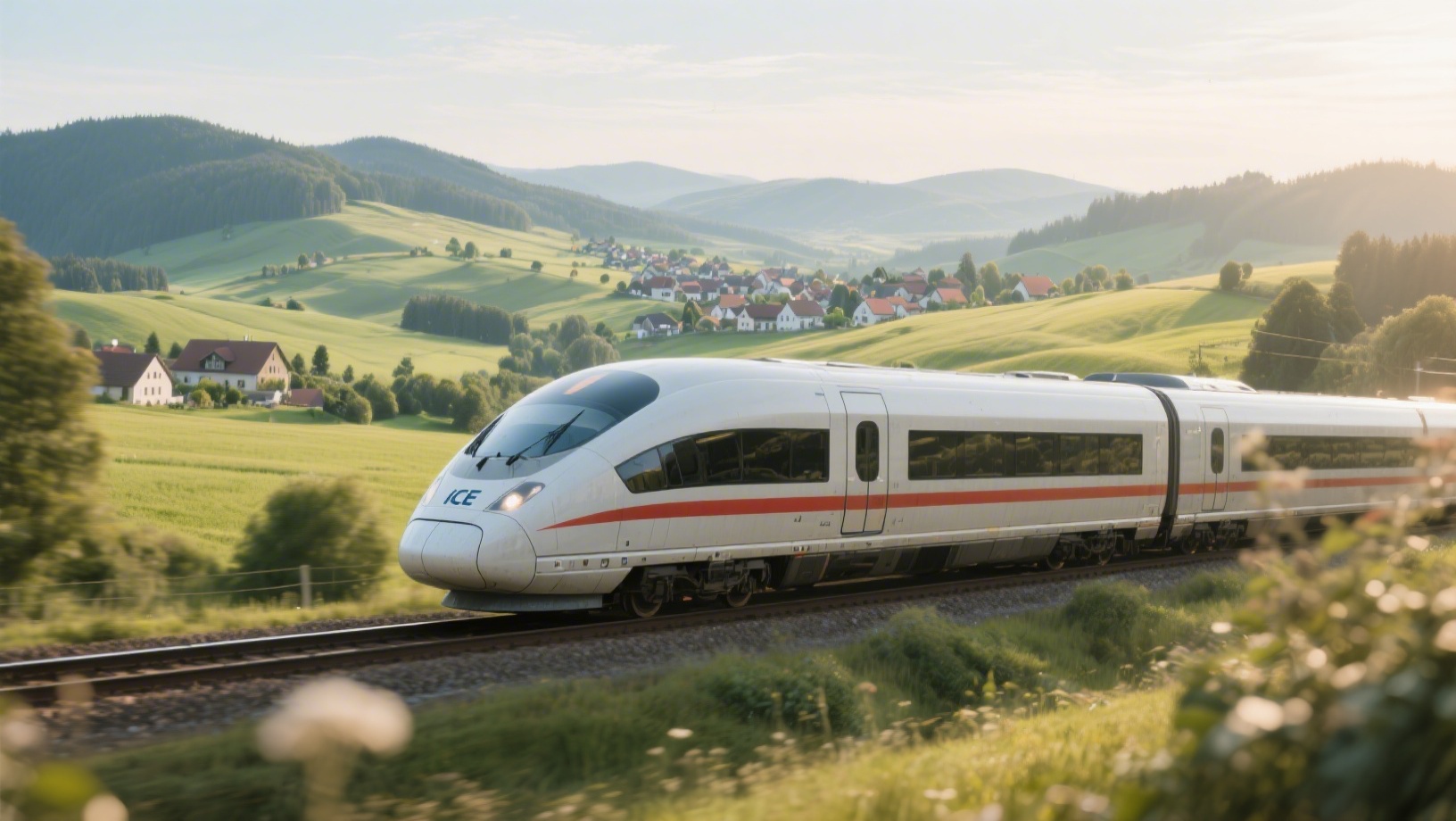
The ICE whisks you at high speed from the Netherlands to the major German cities and beyond. With speeds of up to 300 kilometres per hour, Berlin, Munich and Hamburg are comfortably within reach without traffic jams or airport stress. This is the most practical way to discover Germany by train. But in 2026 several routes will change significantly due to planned engineering works. Read here what that means for planning your trip.
What is the Intercity-Express (ICE) and where does this train run
The Intercity-Express is the German high-speed train operated by Deutsche Bahn (DB). These trains connect all major cities in Germany and also run to the Netherlands, Belgium, France, Switzerland, Austria, Czechia and Hungary. From Amsterdam you can reach Cologne, Frankfurt and Berlin directly. The journey to Berlin takes around six hours.
The ICE is an excellent basis for a train holiday through Europe. From the Netherlands you can easily travel to Hamburg, Munich or Stuttgart. From there you continue on to southern Europe or the Alps. Services are frequent and also reliable.
On high-speed lines, the ICE reaches speeds between 250 and 320 kilometres per hour. On regular railway lines the train runs between 140 and 230 kilometres per hour. The German rail network combines modern high-speed lines with traditional routes. This means almost every important destination is within reach.
‘ Deutsche Bahn plans this kind of engineering work carefully, but do allow for possible diversions or delays. ’
Important route changes in 2026
Major maintenance and upgrade works on the German rail network will start in 2026. This will mainly affect travellers who want to go from the Netherlands to Hamburg. The well-known route via Osnabrück will be temporarily altered.
During the works, Hamburg will have a direct link from Amsterdam that uses a different route. This may result in longer or shorter journey times, depending on your departure point. Always check the current timetable in the months before you travel.
Other corridors may also be temporarily adjusted. Deutsche Bahn plans this kind of engineering work carefully, but do allow for possible diversions or delays. When booking your tickets, build in sufficient transfer time if you need to continue your journey to other destinations.
Different ICE train types and their comfort
Several generations of ICE trains are in service. Each generation has its own characteristics. The first-generation ICE 1 (an early high-speed train series) is the oldest variant and has been running since 1991. These trains are longer and have between 500 and 700 seats. You will mainly find them on busy north–south corridors such as Halle–Munich.
The newer generation with underfloor motors, the ICE 3, is more compact and no longer has separate locomotives. This creates more space for passengers. These trains often run to the Netherlands and Belgium and reach speeds of up to 330 kilometres per hour. The newest ICE generation, the ICE 3neo, will soon be introduced on the Netherlands–Germany route.
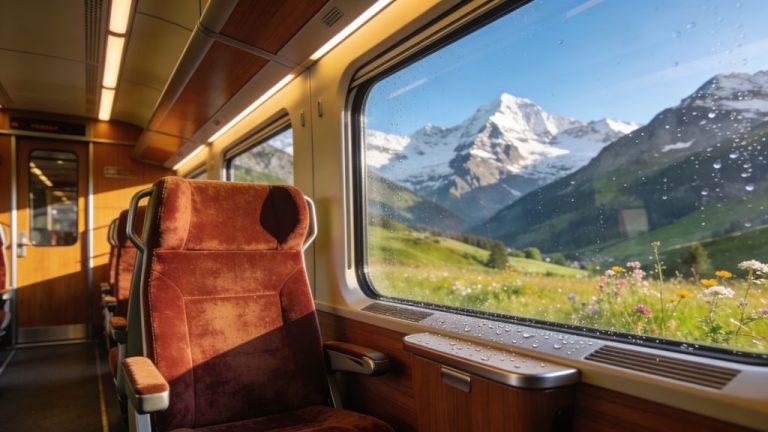
All ICE trains offer standard facilities such as air conditioning, underfloor heating and power sockets. In second class you will find one socket for every two seats and free Wi‑Fi. Legroom is 37 centimetres. Some trains have a small-children compartment and a panorama lounge with an unobstructed view of the tracks.
First or second class
In first class you enjoy more legroom (46 centimetres) and reclining seats. A seat reservation is included with most tickets. You also get free newspapers and, with certain tickets, access to the DB Lounge, Deutsche Bahn’s station lounge, at major stations.
For families with children, second class is often sufficient. The panorama lounge is popular with children and offers a unique view of the tracks. Do reserve these seats in advance, especially during holidays and at weekends.
Planning a rail tour through Bavaria
Bavaria is perfectly accessible by ICE. Munich is the central hub. From Amsterdam you travel to Munich in around seven hours with one change in Frankfurt or Cologne. From there, frequent trains depart for the Bavarian Alps, Garmisch-Partenkirchen, Berchtesgaden and Lake Constance.
Combine the ICE with regional trains for a complete round trip. A practical route:
- Start in Munich and explore the city
- Travel on to Garmisch-Partenkirchen for mountain hikes
- Continue to Füssen for Neuschwanstein Castle
- Finish in Passau or Regensburg for culture and history
With an Interrail or Eurail Pass you can travel flexibly through several countries. Bear in mind that seat reservations on the ICE are usually compulsory or strongly recommended. These reservations cost a few euros extra, but guarantee you a seat.
‘ Toddlers travel free, children up to 14 years travel free when they are listed on an adult’s ticket. ’
Suitable for families with children
The ICE is very suitable for family trips. The trains are spacious and offer many facilities that make the journey comfortable. Toddlers travel free, children up to 14 years travel free when they are listed on an adult’s ticket.
On some ICE trains you will find a special small-children compartment with play area. The panorama lounge is also a favourite with children. Here they have an unobstructed view of the tracks and the driver. Make sure to reserve these seats in good time, as they are very popular.
Wheelchair users and parents with pushchairs can make use of the accessible facilities. The ICE 3 trains of series 407, a later generation with extra accessibility features, have lifts on board. The newest ICE 3neo has level boarding via lift doors, making it easier to travel with luggage and pushchairs.
Practical tips for a smooth journey
- Reserve seats in advance, especially during holiday periods
- Bring enough drinks and snacks, as the on-board restaurant can be pricey
- Download offline entertainment for children; the Wi‑Fi can be patchy
- Check that your transfer time is sufficient, especially when travelling with children and luggage
Booking tickets and fares
You can book ICE tickets via the website or app of Deutsche Bahn, NS International or other European rail operators. The earlier you book, the cheaper the tickets tend to be. Deutsche Bahn offers saver fares starting from 19 euros for domestic routes.
For international journeys to the Netherlands you will pay more, but here too booking early pays off. Flexible tickets are more expensive but offer more freedom. You can then travel on any ICE on the same route without a fixed departure time.
With an Interrail or Eurail Pass you can travel without limit through Germany and other European countries. Do note the compulsory reservation fees for the ICE, usually between 4 and 10 euros per leg. If you are planning several train journeys, such a pass is often cheaper than separate tickets.
Why choose the ICE instead of the car
The ICE saves you time and stress. While you are stuck in traffic jams around Cologne or Frankfurt by car, you can relax on the train. You can work, read or enjoy the view. Parking costs and toll roads are not an issue.
The train is also the better choice for the environment. The ICE carries hundreds of passengers at once and has a much lower CO2 emission per traveller than the car or the plane. For environmentally conscious travellers this is an important argument.
The reliability of the ICE is high. Deutsche Bahn invests heavily in maintenance and punctuality. Delays do occur, but are often limited. In the case of longer delays you are entitled to compensation under European regulations.
‘ This way you combine the comfort of the train with the freedom of the car. ’
Combining with other modes of transport
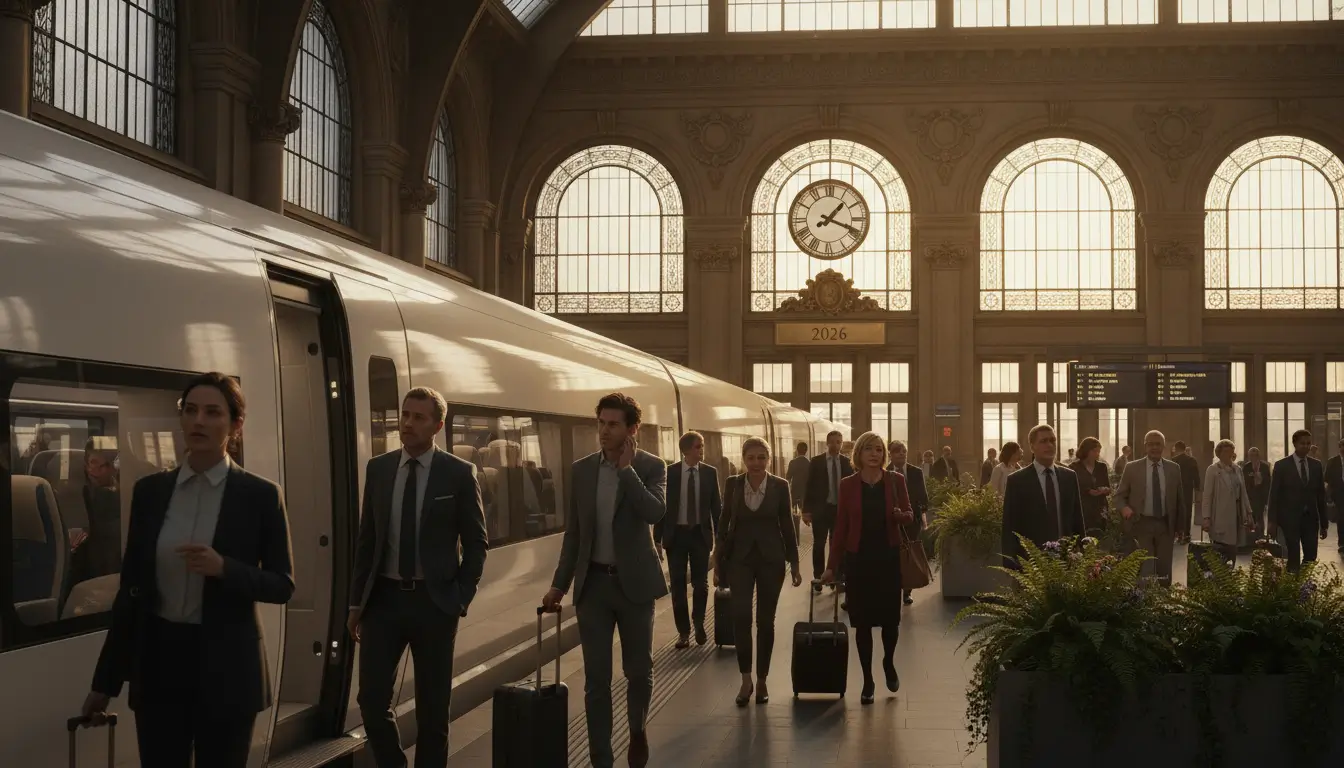
From major ICE stations you can easily change to regional trains, trams and buses. Stations such as München Hauptbahnhof, Frankfurt Hauptbahnhof and Berlin Hauptbahnhof are modern hubs with excellent connections.
Do you want to hire a car after arrival for a road trip through the Bavarian Alps or the Black Forest? That is possible. Many stations have car rental firms in or near the station building. This way you combine the comfort of the train with the freedom of the car.
For cycling enthusiasts, Deutsche Bahn also offers bicycle transport on board. Reserve a bike space in advance, as places are limited. The ICE is therefore a practical option for cycling holidays along the Rhine, Danube or Elbe.
On the Traveler Tips website you will find much more information about train travel across Europe, practical planning tools and tips for routes and destinations. Discover how to organise your next trip smartly and comfortably.
Frequently asked questions
You will usually find the best-priced ICE tickets via the Deutsche Bahn website or app, preferably well in advance and using so‑called Sparpreis offers. For more flexibility you can choose Flexpreis tickets, which often allow you to travel on other trains on the same day. Consider 1st class flex tickets if you value lounge access and an included seat reservation. Combine ICE with regional trains to travel cheaply yet flexibly to tourist regions such as the Moselle or Rhine valleys.
The ICE offers free Wi‑Fi, power sockets at the seats, air conditioning and comfortable seats with generous legroom. In 1st class you get extra comfort with more legroom, reclining seats, free newspapers and often lounge access with certain tickets. Many trains have a panorama lounge where you can watch the driver at work, which makes the journey extra fun. Some trains have special compartments for (small) children and good facilities for travellers using a wheelchair.
Take a suitcase you can carry up the stairs yourself and use the large luggage racks by the doors for heavy or bulky items, so the carriage stays uncluttered. Ideally, reserve a seat, especially in 2nd class and around interchange stations such as Cologne or Frankfurt, and if you have lots of luggage choose a spot near the door or bulkhead with racks. Check the coach plan (Wagenreihung) in advance in the DB Navigator app so that you can already stand in the right place on the platform in the Netherlands or Germany. At German stations the platform boards show letters (A, B, C…) that correspond to the coach layout; follow these and keep an eye on your transfer time in the app in case of delays.
Major German cities that are easy to reach by ICE include Berlin, Hamburg, Cologne, Frankfurt and Munich. Popular holiday regions accessible via these cities by ICE are the Rhine Valley, the Moselle Valley and the Bavarian Alps. Regions around Bavarian lakes and cities such as Leipzig and Erfurt also combine well with ICE journeys. In addition, there are good ICE connections to neighbouring countries such as Switzerland and Austria for mountain and ski holidays.
On the ICE, 2nd class offers comfortable seats, free Wi‑Fi and power sockets (one per two seats), but with less legroom than 1st class and without an included seat reservation. In 1st class you get roomier, reclining seats with extra legroom, generally quieter carriages, free newspapers and usually access to DB lounges with flexible tickets, plus an included seat reservation. If you are price-conscious or travelling with family, 2nd class is usually sufficient, especially on shorter routes. If you place a high value on peace and quiet, comfort and the certainty of a seat (for work or long journeys), 1st class is more likely to meet your needs.