
 NL
NL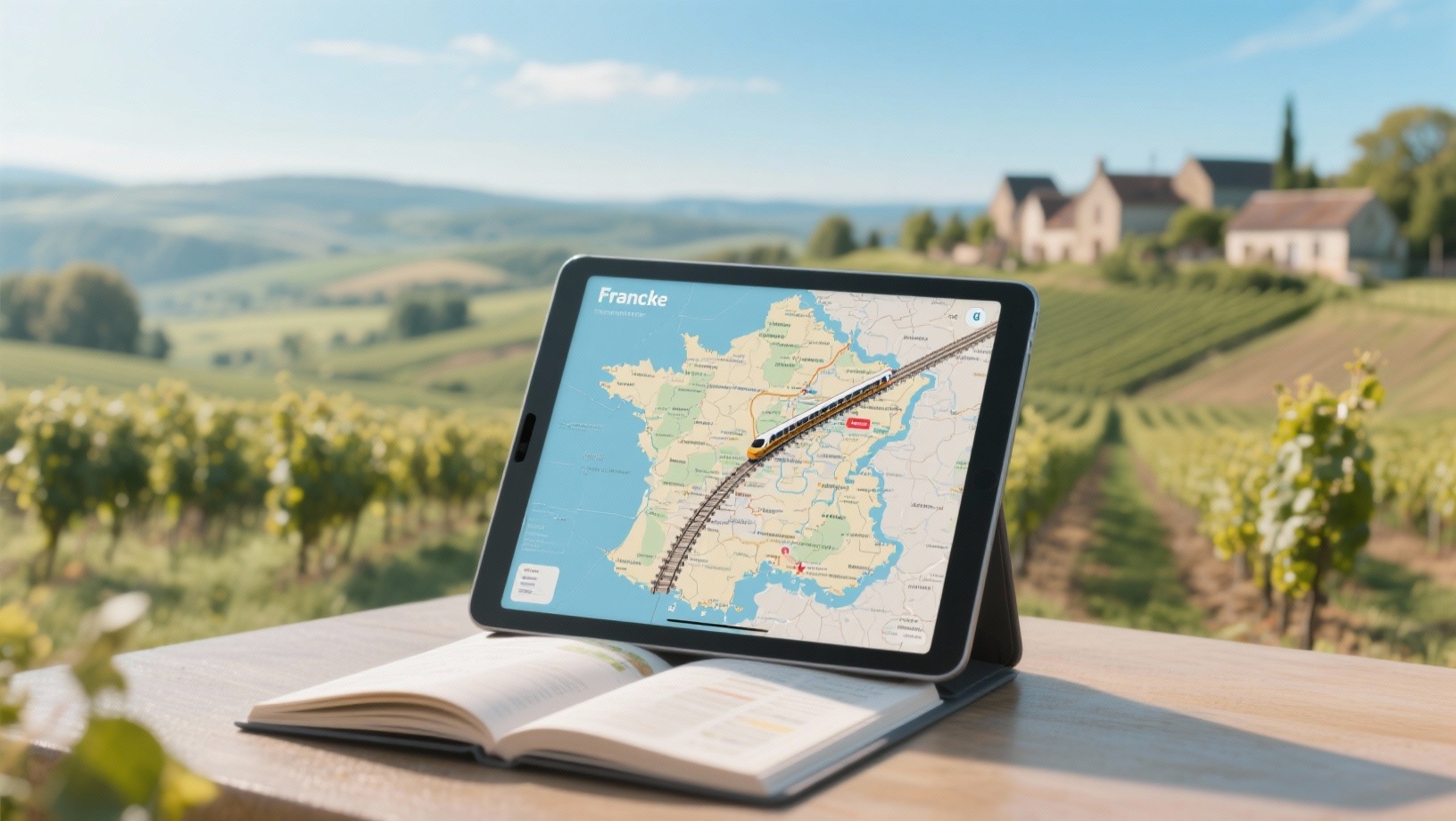
Train holiday in France: the step-by-step guide for a comfortable and smart tour
A train holiday in France is the ideal way to discover the country in a comfortable, efficient and sustainable way. Thanks to the extensive and fast rail network, you travel without the stress of airports or the traffic jams on the autoroute. You watch the landscape glide by and arrive relaxed right in the heart of cities or close to the most popular nature areas. This article gives you all the practical information you need to independently plan your ideal trip through France by train. Read on and discover how to choose the right routes, book tickets and prepare for your journey in the best possible way.
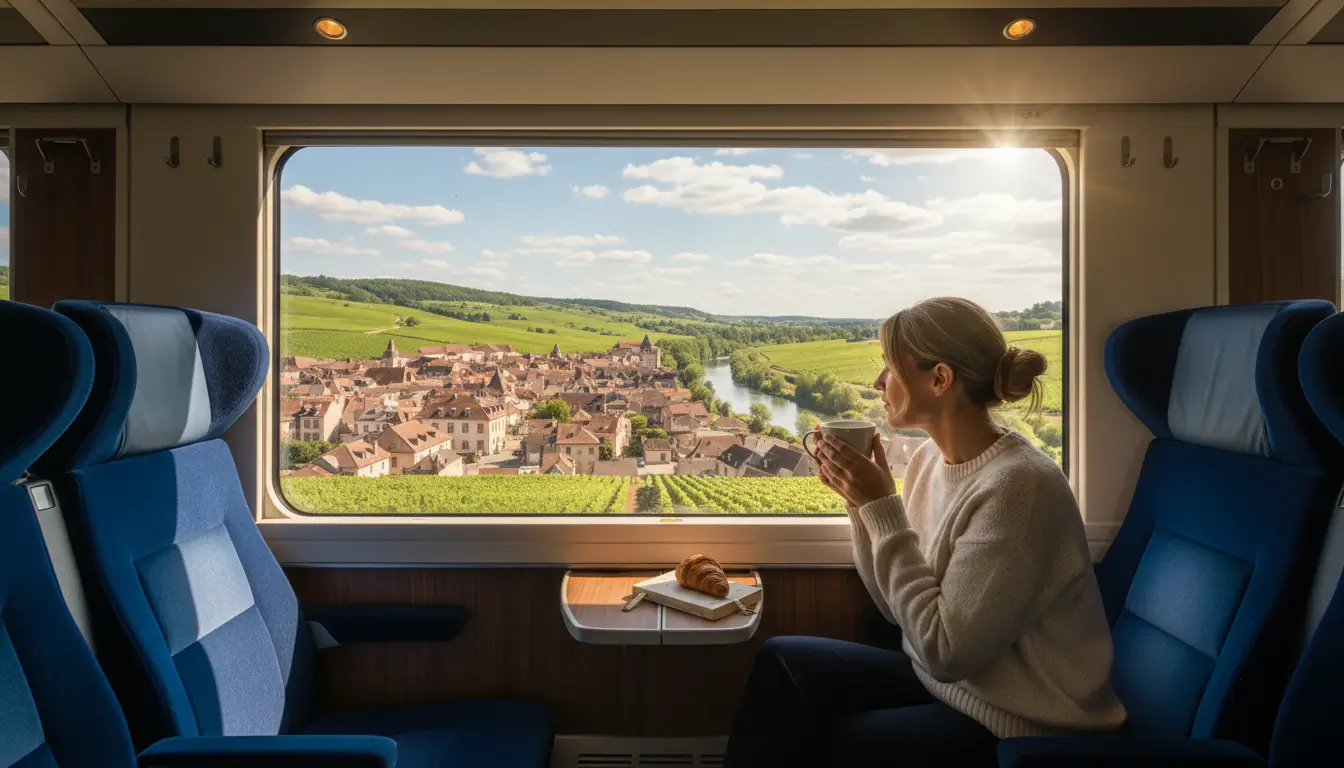
Choosing the train is a conscious choice for comfort and experience. Unlike a car or flight, your holiday begins the moment you board. You have the space to relax, read a book or enjoy the views of French vineyards and rolling hills. On top of that, it is a sustainable way of travelling with a significantly lower CO2 emissions. For those who travel this way more often, holidays by train offer a special way to explore Europe, where the journey itself becomes a fully fledged part of the experience.
To France from the Netherlands and Belgium
For most travellers from the Netherlands and Belgium, the journey to France starts with the Eurostar. This high-speed train takes you from Amsterdam Central to Paris Gare du Nord in about three and a half hours. From Brussels-South you can be in the French capital in less than an hour and a half. This connection is not only fast, but also comfortable and avoids the crowds on the roads and at airports. Once you have arrived in Paris, the extensive French rail network opens up to continue your journey to your final destination.
‘ With speeds of over 300 km/h you can cover large distances in just a few hours. ’
Unravelling the French rail network
The French rail network, operated by SNCF, is one of the most extensive and efficient rail systems in Europe. It is made up of different types of trains, each with their own role. With a good understanding of this system, you can plan a smooth journey.
TGV: speed and comfort for long distances
The TGV (Train à Grande Vitesse) is the showpiece of the French railways. This high-speed train connects Paris with all the major cities and regions in France, such as Lyon, Marseille, Nice, Bordeaux and Strasbourg. With speeds of over 300 km/h you can cover large distances in just a few hours. The TGV is known for its comfort, with spacious seats, a buffet car and often also Wi-Fi on board. Seat reservations are always compulsory on the TGV.
TER: the key to regional discoveries
The TER (Train Express Régional) is the regional train that connects towns and villages within a specific region. These trains are very suitable for covering shorter distances and exploring areas off the beaten track. Travel, for example, along the seaside resorts of the Côte d’Azur or discover the small villages of the Dordogne. For most TER trains, no reservation is required, which gives you a lot of flexibility during your tour.
Intercités: the classic connections
The Intercités trains operate on routes that are not served by the TGV. They connect cities over medium distances and often run on routes without a high-speed line. Although they are slower than the TGV, they offer a comfortable way to reach lesser-known parts of France. Night trains, for example from Paris to the Pyrenees or the Alps, also often come under the Intercités banner. For most daytime Intercités trains, reservations are compulsory.
Paris: the key hub for your journey
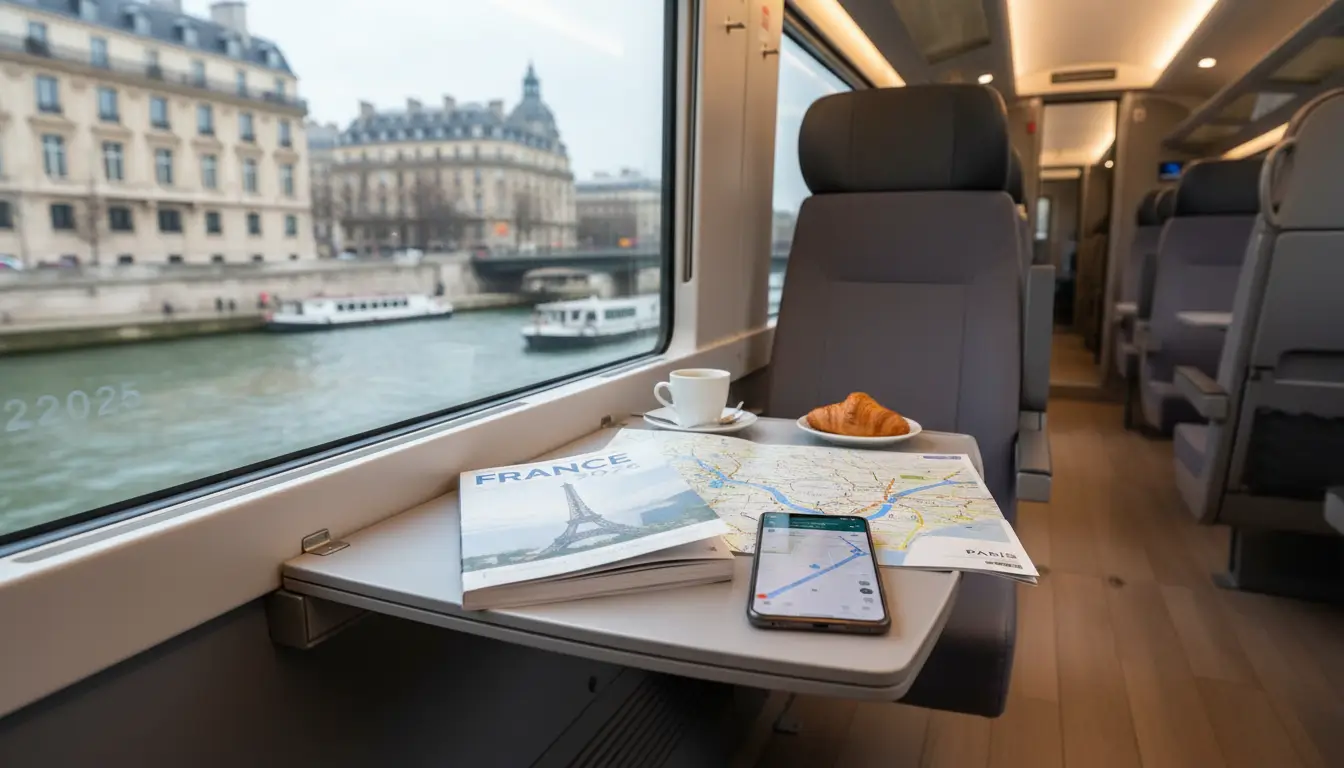
Paris acts as the central hub of the French rail network. Most major TGV routes start or end in the capital. This means that for many destinations in France you will travel via Paris and have to change trains there. The city has several large terminus stations that are not interconnected. The Eurostar from the Netherlands and Belgium arrives at Gare du Nord, while TGVs to the south (such as Lyon, Provence and the Côte d’Azur) depart from Gare de Lyon. For this change, which you make in about 15 minutes by RER metro, make sure you allow enough time. Allow at least an hour so you can make your connection calmly and without rushing.
Discover the best-known coastal and regional destinations
By train you can easily reach a wide variety of French destinations. Here are some suggestions for inspiration:
- The Côte d’Azur and Provence: From Paris you travel in about 5 to 6 hours to Marseille, Nice or Cannes. Once there, you can easily shuttle with the regional TER train between towns such as Antibes, Monaco and the many smaller coastal resorts. Further inland you can discover cities like Avignon and Aix-en-Provence, surrounded by the famous lavender fields.
- Brittany and Normandy: The TGV takes you from Paris to Rennes, the gateway to Brittany, in about 2 hours. From here, explore the rugged coastline, historic towns such as Saint-Malo and the mysterious menhirs of Carnac. The D-Day landing beaches and Mont Saint-Michel in Normandy are also easy to reach by train.
- The Atlantic coast and the Dordogne: In a little over 2 hours you can travel by TGV from Paris to Bordeaux, the heart of the famous wine region. Combine a city break with a tour of the vineyards or continue on to the sandy beaches of Arcachon. The Dordogne, with its castles and prehistoric caves, can be reached via towns such as Périgueux.
- The French Alps: Both in summer and winter, the train is a practical option for reaching the Alps. In winter, special Ski Thalys trains run directly to ski resorts. Outside the ski season you can travel via cities such as Grenoble or Annecy to go hiking and admire the mountain landscapes.
‘ Booking early pays off: tickets are generally available 3 to 4 months before your travel date and prices increase as the departure date approaches. ’
Planning your train holiday: reservations and tickets
Good preparation is essential when booking train tickets in France, especially for high-speed trains. The French railways (SNCF) have a strong reservation culture, particularly for TGV and Intercités. Booking early pays off: tickets are generally available 3 to 4 months before your travel date and prices increase as the departure date approaches. The SNCF Connect website is the official place to book your tickets. Here you will find all train types, including the low-cost option Ouigo.
Are you considering a longer tour with lots of travel days? Then an Interrail or Eurail Pass can sometimes be cheaper. Note: even with a pass you still need to book a seat reservation for most high-speed trains in France. These reservations cost a small fee. Make these reservations as early as possible, as the number of seats available for pass holders is limited.
Smart combinations for a tour
The strength of the French rail network is that you can easily combine different regions. Plan a trip where you use the speed of the TGV for the long distances and the flexibility of the TER for regional explorations. For example, start in Paris, take the TGV to Lyon for a culinary city break, and from there use the TER to explore the Beaujolais wine region. Continue your journey by TGV to Avignon to discover Provence, and finish with a few days on the coast near Marseille. By using the different train types smartly, you create a varied trip that is fully tailored to your wishes.
Practical tips for the journey
A train journey through France generally runs smoothly, but a few tips can make it even more pleasant. The luggage rules are flexible; you can usually take more than on a flight and there are special racks for large suitcases. Take some food and drinks with you for the journey, although most TGVs have a buffet car. Make sure you arrive at the major stations in good time so you can find your platform. Departure platforms are often only announced on the information boards about 20 minutes before departure.
‘ With good planning you lay the foundation for a successful holiday in which the journey itself is just as valuable as the destination. ’
Ready for your train journey through France?
France by train offers many possibilities for the independent traveller. It is a comfortable, efficient and experience-rich way to discover the country’s diversity, from vibrant cities to rustic landscapes. With good planning you lay the foundation for a successful holiday in which the journey itself is just as valuable as the destination. Use this guide as a starting point, map out your route and step on board for a special voyage of discovery through la douce France.