NL
NL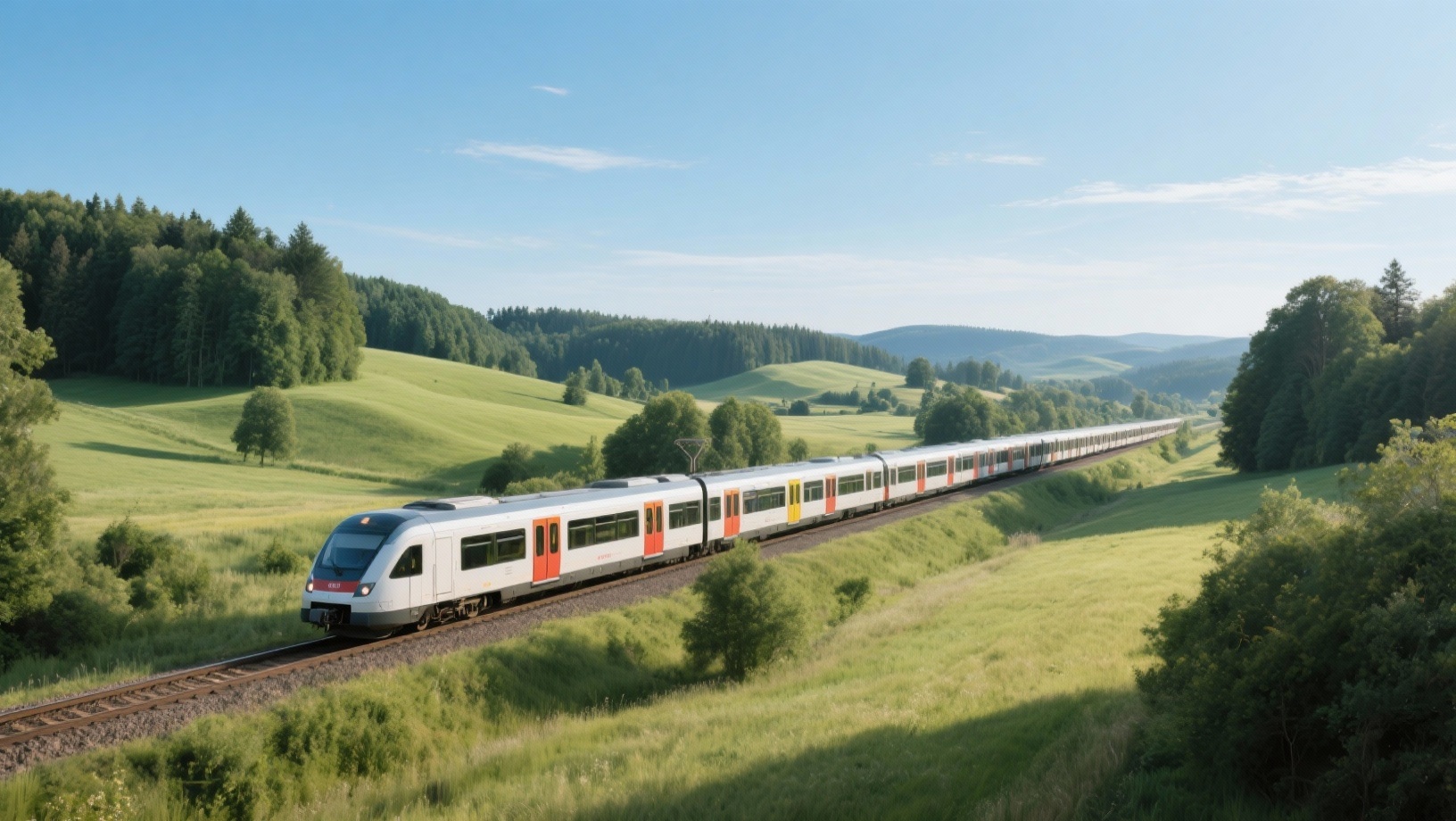
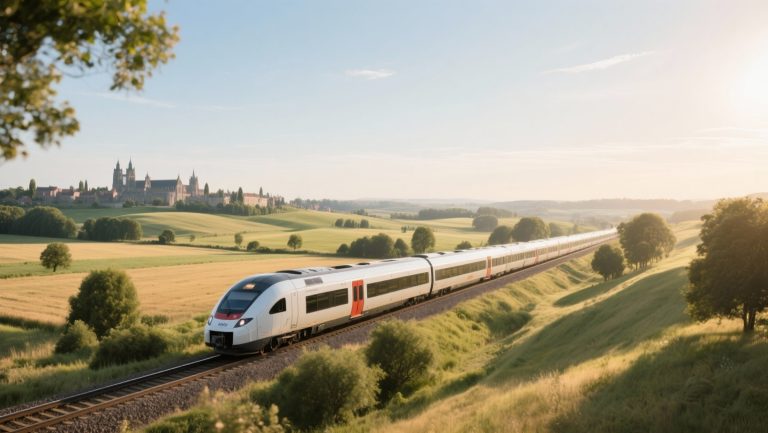
A nature holiday in Germany by train is a comfortable and sustainable way to explore a variety of landscapes. From the dense forests of the Black Forest to the Alpine peaks of Bavaria, the extensive rail network takes you to places that are hard to reach by car. Discover how to experience Germany’s natural areas from the comfort of your train seat.
Why a train journey through German nature is a great choice
Germany is a leader in sustainable and efficient travel. The rail network is modern and extensive, allowing you to travel quickly between major cities on high-speed trains (ICE). From there, regional trains connect seamlessly, taking you deep into nature. Travelling by train means no traffic jams, no parking stress and more time to enjoy your surroundings. As the landscape glides by, you can relax and prepare for your next hiking stage or sightseeing stop. It’s a way of travelling that fits with a conscious and well-planned holiday.
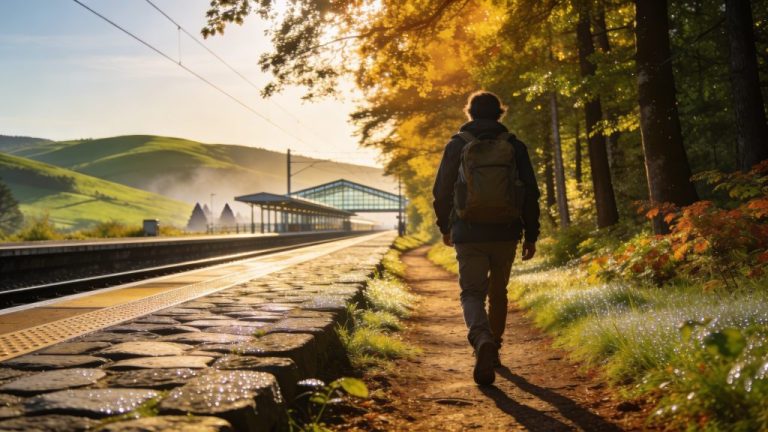
‘ “The stations are often located right at the start of walking routes, so you won’t miss the car for a single moment.” ’
The Black Forest: a classic full of surprises
The Black Forest is one of Germany’s best-known natural areas and is easy to explore by train. The Schwarzwaldbahn, one of the longest railway lines through the region, connects Offenburg with Konstanz on Lake Constance and takes you right through the heart of the area.
During the journey you travel through 39 tunnels and over high viaducts, with constant views of deep valleys, dense pine forests and traditional villages. Get off along the way in Hornberg for a walk through the woods or in Donaueschingen, where you can visit the source of the Danube. Another highlight is the train journey from Freiburg through the Höllental to Titisee and Schluchsee. Here the train climbs through a narrow valley, past steep rock faces and the Ravenna Viaduct, which rises 58 metres above the valley. The stations are often located right at the start of walking routes, so you won’t miss the car for a single moment.
How do you plan a train journey through the Black Forest?
- Starting point: Travel from the Netherlands to Offenburg. This is where the Schwarzwaldbahn starts. The journey takes around 6 to 7 hours with one or two changes.
- Route: The main Offenburg – Konstanz route forms the basis. You can combine this with branch lines such as the Höllentalbahn from Freiburg.
- Walking options: From stations such as Hausach, Ottenhöfen and Hinterzarten various walking routes start. For example, you can hike up to the Feldberg, the highest mountain in the Black Forest.
The German Alps: mountain panoramas from the tracks
For those looking for mountain scenery, the German Alps offer train routes with wide-open views. The Bayerische Zugspitzbahn is the undisputed highlight. This rack railway starts in Garmisch-Partenkirchen, a village with historic façades and cosy squares, and takes you to the summit of the Zugspitze, Germany’s highest mountain.
The journey itself takes just over an hour. The train runs through tunnels carved into the mountains and passes green alpine meadows and the crystal-clear blue waters of Lake Eibsee. At the top you can enjoy 360-degree views of the mountain ranges of Germany, Austria and Switzerland. Garmisch-Partenkirchen is itself easy to reach by train, allowing you to plan a complete mountain holiday without relying on a car.
Along rivers and coasts: other train routes
Besides its well-known mountain and forest regions, Germany also offers more water-rich natural areas that are easy to discover by train.
River valleys full of culture and nature
Germany is crossed by rivers, each with its own character. The train is an excellent way to see these landscapes, as many railway lines follow the riverbanks.
- The Moselle route: Between Koblenz and Trier the railway winds its way along the meandering Moselle. From the train you have views of the steep vineyards and the many castles that characterise the region.
- The Elbe valley: From Dresden a regional train runs through Saxon Switzerland. The tracks follow the Elbe and offer views of the rugged rock formations of this national park.
- The Danube valley: The route from Donaueschingen to Singen follows the young Danube through the Naturpark Obere Donau. Here you will see steep limestone cliffs and Schloss Sigmaringen, an 11th-century castle with towers and courtyards, right from your window.
The North Sea and Baltic Sea coasts
Even Germany’s coasts are geared towards train travellers. Along the North Sea and Baltic Sea special island trains, known as Inselbahnen, operate. These narrow-gauge trains connect the villages on the islands and offer a relaxing way to explore the dune landscapes and coastline, for example on the island of Rügen.
On the Traveler Tips website you will find practical information to help plan your trip. Read our guides on train travel in Europe, discover a variety of routes for a road trip or get tips on how to prepare well for a driving holiday. There are many different ways to travel. Go and discover them for yourself.
Frequently asked questions
Germany offers countless natural areas that are easily accessible by train for a relaxing holiday. Some of the most beautiful train routes for a nature break include the Schwarzwaldbahn in the Black Forest, the Bayerische Zugspitzbahn in Bavaria and the Danube route through the Naturpark Obere Donau. The Moselle route and the Elbe valley near Dresden, which can be easily combined with the Saxon Switzerland National Park, are also popular destinations. These areas not only offer beautiful landscapes and extensive walking networks, but also comfortable accommodation within walking distance of the stations.
For a smart and cost-effective train journey to German natural areas, you can make optimal use of the extensive rail network and sustainable ticket options such as the Deutschland-Ticket. Consider specific routes such as the Schwarzwaldbahn, Bayerische Zugspitzbahn or the Elbe valley, which offer direct access to nature parks and hiking networks. Book ICE tickets in good time for comfort and speed, and combine these with regional trains for the final kilometres to more remote destinations. Organised train holidays sometimes offer good-value packages including accommodation within walking distance of stations.
Germany offers excellent infrastructure for combining train journeys with nature experiences, thanks to an extensive rail network that reaches deep into natural areas. Comfortable ICE and regional trains link cities with numerous walking networks and nature parks, such as the Black Forest and the Bavarian Alps. You can put together your trip flexibly or opt for organised holidays with accommodation within walking distance of stations. By choosing the train you avoid the stress of driving and contribute to more sustainable tourism.
For a comfortable train journey and stay in German natural areas, it is advisable to travel by ICE for the long-distance sections and use regional trains for the connections into nature, staying overnight in hotels within walking distance of stations. Make your luggage as practical as possible by choosing accommodation close to stations, which keeps carrying to a minimum. Take advantage of the extensive walking network that starts right at many stations, and consider a Deutschland-Ticket for affordable and sustainable travel.