NL
NL
The Netherlands is more than canals and windmills. The country offers surprisingly varied natural areas that you can discover without a car. From rolling hills in Limburg to expansive peatland in Flevoland: the train takes you to the most beautiful nature reserves. This article shows scenic routes that combine nature and public transport for a sustainable travel experience. Discover which journeys take you past river views, heathlands and Hanseatic towns.
Why travelling by train shows you more nature
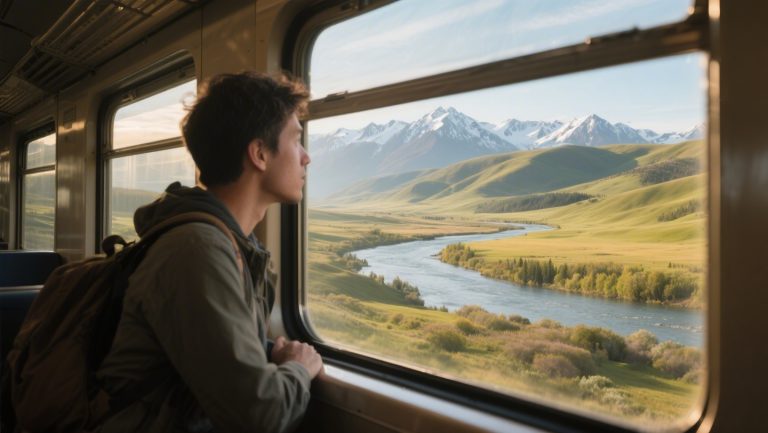
The Dutch rail network covers over 3,000 kilometres with 400 stations. Many stations are directly next to nature areas such as national parks, forests and riverbanks. You step off and can start your walk or bike ride straight away. Travelling by train offers a continuous view of nature without you having to navigate yourself. From your window seat you watch landscapes change from meadows to forests and from rivers to hills. A nature holiday by public transport requires good planning, but rewards you with peace and views from the very first moment.
Local trains (sprinters) often take slower routes through smaller villages and nature areas. These trains stop more often and give you time to observe the landscape. Reserve a window seat and plan your journey in the morning or late afternoon for the best light. At sunrise and sunset you see wildlife active in fields and forests.
‘ From every station you can start a route through river landscapes or historic centres. ’
Nijmegen to Zwolle along the IJssel and Hanseatic towns
The route from Nijmegen to Zwolle runs along the River IJssel and historic Hanseatic towns such as Deventer, Zutphen and Kampen. This line combines river views with culture and green banks. You see the IJssel meandering through the landscape with floodplains that are under water in spring. The train passes small villages with churches and farms between meadows.
Stop off in Deventer for a walk along the IJssel quay or explore the old town with its medieval buildings. Zutphen offers access to walking routes in the IJssel valley. Kampen lies on the IJssel delta where the river flows into the IJsselmeer. From every station you can start a route through river landscapes or historic centres.
The train journey takes around two hours without changes. Use a day ticket so you can get off spontaneously at places that appeal to you. Bring binoculars for birdwatching in the floodplains and along the river.
Bus line 108 through De Hoge Veluwe National Park
Bus line 108 connects Apeldoorn and Ede via De Hoge Veluwe National Park. This bus route runs through vast forest, heathland and sand drifts. You travel through one of the largest contiguous nature areas in the Netherlands without your own transport. The bus stops at entrances to the park where you can get off for walks or bike rides.
Important stops on line 108:
- Schaarsbergen – access to the park and walking routes
- Otterlo – close to the visitors’ centre and museums
- Hoenderloo – starting point for heath and forest walks
In August the heath turns purple. This is the best season for this route. You can spot red deer, wild boar and large grazers if you travel early or late in the day. The Veluwe features sand drifts that resemble desert landscapes. Take water and sturdy shoes for unpaved paths.
Combine the bus with a white bicycle that you can borrow free of charge in the park. This way you can explore greater distances between forests, heathlands and art museums. Check the timetable for line 108 in advance, as the frequency varies by season.
Waterbus to Kinderdijk for windmills and polders
The Waterbus sails from Rotterdam to Kinderdijk and offers a unique view of the Dutch polder landscape. This ferry travels along rivers and canals past dykes, windmills and waterworks. Kinderdijk is known for its nineteen historic windmills, together a UNESCO World Heritage Site. The route shows how the Netherlands manages water and how the landscape is shaped by human hands.
From Rotterdam you depart at the Erasmus Bridge stop. The Waterbus sails along the Nieuwe Maas and Nord towards Kinderdijk. On the way you see the port, shipyards and farmland. The crossing takes about 45 minutes. On arrival you can walk straight to the windmills and footpaths along the waterways.
Walk the five-kilometre windmill loop or hire a bicycle for longer routes through the polder area. The landscape is flat with the horizon stretching far into the distance. This area shows the typical Dutch combination of water, sky and wide open space. Visit between April and October when the windmills are turning and the area is green.
‘ Limburg feels different from the rest of the country because of the height differences and relief. ’
Heuvelland line from Maastricht to Heerlen
The Heuvelland line runs through South Limburg between Maastricht and Heerlen. This route shows rolling hills, green fields and forests that you will not find elsewhere in the Netherlands. The landscape alternates between wide valleys and steep slopes with vineyards and half-timbered houses. Limburg feels different from the rest of the country because of the height differences and relief.
The train passes villages such as Valkenburg, Schin op Geul and Nuth. Each village lies in a valley with hills around it. Get off for walks over hills with panoramic views. The Geul valley route and the Pieterpad long-distance path run through this area with waymarked trails.
In spring orchards and fields are in bloom. In autumn the forests turn red and yellow. Winter reveals bare slopes with views of distant villages. This route does not require any special preparation, but sturdy shoes help on the uphill paths. Take a camera for landscape photos from higher vantage points.
Utrecht Centraal to Rhenen via the Utrechtse Heuvelrug
The journey from Utrecht to Rhenen runs through the Utrechtse Heuvelrug, with forests, heathlands and river views on arrival. You depart from the city and see the landscape turn green within ten minutes. The train passes Driebergen-Zeist, where walking routes into forests and country estates begin.
At Rhenen you end up on the River Rhine with views of the water and the Grebbeberg hill. This area combines water and hills in a single panorama. From the station walk towards the Rhine for paths along the riverbank. The Grebbeberg offers a climb with views over the river landscape.
Rhenen is great for birdwatching thanks to the combination of forest, heathland and water. Take binoculars for birds of prey and waterfowl. The journey takes less than an hour and is suitable for a day trip from Utrecht or Amsterdam.
Northern Netherlands from Meppel to Leeuwarden
The train route from Meppel to Leeuwarden runs through Drenthe and Friesland with wide-open fields, lakes and scattered farms. This area showcases openness with the horizon in every direction. The train passes peatlands, forests near Wolvega and water-rich polders towards Leeuwarden.
The landscape has little variation in height but a lot of variety in water and greenery. You see rows of poplars, small canals and cows in the meadows. In Drenthe, nature reserves such as Dwingelderveld and Drents-Friese Wold lie close to stations. From Wolvega or Heerenveen you can change to buses that go to these parks.
Friesland offers lakes and water activities near Sneek and Heerenveen. The train gives you access to walking and cycling routes that start at smaller stations. Allow extra time for connections to regional buses that take you deeper into nature.
‘ Many NS stations offer waymarked walking routes that start and end at the platform. ’
Best time to travel and practical preparation
In August the heath on the Veluwe and in other heathland areas turns purple. This is the highlight for nature routes through forest and heath. Spring brings blossoming trees, green meadows and active birds. Autumn colours the forests yellow and red, especially in Limburg and on the Utrechtse Heuvelrug. Winter offers bare landscapes with long sightlines and peace.
Use a flexible day ticket so you can get off spontaneously at places that attract you. Check timetables for local trains that run more slowly and show more of the landscape. Take sturdy shoes for unpaved walking paths. Water, sunscreen and binoculars belong in your rucksack for day trips.
Plan walks of four to fifteen kilometres directly from stations. Many NS stations offer waymarked walking routes that start and end at the platform. This means you do not need additional transport. Check whether there is bicycle hire at the station for covering greater distances in nature areas.

Discover more on Traveler Tips
On the Traveler Tips website you will find extensive information about travelling by public transport, route planning and nature destinations in the Netherlands and beyond. From practical tips for train journeys to sights along the way: the site helps you prepare your trip better. Discover more routes, checklists and travel advice that make your next trip smarter and more enjoyable.
Frequently asked questions
Some of the most beautiful Dutch train routes are the Heuvelland line between Maastricht and Heerlen, with rolling Limburg hills and picturesque villages, and the Utrecht Centraal – Rhenen line, which quickly shifts from city to rivers, meadows and forests. The routes along the Veluwe (Arnhem – Apeldoorn/Ede-Wageningen) and the Sallandse Heuvelrug (Nijverdal – Holten) also offer unique nature experiences with heathlands, forests and wildlife. In addition, the routes through the northern Netherlands (Meppel – Leeuwarden/Groningen) and along the Oostvaardersplassen (via the Flevolijn) give wide views over lakes, wetlands and rugged nature.
Plan your journey outside rush hour (roughly 09:30–15:30 and after 19:00) for more peace and a better chance of getting a window seat, especially on routes such as the Heuvelland line, the Veluwe and Utrecht–Rhenen. If you are travelling several stretches, buy a day ticket or rail pass so you can get on and off flexibly at nature stops, and check the timetable in advance for local trains with the best views. Travel in August for flowering heath (Veluwe, Sallandse Heuvelrug) and in spring for bulb and flower fields, preferably around sunrise or sunset for quieter trains and beautiful light. Reserve seats where possible or board at starting stations to find a comfortable spot more easily and combine your route with short walks directly from the station.
Along the Heuvelland line (Maastricht–Heerlen) you will find easily accessible gems such as picturesque Limburg villages, hill walks with panoramic views and small half-timbered farms within walking distance of stations. On the Utrecht–Rhenen line you have the Utrechtse Heuvelrug, riverside walks and viewpoints over the Rhine directly at the stops, ideal for short trips. Between Arnhem, Ede-Wageningen and Apeldoorn you step straight out onto the Veluwe, with hidden sand drifts, quiet heathlands and wildlife hides. At Nijverdal and Holten you can walk from the station directly to the Sallandse Heuvelrug, with lesser-known heath paths and peaceful viewpoints far from the crowds.
Choose routes with plenty of scenery (for example the Heuvelland line, the Veluwe or the Sallandse Heuvelrug) and plan your trip around sunrise or sunset for the best light and a greater chance of seeing wildlife. Reserve or deliberately look for a seat by a clean window on the right side of the train (check maps or satellite images beforehand to see where the views are). Combine your journey with short walks directly from stations and take binoculars, a charged phone/camera, snacks and water so you do not have to keep looking for things. Check the timetable beforehand (ideally local trains for a calmer pace and more views) and avoid rush hours so you can enjoy the landscape in peace and with more space.
Yes, routes such as the Heuvelland line (Maastricht–Heerlen), Arnhem–Apeldoorn/Ede-Wageningen (Veluwe) and Meppel–Leeuwarden/Groningen work well for both day trips and multi-day adventures. For a smart combination, plan day one as an exploration day with short walks directly from stations, and use day two and beyond for longer walks or cycle rides from a fixed overnight base nearby. Make use of flexible (day) tickets so you can get off spontaneously at beautiful stretches and, if you wish, combine several routes in a loop (for example Meppel → Veluwe → Utrecht). Check NS walking routes and ‘OV-stapper’ public-transport walking routes along these lines in advance so that your day and multi-day stages connect logically.