NL
NL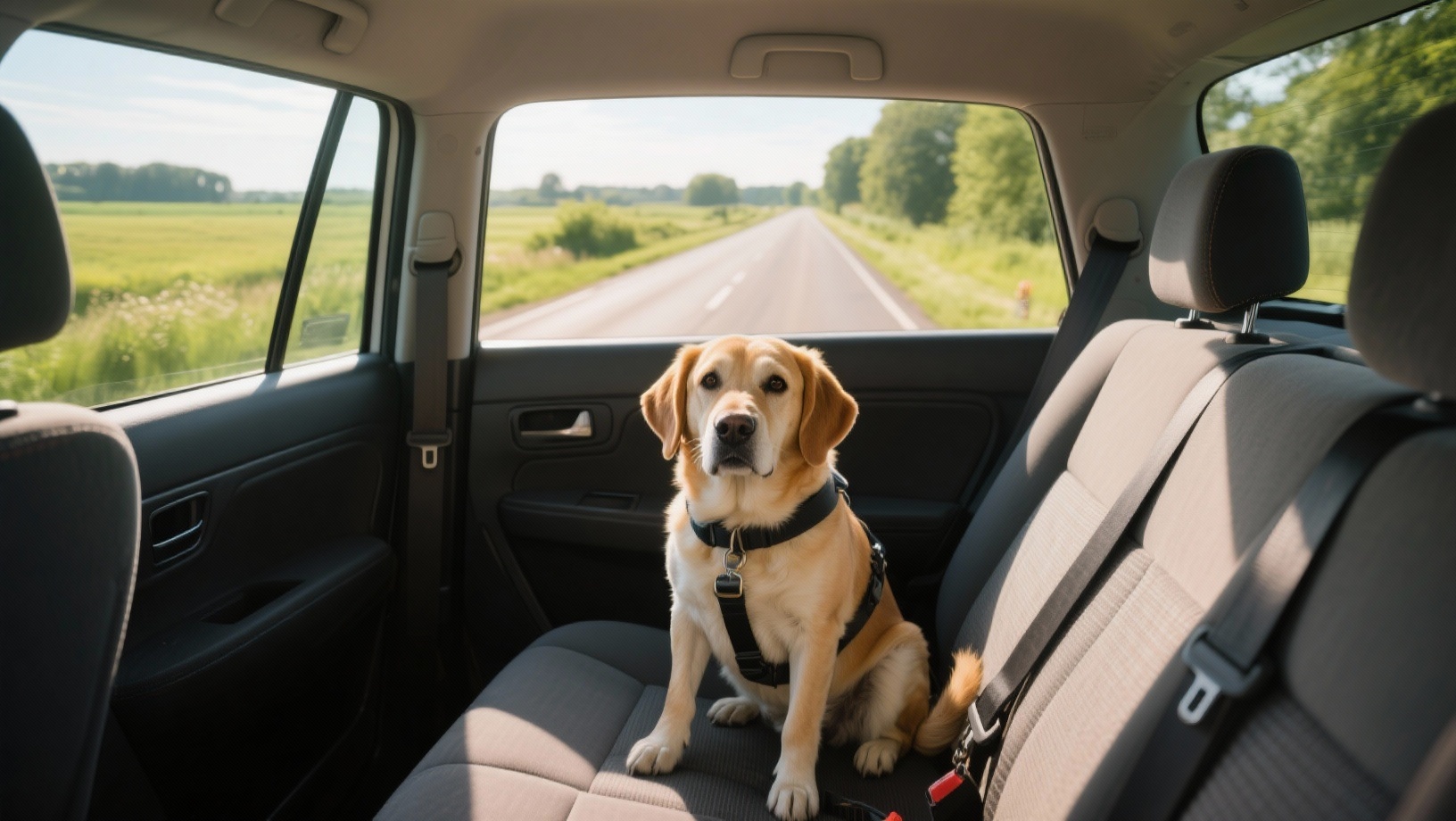
There is only one responsible approach to safely transporting your dog in the car. Always secure your dog with an approved harness, a travel crate or a special carrier. A loose dog poses a major risk to itself and to the occupants in the event of sudden braking or an accident. Read on to discover which method best suits your dog and travel plans.
Why you should never transport a dog loose in the car
A dog sitting loose on the back seat or even on the front passenger seat can create dangerous situations. It can distract you, block your view or be thrown through the car in a collision. In the Netherlands, the law states that an animal in the car must not cause danger or obstruction.
Although the rules do not specifically require a harness or crate, as the driver you are responsible for safety. If a loose dog leads to a dangerous situation, you can be fined. In many other European countries, such as Germany and Spain, it is explicitly mandatory to secure a dog. Good preparation therefore prevents not only accidents, but also problems with the local authorities.
‘ Always attach the short lead in the carrier to a harness and never to the collar to prevent injury in a collision. ‘
Choosing the right method: based on the size of your dog
The safest choice depends very much on the size of your dog, the type of car you have and the length of the journey. Not every solution is suitable for every situation. Below are the most reliable options, based on the size of your four-legged friend.
Small dogs: safely in a carrier or car seat
For small dogs up to around 10 kilos, a special car seat or travel carrier is a good solution. You simply secure these carriers to the rear seat with the seat belt. Inside the carrier there is a short lead that you attach to the dog’s harness.
- Car seat or travel carrier: These raise the dog up so it can look outside. This can reduce travel sickness. The raised sides provide a feeling of security.
- Small crate on the back seat: A small, sturdy crate that you secure with the seat belt is also a safe option. Make sure the crate is wedged in place so it cannot slide.
The advantage of these systems is that your dog sits comfortably while still being safely secured. Always attach the short lead in the carrier to a harness and never to the collar to prevent injury in a collision.
Medium-sized dogs: a car harness is the standard
For medium-sized dogs, a specially tested dog car harness is the most commonly used method. You attach this harness with a special strap to the car’s seat belt buckle. It is a practical solution that gives your dog enough freedom of movement to sit or lie down, but keeps it in place during unexpected manoeuvres.
When buying one, pay attention to the following points:
- Crash-test certification: Choose a harness that has been tested and approved. A normal walking harness is not designed to absorb the forces of a collision and may tear.
- Good fit: The harness must be tight enough so the dog cannot slip out, but comfortable enough for a long journey. A good harness has wide, padded straps that spread the pressure across the chest.
- Attachment at two points: Very safe harnesses have a strap that you attach at two points to the seat belt or via Isofix points. This prevents the dog from spinning around in a collision.
Large dogs: the boot as a safe zone
Large dogs are transported most safely in the boot of an estate car or SUV. This can be done in two ways: loose behind a dog guard or in a large, sturdy crate.
- Dog guard or net: A guard that you firmly clamp between the rear seat and the roof prevents the dog from being thrown forwards in a collision. It gives the dog plenty of space, which is pleasant on a long car holiday. Combine the guard with a comfortable mat on the floor.
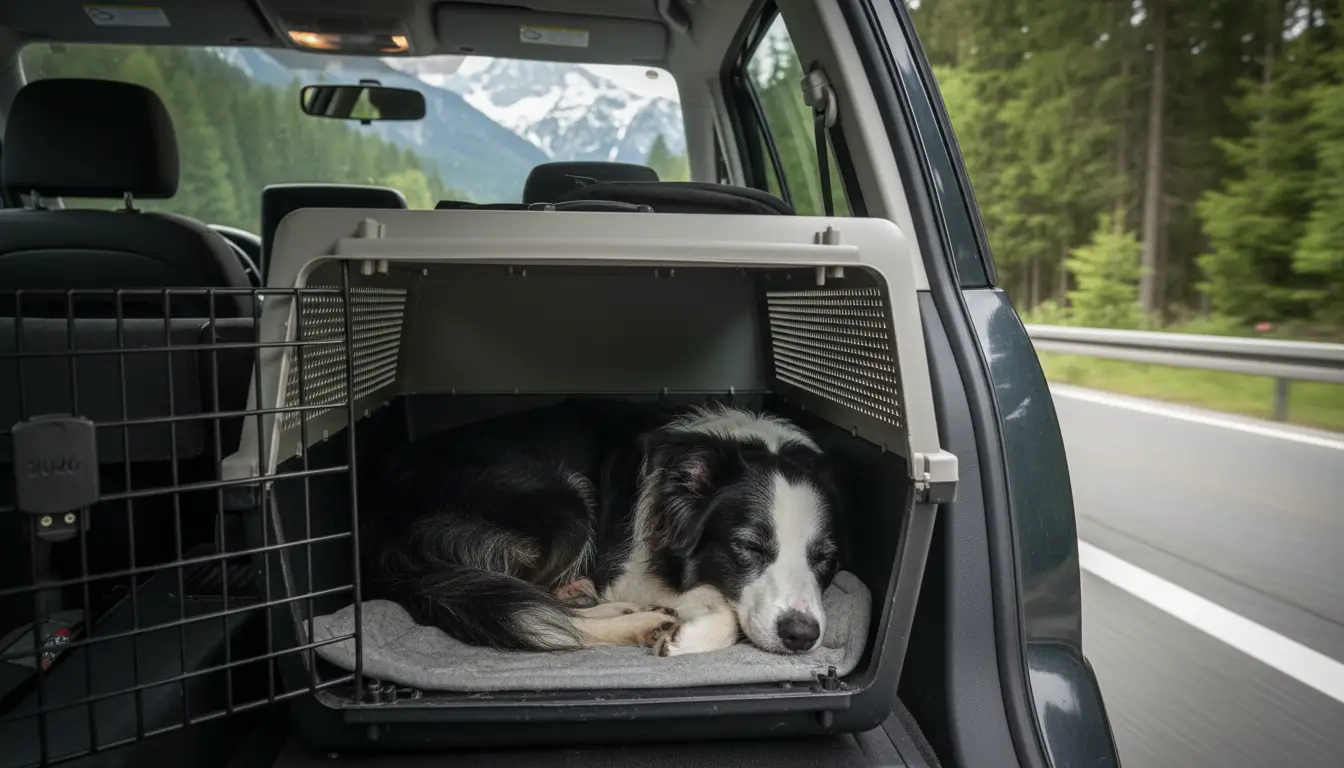
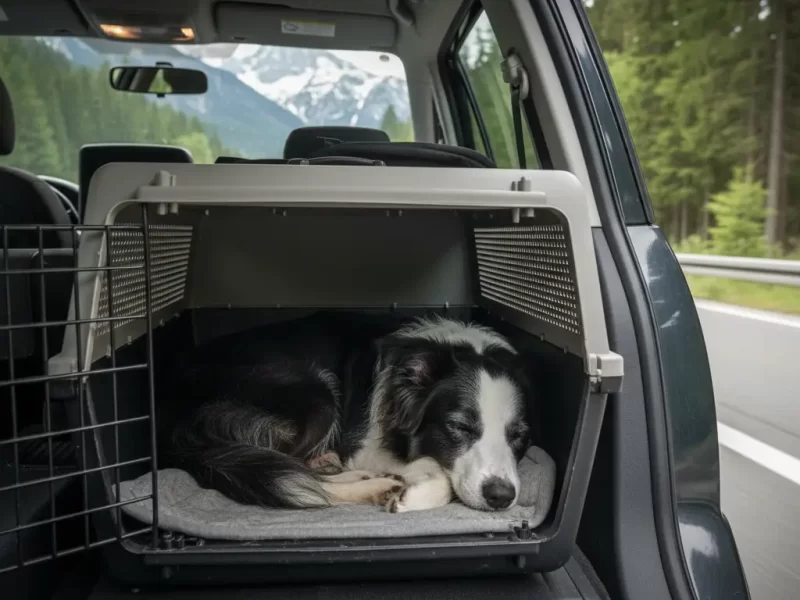
- Metal travel crate: The safest option of all for large dogs is a metal crate placed in the boot. Position the crate sideways to the direction of travel and make sure it is properly secured so it cannot slide. A high-quality crate can withstand severe collisions and protects both the dog and the occupants.
Helping your dog get used to the car comfortably
Not every dog jumps into the car feeling relaxed. You can reduce stress or fear by letting your dog get used to it calmly. Start with short, positive experiences. First let the dog sniff around the stationary car with the engine off. Reward it with a treat. Then start the engine for a brief moment and gradually increase the duration. Keep the first journeys short and drive to a nice destination, such as the woods or the beach. This way your dog learns that the car takes it somewhere enjoyable.
Schedule enough breaks during long trips. Stop every two hours in a quiet place where you can safely walk your dog on the lead. Avoid busy motorway service areas and give your dog time to stretch its legs and drink water.
Smart preparation for a carefree journey
Good preparation is about more than just choosing the right transport method. Think about comfort and health too. Put a familiar blanket or toy in the crate or carrier for a reassuring scent. Ensure sufficient ventilation, but never let your dog stick its head out of the window. In warm weather the risk of overheating is high; never leave a dog alone in the car, not even for a few minutes. A dog ramp can be useful for older or heavy dogs to prevent injuries when getting in and out.
On the Traveler Tips website you will find much more practical information to help you prepare for your trip, from handy routes through Europe to checklists for your luggage. Explore our extensive guides and set off well prepared.
Frequently asked questions
In the Netherlands and many European countries, transporting a dog loose in the car is prohibited if it creates risks, because the dog must not pose a danger to the occupants. Legally, a proper car harness with two straps attached to seat belts or Isofix points, or a sturdy crate positioned sideways to the direction of travel, is required; in some holiday countries loose transport is explicitly forbidden. Recommended safety systems are car seats, carriers or crates for small dogs, dog seat belts with harnesses for medium-sized dogs, and dog guards or large metal crates in the boot for large dogs. The ANWB recommends products that have passed crash tests and stresses the importance of solutions tailored to each dog and car.
To keep your dog comfortable and stress-free during long car journeys, start with gradual familiarisation with the car, from sniffing around to short, enjoyable trips. Choose a safe transport method that suits the size of your dog, such as a car seat, harness with seat belt, or a sturdy crate that is properly secured. Plan regular stops in quiet places for toilet breaks and check for signs of travel sickness. Use familiar blankets in the crate and protect your car with a cover against dirt and scratches.
For a safe and pleasant trip with your dog, it is essential to choose a suitable and robust transport system, such as a car harness, crate or dog guard, tailored to the size of your dog and the type of car. Ensure gradual familiarisation with the car to reduce stress. Plan regular stops for toilet breaks and monitor the temperature in the car to prevent overheating. For international travel, additional checks on local legislation, ID microchip and vaccinations are necessary.