 NL
NL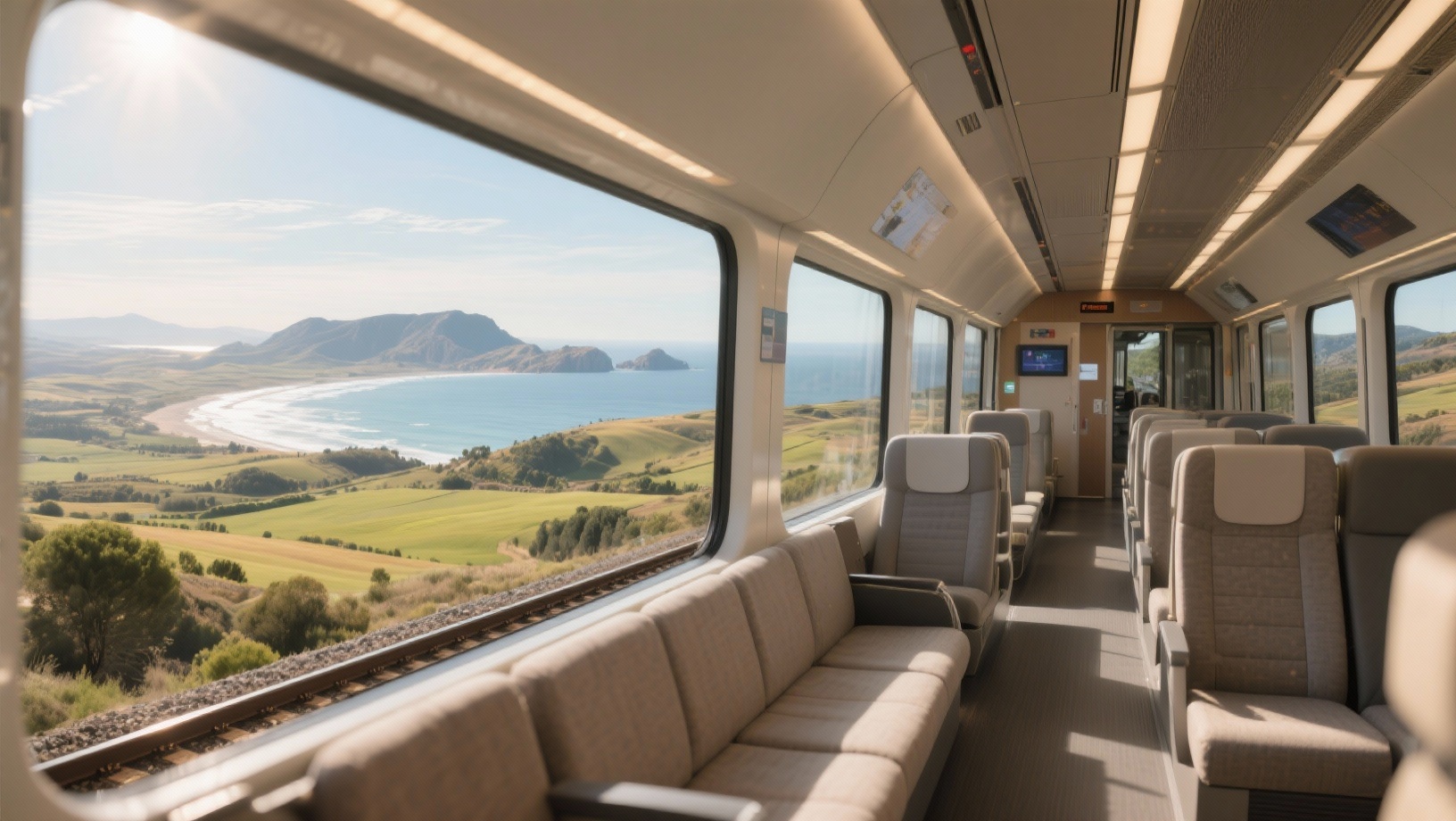
Spain & Portugal by train: discover the Iberian Peninsula in comfort
A train holiday in Spain & Portugal is the ideal way to discover the Iberian Peninsula. It offers a perfect balance between comfort, efficiency and the opportunity to really take in the landscape. Travelling by rail turns the journey from a simple transfer into an integral part of your holiday experience, as you glide in a relaxed way from one cultural treasure to the next. Discover how to make the switch from motorway to railway line and plan an unforgettable trip that is both sustainable and enriching.
This way of travelling fits perfectly with the philosophy of sustainable and mindful train holidays, where the journey itself becomes an important part of the experience. It is a conscious choice for travellers who want to avoid the hustle and bustle of airports and watch the diversity of the landscape pass by, from the green hills in the north to the sun-drenched coasts in the south.
Why choose the train? The advantages of slow travel
Choosing the train means choosing a smarter way to travel. The most immediate benefit is comfort. Spacious seats, freedom to move around and the possibility to work, read or simply stare out of the window already turn the journey itself into a holiday. Unlike flying, you arrive in the heart of the city, allowing you to start exploring straight away without losing time on transfers. On top of that, luggage rules are considerably more relaxed; you can simply take your suitcase without extra costs or strict weight limits. Sustainability is another major argument. Train travel has a significantly lower CO2 emission per passenger than flying, so you can set off with a clearer conscience. It is the ideal way to cross the beautiful, varied landscapes of Spain and Portugal and really experience them.
‘ For anyone heading to Portugal, a change of trains in Spain is unavoidable. ’
The journey there: international access routes from Europe
Reaching Spain and Portugal by train from the Netherlands or Belgium is an adventure in itself. The most logical route runs via France. High-speed trains such as the TGV connect Paris directly with Barcelona in around 6.5 hours. From Barcelona you can then easily continue your journey to other Spanish cities. For anyone heading to Portugal, a change of trains in Spain is unavoidable. Another option is to take a night train, which allows you to sleep while covering a long distance, although the services change constantly. It is important to plan and book these international connections well in advance, especially in high season.
The Spanish rail network: travelling with AVE and Media Distancia
Spain has one of the most extensive and modern high-speed networks in Europe, operated by the national rail company Renfe.
AVE: speed and comfort
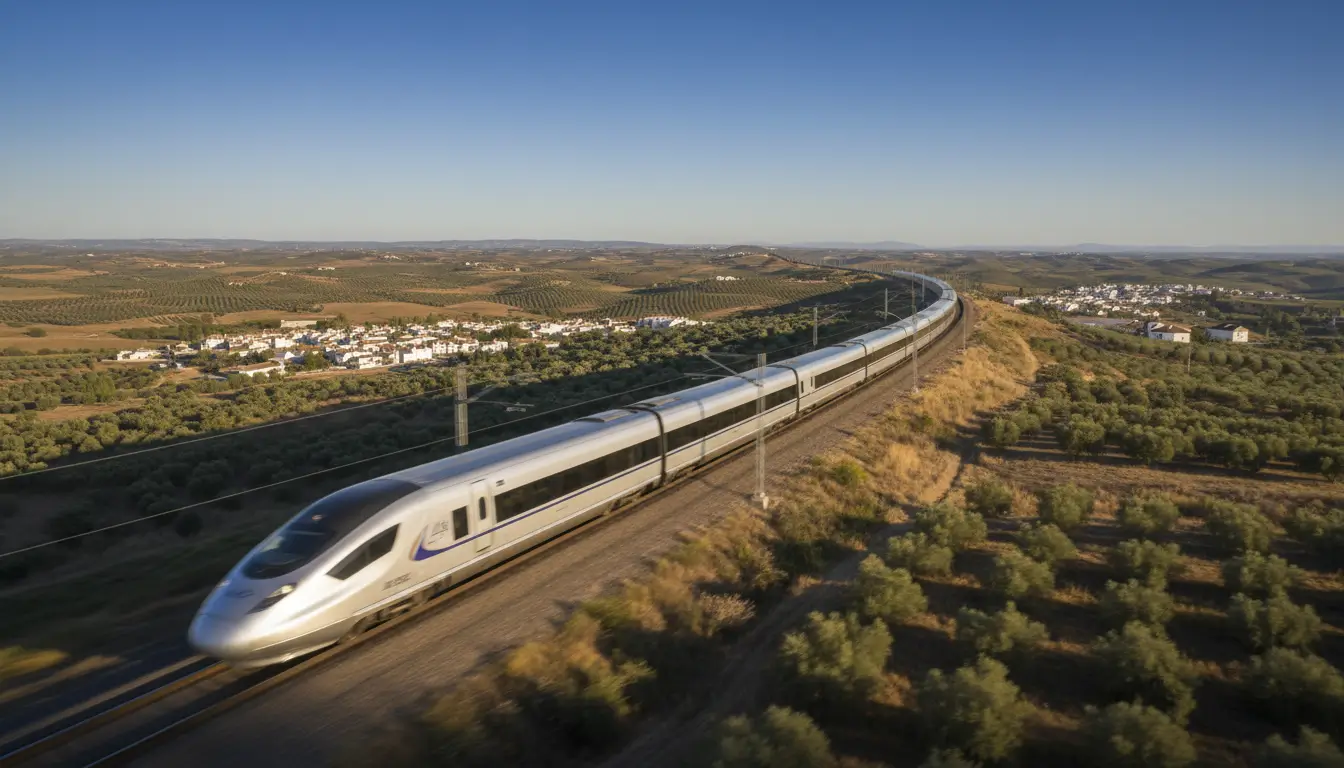
The AVE (Alta Velocidad Española) is the flagship of the Spanish railways. These trains connect the major cities at speeds of up to 310 km/h. The journey between Madrid and Barcelona takes just 2.5 to 3 hours. Other important AVE routes include Madrid to Seville, Valencia and Málaga. Travelling on the AVE is the epitome of efficiency and comfort, with modern trains and excellent on-board service.
Media Distancia and Avant
For connections between cities within a region and to smaller towns, the Media Distancia trains are ideal. They are slower than the AVE, but offer an extensive network that takes you further into the country. Avant trains are an intermediate option; they use the high-speed lines for shorter distances, making, for example, a quick day trip from Madrid to Toledo or Segovia possible.
Portugal by train: a well-connected country
The Portuguese rail network, operated by Comboios de Portugal (CP), is more compact but very effective at connecting the country’s main regions.
Alfa Pendular and Intercidades
The Alfa Pendular is Portugal’s premium high-speed train and links the cities of Braga, Porto, Coimbra, Lisbon and Faro along the west coast. These trains are modern and comfortable. The Intercidades (intercity) complements this network with connections to other important cities such as Évora and Guimarães. These trains are slightly slower but offer an excellent way to travel across the country.
Regional and urban lines
To explore specific regions, such as the picturesque Douro Valley from Porto or the coastline near Lisbon (to Cascais and Sintra), the regional (Regionais) and urban trains (Urbanos) are perfect. They stop more frequently and bring you close to local culture and nature.
‘ Combine cultural metropolises in a single trip without the stress of driving or flying. ’
Iconic city circuits: soaking up culture by rail
The Iberian Peninsula is perfect for city breaks by train. Combine cultural metropolises in a single trip without the stress of driving or flying.
- The Andalusian triangle: a classic route in southern Spain. Start in Madrid and take the AVE to Córdoba to visit the breathtaking Mezquita. Continue on to Seville, the heart of Andalusia, and finish in Granada with a visit to the Alhambra.
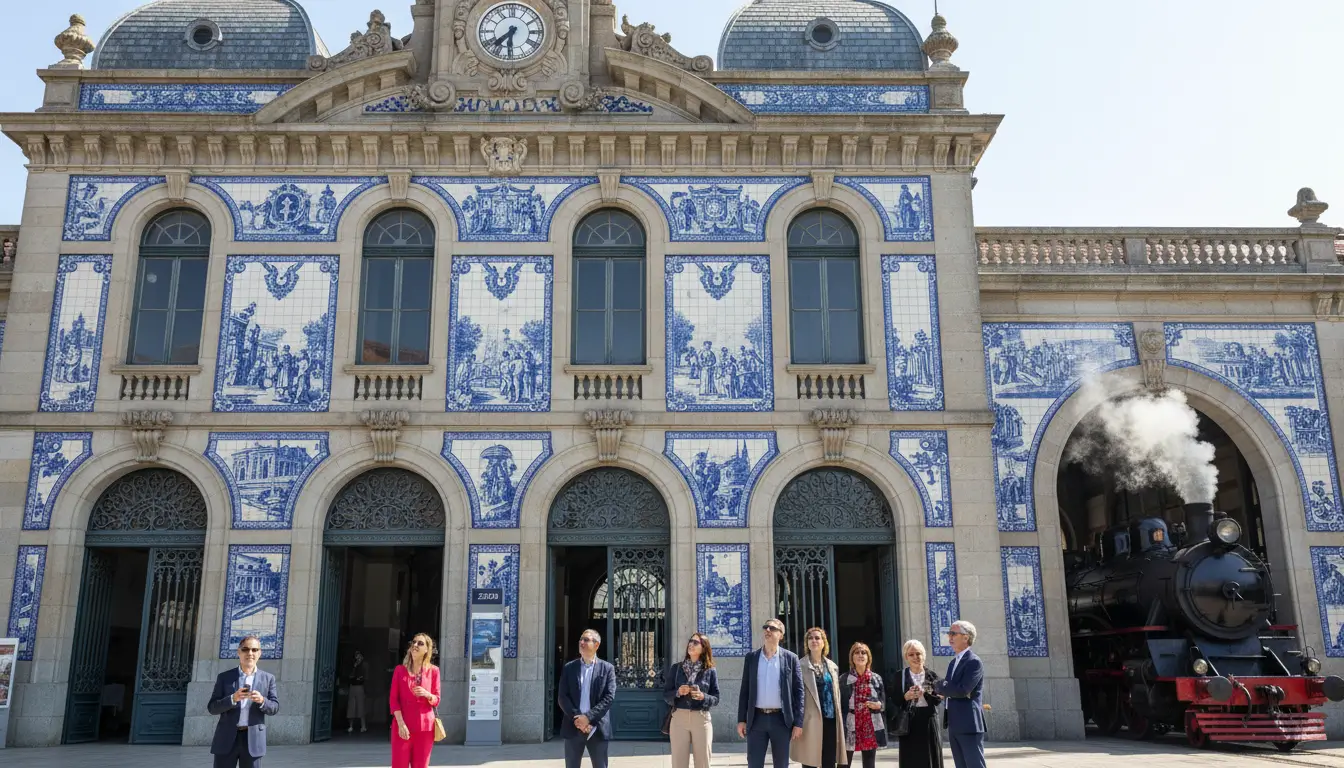
- Portuguese highlights: start in Lisbon and explore the city and the surrounding area (Sintra). Then take the Alfa Pendular north, with a stop in the historic university city of Coimbra, and end in vibrant Porto.
Discovering coastal destinations: from beach to seaside city
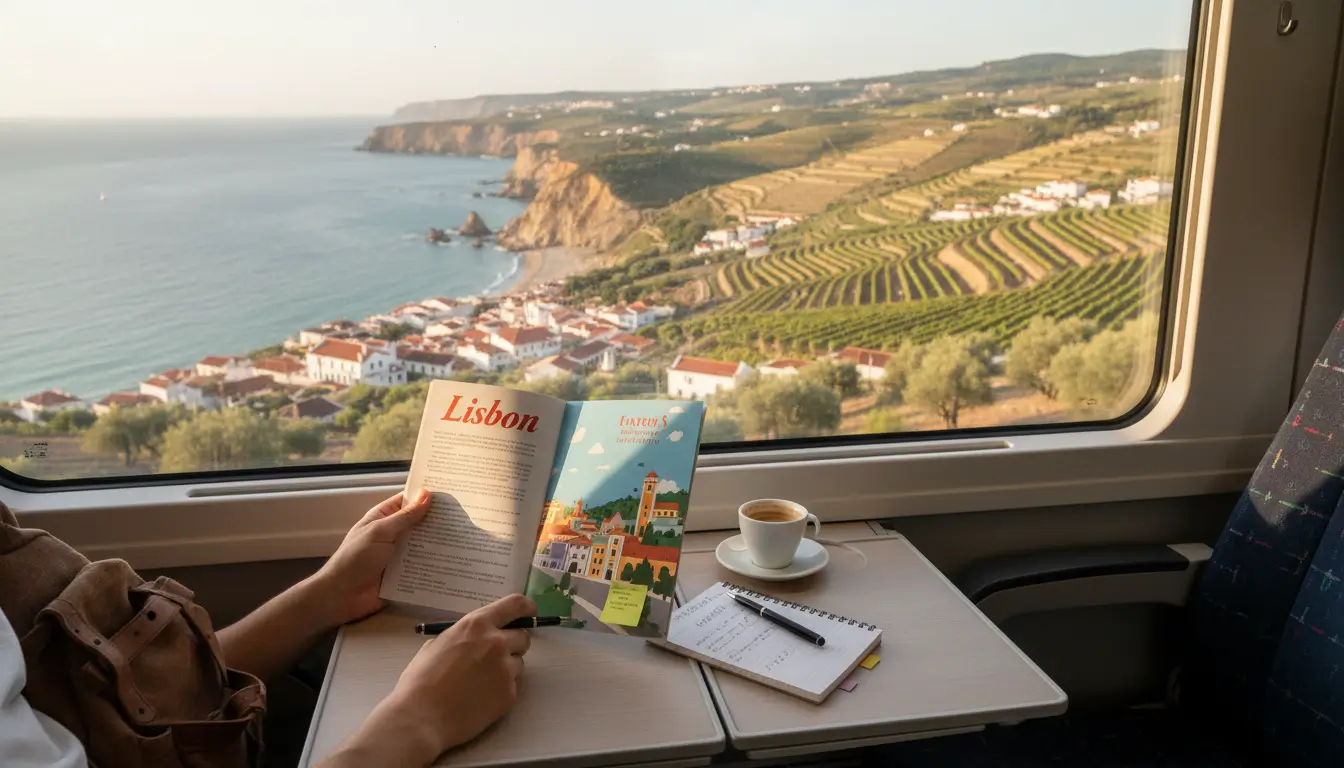
The train is also an excellent way to reach the extensive coastlines of Spain and Portugal. From Barcelona you can easily take the Rodalies (local trains) to the beaches of the Costa Brava. In the south, the train connects Málaga with popular resorts along the Costa del Sol. In Portugal, a short train ride from Lisbon takes you to the chic seaside resorts of Cascais and Estoril, while the main line heading south drops you in the Algarve, where you can explore the beautiful beaches.
Practical tips for planning your train journey
Good preparation is half the work. With these tips you can plan a smooth and comfortable train journey.
- Book tickets in advance: especially for high-speed trains (AVE, Alfa Pendular) the rule is: the earlier you book, the lower the price. You can do this via the official websites of Renfe and CP or via international platforms such as Trainline.
- Consider a rail pass: for a longer trip with many legs, an Interrail or Eurail Pass can be cost-effective. Do note: for many high-speed trains and night trains in Spain reservations are compulsory and incur additional costs.
- Check the stations: major stations such as Madrid Atocha, Barcelona Sants, Lisboa Oriente and Porto Campanhã are modern hubs. Smaller stations have fewer facilities. Check in advance where your station is located; it is usually very central.
- Luggage: take advantage of the generous luggage rules. There are usually special racks at the beginning and end of the carriage and above the seats. Always keep an eye on your valuables.
‘ For the main routes between, for example, Madrid and Lisbon or Seville and the Algarve, you will often be relying on comfortable long-distance buses that fill this gap. ’
Points to note and limitations of the network structure
Although travelling by train in Spain and Portugal is fantastic, there are a few things to bear in mind. The most significant challenge is the limited number of direct rail connections between the two countries. This is partly historical, due to a difference in track gauge (the Iberian broad gauge versus the European standard). The main connections are the Celta train between Vigo (Spain) and Porto (Portugal) and a few regional lines. For the main routes between, for example, Madrid and Lisbon or Seville and the Algarve, you will often be relying on comfortable long-distance buses that fill this gap. In addition, trains do not reach every remote village or nature reserve; for complete freedom in rural areas, combining your trip with a hire car for a few days can be a smart solution.
Sample routes: your adventure on the Iberian Peninsula
Route 1: the royal cities of Spain (10 days)
A journey through the heart of Spain. Start in Madrid (3 nights), take the AVE to Seville (3 nights), make a day trip from there to Córdoba, and then continue on to the historic city of Toledo (2 nights) before returning to Madrid (1 night).
Route 2: Portugal from coast to coast (12 days)
Explore the backbone of Portugal. Start in Porto (3 nights) and explore the Douro Valley. Travel south to Coimbra (2 nights) and then on to Lisbon (4 nights) with day trips to Sintra. Finish with the train to the Algarve (3 nights) for some relaxation by the sea.
Route 3: the grand Iberian adventure (3 weeks)
For the traveller who wants to see it all. Fly to Barcelona (4 nights), take the AVE to Madrid (4 nights). Continue on to Seville (3 nights). From here, take the bus to Lisbon (4 nights). Travel by train via Coimbra to Porto (4 nights) and fly back from there.
Your sustainable rail adventure awaits
A train holiday through Spain and Portugal is more than just a trip; it is a conscious choice for a deeper, more comfortable and more sustainable way of discovering. The railway takes you from world-famous monuments to hidden gems, while you enjoy the ever-changing landscape. With good planning you can overcome the small logistical challenges and the Iberian Peninsula is at your feet. Pack your suitcase, book your ticket and get ready for an adventure where the journey is at least as beautiful as the destination.