 NL
NL
A good campsite can make or break your holiday. The best choice starts with a clear idea of what you want in terms of size, facilities, location and atmosphere. Camping calls for a site that suits your travel party and preferences. Read on and discover how to make a reliable choice that matches your travel style.
First decide what suits your travel party
Your choice of campsite starts with the question: who are you travelling with? A family with young children has different needs from a couple looking for peace and quiet. For families, campsites with playgrounds, swimming ponds and entertainment are often a good starting point. Think of places close to beaches or forests where children can play and explore.
Those seeking tranquillity, on the other hand, will feel more at home on small-scale nature campsites. These offer spacious pitches, private sanitary facilities and no entertainment team. For groups or adventurers, larger parks with sports fields, bowling alleys or water play areas are often more suitable. You have everything within easy reach, without extra travel time.
‘ The location of a campsite plays a major role in your experience. ’
Location shapes your holiday experience
The location of a campsite plays a major role in your experience. Campsites by the sea, such as in Zeeland, Texel or South Holland, are often within walking distance of sandy beaches. Dunes and sea views add extra value for families who love the water.
Would you rather head for the forest? Then campsites on the Veluwe, in Drenthe or in De Maashorst offer direct access to walking trails, fishing ponds and natural swimming lakes. City campsites near Amsterdam, Utrecht or Maastricht combine the peace and quiet of the countryside with the proximity of urban sights. These locations often have bike hire and views over polders or meadows.
In the Netherlands you’ll find top campsites in provinces such as Limburg with its hills, Groningen with natural outdoor pools and Friesland with wide open countryside and safari tents.
Checking facilities and comfort
Sanitary facilities rank high on campers’ list of priorities. Well-maintained, clean and modern facilities make the difference between a pleasant and a disappointing holiday. Look for places with private showers, heated buildings or private sanitary facilities at the pitch.
Pools and leisure options increase comfort, especially when the weather is changeable. Heated outdoor pools, indoor play areas or open-air theatres provide entertainment whatever the conditions. Also check which types of accommodation are available, from tent pitches to glamping safari tents, chalets or gypsy-style wagons. Check the size of the campsite and any luxury options such as wood-burning stoves or domes.
Extra facilities such as free Wi‑Fi, restaurants, shops and bike hire make life easier. These are often standard on larger parks.
Size and atmosphere define your holiday feel
Campsites differ greatly in size, and this has consequences for the atmosphere. Small charm campsites with up to 75 pitches offer peace, privacy and a focus on nature. They are ideal for anyone looking for a personal feel without frills. Large family campsites with more than 250 pitches, on the other hand, are lively and full of activities. You’ll often find enough facilities there to fill a whole day, especially for children.
Small campsites do have downsides: less entertainment and fewer facilities. Large campsites, by contrast, can feel busier and less intimate. Choose a campsite that matches how you want to experience your holiday: relaxed and quiet, or buzzing with non-stop entertainment.
‘ Winners have shown that they are reliable and meet high standards. ’
Reviews and certifications help you choose
Each year the ANWB selects the best family campsites and small campsites based on more than 15,000 camper reviews. These reviews look at facilities, maintenance and overall experience. Winners have shown that they are reliable and meet high standards.
Alongside the ANWB there are other quality marks and labels that guarantee campsite quality. Certifications such as ANWB stars, Recron quality marks or eco-camping labels provide guidance. They give insight into the quality of sanitary facilities, maintenance and sustainability.
Independent reviews from campers are also valuable. Platforms such as Zoover, Google Reviews or specialised camping websites (providers that rate campsites and bring together information) offer insight into other travellers’ experiences. Pay attention to recurring themes in reviews, such as the state of the sanitary facilities, staff friendliness and how clean the grounds are.
Practical tips for a smart choice
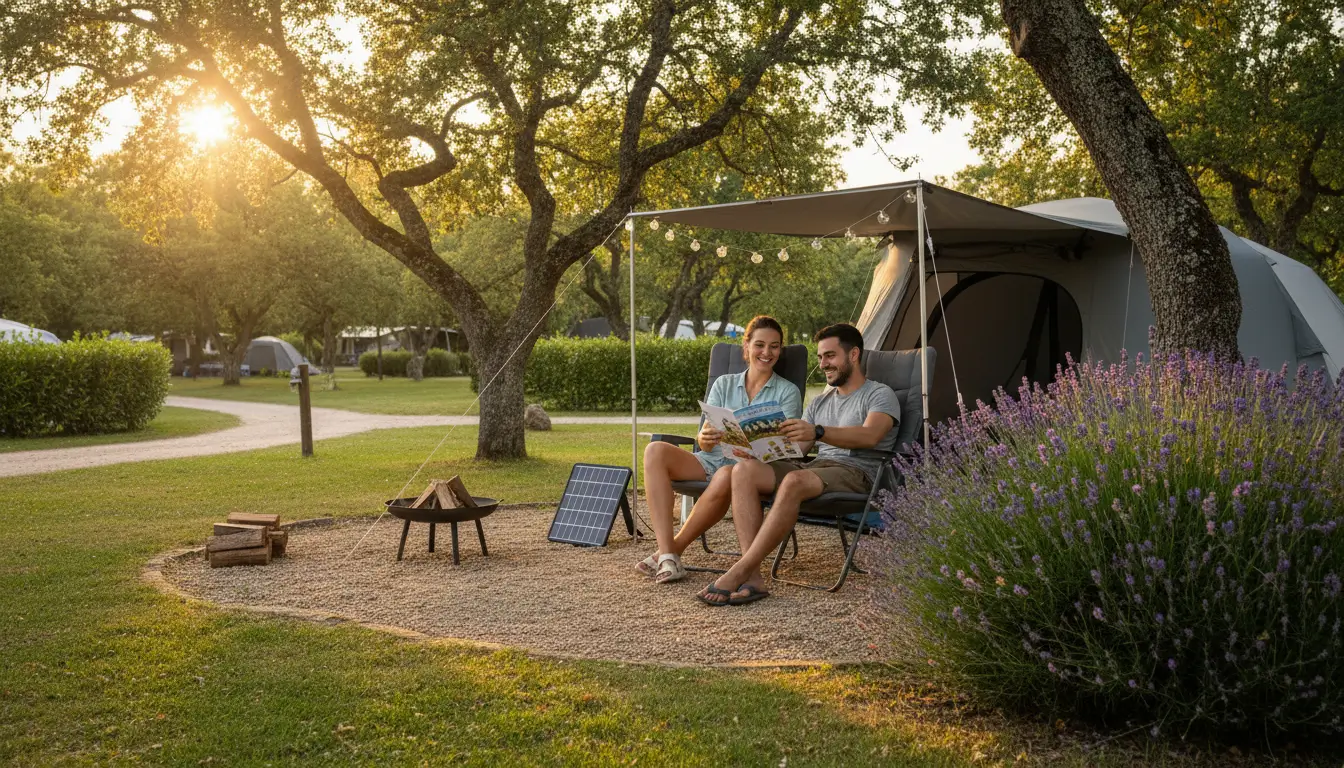
Ask yourself a few key questions before you book. Which region or country matches your wishes? What size campsite feels comfortable? What type of fellow campers are you looking for? How important is the standard of sanitary facilities? Do you want to stay near the beach, forest or city?
Also check whether the campsite is open all year round. Some campsites are ideal for autumn or winter camping. Book ahead for popular places, such as five-star family campsites or dune campsites. These locations are often fully booked quickly during school holidays.
Consider sustainability if that matters to you. Nature campsites with their own nature reserve as a back garden offer peace and an eco-friendly feel. They suit conscious travel and give you direct contact with nature.
Filter options speed up your search
Many camping platforms offer filters to speed up your search. Filter by location, size, facilities, price range and type of accommodation. This way you can quickly narrow things down to campsites that really suit you.
Pay attention to details such as the presence of a campsite shop, the distance to sights and the availability of shady pitches. These factors can make your stay more pleasant. Use photos and site maps to get a feel for the layout and atmosphere.
‘ What is perfect for one person can be disappointing for someone else. ’
The best campsite is personal
There is no single universally best campsite. What is perfect for one person can be disappointing for someone else. The point is to find a campsite that suits your travel party, your preferences and your idea of a holiday. By setting your priorities, reading reviews and using filters, you’ll find a place that genuinely makes your holiday better.
On the Traveler Tips website you’ll find more in-depth information about types of campsite, nature holidays and smart trip planning. Discover more useful tips and make your next journey even better thought out.
Frequently asked questions
For comfort, clean and modern sanitary facilities, good beds or level pitches, heating/electricity and possibly private sanitary facilities are important. For car holidays, a spacious parking space at the accommodation, easy access for luggage and possibly charging points are crucial. For train travellers, good public transport connections, luggage services or trolleys, bike hire and a campsite shop or restaurant within walking distance matter a lot. For road trips, late check-in, flexible arrival times, easy access roads, a service station for motorhomes and basic facilities (shower, Wi‑Fi, breakfast/meal options) are essential.
First plan your route along the main sights and activities, then choose campsites that lie logically between them so that your daily distances stay short and manageable. Deliberately alternate between campsites close to nature, the city or the coast, depending on that day’s theme (active, culture, relaxation). Build in fixed “anchor points” where you stay several nights to limit travel time and really enjoy the surroundings, and complement these with shorter stopovers. Check in advance how well facilities (sanitary facilities, pool, playground) match your planned daily activities, so that campsite and day programme reinforce each other.
Look at reviews and photos on several platforms to get a sense of peace, busy periods, evening noise levels and how clean and natural the grounds look. Pay attention to the location: direct access to the beach, forest or walking and cycling routes for a nature experience, or proximity to a village/city and local events for culture. Read in the descriptions whether the campsite is small-scale and quiet or a large family campsite with entertainment and activities. Finally, check whether the campsite works with nature organisations or local businesses (such as farms, museums, local markets), which often points to a stronger connection with the area.
Pay close attention to the small print: what is and isn’t included in the price (electricity, shower tokens, tourist tax, cleaning costs, use of pool/entertainment). Check the location and surroundings (distance to beach/forest, motorway, railway line, late‑night bar) and read recent reviews for information about how busy or noisy it is and the hygiene of the sanitary facilities. Look in advance at the type of campsite and target group (quiet site versus large family campsite with entertainment) so the atmosphere suits you. Finally, check cancellation terms, arrival/departure times and any deposit or mandatory extras (bed linen, environmental or parking charges).
Use filters on camping websites (such as location near a station, public transport access or ‘reachable without a car’) and check the directions for information on walking or cycling times from the nearest station or bus stop. Specifically look for city campsites or campsites near public transport hubs, as they often explicitly cater for train travellers. Check whether the campsite offers shuttle services, luggage transport, bike hire at the station or combined train + camping packages. Read recent reviews using search terms such as “public transport”, “train” or “without car” to see real-life experiences from other travellers.