NL
NL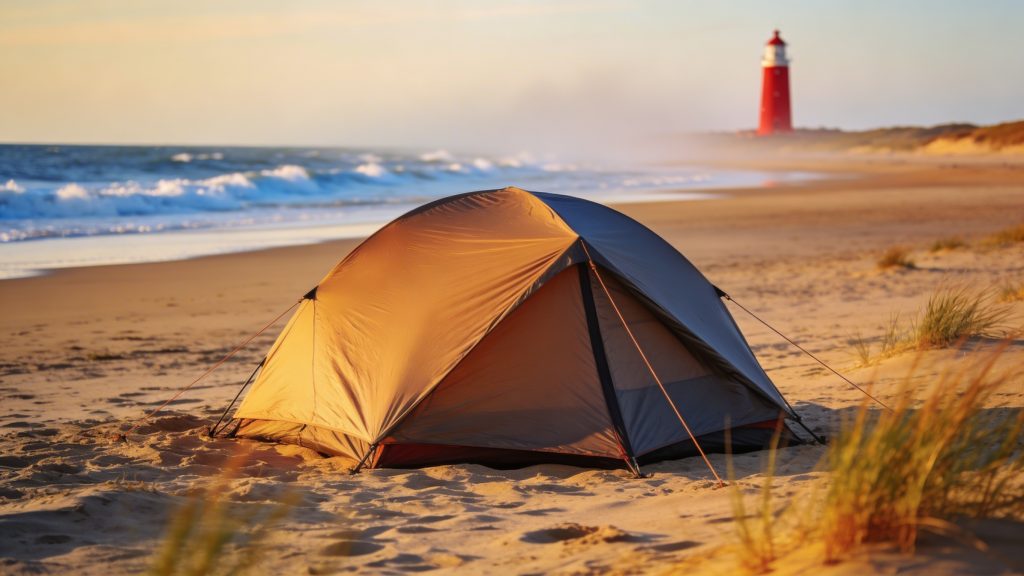
Texel offers nature campsites where you wake up to sea views, walk to the lighthouse and can reach the beach by bike within ten minutes. The largest of the Wadden Islands combines tranquillity, open landscapes and easy access for anyone who likes to organise their own camping experience. In this article you can read where to find the most beautiful nature campsites near the beach and how to explore the surroundings to the full.
Nature campsites in the dunes
The dunes on Texel form a natural barrier between the inland and the North Sea. Campsites in this zone offer direct access to walking trails and are located close to the beaches. The landscape is characterised by dune grasslands and drifting sand, with small pine woods here and there that offer shelter from the wind.
Many nature campsites between Den Burg and De Koog are located in this dune area. The locations range from small-scale sites with spacious pitches to campsites with sanitary facilities focused on comfort. Distances to the beach are usually between five hundred metres and two kilometres.
For anyone who likes to combine camping in nature with beach visits, these campsites are ideal. Their location allows you to combine dune walks with a day by the sea, without long travel times.
Campsites with sea views on Texel
Sea views from your tent or campervan make a stay special. On Texel you will find a few campsites where the sea is visible from the site. These spots are usually on the west side of the island, towards Paal 17 or near De Cocksdorp in the north.
The view varies per pitch. Some campsites offer elevated spots in the dunes where you can see the horizon above the marram grass vegetation. Other campsites are located directly behind the dune row, which means that in clear weather you can see the North Sea.
- Campsites near Paal 17 are within walking distance of the beach and often offer open sea views
- In De Cocksdorp you will find small-scale sites with views of both the Wadden Sea and the North Sea
- Near De Muy there are campsites in a nature reserve with panoramic views of the dune landscape
Book in advance if you have specific wishes. Pitches with sea views are in high demand, especially from April through September.
The lighthouse within cycling distance
The lighthouse of Texel is located in De Cocksdorp, at the northern tip of the island. From most nature campsites this beacon can be reached by a bike ride of twenty to forty minutes. The distance depends on your starting point, but the island is compact enough to plan this trip easily.
The lighthouse itself is open to visitors and from the top you have sweeping views over the Wadden area, the North Sea and the island. Around the lighthouse there are walking routes through the dunes and the nature reserve De Slufter. Here you will often see birds such as spoonbills, avocets and oystercatchers.
Many campsites rent out bicycles or offer bicycle parking. Texel has an extensive network of cycle paths that are safe and easy to follow. A route to the lighthouse often takes you through woods, past meadows and through dune areas.
Walking from the campsite
Texel has several walking networks, which connect directly with the surroundings of nature campsites. The junction system makes it easy to put together routes based on distance and landscape. You can choose short walks of five kilometres or longer hikes of fifteen to twenty kilometres.
Popular walking areas include De Slufter, a unique salt marsh area where the sea flows in and out freely, and the Dunes of Texel National Park. In both areas routes are signposted and accessible for different levels. The paths lead through different types of landscape, from poor grassland to dense dune thickets.
- De Slufter: a salt marsh area with saline flora and an abundance of birds
- Dunes of Texel National Park: protected nature reserve with shifting dunes and heathland
- De Dennen: woodland area south of De Koog with shady paths
- De Muy: heathland with open views and flocks of sheep
From campsites in the dunes you can often reach these areas on foot. Campsites near Den Burg or De Koog offer a central starting point for walks in several directions.
‘ The cycle paths are flat and easy to follow, except for a few dune paths that are sandier. ’
Exploring the island by bike
Cycling is the most common way to discover Texel. The island measures roughly 24 kilometres from north to south and is about 9 kilometres wide at its widest point. The cycle paths are flat and easy to follow, except for a few dune paths that are sandier.
From nature campsites you can easily cycle to the various villages, beaches and sights. A loop around the island covers around fifty kilometres and is divided between tarmac and semi-paved paths. The route passes the lighthouse, the villages of Den Burg and Oudeschild, and the beaches of De Koog and Paal 17.
For families with children there are shorter routes, for example a trip of ten to fifteen kilometres along the west coast. These routes combine beach and dunes and are manageable for less experienced cyclists.
Facilities at nature campsites
Nature campsites on Texel vary in facilities. Small-scale sites often offer the basics: running water, toilets and showers. Larger campsites have more extensive facilities such as washing machines, play areas and campsite shops.
Many campsites focus on comfort without detracting from the natural surroundings. Sanitary facilities are generally well maintained and cleaned regularly. Pitches are generously sized, which offers privacy and peace.
When choosing a campsite, pay attention to its location in relation to amenities. Campsites further away from villages are quieter, but require more planning for shopping or eating out. Campsites near Den Burg or De Koog offer more convenience in the immediate area.
Best time for nature camping on Texel
Texel can be visited all year round, but the period from April through October is most suitable for nature camping. In spring you will see flowering dune fields and migrating birds are active. The summer months of July and August are the busiest, with crowded beaches and campsites.
September and October offer a quieter alternative. The weather is often still mild, the dunes turn yellow and brown, and the campsites are less busy. For those seeking peace and a greater chance of availability, these months are recommended.
Bear in mind the island climate. It is often windy, especially in autumn and winter. Make sure you have a well-pitched tent or campervan that can withstand gusts of wind. Rainwear and warm layers are sensible even in summer.
Practical preparation
Book your pitch in good time, especially if you are going camping in high season or with a larger group. Many nature campsites apply a maximum number of guests to safeguard peace and the experience of nature. When booking, check whether the campsite is suitable for children or pets, if that is relevant.
Take enough provisions with you or plan your shopping in one of the villages. Supermarkets can be found in Den Burg, De Koog and Oudeschild. Not all shops are open on Sundays, especially outside high season.
- Tent or campervan: suitable for wind and changeable weather
- Warm clothing and a waterproof jacket: useful even in summer
- Cycling kit: pannier, helmet and repair kit
- Insect repellent: especially in spring and early summer
Check in advance whether your campsite offers electric hook-ups if you need them. Not all nature campsites provide this option at every pitch.
Discover more on Traveler Tips
On the Traveler Tips website you will find extensive information about planning nature holidays, practical camping tips and routes across the Netherlands. Discover more about other islands, coastal areas and nature campsites that match your travel preferences.
Frequently asked questions
The nature campsites on Texel are easiest to reach by car via the ferry from Den Helder, after which you can simply drive to the campsite on the island. Travellers arriving by train get off in Den Helder and then take the bus or a taxi to the ferry, and on Texel take a bus or (rental) bike to the campsite. For a driving holiday you combine the drive to Den Helder with the ferry crossing and then continue your route along the various nature campsites on the island.
The immediate surroundings of nature campsites on Texel offer conscious travellers extensive dunes, woods and quiet beaches to explore in peace. You can walk and cycle endlessly along well-marked routes, often starting directly from the campsite. Birdwatchers can enjoy unique birdwatching spots along the Wadden Sea and in the nature reserves. Many activities, such as beach walks and trips through woods and dunes, are low-threshold, small-scale and in keeping with sustainable and conscious travel.
At a nature campsite on Texel you can in any case expect clean, well-maintained sanitary facilities, such as showers and toilets. The pitches are generally spaciously laid out with plenty of privacy and your own outdoor space. Usually there are basic facilities such as water points, waste separation and possibly electricity on or near the pitch. In addition, you can often rely on direct connections to walking and cycling routes in the surrounding countryside.
Book several months in advance via the official website of your chosen nature campsite, especially for school holidays and public holidays. Compare locations (dune, forest, beach) and facilities beforehand so that you can book in a targeted way. Consider travelling outside the peak season (July–August) for more availability and peace and quiet. If in doubt, contact the campsite directly for up-to-date occupancy levels and any waiting lists.