NL
NL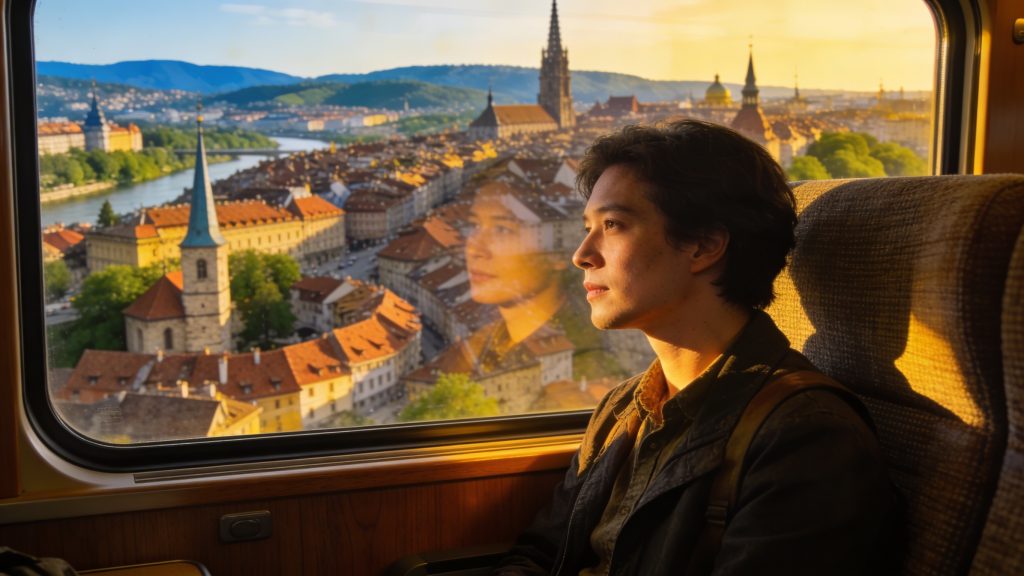
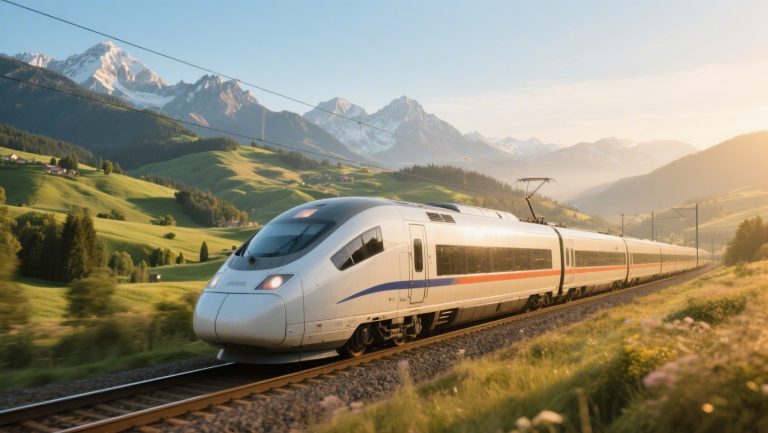
A five-day train journey through Europe makes it possible to combine several cities in one trip without flying. You travel comfortably between iconic destinations, discover different cultures and enjoy landscapes along the way that you would miss by car. All this with lower CO2 emissions and more freedom to plan flexibly. This compact experience combines culture, practical convenience and conscious travel.
Why a five-day train journey is a smart choice
A short train journey offers advantages you will not find with other forms of travel. You get on, look out of the window and arrive in the heart of the city centre. No long waits at airports, no hectic search for parking. Trains take you to places that are difficult to reach by car and stop at stations that give you direct access to city centres.
Flexibility is another major advantage. With an Interrail Global Pass – a rail pass that allows you to travel through several European countries – you can travel for five days within one month. This way you can visit four to six cities. Night trains save on hotel costs and deliver you well-rested to your next destination. Travelling by train is also more sustainable. It reduces your CO2 emissions by ninety per cent compared with flying. For train holiday destinations in Europe you are therefore making a conscious choice.
‘ Prague, also known as the Golden City on the Vltava, offers castles, narrow streets and a vibrant centre. ’
Routes that link several cities
In five days you can combine two to four cities. The routes below depart from the Netherlands or Belgium and are manageable without excessive travel times.
Central Europe: Berlin, Prague and Vienna
This route takes you past history, art and architecture. Day one takes you from Amsterdam to Berlin. The journey takes five to six hours via Arnhem. Book a hotel near Hauptbahnhof so you can get into the city quickly. On day two you stay in Berlin to explore museums, the Wall and hip cafés.
On day three you travel to Prague in four hours. Prague, also known as the Golden City on the Vltava, offers castles, narrow streets and a vibrant centre. On day four you travel from Prague to Vienna, again in four hours. There you can discover vineyards, St Stephen’s Cathedral and the Belvedere. On day five you return by night train. If you wish, you can make a stop in Bratislava on the way for an Eastern European contrast.
Germany with stopovers: Amsterdam to Munich
This route takes you past some of Germany’s most characteristic cities. Day one takes you to Cologne in two and a half hours. Climb the cathedral and stroll along the Rhine. On days two and three you travel to Munich, which takes seven to eight hours. Consider a night train for comfort, or travel by day to enjoy the scenery.
From Munich you can take a day trip to a nearby city on day four. Reserve seats for busy routes such as the ICE. On day five you travel back home.
Western Europe: Lille, Brussels and London
A western route combines Franco-Flemish charm with British energy. On day one you travel from Amsterdam to Lille in three and a half hours via Brussels. Sample the Flemish-French blend in its food and language. On day two you travel to Brussels in one hour, where you can enjoy a cosmopolitan vibe without language barriers.
On days three and four you take the Eurostar from Brussels to London. The Eurostar is a high-speed train that connects Brussels and London. The journey takes two hours. Browse the markets, visit museums and see well-known hotspots. On day five you travel back. Book the Eurostar in advance to guarantee reserved seats.
Southern and Eastern Europe variants
Other routes open up even more of Europe. From Amsterdam to Montpellier you travel in seven hours. There you can enjoy the Mediterranean, the beach and Mediterranean cuisine. An eastern variant runs from Bratislava to Kraków. There you will discover culture-rich cities and relaxation in nature. For Auschwitz, plan in an extra day.
In Slovenia and Austria you can combine Zagreb, Ljubljana and Vienna. The journey from Zagreb to Ljubljana takes two hours and runs past lakes. Ljubljana to Vienna takes six hours. Highlights include the Dragon Bridge, the castle and a day trip to Lake Bled.
Practical preparation for five days by train
Good planning starts with your tickets. An Interrail Global Pass offers flexibility for five travel days within one month. Check whether night trains are available on your route. They save time and hotel costs. Book seats in advance for popular trains such as the ICE or Nightjet. The Nightjet is a night train operated by Austrian rail company ÖBB. Reservations cost a few euros but prevent you from having to stand.
Choose accommodation within walking distance of the station. In Berlin, look near Hauptbahnhof, in Prague near Hlavní nádraží. Small-scale hotels are often cheaper and more personal than large chains. Book in advance to avoid stress.
Pack light. Trains have limited luggage space and you do not want to be lugging heavy suitcases around. Take an adapter for different power sockets, download the Eurail app for up-to-date departure times and pack snacks for longer journeys. If you are travelling to Southern Europe in summer, choose lightweight clothing. For Christmas markets in Hamburg or Munich, pack warm layers.
Useful tips for on the road
Book tickets early for lower prices. Popular connections increase in price as the departure date approaches. Travel outside peak times to avoid crowds and enjoy more space on the train. For longer journeys, choose a window seat so you can follow the landscape.
Stopovers make your journey more varied. An extra night in Cologne breaks up the trip to Munich and gives you time to explore the city. Local cafés such as Café-Meierei in Vienna give an authentic impression of your destination. For nature lovers, routes along lakes are ideal. Ljubljana and Lake Bled combine culture with greenery.
Night trains save on hotel costs, but consider in advance whether you will sleep comfortably on them. Some travellers prefer the extra day in a hotel to a night journey. Choose what suits you and plan accordingly.
‘ Every route has its own character. ’
What you take away from five days by train
A five-day train journey through several cities combines culture, nature and convenience. You travel consciously, explore diverse destinations and remain flexible in your planning. Every route has its own character. Central Europe offers castles and art, Germany cathedrals and beer, Western Europe markets and port cities. Southern Europe brings Mediterranean beaches and Eastern Europe nature with history.
The combination of short travel times and direct access to city centres makes this way of travelling very accessible. Whether you choose a structured route or prefer to stay flexible, a five-day train journey suits different travel styles. Prepare well, choose your route and experience Europe from the rails.
On the Traveler Tips website you can find much more information about routes, destinations, practical regulations and useful planning for your next trip. Discover what suits you and plan your next journey with confidence.
Frequently asked questions
Choose 2–3 cities that lie logically on one railway line (for example Berlin–Prague–Vienna) and limit yourself to a maximum of one longer journey per day. Alternate travel days with full days on location, so that you have at least one complete day in each city. Use a route planner (such as DB Navigator or Rail Planner) to check journey times and connections and choose daytime services of 3–6 hours for more comfort. Book accommodation within walking distance of the station and reserve any seats or sleepers on busy routes or night trains in advance.
For an intensive 5-day trip through several European cities, an Interrail Global Pass with 5 travel days within 1 month is usually the most suitable and flexible option. This pass is cost-effective if, in a short time, you make many medium to long journeys (for example Berlin–Prague–Vienna or Lille–Brussels–London). Reserve where necessary (ICE, Eurostar, Nightjet) to make optimal use of your pass and keep surcharges down. Only buy separate tickets instead of a pass if you are planning at most one or two longer journeys.
Travel with only hand luggage or a small wheeled suitcase so that you can get on and off easily and do not waste time dragging bags around. Book overnight stays within walking distance of major train stations so you can continue your journey quickly and are not dependent on additional transport. Plan the longest journeys early in the morning or in the evening, so that you can spend the afternoons in the cities. Use apps (such as Eurail/NS International) to monitor connections and delays in real time and, where necessary, quickly choose an alternative.
Choose a maximum of 2–3 cities that lie logically on one rail route, so that you lose less time travelling and spend more time experiencing. Go for a mix of different atmospheres (for example historic Berlin, romantic Prague, imperial Vienna) and choose 2–3 highlights per city instead of all the “must-sees”. Stay close to the station to save travel time, and consider planning one longer train ride as a “scenic” day with views. Match season and interests (summer: southern coastal city, winter: city with Christmas markets) so that each stop has a clearly different focus.
Yes. For example, the Berlin–Prague–Vienna route is known for comfortable, direct trains and varied views of rivers, hills and historic cities. The route through Slovenia and Austria, such as Zagreb–Ljubljana–Vienna, also offers plenty of comfort and beautiful landscapes along lakes and green valleys. For a shorter trip, routes in Germany such as Cologne–Munich are pleasant: good ICE trains with spacious seats and views of rivers and hills along the way. You can combine these routes into a short, intense trip of 4 to 5 days.