NL
NL
Travel from the Netherlands to Norway, Sweden and Denmark without flying. The train journey to Scandinavia takes between 20 and 30 hours, depending on your destination and chosen route. It is a comfortable and sustainable alternative to the plane, and you can break up the journey into stages with stopovers in beautiful cities. Discover which routes are available and how to plan your trip smartly.
There are no direct trains
There is no direct train connection from the Netherlands to Norway. You travel via Germany, Denmark and often also Sweden. The most commonly used route goes via Hamburg and Copenhagen. That sounds like a long journey, and it is. But you decide how to break it up yourself: in one go, with a night train, or spread over several days with stopovers.
‘ You can do this in two days, or deliberately choose to stop along the way. ’
Route via Hamburg and Copenhagen
The most popular route to Norway starts in Amsterdam or another major Dutch city and runs via Germany to Hamburg. From there you continue on to Copenhagen. You then travel via Sweden to Oslo or Stockholm. This route is very manageable with a combination of day and night trains.
The main stages are:
- The Netherlands to Hamburg: around 3 to 5 hours via Osnabrück
- Hamburg to Copenhagen: direct train connection available
- Copenhagen to Gothenburg or Stockholm: direct connection
- Stockholm or Gothenburg to Oslo: with Norwegian trains from Vy or Swedish trains from SJ
The total travel time from Amsterdam to Oslo is around 20 to 30 hours. You can do this in two days, or deliberately choose to stop along the way.
Night train as a smart option
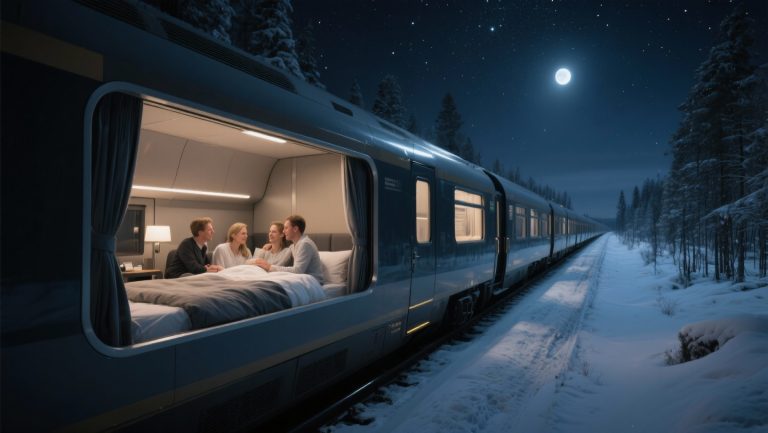
Within Scandinavia, modern night trains run, operated by SJ and Vy. This means you can cover part of the journey while you sleep. That way you save time and hotel costs. The night trains have couchette compartments and sleeping cars, which makes travelling a lot more comfortable.
A widely used combination is the train from Amsterdam via Hamburg to Copenhagen or Stockholm. After that you continue with a night train towards Oslo or other Norwegian cities. This way of travelling suits travellers who consciously opt for slowing down.
Advantages of the night train
- You cover a large part of the distance while you sleep
- You save on a night in a hotel
- You arrive well rested at your destination
What is the route to Stockholm?
The train journey to Stockholm largely follows the same route as the one to Oslo. From the Netherlands you travel via Osnabrück and Hamburg to Copenhagen. From there you take a direct train across the Øresund Bridge to Malmö and then on to Stockholm. This route is slightly shorter than the journey to Oslo.
From Amsterdam, the journey to Stockholm takes around 20 to 24 hours. A night train from Germany or Denmark is also an option here. This allows you to cover part of the journey while asleep.
‘ This combination makes the journey more varied and less intense. ’
Alternative route via ferries
Besides the route that can be done entirely by train, there is also the option to travel part of the way by ferry. From Copenhagen, Kiel, Frederikshavn or Hirtshals, ferries depart for various Norwegian port cities. This combination makes the journey more varied and less intense.
Via Kiel you travel by train from Amsterdam to the German port city in around 6.5 to 7.5 hours. From there you transfer to the ferry to Copenhagen and then continue your journey by train to Norway. This option gives you more space to move around and to experience the sea.
From Hirtshals in northern Denmark, boats sail to Kristiansand, Bergen, Stavanger and Larvik. For travellers heading to Oslo, the ferry connection to Larvik or Kristiansand is practical, after which you continue your journey by train.
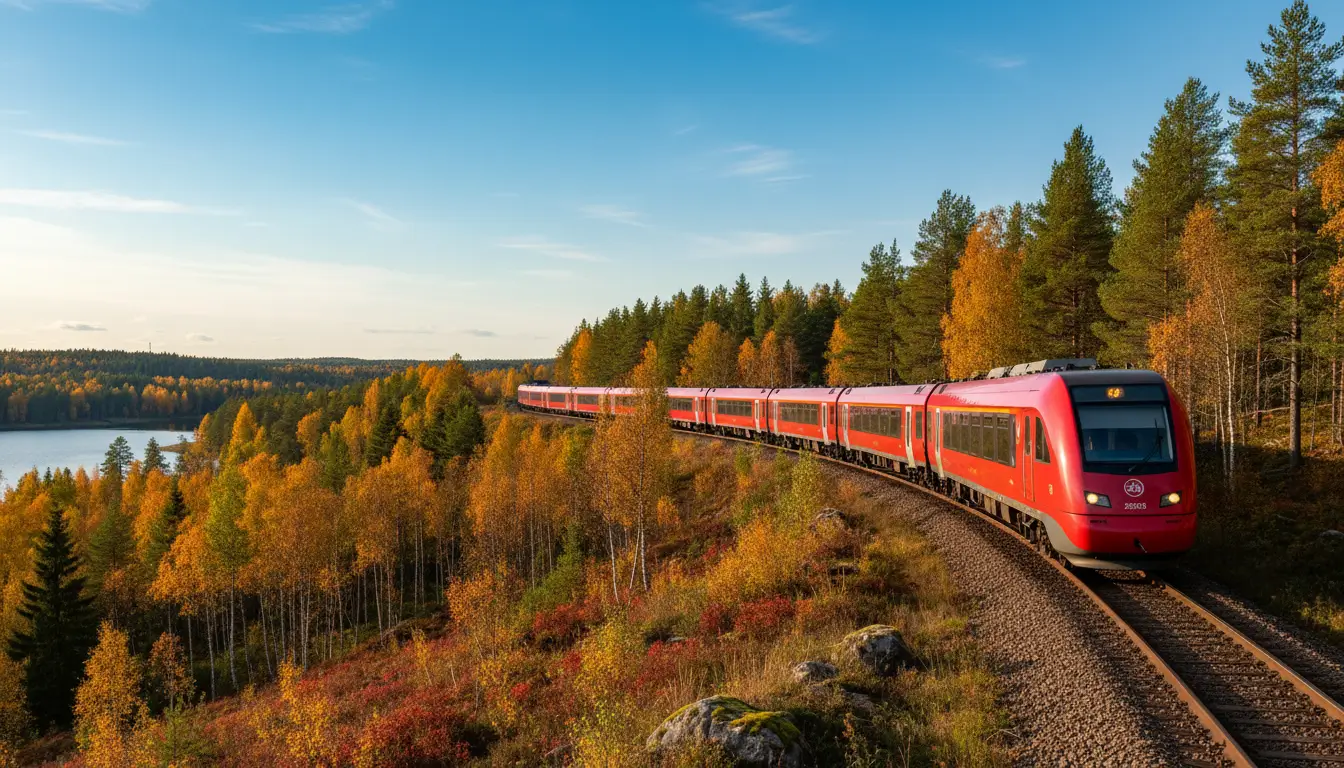
Stopovers make the journey more pleasant
The journey is long. That is why many travellers choose to stop along the way. This makes the train journey to Scandinavia part of your holiday. You explore several cities. You continue travelling in a relaxed way.
Good places for stopovers are:
- Bremen: historic Hanseatic city with an authentic old town
- Hamburg: lively port city on the Elbe
- Berlin: cultural capital with history and contemporary art
- Copenhagen: Scandinavian atmosphere with cycling culture and design
- Gothenburg: Swedish port city with cosy neighbourhoods
- Malmö: modern city near the Øresund Bridge
This way the journey itself becomes an experience. You get to know several countries and cultures.
Costs vary by route and comfort level
The price of your train journey depends on the comfort you choose, the type of train and when you book. A simple route via Frederikshavn with several changes can start at around 100 euros, but is less comfortable. Standard routes via Hamburg and Copenhagen, possibly with a night train, fall in the mid-range. More luxurious options with sleeping cars and more service cost more.
Book your tickets in good time for the best prices. For international routes you can use various booking platforms that combine several railway companies.
‘ The CO2 emissions from a train journey are much lower than from a flight. ’
Sustainable travel without flying
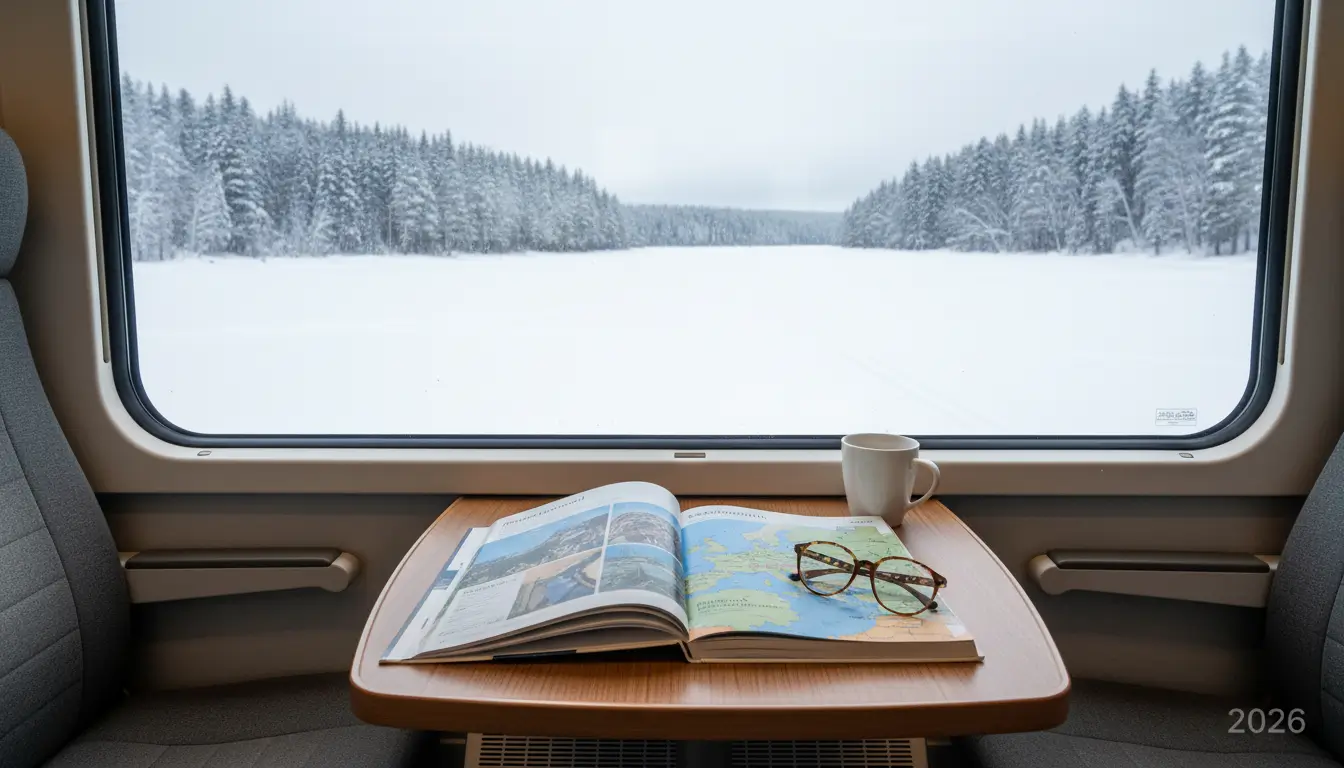
Travelling to Scandinavia by train is a conscious choice for anyone wanting to reduce their ecological footprint. The CO2 emissions from a train journey are much lower than from a flight. On top of that, the train offers more space, comfort and the chance to already enjoy the landscape and the atmosphere of different countries en route.
Travellers who organise their holiday themselves and see the journey as part of the experience appreciate the train journey as a valuable element.
Special rail routes in Norway
Once you arrive in Norway, some of the most beautiful train journeys in Europe are waiting for you. These routes pass through mountainous landscapes, along fjords and through tunnels drilled straight through the mountains.
Well-known rail routes are:
- Bergensbanen: from Oslo to Bergen, around 6.5 hours through the mountains
- Flåmsbana: from Flåm to Myrdal, spectacular fjord views
- Dovrebanen: from Oslo to Trondheim
- Nordlandsbanen: from Trondheim to Bodø
- Raumabanen: from Dombås to Åndalsnes
- Ofotbanen: from Narvik to Kiruna in Swedish Lapland
These routes make your journey through Norway a highlight in itself.
Planning and practical tips
Allow enough transfer time, especially in Hamburg and Copenhagen. Take possible delays into account and make sure you have enough margin between connections. Check whether you need reservations for certain stretches of the journey, especially for night trains.
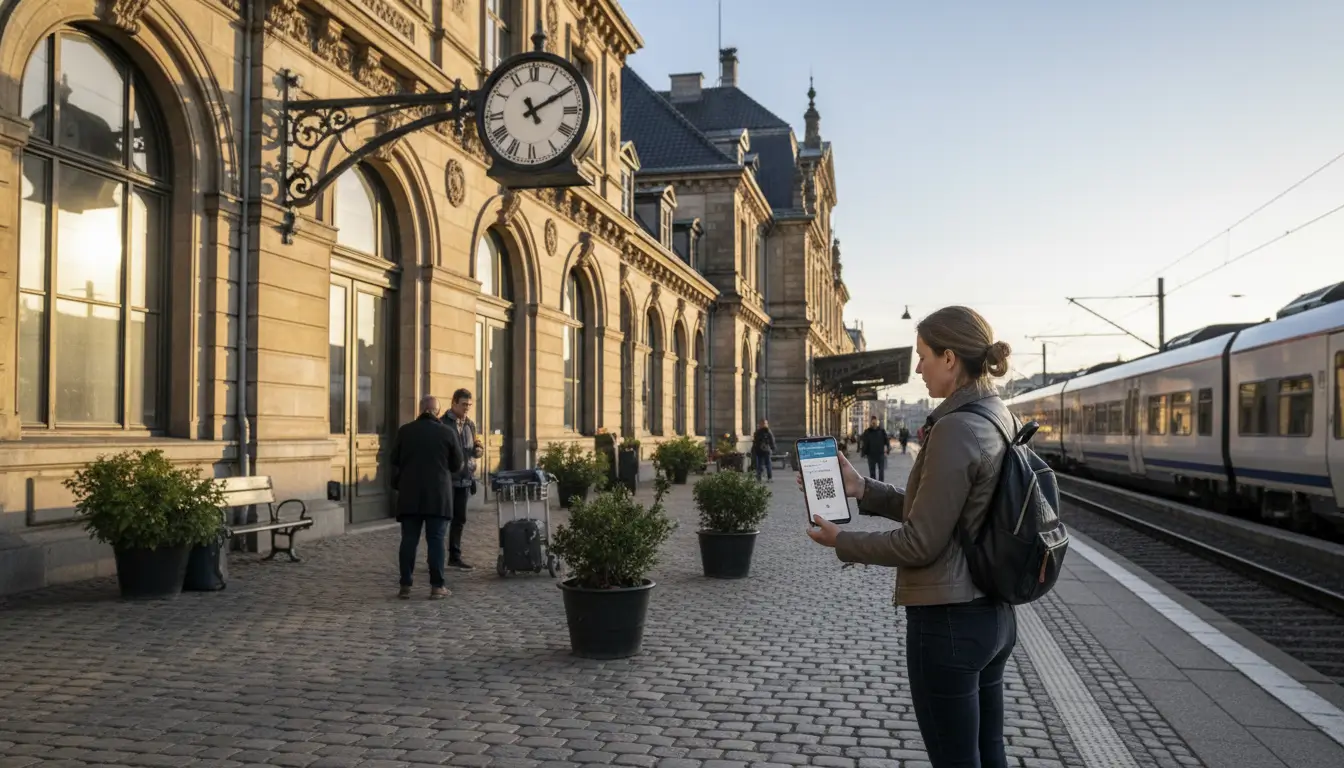
Take enough food and drink with you for the journey. Not all trains have extensive catering. Also download travel information for offline use and keep your tickets handy in digital form or on paper.
On the Traveler Tips website you will find more information about train travel across Europe. We also cover slow travel and sustainable travel options there. Discover routes, destinations and practical tips to help you plan your holiday smartly and get more out of the journey itself.
Frequently asked questions
The most comfortable and efficient route is usually Amsterdam – Osnabrück – Hamburg – Copenhagen – Gothenburg/Stockholm – Oslo, with clear, well-organised changes and modern trains in Hamburg and Copenhagen. For extra comfort and shorter “daytime travel time”, you can do part of the journey on the night trains operated by SJ or Vy (for example Hamburg–Stockholm), so that you travel while asleep and arrive well rested. Travellers who prefer not to spend such long days on the train often choose Amsterdam – Hamburg – Kiel, then the comfortable ferry to Copenhagen and finally the train to Sweden/Norway. Budget travellers can go via Osnabrück – Hamburg – Flensburg – Fredericia – Aalborg – Frederikshavn and take the boat from there, but this route involves many changes and is less relaxing.
Book your long-distance legs (Netherlands–Hamburg–Copenhagen–Oslo/Stockholm) as early as possible via NS International, DB and the Scandinavian railways, and always compare this with an Interrail pass plus separate seat reservations to see which works out cheaper for your travel pace. Ideally, combine the more expensive, longer legs (e.g. Hamburg–Copenhagen, Copenhagen–Stockholm/Oslo) with night trains to save time and a hotel night. Plan strategic stopovers in cities such as Hamburg, Copenhagen or Gothenburg/Malmö so that you break up the journey time and add extra experiences without much of a detour. Finally, also check ferry connections (for example Kiel– or Copenhagen–Oslo): for similar costs you may get more comfort and a more enjoyable travel adventure.
Before departure, check the luggage rules of each railway company (size, weight, whether or not a reservation is required for large suitcases) and pack light, with layers of clothing, snacks and a small daypack for in the compartment. Decide whether you mainly want to travel during the day (more views, more frequent changes) or use night trains (reserve sleeping compartments/couchettes, as seat or berth reservations are sometimes compulsory). Reserve long legs and night trains (e.g. Hamburg–Copenhagen, Copenhagen–Stockholm/Oslo, SJ/Vy night trains) well in advance, especially at weekends and in peak season. Plan transfers with some leeway in Hamburg and Copenhagen, and have tickets, reservations and any ferry tickets ready both digitally and printed.
Along the routes via Germany and Denmark you can plan city breaks to places such as Bremen, Hamburg, Berlin, Copenhagen, Malmö and Gothenburg, so that the long journey is broken up with culture and good food and drink. In Sweden and Norway you can include special routes such as the Bergensbanen (Oslo–Bergen) and the Flåmsbana (Flåm–Myrdal) with spectacular fjord and mountain scenery. The Ofotbanen (Narvik–Kiruna) and other lines such as the Dovrebanen, Sørlandsbanen and Nordlandsbanen also offer unique panoramic routes through unspoilt nature. In addition, you can add variety with ferry legs, such as Copenhagen–Oslo or from Hirtshals to various Norwegian coastal towns, to make the journey calmer and more varied.