 NL
NL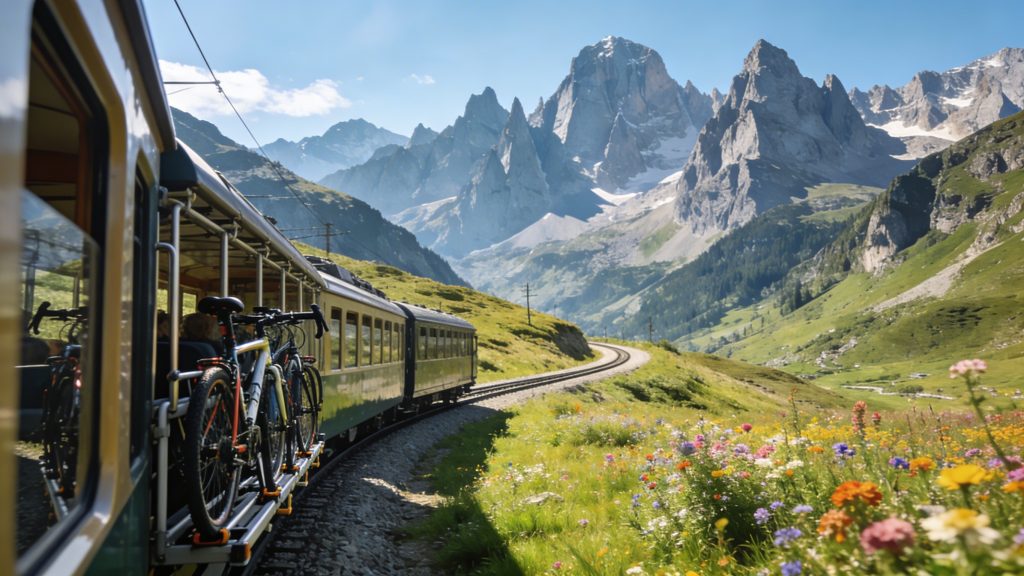
Hybrid travel to the Alps with the train as your base and the bike for local exploration is a smart way to discover mountain landscapes without a car. You travel sustainably, keep your freedom of movement and avoid parking problems in mountain villages. Using bike-friendly train stations as a starting point, you explore valleys and mountain passes at your own pace. Read on to discover how to practically plan an Alpine holiday by train and bike.
Why multimodal travel in the Alps works
A combination of train and bike offers flexibility that fits the Alps perfectly. The train takes you to a strategic point in the mountain region, where you can explore local cycling routes without long journeys by car. This is especially useful on steep passes or long distances: you use the train for the heavy lifting and save your energy for the most spectacular sections.
This style of travel fits well with holidays in the Alps. You consciously choose peace and experiencing nature. You are not in a rush, you do not get stuck in traffic jams, and you decide for yourself where and when you stop. For solo travellers, couples and families, this offers a relaxed way to discover mountains, lakes and villages.
In addition, multimodal travel is more sustainable than travelling entirely by car. Your ecological footprint remains limited, you see more of the landscape and you can more easily connect with the local environment. It does require some preparation, especially when taking a bike on the train.
‘ The weather can change quickly in the mountains. ’
Popular routes for train and bike
The Alpine region has several routes that combine well with train connections. Choose a route based on your fitness level, the time you have available and whether you prefer flat paths or challenging elevation gain.
Vennbahn for families and beginner cyclists
The Vennbahn is a flat route of 125 kilometres along a former railway line. The route runs through the East Cantons, Germany and France. It is divided into six stages. Families with children can cycle here comfortably thanks to the well-maintained paths and picturesque villages along the way.
You start in Aachen and finish in Troisvierges. Regional trains from DB and SNCB offer connections back to your starting point. Along the way there are plenty of accommodation options, including guesthouses with bike storage. Travellers recommend tasting local beers after a stage and booking flexible train tickets for extra convenience.
Traverse des Alpes for advanced mountain bikers
The Traverse des Alpes VTT is a mountain bike route right across the Alps with varying amounts of elevation gain. You plan stages past lakes, glaciers and steep singletracks. This route requires experience and good fitness, especially with climbs of 500 to 1500 metres of elevation per day.
Trains such as those of SNCF or ÖBB help you to move between sections. Local shuttle buses are sometimes available to transport mountain bikes to higher starting points. Download offline maps and check weather apps for thunderstorms. The weather can change quickly in the mountains.
Regional routes around Innsbruck and Chamonix
For shorter trips, routes around Innsbruck in Austria and Chamonix in France are ideal. Both regions have extensive rail networks with bike-friendly connections. You can plan day trips of 20 to 30 kilometres and return to your accommodation at the end of the day.
This approach suits travellers who want to keep their base in one place and from there explore different valleys. The trains provide access to alpine meadows where you can spot marmots and visit local cheese producers.
Taking your bike on the train
Each railway company has its own rules for bikes on trains. Plan this well in advance, because space is limited during busy periods.
- Belgium: You buy a Bike Supplement for 4 euros per single journey. Reservations are not possible, so leave early to secure a spot.
- Germany: Pay a supplement of 5.40 to 8 euros. Use route planners that indicate which trains are bike friendly. On regional trains the chance of space is greater than on intercity trains.
- Netherlands: Bikes are only allowed during off-peak hours. From September to June this is permitted on weekdays outside rush hour. Check current rules for border crossings towards the Alps.
- Austria and France: ÖBB and SNCF offer bike-friendly trains, but reservations are often compulsory. Buy your ticket well in advance and check whether the connection allows bikepacking bags.
Keep your luggage to around 20 kilos when using bikepacking bags. Train spaces are tight and large panniers or trailers often do not fit.
Preparing for an Alpine holiday by train and bike
Good preparation increases your comfort and helps prevent setbacks on the way. Start planning a few weeks in advance.
Fitness training and route choice
Train your endurance with hill sessions. Focus on rides of several hours during which you climb 500 to 1500 metres in altitude. This prepares you for Alpine passes and helps you to assess whether your own bike is sufficient or whether an e-bike would be more convenient.
An e-bike can be useful on steeper sections, but take into account charging the battery. Some accommodation offers charging points, but check this beforehand.
Safety equipment and gear
Wear a helmet and take reflective vests for tunnels and poorly lit roads. A first-aid kit with plasters, compression bandage and painkillers should be in your luggage. Make sure you have spare inner tubes, a pump and tools for small repairs.
Download offline maps to your phone so you are not dependent on mobile internet. Weather apps help you avoid thunderstorms, which can form quickly in mountain areas.
Best season for train and bike
Travel from June to September for mild weather and open mountain passes. In these months most routes are free of snow and the chance of heavy rain is smaller. Start early in the morning to avoid queues at train stations and the heat later in the day.
Avoid the winter months, as snow on paths makes cycling unsafe and some train stations in mountain villages are only partially accessible.
‘ Stay overnight in youth hostels or small guesthouses with bike storage so you can store your gear safely. ’
Useful tips for on the road
Experience shows that small adjustments make your trip more pleasant. Book flexible train tickets where possible, so you are not tied to a departure time if a stage takes longer. Avoid peak hours on trains, especially in holiday regions where tourists make heavy use of public transport.
Take water filters with you for streams in remote areas. This saves the weight of carrying extra water bottles. Stay overnight in youth hostels or small guesthouses with bike storage so you can store your gear safely.
Families can cover the Vennbahn in four to six days with relaxed stages and plenty of breaks. For more experienced travellers, the Traverse des Alpes offers enough challenge with multi-day trips and varying altitudes.
Smarter travel by train and bike
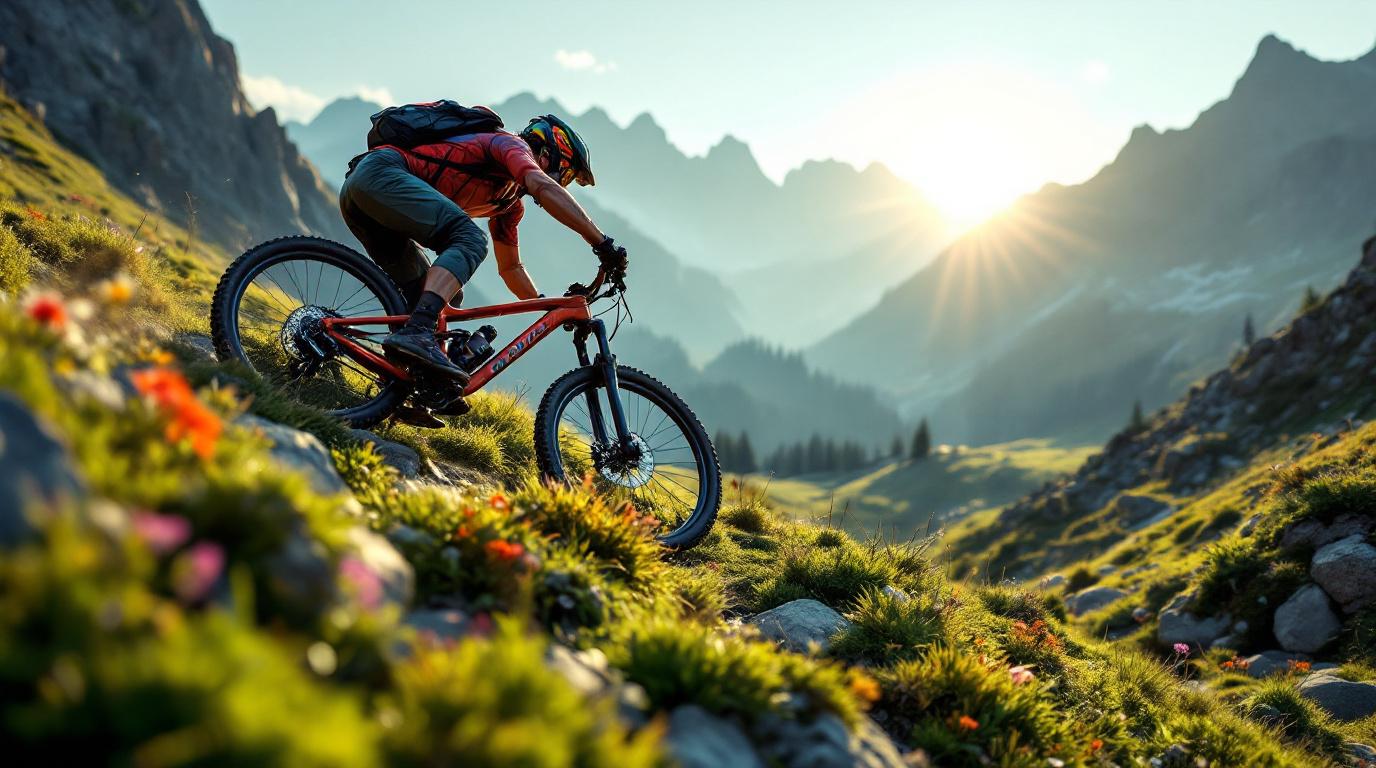
An Alpine holiday by train and bike combines adventure with practical logistics. You explore mountain landscapes at your own pace, stay flexible and travel consciously. With the right preparation you will get the most out of this trip.
On the Traveler Tips website you will find more information about routes, preparation and destinations in the Alps and beyond.
Frequently asked questions
Look for an Alpine region with a good rail network (e.g. Innsbruck, Chamonix or the Vennbahn region) and plan your cycling route around stations so you can use the train to cover heavy or long sections. Check the rules, surcharges and any reservation requirements for taking bikes on trains for each railway company (NS/DB/ÖBB/SNCF), and choose trains with bike spaces. Travel preferably outside rush hour and peak season and limit your luggage (e.g. ±20 kg in bikepacking bags) so that boarding and storing your bike on the train remains comfortable. Use online planners and offline maps to plan stages so that you can finish the day at a station or bike-friendly accommodation.
The Vennbahn route (Aachen–Troisvièrges) and regional routes around, for example, Innsbruck and Chamonix are the most suitable, because they are well served by regional, bike-friendly trains. In Germany and Belgium you take your bike with a bike supplement (with DB/SNCB often 5–8 euros, in Belgium Bike Supplement), with no or limited reservation options. For international high-speed trains and Alpine countries such as Austria and France, you usually need to book a bike reservation in advance via the website or app of the national railway company (ÖBB, SNCF, DB). Check the conditions for each journey, because the number of bike spaces per train is limited.
Make sure your bike is in good technical condition: check brakes, tyres, drivetrain and mounting of racks, and take basic tools, a spare inner tube, brake pads and chain oil with you. Pack light and compact with good rain and warm clothing in layers, a set of casual clothes, minimal toiletries and a small first-aid kit. Use waterproof panniers (or with rain covers) or bikepacking bags and keep the total weight to roughly 15–20 kg. When packing, take account of using the train: no protruding parts, handlebars and bags as compact as possible, and valuables in a separate daypack.
Use a good route planner (e.g. Komoot, Outdooractive or the EuroVelo site) and filter for Alpine cycling routes along railway lines or with clear train stops at the start and end points. Focus on areas with a dense rail and cycling route network such as around Innsbruck, South Tyrol, the Swiss Prealps and the Vennbahn region. Plan day stages where you travel by train to a higher village and then enjoy a relaxed descent by bike for maximum experience. Check the rules for transporting bikes on trains in each country beforehand and avoid busy rush hours and holiday periods.
Alternatives to taking your own bike include renting a (e-)bike at your destination, using local bike-share systems and, in some regions, joining organised cycling tours with a rental bike included. Cost factors include the daily or weekly rental price (often higher for e-bikes and MTBs), any deposit, insurance against damage/theft and surcharges for accessories such as child seats or panniers. In addition, the local price level (tourist hotspots are more expensive) and the season (high season is more expensive than low season) play a role. It may also be cheaper to buy combination tickets where train travel and bike rental are offered together.