NL
NL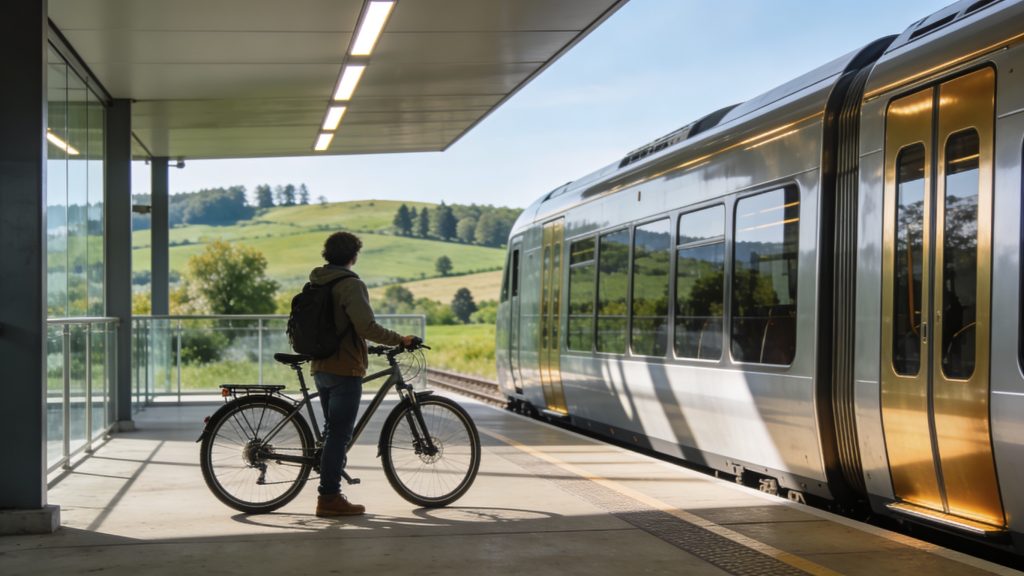
Travelling by train with your bike seems simple, but in practice it often goes wrong in the same ways. Many travellers forget to reserve a bike space or choose the wrong train. These mistakes cause unnecessary stress and expense. With the right preparation you can avoid problems with your bike ticket and being refused during peak hours. Read on to discover which steps you can take for a smooth journey.
Why travellers often get stuck without a valid bike ticket
One of the most common mistakes is assuming that you can always take your bike without booking in advance. That only applies in some regional trains outside busy hours. On international trains and high-speed trains, reserving a bike space is compulsory. On top of that, availability is limited. The problem arises when travellers want to buy the bike ticket at the last minute, when all the spaces are already taken.
Many people think: “I’ll sort it out later” or “There will surely be space”. In reality, bike spaces are often fully booked weeks in advance, especially during holiday periods. If you are planning a train holiday with a bike, it is therefore wise to book your bike and train ticket at the same time.
For some international tickets it is not possible to add a bike later on. You must make the right choice at the very first booking. Fix your travel option as soon as your date is set. Immediately check whether a bike reservation is compulsory and, preferably, book passenger and bike together.
Peak hours and bike restrictions on the train
In the Netherlands there are restrictions on taking bikes on trains during busy hours. In many other countries it is the same. Many travellers book a train journey and only discover later that bikes are not allowed at that time, or only under certain conditions. These rules differ by country and operator. The type of train can also have an impact.
The most common mistake is that travellers plan their journey during peak hours without checking the bike times. Weekday morning and evening rush hours are often problematic for regular bikes. Many people miss the fact that the rules can vary. At weekends, during the summer months or on public holidays, different conditions often apply.
To avoid fines and problems, you can follow these steps:
- Avoid weekday peak hours if you are travelling with a regular bike
- Check separate rules for weekends and public holidays
- Check whether bike times differ during holiday periods
- For international tickets, pay attention to differences by country and route
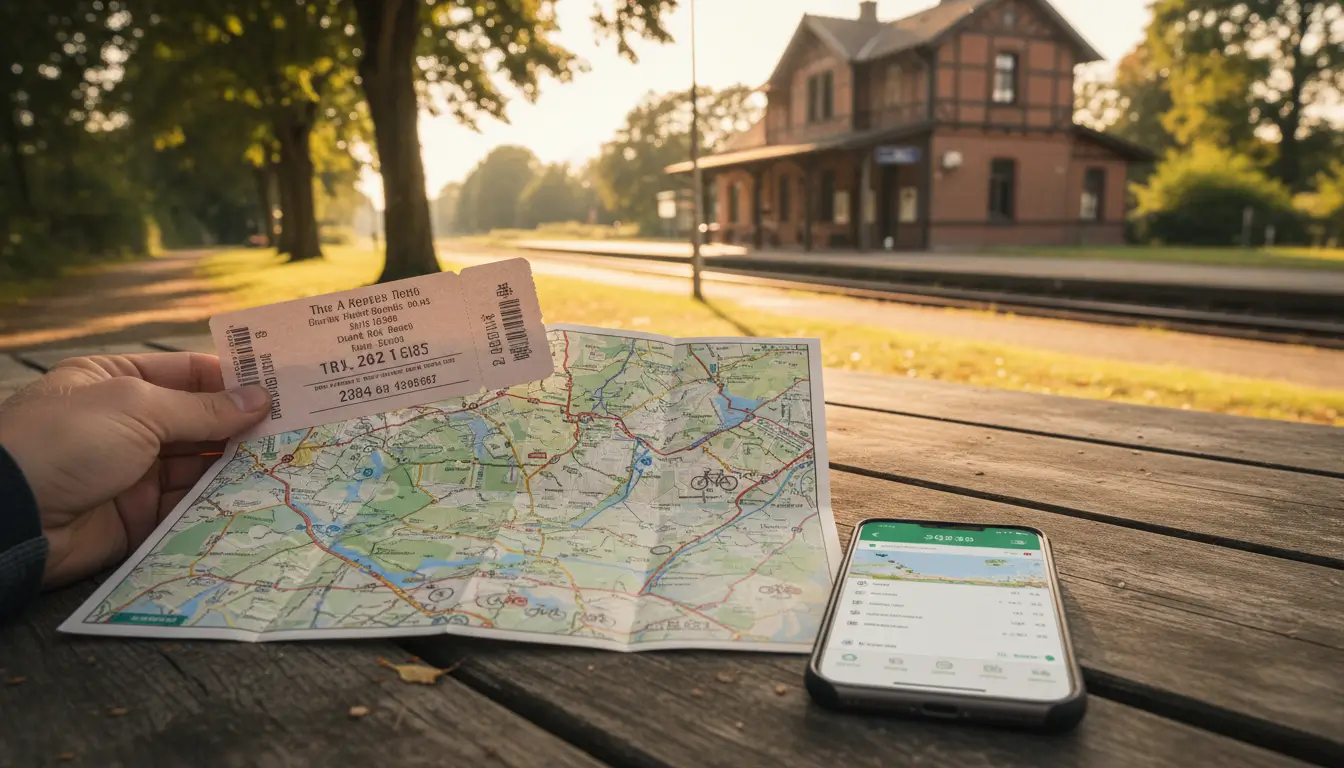
Choosing the wrong type of train
Many travellers choose on speed instead of bike-friendliness. In many countries regional trains are much more accessible for cyclists. High-speed and Eurostar services often have strict rules. Sometimes there is no option at all for a fully assembled bike. TGVs and similar fast trains often require a reservation. Another option is a packed bike.
Regional trains usually offer the most freedom. Sometimes taking your bike is even free. The journey may take longer, but you spare yourself a lot of hassle with dismantling, packing and checking whether your bike is allowed on board at all.
Where possible, choose regional or intercity services with clear bike options. For international routes, do not just look at the fastest journey, but also at the most practical one. For a holiday trip with a bike, predictability is often more valuable than speed.
Not every bike is allowed on every train
Not every train accepts the same types of bikes. Cargo bikes, tandems and tricycles in particular are often refused. Recumbent bikes and bike trailers also sometimes fall outside the rules. In international trains and high-speed services this is even stricter. People sometimes assume that a special bike is treated the same as a regular two-wheeler. That is not always the case.
An e-bike is also not always regarded as a regular bike. For batteries or speed pedelecs there are often extra conditions. Always check whether your type of bike is allowed. Look not only at the country, but also at the type of train. Pay extra attention if you have a special bike or an electric model.
Packing and dismantling: what is required and what is allowed
On some trains, a bike may only be taken if it is dismantled. In that case, packing is compulsory. This often applies to international high-speed services. Travellers then wrongly turn up at the station with a fully assembled bike. The result: refused at boarding.
Another common mistake is that a bike is not fully packed. Bike boxes or covers are too large, pedals or handlebars still stick out, or panniers remain attached to the bike. This can lead to problems with the conductor or when placing the bike on the train.
Check the following in advance:
- May the bike be taken assembled, or must it be dismantled?
- Does the bike have to be completely packed?
- What are the maximum dimensions of the packing?
- Do bags and accessories have to be removed from the bike?
Practise at home how to pack your bike quickly and neatly. Use a sturdy cover or packing that covers the entire bike. Remove loose lights, bags and accessories from the bike. Make your bike as compact and light as possible for boarding.
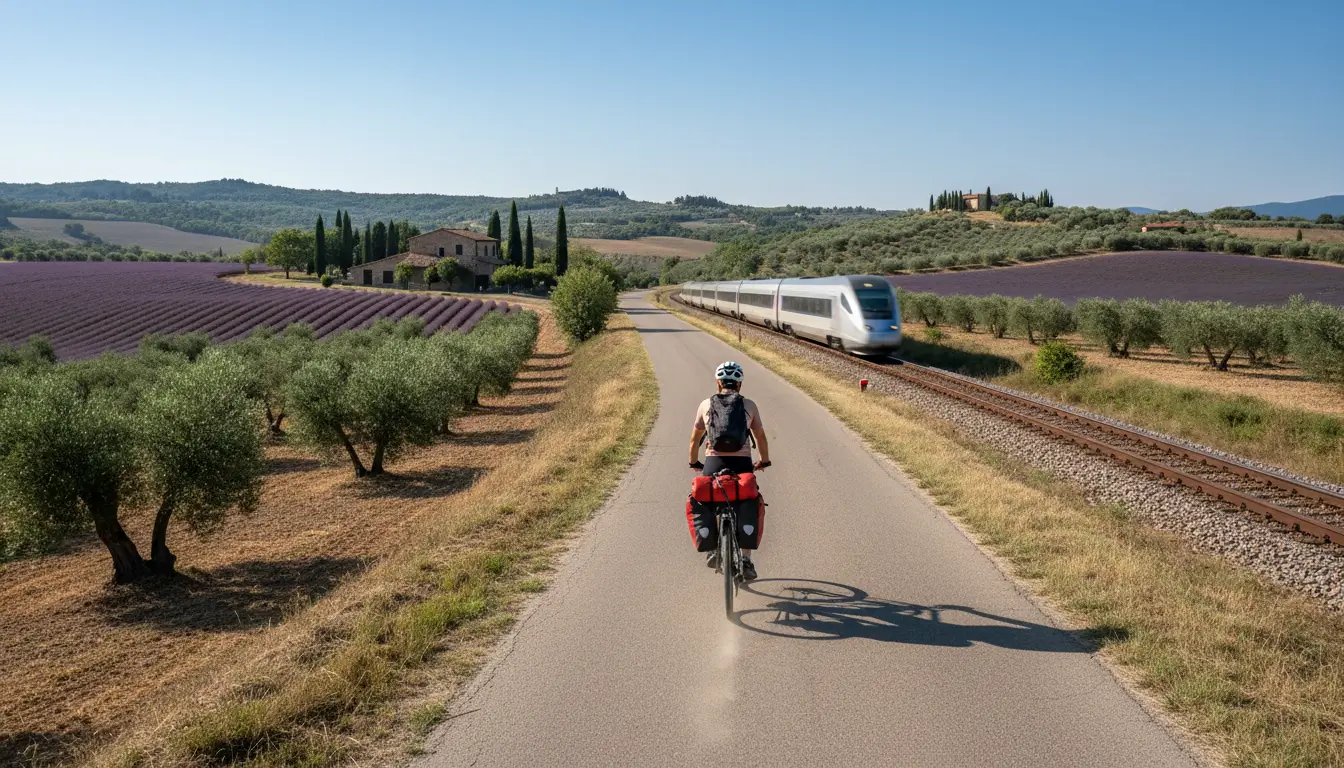
Planning too little transfer time
A classic mistake on bike trips is to plan a tight connection. With a bike, luggage and possible lifts or stairs, changing trains takes much more time than on an ordinary journey. Train delays can cause you to miss your connection. Changing platforms with a bike is difficult, and long walking routes through stations cost extra time.
Plan a generous buffer for transfers. On international journeys this is especially important. Go for a comfortable transfer rather than a tight connection. Take into account stations without lifts or with long tunnels. Not every station is equally practical. Cyclists therefore need more time. Underground stations and narrow platforms can make boarding difficult. Stairs and limited lifts are also tricky.
Check in advance whether your boarding and alighting stations are easily accessible. Look at lift availability, stairs and platform height. Ask the station or the operator for the most convenient route.
Bike spaces and luggage: where it is allowed to put them
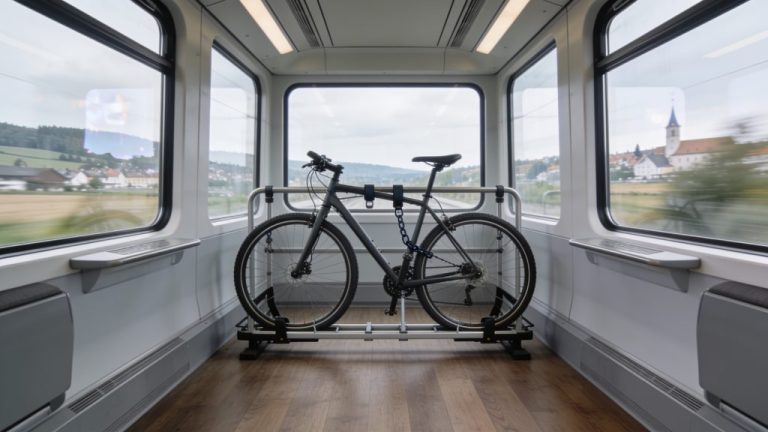
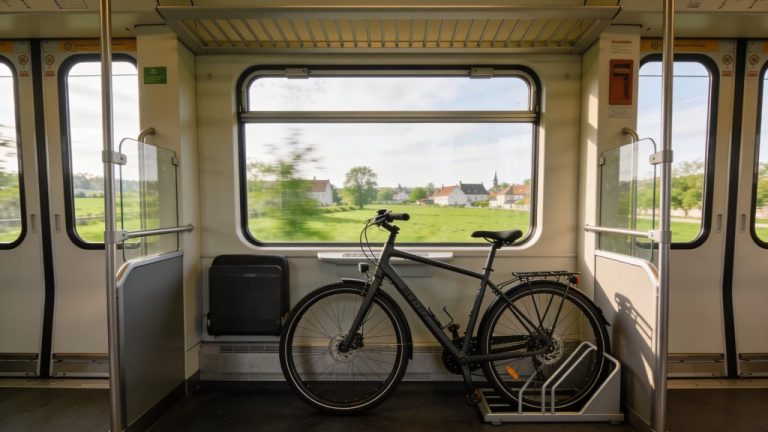
Many travellers just get into the first carriage. This often leads to situations where the bike is not in the right place or is even refused. Always look out for bike icons on the door or inside the train. Only place your bike where bikes are explicitly allowed. Be prepared to follow any instructions from train staff.
Many travellers leave their panniers attached to the bike when boarding. That seems convenient, but in practice it makes the bike wider, heavier and harder to manoeuvre. Remove panniers and loose luggage from the bike if necessary. Distribute your things across your normal luggage and make your bike as compact as possible.
‘ Don’t automatically assume that you can take your folding bike for free everywhere. ’
Folding bikes are not always free or always allowed
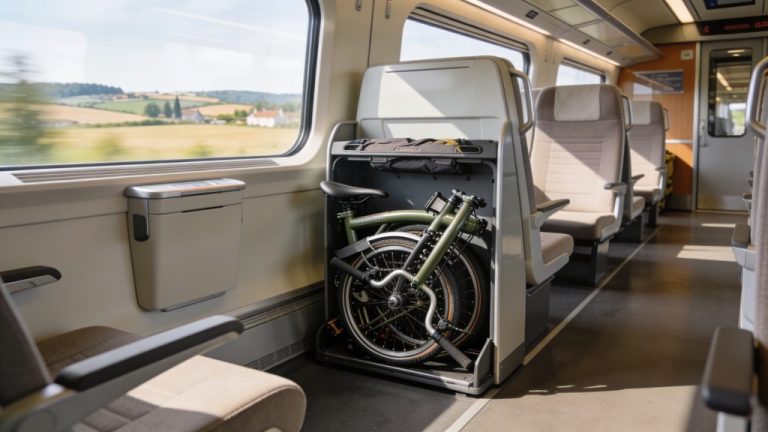
Folding bikes are convenient, but the rules differ by size and by train. A fully folded folding bike can often be taken as luggage. This only applies if the bike falls within the specified dimensions. A larger or unfolded folding bike may still require a bike ticket.
Check the maximum dimensions of your folded folding bike. Measure your bike at home and take a cover with you if the operator requires this. Don’t automatically assume that you can take your folding bike for free everywhere.
Differences by country and operator
On international train journeys, the rules differ greatly by country. In Belgium, Germany, France or Switzerland, certain conditions apply. Elsewhere these may be different. Regional trains in particular are often favourable, whereas high-speed lines are not. Many travellers assume that a bike transport rule in one country also applies in another. On some routes, several train companies operate. In that case, different rules often apply.
Check the conditions for each country and each train operator. Pay attention to differences between:
- Regional trains
- Intercity services
- Night trains
- High-speed trains
Also check whether your bike ticket is valid on several stretches or whether you have to book separately for each train. If in doubt, choose the connection that guarantees bike transport. The journey may take a bit longer, but it will be predictable.
Practical checklist before departure
For a train journey with a bike, it is not just about the train itself. Arrival and departure are also important. In addition, pay attention to luggage and station facilities. Many travellers forget to plan the whole travel logistics. Think about how you will get to the station, whether there is a lift and whether you can unload safely at your destination.
Make a short checklist before departure with these points:
- Is there space to reassemble your bike at your destination?
- Do you have tools or packing material with you?
- Are you taking a multitool, pump and basic packing materials?
- Are you planning a calm arrival, especially after a long day of travelling?
Most mistakes on train journeys with bikes do not arise because of the bike itself, but because people book too late, choose the wrong train or do not pay enough attention to peak-hour rules and packing requirements. Anyone who checks the rules in advance for each country and train can avoid stress and save time and money.
On the Traveler Tips website you will find more information about train travel, routes, practical tips and preparation for a well-planned holiday. Discover how to plan your own trip and get more out of your train journey.
Frequently asked questions
Regional trains usually have the most flexible rules: a regular bike is often allowed (sometimes with a surcharge), but do watch out for peak-hour restrictions and the designated bike spaces. On intercity services and especially on high-speed and international trains (such as TGV, Eurostar, night trains), reserving a bike space is often compulsory, the number of spaces is limited and special bikes (cargo bike, tandem, recumbent bike, speed pedelec) are often excluded or only allowed if dismantled/packed. Check with each train operator whether your bike may travel assembled, whether size and packing rules apply, and whether a folding bike counts as luggage. You can avoid mistakes when reserving by booking passenger and bike at the same time, immediately checking whether bike spaces are available and compulsory, and, if in doubt, choosing a bike-friendly (regional) route with generous transfer times.
Make your bike as compact and light as possible: remove panniers and loose accessories and, if necessary, pedals or front wheel, and use a sturdy cover that complies with the operator’s size rules. Check in advance whether your bike may travel assembled or must be dismantled and packed. Plan extra time for boarding, alighting and transfers, especially at stations with stairs or limited lifts. On the platform, look for the marked bike doors and only place your bike in the designated bike spaces to avoid blocking doors and aisles.
Common pitfalls include opting for the fastest (high-speed) train instead of a bike-friendly regional or intercity connection, and not checking whether your type of bike (e-bike, tandem, special bike) is even allowed on the chosen train. Many people also plan transfers too tightly, even though you need extra time with a bike, luggage and sometimes stairs or long tunnels. Another frequent issue is that on some trains bikes must be reserved or even dismantled and packed, which only becomes clear on the platform. Finally, travellers often wrongly assume that all countries and operators have the same rules for bike transport and transfers.
The biggest differences concern: whether bike reservations are compulsory or not, which types of bikes are allowed (for example, no tandems/cargo bikes), rules by train type (regional vs intercity/night train/high-speed) and peak-hour restrictions. So always check the conditions for each country and each operator, and pay extra attention to high-speed and international trains, where only packed or dismantled bikes are often allowed. For cross-border journeys, always book both your ticket and bike space for each leg/train and avoid tight transfers. Take a printout or screenshot of the bike transport conditions with you so that, in case of a discussion with staff at the border, you can clearly show what is permitted.
Common misunderstandings include thinking that every bike is allowed on every train, that there is always space without a reservation and that peak times do not matter; you can avoid this by checking the bike rules for each train type and country when booking and reserving a bike space in good time. People also often underestimate how much space a bike takes up and where it may be placed; always look for bike icons on the platform and carriage and only use the designated bike spaces. Travellers also tend to overestimate how easy it is to manage a bike plus luggage; remove your bags from the bike at busy times and keep it as compact as possible. Finally, things go wrong during transfers: plan extra transfer time, especially at large stations or those with many stairs.