
 NL
NL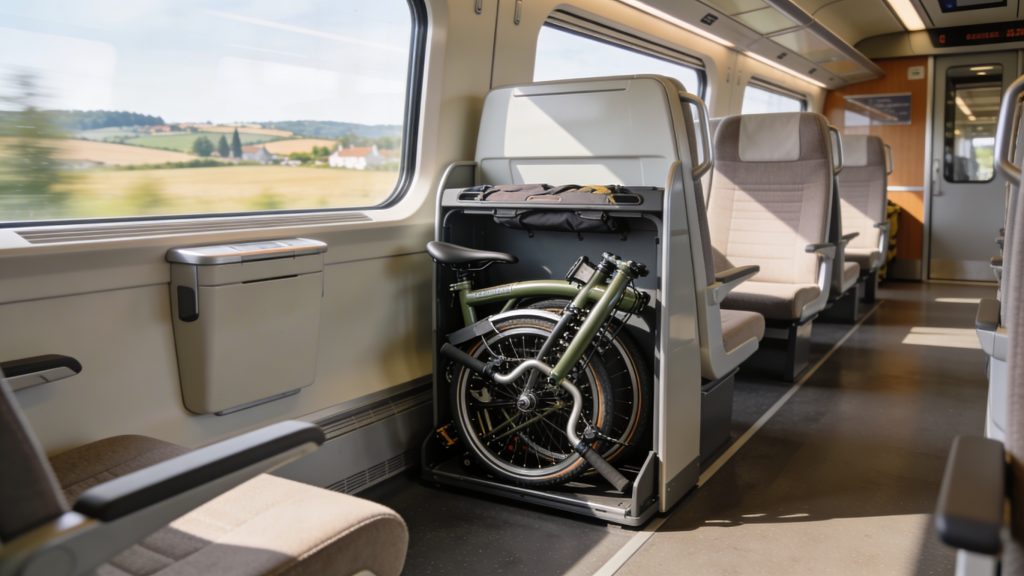
On regional TER trains in France you can take your bike for free without reserving in advance, as long as there is space. But be aware: on high-speed trains such as the TGV and Thalys the rules are stricter, and on busy days to the coast you may run into problems. A train holiday with a bike requires good preparation if you are travelling to France from the Netherlands or Belgium. What exactly are the rules for each type of train?
Rules by train type in France
The options for taking your bike differ greatly depending on the type of train. On regional trains it is often simple and cheap, while long-distance trains have more restrictions.
TER trains: free and without reservation
On regional TER trains (Train Express Régional) you may take a non-dismantled bike for free. You do not need to reserve. However, there must be space in the designated bike area. Board the train at the carriages with a bike symbol on the outside. Do check the rules of the region you are travelling in, as these may differ.
Some regions have peak-time restrictions or seasonal rules. In July and August the bike carriages in popular coastal areas fill up quickly. Brittany and Provence are examples of this. In that case, take the next train, usually an hour later. Newer TER trains have more bike space than older models.
TGV InOui and Intercités: reservation and payment required
You must reserve a bike space in advance for high-speed trains such as the TGV InOui and Intercités. This costs around 10 euros per leg. You book the bike space at the same time as your train ticket. It is not possible to add separate bike spaces later. You are allocated a seat near the bike area.
Note: not all TGV routes accept bikes. The line to Lille, for example, does not offer this option. Check when booking whether your specific train allows bikes.
OUIGO and night trains
OUIGO trains apply similar rules to the TGV. A reservation is compulsory; otherwise your bike may only travel dismantled in a bag. On night trains you can usually take your bike on board without packing it. In that case you also reserve a berth.
Dismantled bike as an alternative
A dismantled bike in a bag counts as hand luggage. The maximum dimensions are 130 x 90 x 50 centimetres and the maximum weight is 30 kilograms. Your bike in a bag may travel in any carriage. You do not pay any extra costs. You also do not need to reserve. This applies to all types of train.
‘ Only fully dismantled and packed bikes within the luggage dimensions are permitted. ’
Why are bikes not allowed on the Thalys to Paris?
Thalys does not accept non-dismantled bikes. Only fully dismantled and packed bikes within the luggage dimensions are permitted. This rule applies to all Thalys routes, including those to Paris. Eurostar has even stricter requirements: dismantled bikes may be a maximum of 135 x 85 x 30 centimetres.
Are you travelling from the Netherlands or Belgium? It is often easier via Belgian trains. There you pay for a separate bike ticket and you can often take your bike with you. Do you want to travel to France with a fully assembled bike? Then plan your route via regional services.
Reserving a bike space on Intercités trains
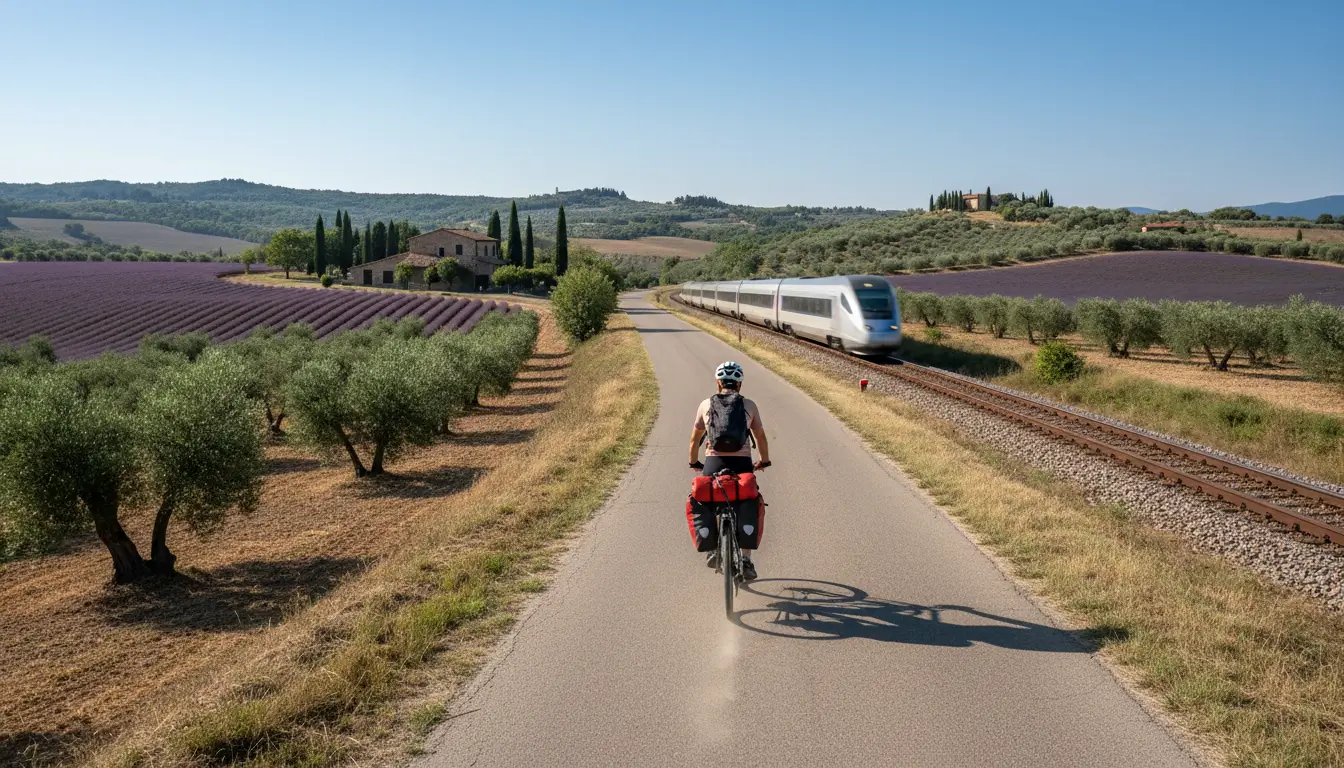
When booking your Intercités ticket you add a bike space straight away. You do this via the SNCF website or the SNCF Connect app. During the booking process, choose the option “vélo non démonté” (non-dismantled bike). You pay about 10 euros extra per leg.
Check availability during the high season. Also check routes to the coast. Popular cycling routes are quickly fully booked. La Loire à Vélo is one example. During holidays and at weekends bike spaces are often booked up quickly.
Which bikes are not allowed?
Standard two-wheelers are welcome, but there are exceptions. Recumbent bikes, tricycles, tandems, cargo bikes and bikes with trailers are usually not permitted. Some regions make temporary exceptions. Along La Loire à Vélo or in Brittany during the summer this is sometimes possible. In that case a reservation is compulsory.
Folding bikes count as hand luggage if, when folded, they are smaller than 130 x 90 centimetres. You may then take them in any carriage without extra cost.
‘ Exceeding the dimensions may result in refusal. ’
Practical tips for a smooth journey
Good preparation makes the difference between a relaxed journey and hassle along the way. These tips help you avoid surprises.
- Book bike spaces at the same time as your train ticket. Check availability via the SNCF Connect app or website.
- Travel outside peak times for more space and comfort. Trains to coastal destinations are often full in July and August.
- Look for carriages with a bike symbol when boarding. Ask the train staff if you cannot find the right carriage.
- Measure your bike if you are taking it dismantled. Exceeding the dimensions may result in refusal.
- Pack your bike securely to prevent damage during transport.
- Check whether e-bikes are allowed. Some Intercités trains have charging points, but remove the battery if necessary.
Regional differences and exceptions
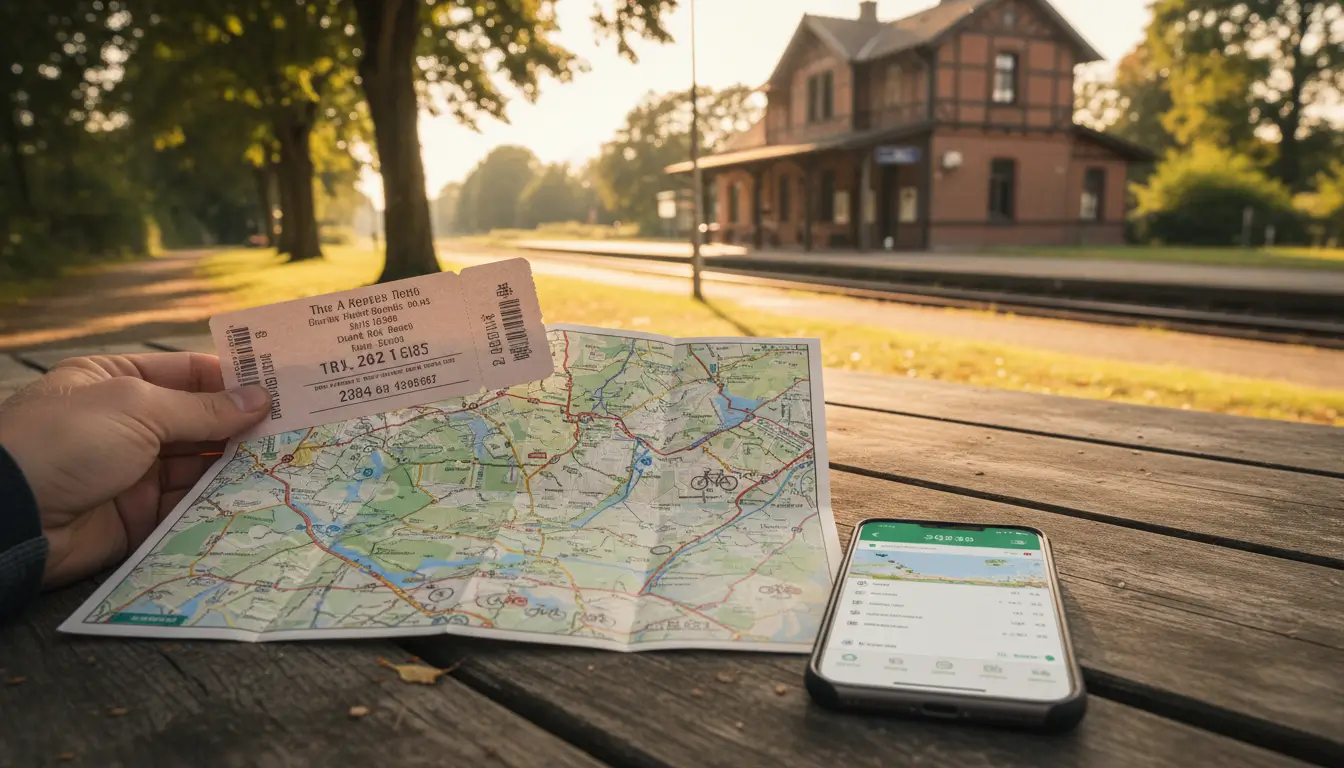
Not every French region applies the same rules for bikes on TER trains. In Grand Est you can travel for free on TER Fluo trains. In other regions there are peak-time bans. Ask locally about the specific rules. Also check the website of the regional transport operator.
In some cities such as Lille, Roubaix, Tourcoing and Orléans you may take your bike on the tram for free. This is handy if you want to explore a city before travelling on.
Experiences of train travellers with bikes
Travellers enjoy combining cycling with train journeys in France. They praise the flexibility of TER trains. You can spontaneously adjust a route and get off at interesting places. Trains to Brittany and Provence do fill up quickly in summer. Allow enough time to take an alternative train.
On TGV trains you will appreciate having a reserved seat next to your bike. That way you do not need to search or carry it around. Availability is limited, though. So book in good time. Combine your journey with local cycle networks for the best routes and discoveries.
On the Traveler Tips website you will find much more information about travelling by train, routes through France and practical tips for your preparation. Regional differences in regulations can be found for each region on the SNCF Voyageurs website.
Frequently asked questions
On regional TER trains a non-dismantled bike can usually travel for free and without reservation in the special bike area, as long as there is space and subject to any peak-time or seasonal restrictions per region. On TGV InOui, Intercités and many OUIGO trains you generally have to reserve a bike space and pay a supplement (around €10 per leg), and not all trains accept non-dismantled bikes. A dismantled bike in a bag (max. about 130×90×50 cm, up to around 30 kg) counts as luggage and may in principle be taken on all trains. Special bikes such as tandems, cargo bikes or trailers are usually not allowed, except on a few regional services.
You reserve a bike space at the same time as your train ticket for TGV InOui, Intercités and many OUIGO trains; this cannot be added separately afterwards. The costs for a reserved, non-dismantled bike space on these trains are usually around €10 per leg. On regional TER trains a non-dismantled bike is generally allowed for free and without reservation, as long as there is space. If you take your bike dismantled in a bag (max. about 130x90x50 cm), it counts as luggage and no reservation is needed.
On many French TER trains your bike may travel non-dismantled, provided there is space in the designated bike areas. On TGV, Intercités and some OUIGO trains a reserved bike space is generally required; without such a space the bike must be dismantled and packed in a bag within the luggage dimensions. If the bike is fully dismantled and packed (e.g. 130×90×50 cm, max. 30 kg), it counts as luggage and can in principle always be taken. Check the specific conditions for each type of train and route.
The regional TER trains are the most suitable for travellers with a bike, because your bike can travel on them for free and without reservation, as long as there is space. TER routes along popular cycling corridors such as La Loire à Vélo and in regions like Brittany and Provence are particularly popular with cycle tourists. For longer distances, TGV InOui and Intercités services are also useful, but there a paid bike reservation is compulsory and not every train has bike spaces. By mainly using TER trains in combination with these long-distance routes you have the greatest flexibility and cycling comfort.
For TGV/Intercités always reserve a bike space at the same time as your ticket and check in advance whether your train allows non-dismantled bikes at all. Where possible, choose TER (regional) trains, travel outside rush hour and high season and arrive at the platform early at the carriages with a bike symbol to increase your chances of a good spot. Take into account restrictions for tandems, cargo bikes and trailers, and if necessary take a dismantled bike in a bag (max. about 130×90×50 cm) as luggage. Keep your luggage to a minimum, turn your handlebars and pedals sideways if needed and use straps to keep your bike stable during the journey.