 NL
NL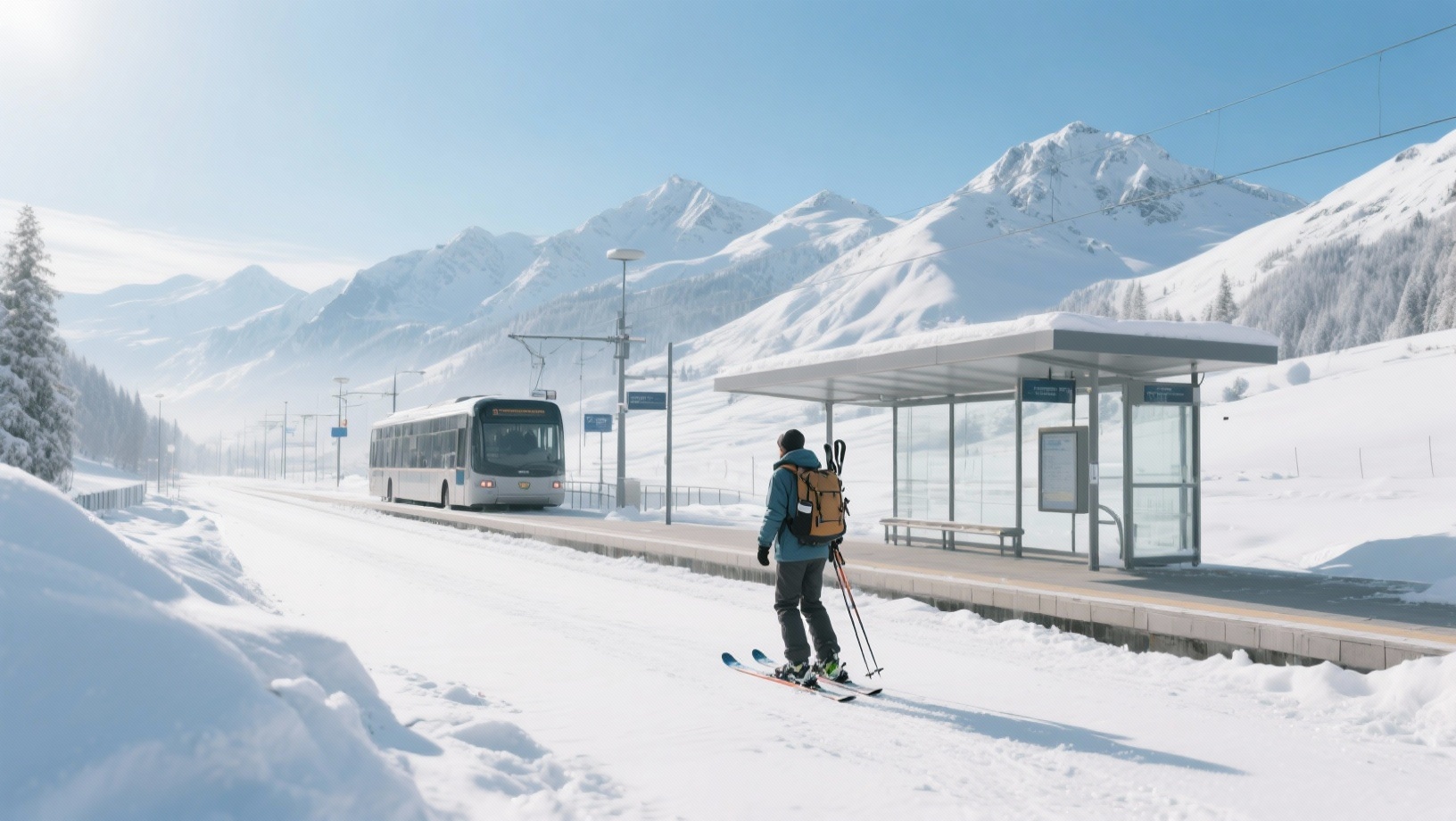
Planning your last-mile transfers from the train station to the ski resort properly is essential for a relaxed start to your winter sports holiday. The final part of your journey is often the most complex, but with the right preparation you can cover those last kilometres efficiently and without stress. Discover how to get from platform to piste smoothly.
Why plan the final kilometres?
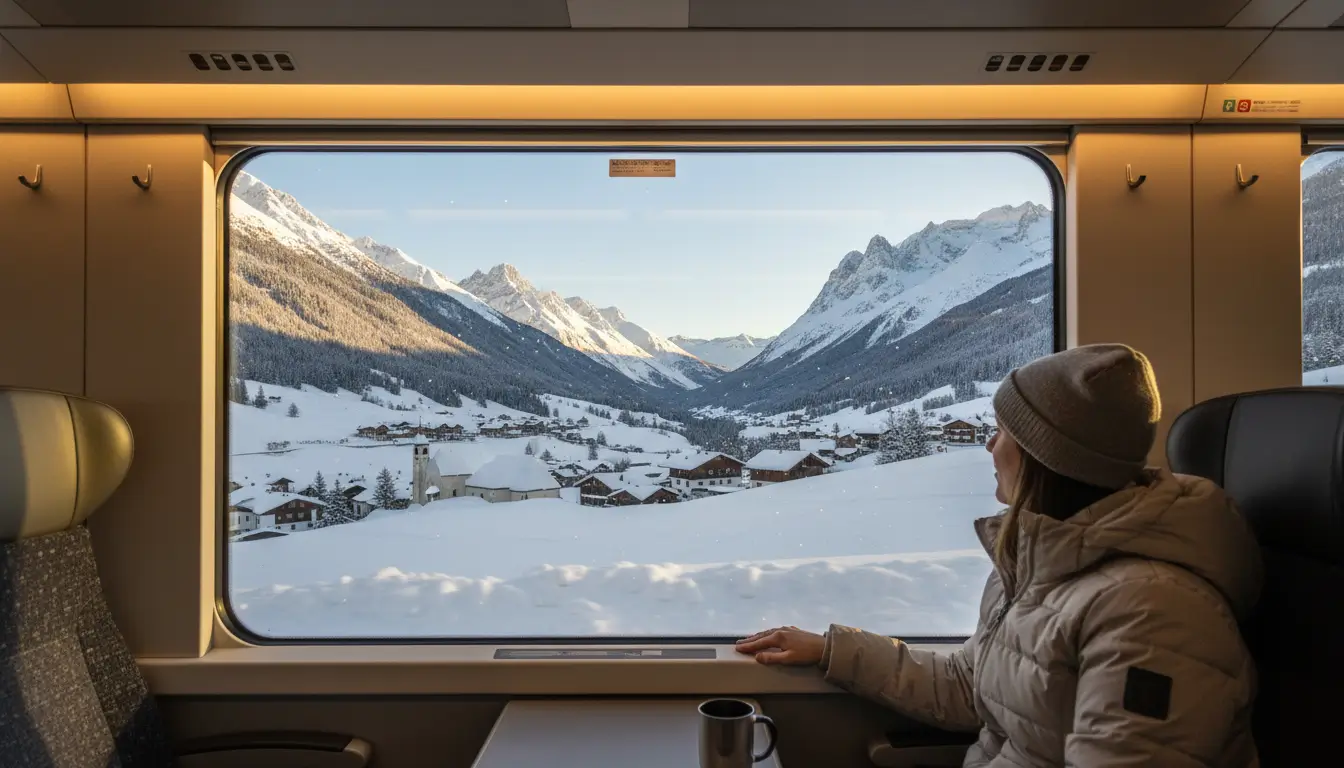
Travelling to the Alps by train is a comfortable and sustainable choice. You avoid traffic jams, have more legroom and can enjoy the passing scenery. But your journey does not end on the platform. The last leg, from the station in the valley to your accommodation higher up in the mountains, calls for a well thought-out plan. Especially in high season, when buses are fully booked and taxis are scarce, a lack of planning can cause unnecessary delays. With skis, luggage and perhaps children in tow, you will want this final part of the journey to run as smoothly as possible.
‘ These stations act as the gateways to some of the largest ski areas in the world. ’
The main hubs in the Alps
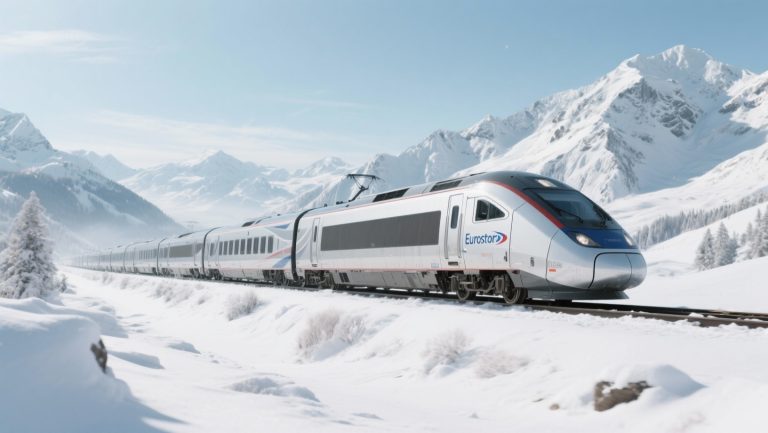
Many international trains, including the Eurostar Snow and night trains, stop at strategically located stations in the valleys of the Alps. From here, a network of local transport is available to take you to your final destination. Three of the best-known and most frequently used stations are Bourg-Saint-Maurice and Moûtiers in France and Innsbruck in Austria. These stations act as the gateways to some of the largest ski areas in the world.
France: gateways to the Tarentaise valley
The Tarentaise valley is home to world-famous ski areas such as Paradiski (Les Arcs, La Plagne) and Espace Killy (Tignes, Val d’Isère). The stations of Bourg-Saint-Maurice and Moûtiers are the terminus for many high-speed trains and form the starting point for your transfer up the mountain.
From Bourg-Saint-Maurice you have direct access to Les Arcs via the funicular, a cable railway that takes you to Arc 1600 in less than ten minutes. For destinations such as Tignes and Val d’Isère, buses depart directly from the station square. A journey to Tignes takes around 45 to 60 minutes, depending on traffic and weather conditions.
If your destination is La Plagne, you will usually also travel via Bourg-Saint-Maurice, or via the nearby station of Aime-La Plagne. From both stations you can take a bus or taxi to one of the villages of La Plagne. Journey times vary, but allow around 45 to 75 minutes. The station at Moûtiers is the ideal base for Les 3 Vallées. Buses take you from here to Méribel, Les Menuires and Val Thorens.
- Regional buses: Local bus companies offer regular services that connect with train arrival times. Reserve your bus ticket online in advance, especially for busy Saturdays.
- Shared or private transfers: Some companies offer shuttle buses or private taxis. This is a good option for families or groups, as you are taken straight to your accommodation and there is plenty of space for luggage and ski equipment.
Austria: from Innsbruck into the mountains
Innsbruck Hauptbahnhof is one of the main transport hubs of the Austrian Alps. From here you can easily continue to many ski resorts in Tyrol. Public transport is excellently organised, with a combination of trains and buses taking you further into the valleys.
The VVT (Verkehrsverbund Tirol) network provides the main bus connections, including the well-known Postbuses. These buses depart from the bus station next to the railway station and run to destinations in the Stubaital, Ötztal and Zillertal. For many destinations, however, the train is a faster alternative. For example, a regional train takes you in just over an hour directly from Innsbruck to the centre of Sankt Anton am Arlberg. To get to Mayrhofen in the Zillertal you take the train to Jenbach, where you change to the local Zillertalbahn.
How long does the transfer from station to slopes take?
The duration of your transfer depends on a number of factors. Distance and choice of transport play the biggest role, but road conditions are crucial too. On a Saturday in peak season with fresh snowfall, a journey that normally takes an hour can easily take twice as long. So always allow a generous margin.
Here are a few indications of average journey times, excluding extreme traffic or weather conditions:
- Bourg-Saint-Maurice to Les Arcs 1600: approx. 10 minutes by funicular.
- Bourg-Saint-Maurice to Tignes: approx. 45–60 minutes by bus.
- Moûtiers to Val Thorens: approx. 60–75 minutes by bus.
- Innsbruck to St. Anton am Arlberg: approx. 70 minutes by train.
- Innsbruck to Neustift (Stubaital): approx. 50 minutes by bus.
Practical tips for a smooth transfer
The tips below will help ensure that the final leg of your journey goes without a hitch.
- Book your transfer in advance: Especially during holiday periods and on changeover days (Saturdays), buses and shuttles are quickly fully booked. Booking online gives you certainty and is often cheaper.
- Check the timetable: Coordinate your train arrival time with the departure of your bus or shuttle. Note that in the late evening or on Sundays there are often fewer buses.
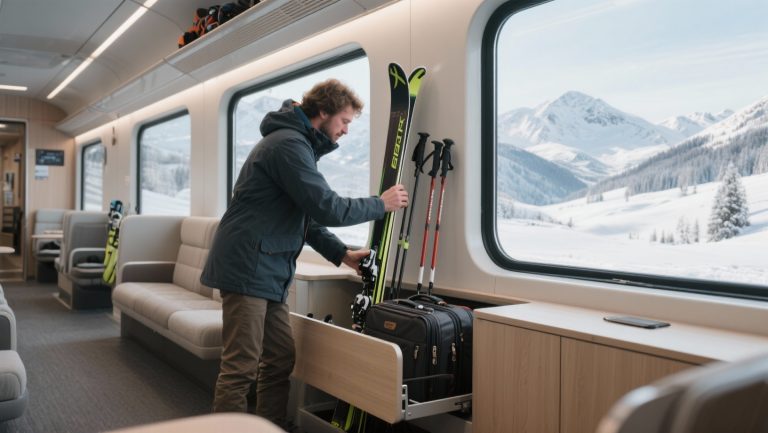
- Ask about luggage rules: Almost all transfer services are geared towards winter sports travellers, but check in advance whether you can take your ski or snowboard bag without extra charges.
- Build in a buffer: Your train may be delayed. A buffer of at least an hour between the scheduled arrival of your train and the departure of your transfer is sensible.
- Compare the options: A local bus is often the cheapest option, but a shared shuttle can offer a lot of extra comfort for a small surcharge, such as drop-off at the door of your hotel.
Good preparation does not stop with booking your transfer. On the Traveler Tips website you will find much more in-depth information to help you plan your trip comfortably and efficiently, from the best train routes through the Alps to checklists for your gear. Discover more and turn your next winter sports holiday into a perfectly organised experience.
Frequently asked questions
From railway stations there are various transfer options to ski resorts, including direct train connections such as Eurostar Snow to French Alpine resorts. There are also night trains such as the Alpen Express and Urlaubs-Express, which run from Dutch cities to Austrian ski resorts. In addition, transfer services such as Ski-Lifts offer transport from railway stations to European ski resorts. The best choice depends on your departure point, destination and personal preference in terms of journey time and convenience.
For comfortable and safe transport of luggage and ski equipment during the last-mile transfer, you can use specialised transfer services such as Ski-Lifts, which often offer free ski storage. You could also consider direct train connections such as Eurostar Snow to the French Alps, or night trains such as the Alpen Express and Urlaubs-Express to Austrian ski resorts. These services are often set up specifically for transporting winter sports equipment.
It is not always strictly necessary to book last-mile transfers in advance, but it is strongly recommended, especially in high season. By booking in advance you are assured of availability and avoid stress or long waiting times on the spot. In addition, you can compare prices and options more easily and often benefit from lower fares. You will also know exactly where and when you will be picked up, which makes your journey smoother and more predictable.
The costs of transfers vary greatly depending on the option: shared shuttle buses are usually the most economical, private transfers are more expensive and taxis are the most expensive per kilometre. Journey times are generally between 20 minutes and 2 hours, depending on distance, traffic levels and weather conditions. Night trains and long-distance coaches tend to have lower hourly prices but longer total journey times, while direct trains to the Alps are faster but often require an additional local transfer. For exact prices and journey times you need to compare each provider and route separately.
Plan your last-mile transfer well in advance, ideally with flexible tickets or a service that monitors your train delays and automatically adjusts your pick-up time. Make sure you build a time buffer into your schedule between the arrival of the train and the departure of the transfer, especially when changing trains abroad or in high season. Use one clear communication app (for example WhatsApp or SMS) with the transport provider, so that in case of delay you can immediately let them know what time you will actually arrive. Keep your travel information, booking confirmations and emergency numbers available offline, so that even with limited reception you can still react quickly.