
 NL
NL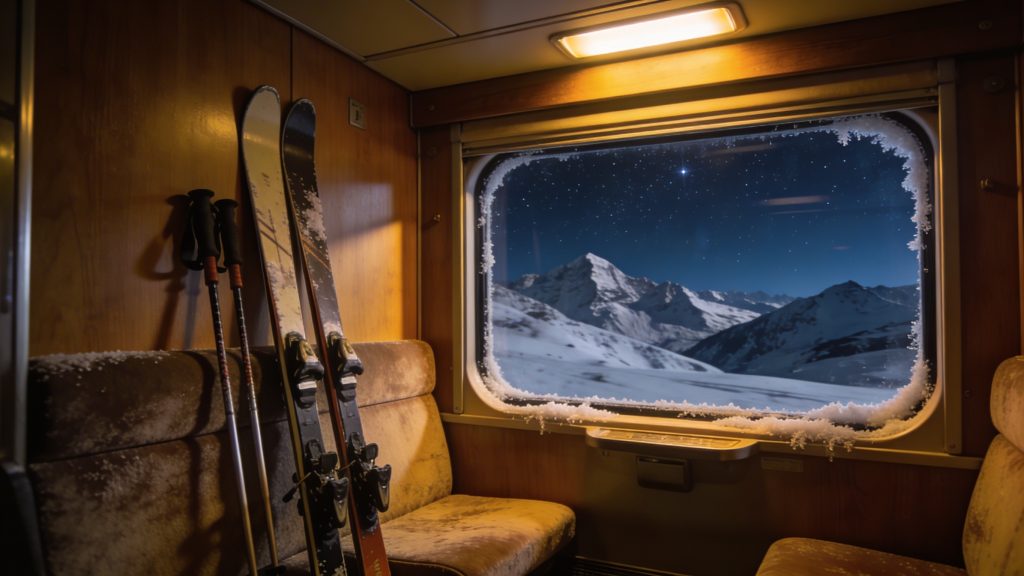
A weekend in the snow is possible without the stress of driving. Travelling to the Alps by night train means a relaxed journey and you arrive fresh in the ski area. You board on Friday evening and on Saturday you make your first tracks in the snow. Discover how to smartly plan a short ski weekend by train and where you can go.
The advantages of travelling to your winter sports holiday by train
A weekend trip by train to the mountains offers practical benefits. You do not have to drive through wind and weather on slippery roads, you are not dependent on snow chains and you avoid fatigue behind the wheel. By travelling at night you also save a hotel night and gain extra time in the ski area.
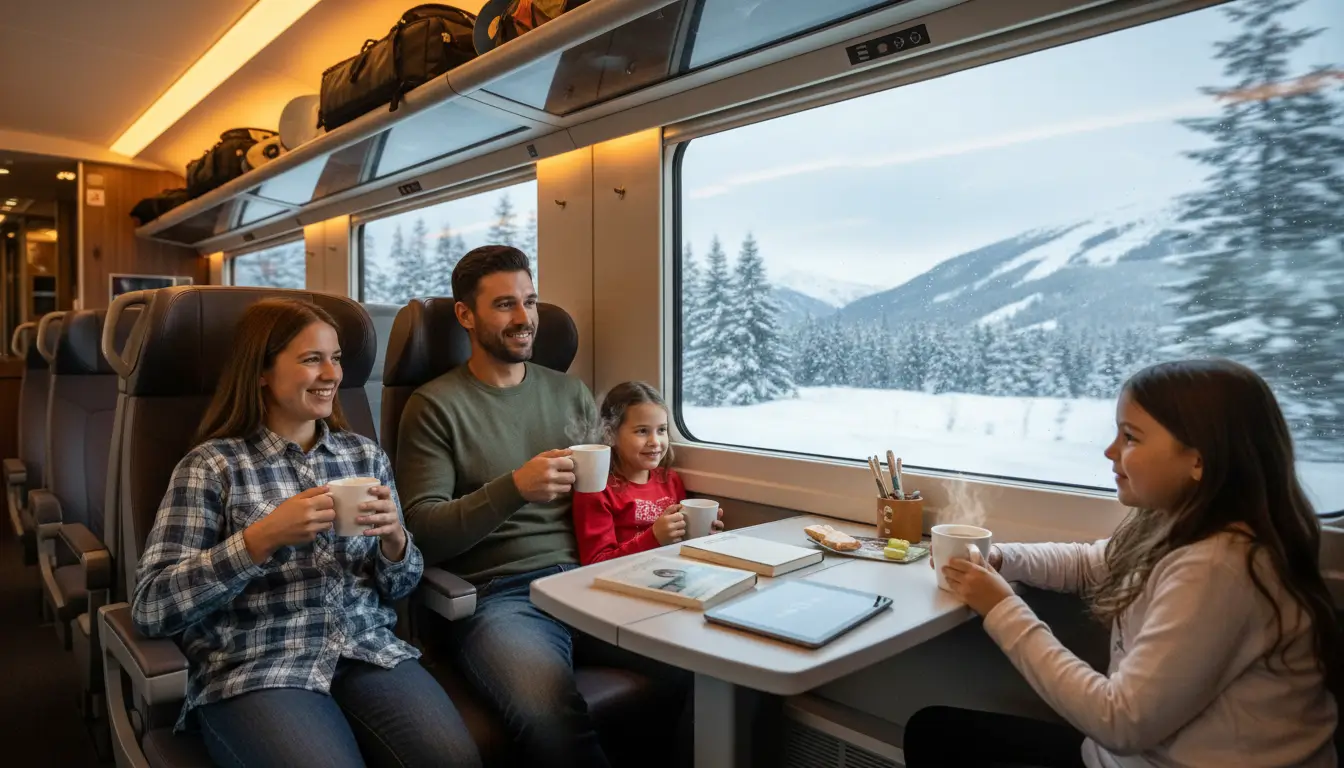
Besides convenience, travelling by train is more environmentally friendly than travelling by car. CO2 emissions are significantly lower and you contribute to more sustainable mobility. During the journey you can read, work or simply relax while the landscape glides past. Want to know more about train journeys for winter sports holidays? There are extensive overviews available with all connections and destinations.
‘ You arrive the next morning well rested and ready for the slopes. ’
Night train connections to Austria
Several night train connections depart from the Netherlands to Austrian winter sports areas. These trains run in the evening and take you straight to the Alps the next morning.
UEX Urlaubs-Express
The Urlaubs-Express is a relatively new option for the 2025–2026 season. This night train departs from Amsterdam, Utrecht, Den Bosch and Venlo and runs directly to popular Austrian ski resorts. You can get off in Kitzbühel, Zell am See, Schladming, Landeck, Ötztal or St. Anton am Arlberg.
Departure is scheduled so that you can board after a working day. The train runs from 26 December 2025 to March 2026. You arrive the next morning well rested and ready for the slopes.
ÖBB Nightjet
The ÖBB Nightjet is a regular service that has been running successfully for years. The train departs around 19:00 from Amsterdam and stops in Utrecht and Arnhem. You arrive without changing trains in Kufstein, Wörgl, Jenbach and Innsbruck.
From these stations you can easily continue by regional bus, train or taxi to your final destination. Many accommodations offer a transfer service from the station.
European Sleeper
The European Sleeper provides access to both Austria and Italy. You board at Breda or Eindhoven and travel to Kufstein, Wörgl, Jenbach and Innsbruck in Austria, or further to Brennero, Bressanone, Ponte Gardena-Laion and Bolzano in Italy.
This route gives you the flexibility to explore different winter sports areas. Bolzano, for example, lies in the Dolomites and offers access to extensive ski areas. The atmosphere there is different from that in the Austrian resorts.
Daytime train connections to the French Alps
If you prefer travelling during the day, choose a daytime train connection to the French Alps. This option does take more travel time, but you see the landscape change as you head south.
Eurostar Snow
The Eurostar Snow runs every Saturday during the winter months from the Netherlands to the French Alps. You can board at Amsterdam Centraal, Schiphol Airport or Rotterdam Centraal. The train takes you directly to Moûtiers, Aime-la-Plagne and Bourg-Saint-Maurice.
From Amsterdam, the journey takes around 8 hours to Moûtiers and just over 9 hours to Bourg-Saint-Maurice. From these stations you can reach well-known ski resorts: Les Arcs, Val Thorens, La Plagne and Tignes. Les Arcs is part of the huge Paradiski area with more than 425 kilometres of pistes.
Planning a 4-day winter sports trip by train
A well-planned short ski trip starts with choosing your destination. You then pick your train connection. Book your tickets a few weeks in advance for the best availability and fares. Night train connections have a limited number of couchettes and sleeping berths, so booking early pays off.
Depart on Friday evening and arrive early on Saturday. You then have the whole of Saturday and Sunday to ski. On Monday you can, if you wish, still spend the morning on the slopes before heading back. That way you gain two to three full ski days without losing much daytime travel time.
Practical preparation
Packing for a train journey is different from packing for a car trip. Pay attention to the following points:
- Take only hand luggage and one larger bag or suitcase for easy handling
- Reserve space for your skis or snowboard on the train in advance
- Wear layers of clothing for comfort during the journey
- Bring earplugs or an eye mask for a better night’s sleep
- Keep toiletries and any medication in your hand luggage
On arrival at an Austrian station you usually transfer straight onto a bus to your ski area. The same applies at a French station. Some accommodations pick guests up from the station. Check this in advance and book a transfer if it is not already arranged.
‘ What’s more, you gain extra time in the ski area because you arrive rested. ’
Costs and savings when travelling by train
The train journey itself costs more than fuel for a car. You do, however, save on other items. By travelling at night you skip a hotel stay. You do not pay parking fees at your accommodation and you avoid motorway tolls. What’s more, you gain extra time in the ski area because you arrive rested.
Many train operators offer discounts for groups of four or more people. Compare fares and look for combination deals with ski passes or accommodation. Some tour operators offer rail package holidays that are sometimes cheaper than booking everything separately.
Ski areas for every level
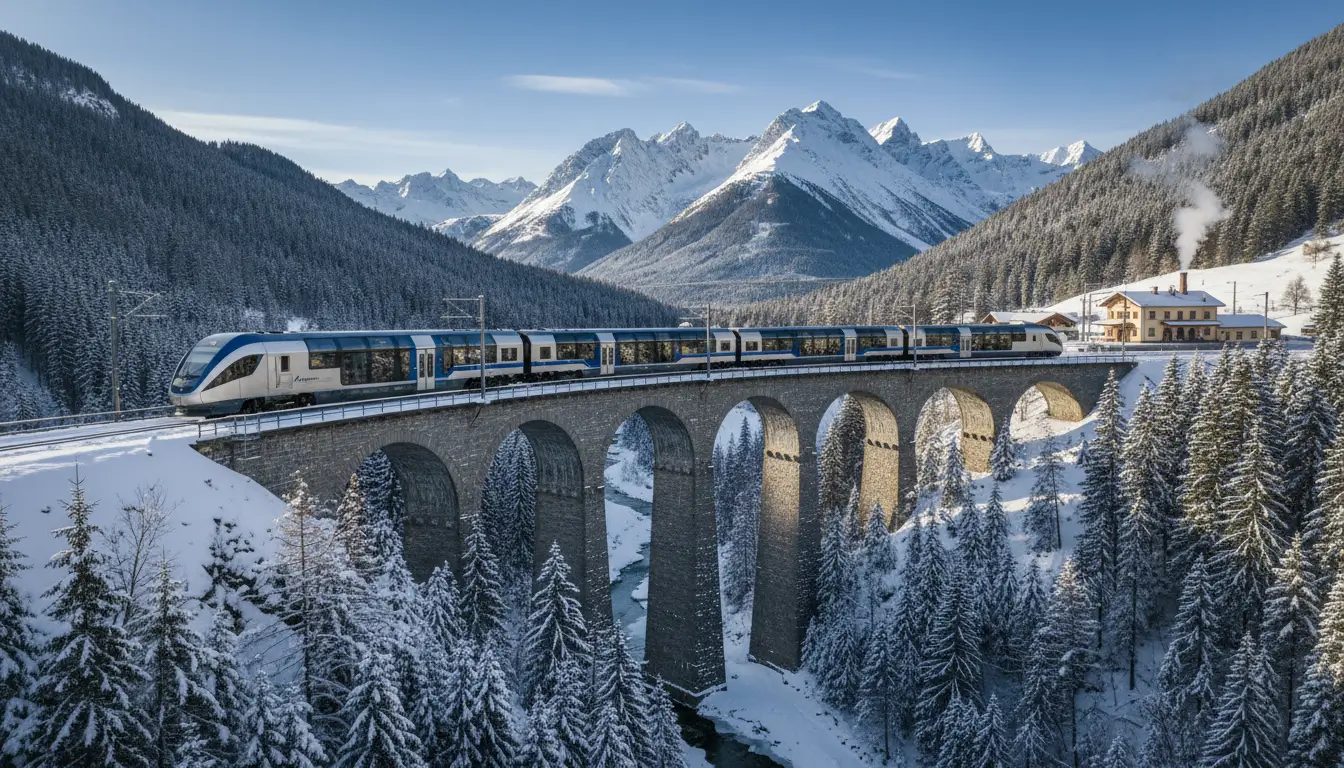
The destinations that can be reached by train offer pistes for both beginners and advanced skiers. The choice of ski area depends on your level, and also on what you are looking for in a winter sports destination.
For beginners and families
In France, Valloire and Flaine are good choices for those who are just starting to ski. These areas have quiet, wide pistes and a relaxed atmosphere. Flaine is known for its reliable snow conditions well into spring.
For advanced skiers
St. Anton am Arlberg in Austria and the Paradiski area around Les Arcs offer challenging runs and lively après-ski. These areas attract experienced skiers looking for variety and challenge.
For mixed ability groups
Kitzbühel, Zell am See and Schladming have pistes for different levels and are suitable for groups with mixed abilities. These areas combine good facilities with varied terrain.
Environmentally conscious travel to the mountains
Travelling to the Alps by train has a lower environmental impact than going by car or plane. Modern trains largely run on sustainable energy and produce considerably less CO2 per passenger.
If you consciously choose sustainable mobility, the train is an obvious option. You help reduce traffic jams and air pollution in the mountains and travel in comfort without compromising your winter sports experience.
‘ The combination of convenience, sustainability and extra ski days makes the train a smart choice for a winter break. ’
Combine comfort and adventure
A short ski weekend in the Alps by train is more accessible than you might think. With direct night train connections from several Dutch stations, you travel in a relaxed way and make the most of your time in the ski area. The combination of convenience, sustainability and extra ski days makes the train a smart choice for a winter break.
Choose your route, book your tickets and pack your bags. The Alps are waiting for you.
Frequently asked questions
The most efficient and comfortable short ski routes are the night trains from the Netherlands to the Alps, such as the ÖBB Nightjet (Amsterdam/Utrecht/Arnhem – Kufstein/Wörgl/Jenbach/Innsbruck) and the UEX Urlaubs-Express (including Amsterdam/Utrecht – Kitzbühel, Zell am See, St. Anton). These offer sleeping cars, save you a hotel night and drop you early in the morning right in the middle of the Alps. For the French Alps, Eurostar Snow (Amsterdam/Schiphol/Rotterdam – Moûtiers/Aime-la-Plagne/Bourg-Saint-Maurice) is a very comfortable and direct daytime train option. Those who prefer travelling by day to Austria or Switzerland can take the ICE International to Munich and change there for the ski areas.
You can usually just take your ski equipment with you on the train; many (night) trains to the Alps have special racks or luggage spaces for skis and snowboards. Check the luggage rules with the operator in advance and make sure you have a protective cover and clear label. From the arrival station there are almost always shuttle buses, regional trains or taxis to the ski villages. Ask your accommodation whether they offer a (free) transfer or can advise you on the best connection for the last few kilometres.
Good destinations for a short stay by train include Les Arcs, La Plagne, Tignes and Val Thorens in the French Alps via Eurostar Snow (stations Moûtiers, Aime-la-Plagne and Bourg-Saint-Maurice). In Austria, St. Anton am Arlberg, Kitzbühel, Zell am See, Schladming, Ötztal and Landeck are all easy to reach by night train (UEX, Nightjet, European Sleeper). Innsbruck and its surrounding ski areas are also straightforward to get to with Nightjet or European Sleeper. These destinations have good connections with local buses or lifts, making them ideal for a short ski weekend.
Plan your short ski by first choosing your destination and travel time: Austria (Nightjet, UEX or European Sleeper) or the French Alps (Eurostar Snow on Saturdays). Book a night train that leaves on Friday evening and returns on Monday morning, so you gain two full ski days and save a hotel night. Make sure your accommodation is close to a station with good bus or transfer links and reserve those transfers in advance. Pack light but smart (skis/board registered, layered clothing, earplugs, eye mask), so you sleep well on the night train and can head straight for the slopes on arrival.