
 NL
NL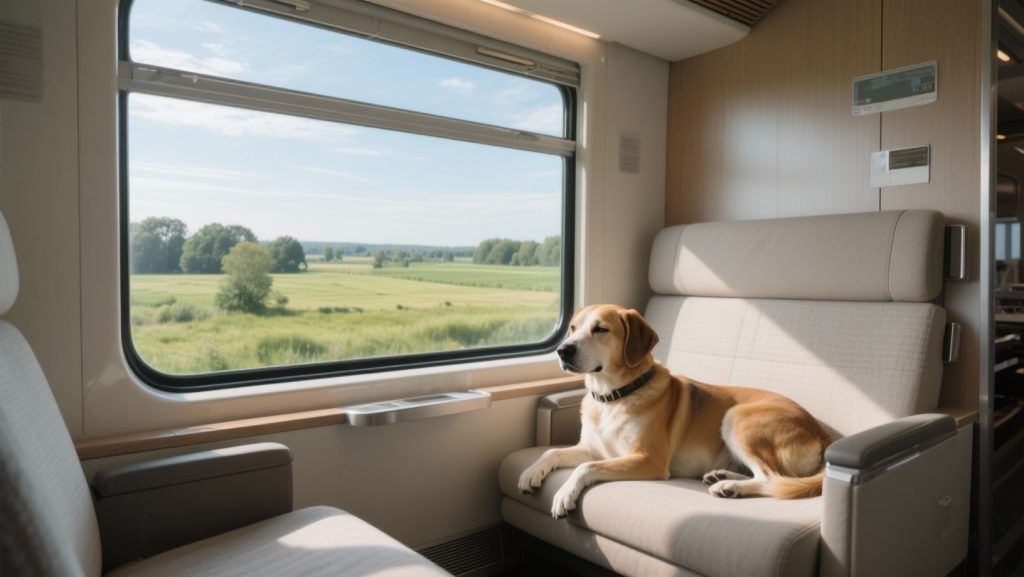
Train Holidays with Your Dog
A successful train holiday with your dog or pet is entirely dependent on good preparation. Knowing the rules per carrier, gathering the correct documents, and planning a comfortable route are the keys to success. With the right approach, the journey will become a relaxed and pleasant experience for both of you. Read on and discover how to make your joint train journey a smooth undertaking.
The train is a comfortable and sustainable way to explore Europe, where the journey itself becomes part of the experience. More and more travellers are discovering the benefits of travelling by train, and the good news is that your loyal four-legged friend can often come along. Unlike the restrictions and stress of flying, the train offers more peace and space for you and your pet.
The Charm of a Train Holiday with Your Pet
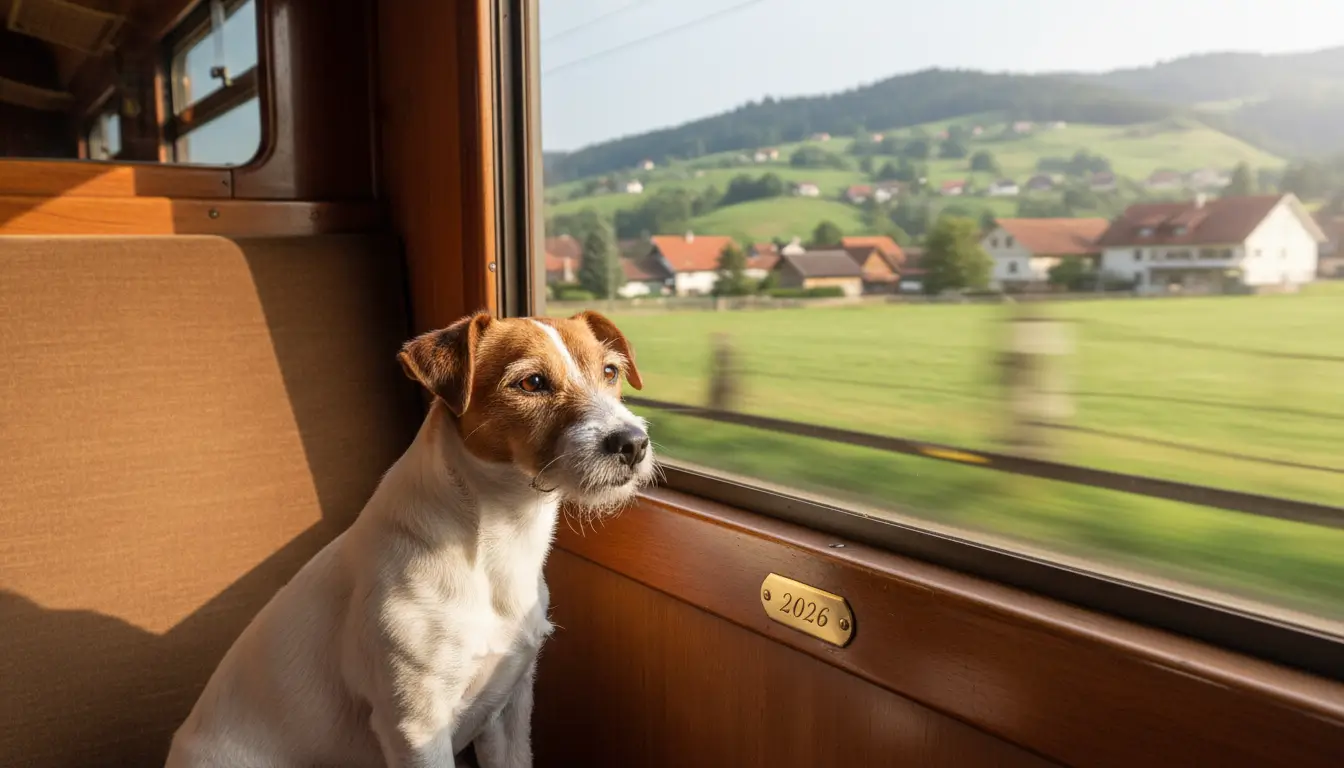
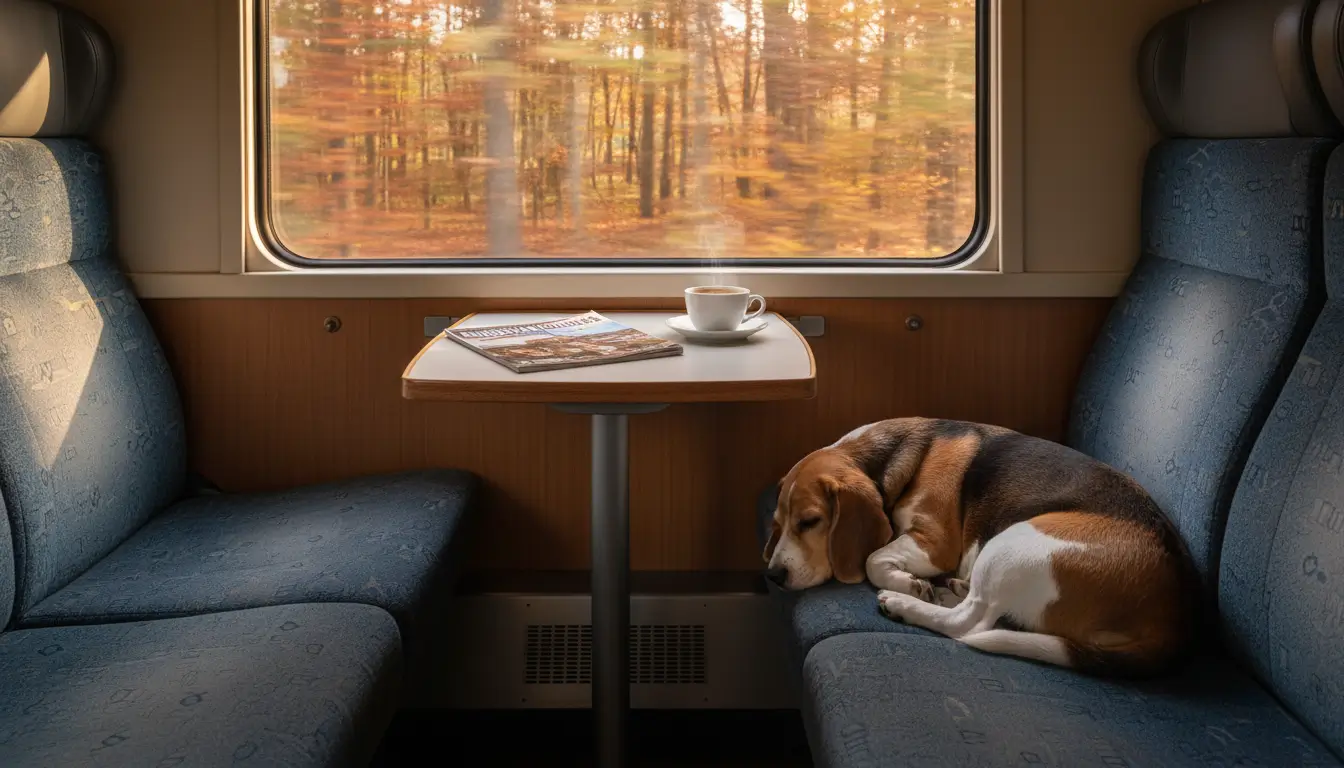
Travelling by train with your dog or cat is a conscious choice for comfort and sustainability. As the landscape passes by, your pet sits quietly beside you, without the stress of a cramped car crate or the noisy cargo hold of an aeroplane. It’s a way of travelling that offers more experience; you see the world change and share that experience with your pet. Moreover, the ecological footprint is significantly smaller than with a car or plane journey, which perfectly suits a modern, conscious lifestyle.
‘ “A good start is half the battle and prevents unexpected problems en route or at the border.” ’
Good Preparations at Home
Before booking a ticket, the journey begins with a number of preparations at home. A good start is half the battle and prevents unexpected problems en route or at the border. Arrange the following well in advance:
- Visit to the vet: Plan a health check-up with the vet. Discuss your travel plans and ensure all vaccinations are up-to-date. Pay particular attention to the compulsory rabies vaccination. This must have been administered at least 21 days before departure.
- EU pet passport: For travel within the European Union, an official EU pet passport is mandatory. This includes a description of the animal, its microchip number, and proof of vaccinations. Your vet can prepare this document for you.
- Identification chip: Ensure your pet is microchipped. Check that the registration is correct. Enter your current contact details. This is not only mandatory but also important if your pet unfortunately gets lost.
- Training and acclimatisation: Practice the travel situation at home. Let your dog or cat get used to the travel crate or bag. A short, trial journey by train in your home country helps to familiarise your pet with the sounds and movements. Also, practice wearing a muzzle if it is compulsory on your route.
Rules per Country and Carrier Clearly Arranged
The rules for bringing pets vary significantly per country and per railway company. It is essential to check the specific conditions of each carrier on your route. Small pets can often travel for free in a suitable travel bag or basket. For larger dogs, you usually need a separate ticket. These animals must be kept on a lead and muzzled.
Below is an overview of some important carriers:
- Netherlands (NS): Small pets travel for free in a bag (maximum 30x55x30 cm) or on your lap. For larger dogs, on a lead, you buy a ‘Dog Day Ticket’. Assistance dogs always travel for free.
- Germany (Deutsche Bahn): Small dogs and cats in a closed crate (the size of a cat basket) are free. Larger dogs pay half the price of a second-class ticket and must be kept on a lead and muzzled.
- Belgium (NMBS): Small animals in a cage (maximum 30x55x30 cm) travel for free. For larger dogs on a lead, you pay a fixed amount per single journey. A muzzle is not always mandatory but is recommended.
- France (SNCF): Almost all pets require a ticket. The price depends on your animal’s weight. Animals under 6 kg in a bag pay a small fixed amount. Heavier dogs pay a higher fare. Muzzle and lead are mandatory.
- Eurostar: Pets are not allowed on routes to London, with the exception of assistance dogs. On routes to continental Europe (formerly Thalys), similar rules apply as in France and Belgium. Always check this for the specific connection.
Please note: these rules may change. Always consult the official website of the relevant railway company just before you book and travel.
Specific Ticket and Muzzle Requirements
Booking a ticket for your dog may sometimes not be possible online. Often, you will need to do this by phone or arrange it at the station ticket office. Be prepared for this. The muzzle is another important point of attention. Even if your dog is the epitome of friendliness, a muzzle is a strict requirement in many countries for the safety and comfort of fellow travellers. Ensure a well-fitting and comfortable model and let your dog get used to it calmly at home with positive training.
‘ Some modern trains have special compartments with more space, which can be more pleasant. ’
Choosing the Right Train and Route
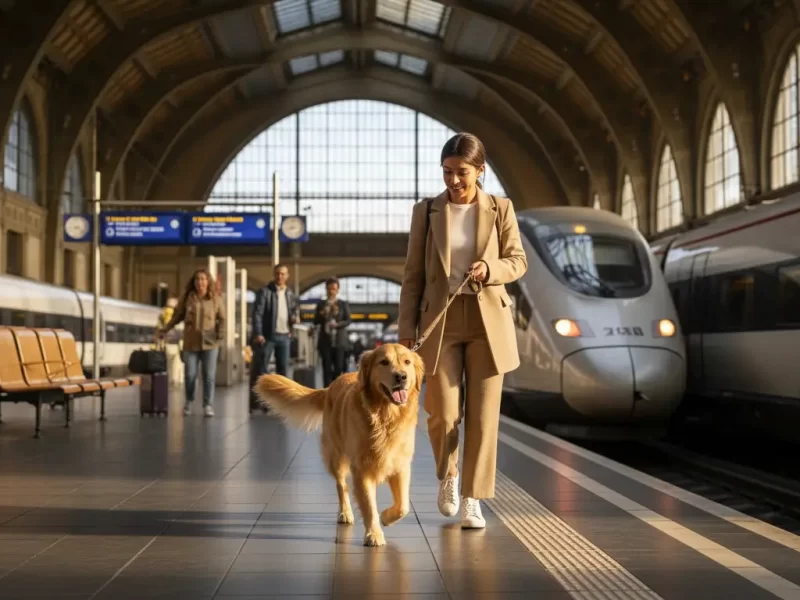
Smart route planning makes the journey considerably more pleasant for your pet. Try to avoid busy peak hours and, if possible, choose direct connections. Is a transfer unavoidable? Then plan ample transfer time. Choose a station where you can briefly get on and off the platform. This way, you can make a quick comfort stop in between. Some modern trains have special compartments with more space, which can be more pleasant. Night trains are an option for long distances. However, check the specific rules in advance: sometimes you have to book an entire compartment for yourself.
What to Bring? The Complete Packing List
Good preparation is reflected in your luggage. A complete packing list ensures you don’t forget anything for your pet’s care and comfort.
Documents and Health
- EU pet passport
- Proof of microchip registration
- Any medication and a pet first-aid kit
- Contact details of your own vet and a vet at the destination
For the Journey
- A comfortable and safe travel crate or bag
- A sturdy lead and a well-fitting muzzle
- Foldable water and food bowl
- Sufficient water and your pet’s own familiar food
- Reward treats and chew toys for distraction
- Plenty of poop bags and wet wipes, if needed
- Absorbent puppy pads for the crate in case of an accident
Comfort and Entertainment
- A familiar blanket or cushion with the scent of home
- Your pet’s favourite (quiet) toy
Comfort and Well-being During the Journey
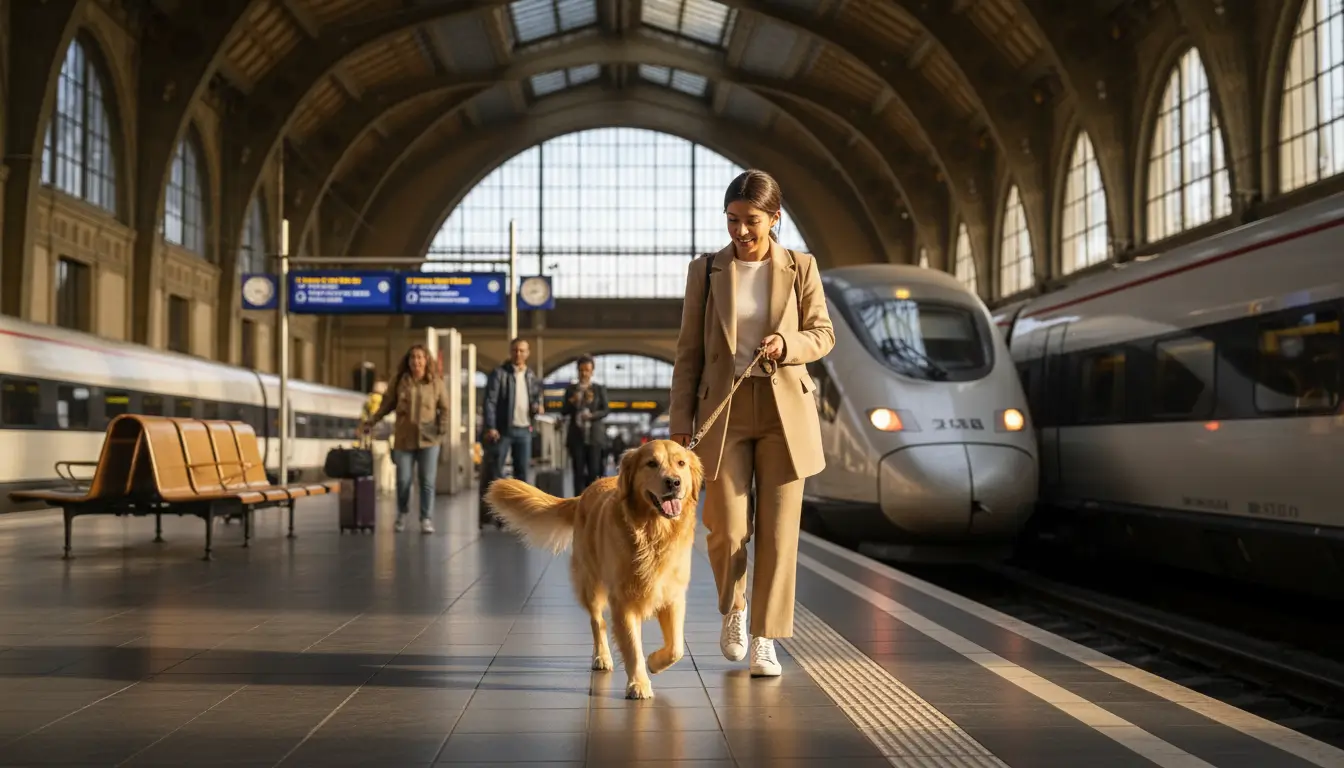
During the train journey itself, you can do a lot to make your pet comfortable. Ensure a long walk before boarding. This way, your pet can expend its energy. It will also have relieved itself. Find a quiet spot on the train, for example, at the end of a carriage. Offer small sips of water regularly, but preferably do not give a large meal just before or during the journey. Stay calm yourself, as your calm energy will reassure your pet. Use longer stops on the platform for a short toilet break, but always keep the dog on a short lead and pay close attention to safety.
‘ Familiarise yourself with the local rules in advance. ’
Arrival and Stay at the Destination
Once you’ve arrived, the next part of the planning begins. Familiarise yourself with the local rules in advance. Is your dog allowed on local public transport? What are the rules in restaurants and parks? Choose pet-friendly accommodation and inquire about any extra costs or specific house rules when booking. Upon arrival, give your pet time to calmly adjust to the new environment before heading out immediately.
Enjoy the Journey Together
You and your pet are on the eve of a wonderful adventure. The preparations are complete, the tickets are ready, and the route is mapped out. Step onto that train with confidence and enjoy the slowly changing landscape. Discover new places together, experience special moments, and let your loyal four-legged friend enjoy this unforgettable adventure. The train will take you to new horizons.