 NL
NL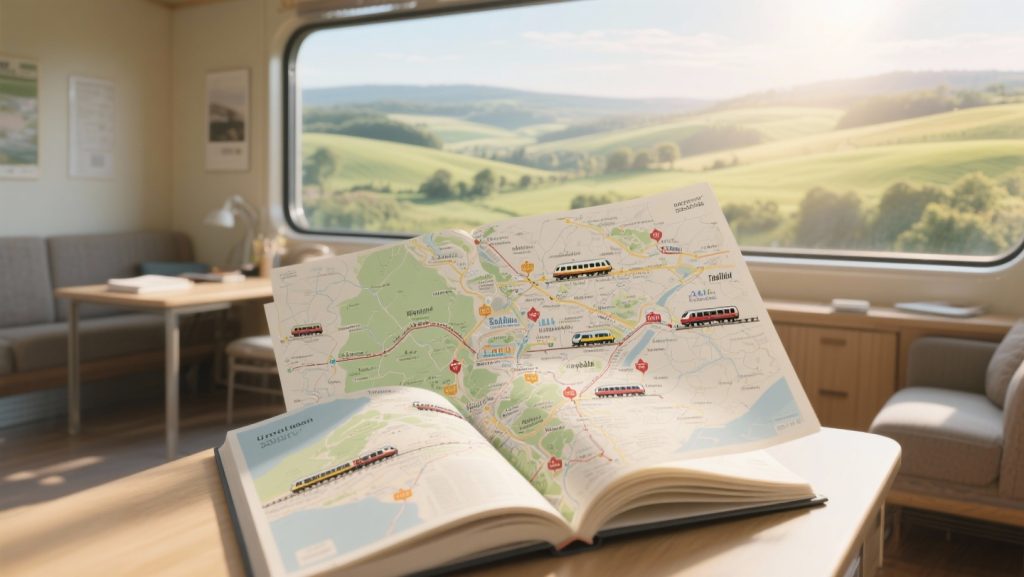
Making Train Round Trips
A train round trip offers an optimal balance between comfort, efficiency, and experience. The key to a successful journey lies in thoughtful planning. Make the right choices between flexible tickets and fixed routes. Discover how to put together a trip that perfectly matches your wishes.
Whether with individual train tickets or a planned route: good preparation determines the success of your train tour. The way you travel not only affects the costs and flexibility but also the experience itself. It is therefore important to understand the differences between travel methods before you start planning your route.
What is a train round trip? Point-to-point and multi-city explained
You can organise a train round trip in two ways: through individual tickets from one city to another, or with a pass for multiple journeys. Each method has its own advantages and disadvantages, depending on your travel style and destinations.
Point-to-point journeys
Point-to-point travel means buying an individual ticket for each separate leg of your journey. This approach offers maximum flexibility. You decide which route to take and how long to stay in a particular place. This is ideal if you only want to visit a few cities that are relatively close to each other. It is often the most economical option for shorter distances. Also, tickets are generally cheaper when booked early. The disadvantage is that you spend more time planning and booking all the individual journeys.
Multi-city journeys
Multi-city travel means making multiple journeys within a certain period with a pass. Think of an Interrail or Eurail Pass for travel through different countries and regions. This is convenient for longer trips through multiple countries. It offers ease, as you don’t have to buy a separate ticket for each journey. However, there are often reservation fees for high-speed and night trains. A pass is more expensive than individual tickets for a few short trips. For an intensive itinerary with long distances, a pass can actually be more economical.
‘ “Be realistic about the number of locations within the available time.” ’
The basics of route planning: how to build a logical itinerary
A well-planned route is the foundation of a relaxed train round trip. It ensures an efficient travel schedule and prevents unnecessarily long travel days. A logical structure begins with determining your start and end points and the destinations you want to visit in between.
Follow these steps for a structured approach:
- Determine your destinations: Make a list of cities or regions you absolutely want to see. Be realistic about the number of locations within the available time.
- Group destinations: Look at a map to see where your destinations are located and cluster them geographically. This helps avoid illogical zig-zag movements.
- Choose a start and end point: Select the most logical city to begin and end your journey. These are often cities with good international train connections.
- Check connections: Research the train connections between your chosen locations. Use the websites of national railway companies or international planners. Pay attention to travel times, frequency, and any transfers.
- Create a preliminary schedule: Make an itinerary that specifies the travel days and durations of stay for each destination. This gives you an initial overview of feasibility.


Optimise Your Journey: The Importance of Logical Loops and Travel Direction
A smart route minimises travel time and maximises the experience. Consider the shape of your route. A ‘loop’ or a ‘one-way trip’ from A to B are often the most efficient route forms. A loop brings you back to your starting point, which is useful if you travel to a station by car. A one-way trip is ideal if, for example, you travel south and fly back from your endpoint.
The direction of travel is also important. Travelling with the sun can offer seasonal advantages, such as more pleasant temperatures in spring or autumn. By taking your route in a logical order, you prevent unnecessary back-and-forth travel. This not only saves time and money but also makes the journey much more peaceful.
Travel Days and Stop Durations: Balancing Travel Time and Experience
When planning a train round trip, travel time is often underestimated. Short stays are also frequently planned, which is a common mistake. The journey itself is part of the experience, but you also want to have enough time to explore the destinations. A good balance is important here.
Consider the following:
- Travel duration: Try to limit train journeys to a maximum of six hours per day. Longer journeys can be tiring and detract from your time at the destination. Consider a night train for distances that take more than six to eight hours. This saves you a travel day and a hotel overnight stay.
- Duration of stay: Plan at least two to three full days for large cities. For smaller places, one day may be sufficient. Give yourself time not only to see the highlights but also to experience the atmosphere of a place.
- Rest days: Occasionally include a rest day in your schedule, especially for longer trips. This gives you the chance to catch your breath and prevents the trip from becoming a race against time.
‘ This is a good middle ground. ’
Fixed Route or Flexible Travel: Which Style Suits Your Trip?
The choice between a completely fixed route and a flexible itinerary depends on your personal preference and the type of trip you are making. A fixed route offers certainty. You know what to expect and have already booked all your tickets and accommodation. You’ll have little to arrange once you’re on the go. This is pleasant if you are travelling in high season or if you have a tight schedule.
Flexible travel offers more freedom. You can spontaneously decide to stay somewhere longer or make an unplanned stopover. This suits travellers who like to explore and let themselves be guided by what they encounter along the way. A disadvantage is that in busy periods you pay more for accommodation and trains can be fully booked. Fix the main lines of your route and leave room for spontaneity within that framework. This is a good middle ground.
Baggage Logistics for Train Travellers: Smart Packing and Transport
Travelling by train means you carry and move your own luggage. Smart packing is therefore very important. Choose a suitcase or backpack that you can easily carry and that isn’t too heavy. A wheeled suitcase is handy at stations but can be impractical in cities with many stairs or cobblestones.
Also, consider logistics at the stations. You often only have a short time to get on and off. Make sure you can quickly grab your luggage. Lockers are available at many large stations where you can temporarily store your luggage. This is ideal if you want to spend a few hours in a city where you are only transferring.
Practical Preparation: From Tickets to Accommodation
Good preparation ensures a carefree journey. As soon as your route is broadly established, it’s time to arrange the practical matters. Book your train tickets and accommodation preferably a few months in advance, especially if you are travelling in high season. This often yields the best prices and prevents disappointment.
Use online planners and apps from railway companies to plan your trip and book tickets. Platforms such as Trainline are useful for international travel. The websites of NS International and Deutsche Bahn also offer good services. Always check the terms and conditions for changing or cancelling your tickets.
‘ A flexible attitude helps deal with unexpected situations. ’
Tips for a Carefree Journey: Enjoy Every Mile to the Fullest
With good planning, you’re already halfway there, but a few extra tips can make your train journey even more pleasant. Make sure you are at the station on time so you can calmly find the right platform. Take some food and drinks for the journey, even though a dining car is often available.
Keep in mind that timetables can change and delays can occur. A flexible attitude helps deal with unexpected situations. Download the apps of the respective railway companies so you always have access to current travel information. This way, you will be well-prepared and can fully enjoy the views and the freedom that a train round trip offers.