NL
NL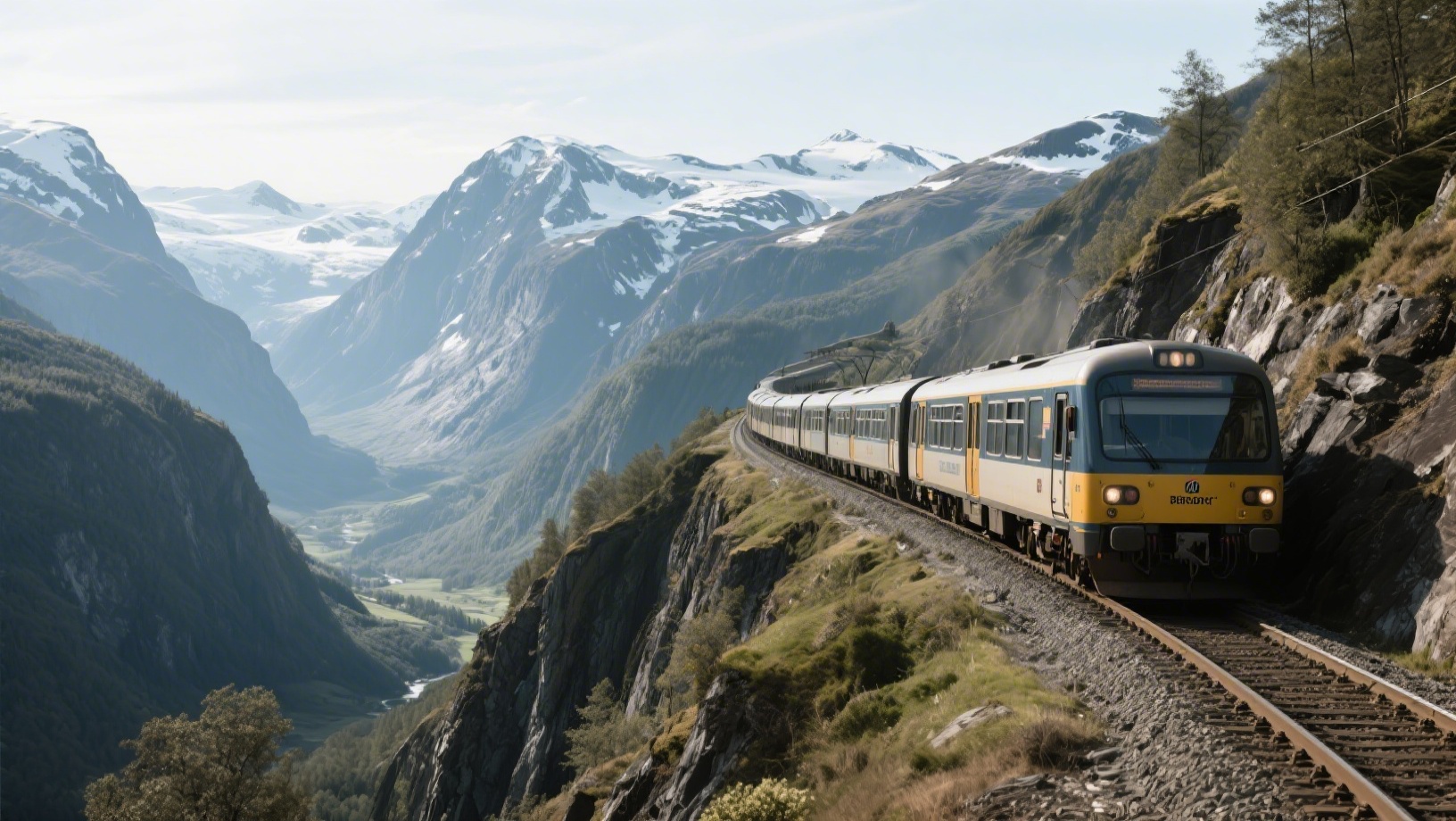
The Bergen Railway in Norway climbs to an altitude of 1,222 metres and takes you through landscapes ranging from fjords to Arctic mountain plateaus. This iconic railway links Oslo with Bergen over a distance of almost 500 kilometres and is widely regarded as one of the most beautiful train journeys you can take. Curious what you will encounter along the way?
From Oslo to Bergen through unspoilt nature
The Bergen Railway connects the capital Oslo with the port city of Bergen. In Norway, this line is known as the Bergensbanen. The train covers a distance of 484 kilometres in around 7 hours. You travel through forests, pass hundreds of lakes and cross the Hardangervidda plateau.
The highest point on the route is at Finse station, at 1,222 metres above sea level. Originally, the line climbed to 1,300 metres at Taugevatn. A 10.3-kilometre-long tunnel was later added, which shifted the highest point to Finse. The line was opened in stages between 1870 and 1909. The route has 182 tunnels with a total length of 73 kilometres. The longest tunnel is 10.6 kilometres.
The train also crosses around 300 bridges. The line is electrified and single track. The maximum speed is 160 kilometres per hour. At the opening, King Haakon VII called the route a masterpiece of its time.
‘ There are no roads leading to Finse. ’
Finse station takes you into Arctic scenery
Finse is the highest point on the line, located at 1,222 metres above sea level. At 1,222 metres above sea level, you are in a sub-Arctic climate, even in the middle of summer. The village lies between glaciers and snowfields and is only accessible by train. There are no roads that lead to Finse.
When you get off at Finse, you can take a short walk through the Arctic surroundings. Even on the longest day of the year you feel the cold wind sweeping over the barren mountain landscape. The station offers a unique experience: you feel as if you are in a polar region, while you are still in southern Norway.
Hardangervidda reveals Europe’s largest mountain plateau
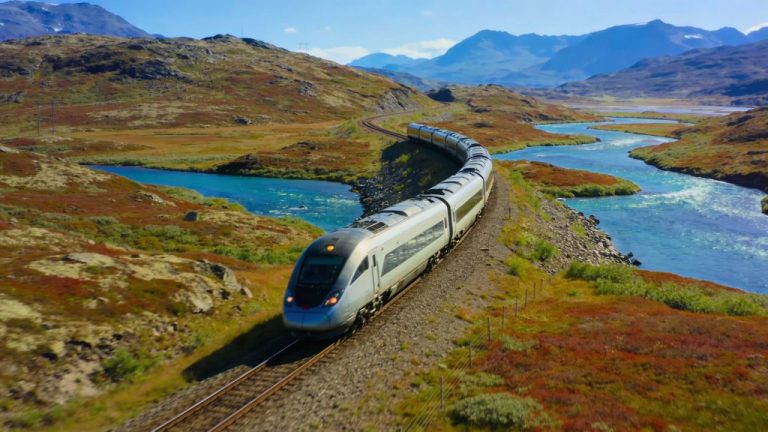
The train crosses the Hardangervidda plateau, the largest upland plateau in northern Europe. This area stretches over hundreds of square kilometres. It is a protected nature reserve. In the distance you can see the Hardangerjøkulen glacier.
The view from the train ranges from expansive lakes to rugged wilderness. In summer, reindeer graze on the high plateau. The area has hardly any vegetation and exudes a raw beauty. Travellers who want to explore the plateau in more depth can get off at Ustaoset and Haugastøl, where walking trails start.
Hallingdal valley offers picturesque villages and mountain ridges
Through the Hallingdal valley, the train runs alongside a river. This is the Hallingdalselva, the river that flows through the valley. You pass villages such as Geilo, Gol and Flå. These places are surrounded by mountains such as Norefjell and Hallingskarvet.
Geilo is a popular stop for travellers who want to be active. You can go mountain biking, rafting or fishing. In winter, it is a ski resort. From the train you can see wooden houses on the mountain slopes and forests that give way to bare rock as you climb higher.
‘ It is known as Norway’s adrenaline capital. ’
Voss combines adrenaline with panoramic views
Voss lies on the western side of the route. It is known as Norway’s adrenaline capital. From the station you can take a gondola up to the top of Hanguren, at an altitude of 820 metres. From there you have sweeping views over the surrounding mountain landscape.
Travellers with more time can go rafting, skydiving or cycling in Voss. The Prestholtstien staircase is a popular climb for those who want to go up on foot. The gondola also departs directly from the train station, which makes it a convenient stop.
Myrdal connects with the Flåmsbana to the fjords
Change at Myrdal station for the Flåmsbana, a tourist branch line and one of the steepest train lines in the world. This branch descends 863 metres over a distance of 20 kilometres to the fjord village of Flåm. The journey takes about an hour.
The Flåmsbana offers a completely different landscape from the Bergen Railway. You ride past steep rock faces, waterfalls and deep ravines. Many travellers combine both routes for a complete experience of Norway’s mountains and fjords.
Summer and winter offer different experiences
What you want to see along the way determines the best time to travel. In summer, the days are long and the landscape is green and open. This is also when the Rallarvegen is open, a cycle route that runs parallel to the railway line. This route reaches an altitude of 1,341 metres. Cyclists follow the train in the morning on gravel tracks.
In winter, the landscape turns into a blanket of snow. The mountains are white and the Hardangervidda plateau looks even more like a polar region. You can ski at Geilo and Voss. Make sure to take warm clothing and ski boots with you if you travel in winter.
Weather conditions can change quickly, regardless of the season. Dress in layers. Take a windproof jacket.
‘ From Bergen towards Oslo, the left-hand side is best. ’
Book regional and choose your seat carefully
The Bergen Railway is a regular rail service and you travel on regional trains. Book your seat in advance. This is especially important in high season. Choose a seat on the side with the best views. From Bergen towards Oslo, the left-hand side is best.
The train stops regularly, but not always long enough to get off. Do you want to explore the landscape on foot? Then plan stops at stations such as Finse, Myrdal or Voss. The entire journey takes about 7 hours without stopovers.
Arriving in Bergen by plane? Then take the light rail to the train station. From Oslo Central, the train departs directly to Bergen.
Take a camera, snacks and proper clothing
Take a camera with you. The views are constantly changing and you will want to capture moments such as crossing the Hardangervidda or spotting a waterfall near Myrdal. Snacks are useful, because although food is available on the train, the choice can be limited.
Dress in layers. It can be warm on the train while it is cold outside, especially at higher altitudes. At Finse, it can even freeze in summer. Walking boots are useful if you plan to get off at one of the stops.
If you are a cycling enthusiast, hire a bike at stations such as Finse or Haugastøl to ride the Rallarvegen. This route follows the old construction road of the railway. It takes you through tunnels and across bridges.
Practical tips for along the way:
- Book your train ticket in advance for the best seats
- Choose a seat on the left-hand side from Bergen towards Oslo
- Plan extra time for stops at Finse, Myrdal or Voss
- Take warm clothing, even in summer
- Hire a bike if you want to ride the Rallarvegen
- Combine the journey with the Flåmsbana for a complete fjord experience
Combine the train journey with city breaks
The railway between Oslo and Bergen links two of Norway’s most important cities. Oslo offers museums, architecture and urban energy. Bergen is a port city with colourful wooden houses and access to the fjords. Many travellers combine the train journey with a visit to both cities.
From Bergen, you can continue to the Sognefjord or Hardangerfjord. Oslo is a base for exploring southern Norway. The train journey itself is just as important as the destination.
On the Traveler Tips website you will find much more information about train journeys across Europe. You will also find extensive information on fjord routes. In addition, you will discover the best ways to explore Norway. Discover more tips and practical guides to help you plan your next trip.
Frequently asked questions
Above one thousand metres, you should above all not miss the rugged, almost polar landscape around Finse (1,222 m), with endless snowfields, lakes and views of the Hardangerjøkulen glacier. The section over the vast Hardangervidda plateau is spectacular because of the empty, undulating wilderness and the many high mountain lakes close to the track. Also pay attention to the contrasts when you descend from the barren high mountains back towards the green Hallingdal valley with its rivers and mountain slopes. In summer you often still see snow next to green patches here, while in winter everything changes into one vast white snowy landscape.
Use the Bergen Railway as the ‘backbone’ of your trip: for example, fly to Oslo, drive by (rental) car via the fjords and coast towards Bergen, and take the train back to Oslo from there (or the other way round). Plan 1–2 nights along the line, for instance in Geilo, Finse or Voss, so you can break up the train journey with walks or activities. Combine Myrdal with an excursion on the Flåmsbana and a fjord cruise on the Aurlandsfjord or Nærøyfjord for a logical loop. Make sure you return your hire car in one city and use public transport or another rental car in the other city to avoid unnecessary backtracking.
Book your tickets well in advance via the Norwegian railways (Vy) and preferably choose a direct daytime train, so you can fully enjoy the views. Reserve window seats; many travellers have a slight preference for the northern side (facing Hardangervidda) for longer vistas, but both sides are beautiful. The best time to travel is during the day in summer (long days, lots of light) or in the depths of winter for spectacular snowy landscapes. Avoid late evening or night trains, as you will see little of the scenery then.
Yes, there are several recommended stops along the Bergen Railway that work well for a conscious planner. Finse is ideal for a short, peaceful walk in a sub-Arctic landscape without large crowds. Geilo and Ustaoset/Haugastøl offer direct access to Hardangervidda for low-impact hiking and outdoor activities that can be easily fitted into a tight schedule. A change at Myrdal onto the Flåmsbana can enrich your journey, provided you allow plenty of time here.