 NL
NL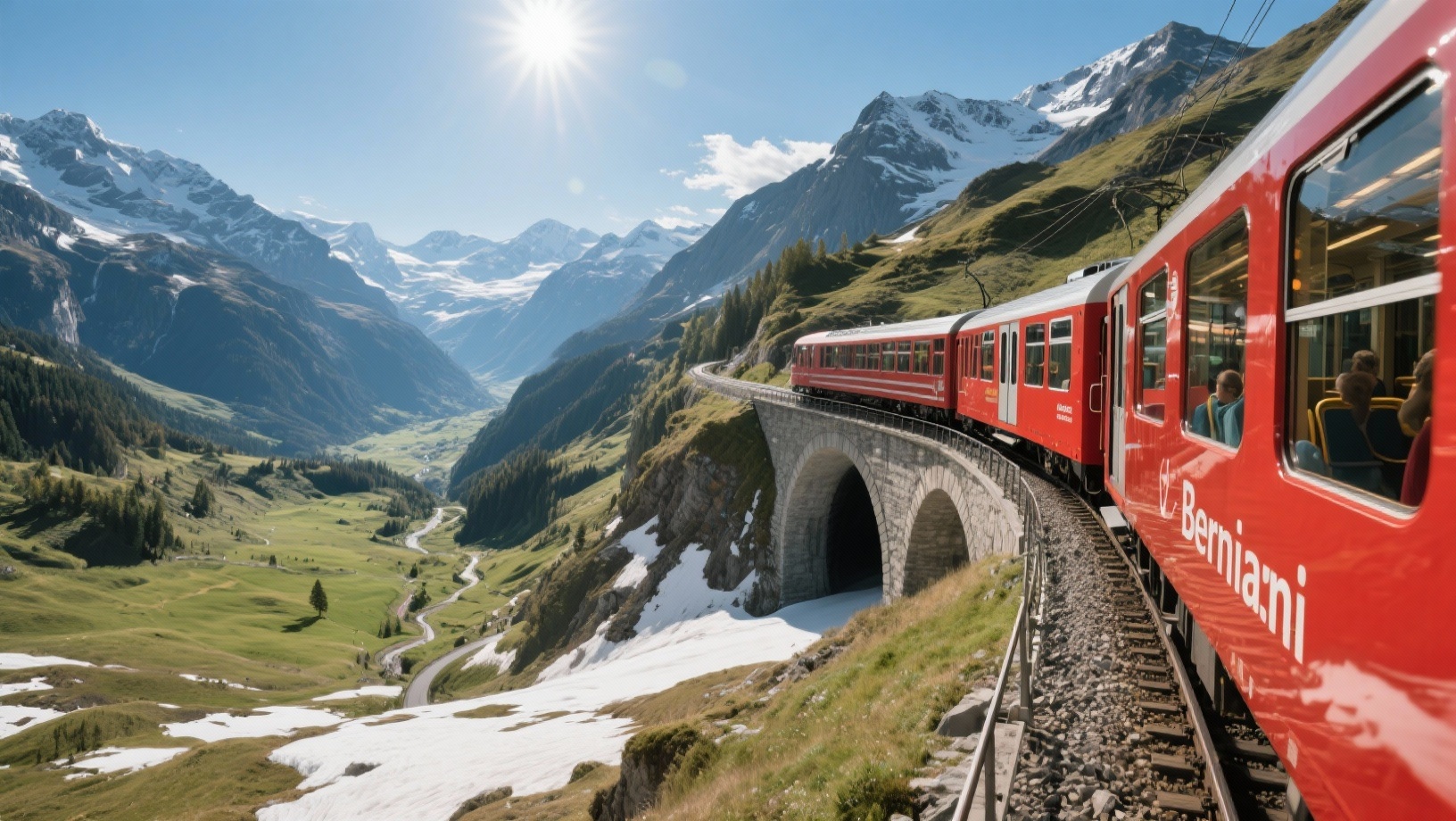
Frequently asked questions
Integrate the Bernina Express smartly into your Alpine itinerary by starting in Chur or St. Moritz and ending in Tirano, Italy. Combine the train journey with a boat trip on Lake Como or a bus to Lugano for a Mediterranean finale. Consider optional stops such as Ospizio Bernina or Poschiavo for walks, and book early, especially in high season, to secure panoramic seats. Start in St. Moritz for more high-alpine views and consider a hike at the Morteratsch Glacier.
The best seat choices for the Bernina Express are on the right-hand side when travelling from north to south, for optimal views. Travellers recommend the summer months for glaciers and hikes, and the winter for snowy landscapes. Avoid the crowds in July and August by booking early. For a shorter trip with more high-alpine views, starting in St. Moritz is highly recommended.
To avoid inconveniences, it is essential to book a panoramic reservation (€14–28) in good time via the RhB app or at the station, as this is compulsory. Choose summer for glaciers and hikes, or winter for snowy landscapes. Make sure you sit on the right-hand side for the best views when travelling from north to south and take earphones for the audio guide. Be aware of the crowds in July and August and book early to avoid disappointment.
To complete the Bernina Express experience, there are several recommended stops and combinations with other activities. Popular stops along the way are Ospizio Bernina and Poschiavo. Travellers can also combine the journey with a boat trip on Lake Como from Tirano or a bus to Lugano in summer. A walk at the Morteratsch Glacier (15 minutes from the station) is also recommended.
The journey on the Bernina Express is a ride through UNESCO World Heritage with 55 tunnels and 196 bridges. It is much more than a rail connection. It is a masterpiece of engineering that blends into the Alpine landscape. This is not an ordinary train journey, but a carefully planned trip along one of the most impressive railway lines in the world. The train crosses the Alps without rack-and-pinion drive and reaches an altitude of 2,253 metres. Find out how you can make this journey yourself and what is involved in preparing properly.
What makes the Bernina Express special?
The Bernina Express connects Chur in Switzerland with Tirano in Italy and crosses the Alps without using rack-and-pinion drive, even on the steepest sections. The line reaches an altitude of 2,253 metres at the Bernina Pass, making it the highest railway crossing in Europe. The combination of technical ingenuity and integration into the natural environment earned the route a place on the UNESCO World Heritage List in 2008.
The UNESCO recognition applies not only to the train journey itself, but to the entire railway landscape of the Albula and Bernina lines. The construction, which took place between 1898 and 1910, was a huge achievement. Engineers used local materials such as granite to build the railway. As a result, the viaducts and tunnels almost appear to have grown out of the mountains themselves. The route is a showcase of how human ingenuity and nature can exist in balance.
‘ It is a structure that seems to defy gravity. ’
The route and its technical highlights
The journey of around four hours takes you through constantly changing landscapes. You start amidst Swiss mountains and glaciers and end up between palm trees in the Italian town of Tirano. The transition between these climate zones is one of the things that makes the trip so special. Along the way you pass several structures that are destinations in their own right.
Iconic structures along the way
The railway line is famous for its viaducts and tunnels, which engineers designed to overcome extreme differences in altitude.
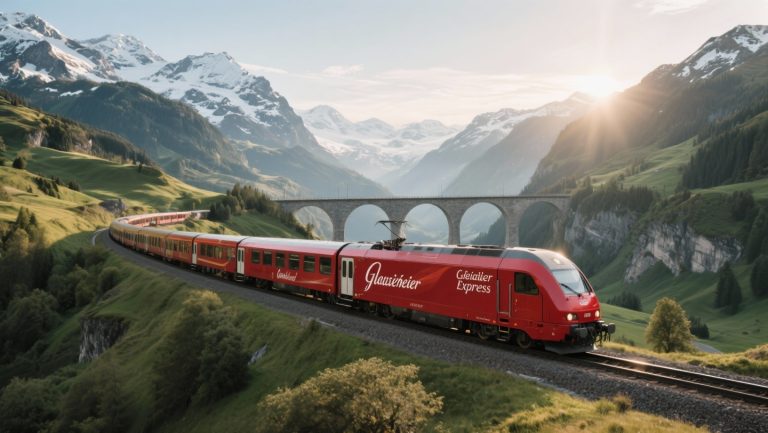
- Landwasser Viaduct: The most photographed point of the route. The viaduct is 65 metres high and consists of six arches that curve and lead directly into a tunnel through a vertical rock face. It is a structure that seems to defy gravity.
- Brusio Circular Viaduct: Another highlight of technical ingenuity is the Brusio spiral viaduct. This spiral-shaped bridge makes a full 360-degree turn. In this way, the train can descend significantly within a small area. It is a clever and elegant solution to a tricky topographical problem.
- Bernina Pass: The highest point of the journey, at 2,253 metres, offers a panoramic view of the surrounding mountain world. Here you also pass the Lago Bianco, a reservoir whose milky white water comes from the glaciers. This point marks the watershed between the Black Sea and the Adriatic Sea.
Highlights and views: what do you see along the way?
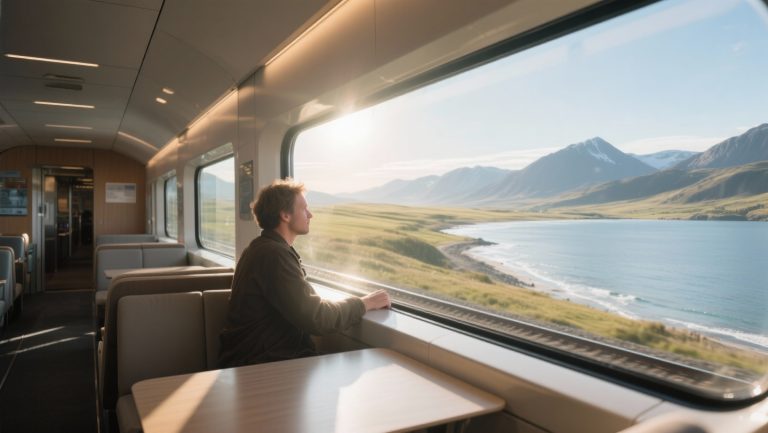
The large panoramic windows were designed to immerse you in the surroundings. The views change constantly and offer an uninterrupted sequence of natural and cultural sights.
- World of glaciers: From the train you have a front-row view of the Morteratsch Glacier and Piz Bernina, the highest peak in the Eastern Alps. The eternal ice and rugged mountain tops form an impressive backdrop.
- Lakes and valleys: The route follows the white Lago Bianco, the dark Lej Nair and the bright blue Lago di Poschiavo. Each valley has its own character, from the wide Engadin valley to the narrow, Italian-feeling Valposchiavo.
- Cultural transition: The journey is also a trip through several cultures. You start in the German-speaking part of the canton of Graubünden, travel through Italian-speaking Poschiavo and end in the Italian town of Tirano, where the atmosphere is distinctly Mediterranean.
Planning your journey: the best time to travel and duration
The Bernina Express runs all year round, and each season offers a completely different experience. The best time to go depends on what you want to see and do.
Seasons on the rails
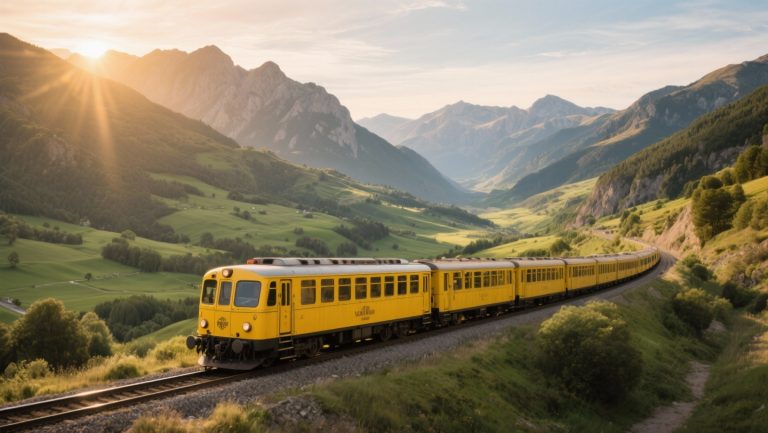
- Summer (May to October): In the summer months the valleys are green, the Alpine meadows are in bloom and the glaciers are clearly visible. This is the ideal period if you want to combine the train journey with walks. From stations such as Alp Grüm you can head straight into the mountains.
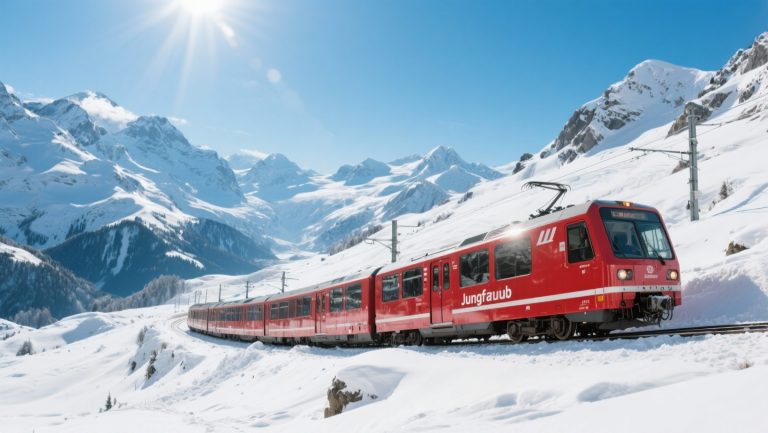
- Winter (December to March): A winter journey transforms the landscape into a white fairy tale. The snow-covered mountains, frozen lakes and ice-clad trees create unforgettable scenes. The train is comfortably heated, so you can relax and enjoy the winter world outside.
How long does the journey take?
The full route from Chur to Tirano takes around four hours. A popular alternative is to start in St. Moritz. This journey to Tirano takes about two and a half hours and includes the most spectacular section of the route over the Bernina Pass. This is a good option if you have less time but still want to experience the main highlights.
‘ Once you arrive in Tirano, you step out into a different world. ’
Practical tips for a smooth preparation
Good preparation ensures you can relax and enjoy the journey. For the Bernina Express there are a few important things to arrange in advance.
- Tickets and reservations: For the panoramic carriages of the Bernina Express a seat reservation is compulsory, in addition to a valid train ticket. The reservation costs vary by season. If you have a Swiss Travel Pass or Eurail Pass, this covers the ticket price, but you must pay the seat reservation separately.
- The best seat: For the best views of the most iconic structures, such as the Landwasser Viaduct, reserve a seat on the right-hand side. This applies in the direction of travel from Switzerland to Italy.
- Facilities on board: The train offers an audio tour that you can listen to via your own earphones, providing information about the route. There is space for luggage and the train is accessible for wheelchair users.
Once you arrive in Tirano, you step out into a different world. This Italian town is the ideal place to end the journey with a good lunch or to continue on to other destinations in Italy, such as Lake Como.
On the Traveler Tips website you will find many more articles about special train journeys in Europe, route planning through Switzerland and practical tips for organising your car holiday or road trip. Explore more and prepare your next journey down to the last detail.
Frequently asked questions
How can I integrate the Bernina Express smartly into my wider travel itinerary through the Alps?
Integrate the Bernina Express smartly into your Alpine itinerary by starting in Chur or St. Moritz and ending in Tirano, Italy. Combine the train journey with a boat trip on Lake Como or a bus to Lugano for a Mediterranean finale. Consider optional stops such as Ospizio Bernina or Poschiavo for walks, and book early, especially in high season, to secure panoramic seats. Start in St. Moritz for more high-alpine views and consider a hike at the Morteratsch Glacier.
What are the best seat choices and times to travel to make the most of the spectacular views and the UNESCO World Heritage?
The best seat choices for the Bernina Express are on the right-hand side when travelling from north to south, for optimal views. Travellers recommend the summer months for glaciers and hikes, and the winter for snowy landscapes. Avoid the crowds in July and August by booking early. For a shorter trip with more high-alpine views, starting in St. Moritz is highly recommended.
Which practical tips are essential for booking tickets and preparing for the journey to avoid inconveniences?
To avoid inconveniences, it is essential to book a panoramic reservation (€14–28) in good time via the RhB app or at the station, as this is compulsory. Choose summer for glaciers and hikes, or winter for snowy landscapes. Make sure you sit on the right-hand side for the best views when travelling from north to south and take earphones for the audio guide. Be aware of the crowds in July and August and book early to avoid disappointment.
Are there recommended stops or combinations with other activities that complete the Bernina Express experience?
To complete the Bernina Express experience, there are several recommended stops and combinations with other activities. Popular stops along the way are Ospizio Bernina and Poschiavo. Travellers can also combine the journey with a boat trip on Lake Como from Tirano or a bus to Lugano in summer. A walk at the Morteratsch Glacier (15 minutes from the station) is also recommended.