 NL
NL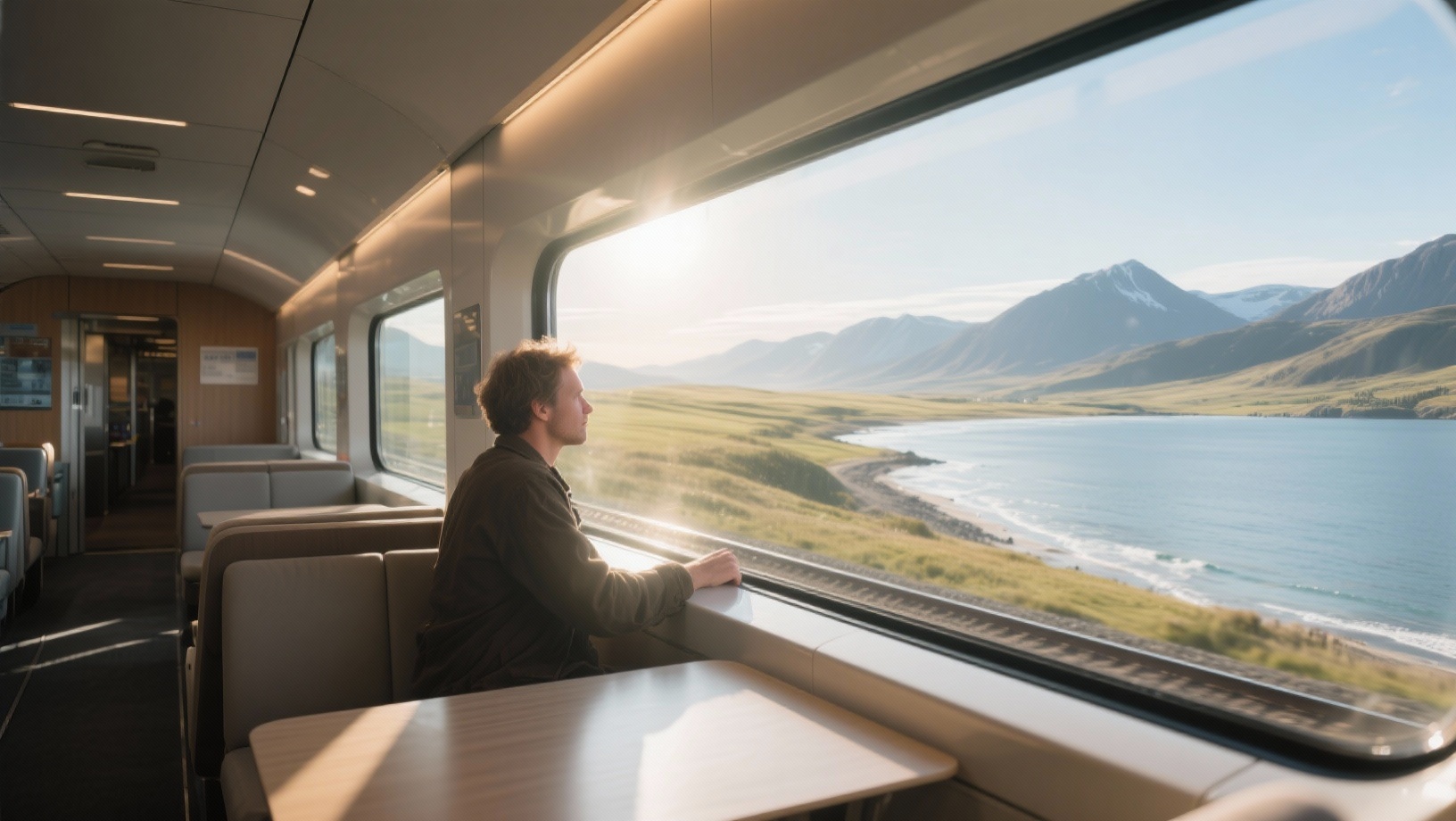
For a great experience on a journey with a panoramic train, the choice is clear: a window seat is almost always the best option. The question is not so much whether to sit by the window, but rather on which side of the train you will find the most favourable views. Read on to discover how to reserve the most suitable seat for a train journey.
The advantages of a window seat
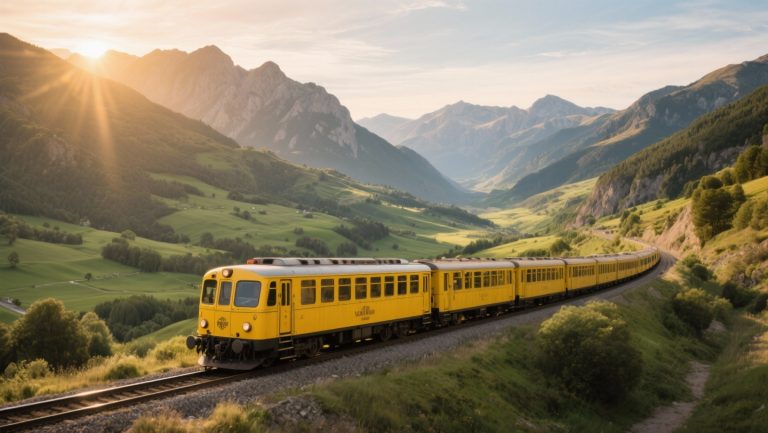
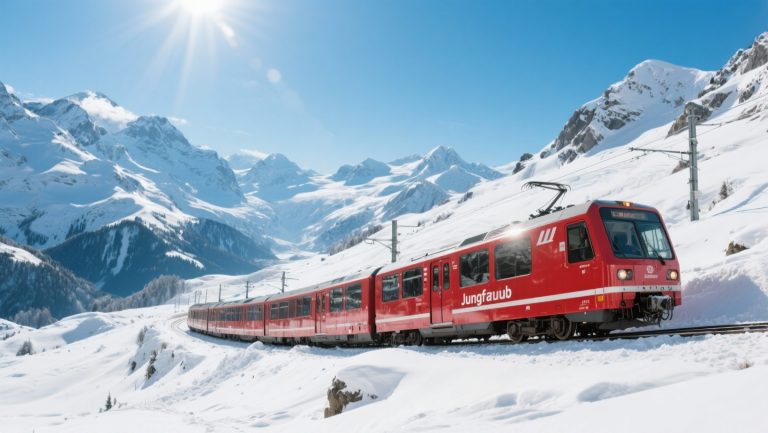
Panoramic trains are designed to let travellers enjoy impressive landscapes. With their extra-large windows that often extend into the roof, they offer an almost unobstructed view of the surroundings. A window seat gives direct, personal access to this view. Travellers do not need to lean over fellow passengers and have the freedom to look, daydream and take photos undisturbed. The experience of a mountain pass, a deep valley or a shimmering lake is more intense when you look directly out at it.
The aisle side, on the other hand, mainly offers practical advantages. Travellers have more freedom of movement and can get up more easily to stretch their legs, visit the toilet or walk to the dining car. For those who value comfort, want more legroom or are travelling with small children, this can be a decisive factor. For most travellers on a panoramic route, however, this does not outweigh missing out on the views that the journey is really all about.
Choosing the right side: left or right?
The choice between the left-hand or right-hand side of the train depends entirely on the route. Preparation is essential in order to enjoy it to the full. It is advisable to study the route in advance to determine on which side the most impressive views can be seen. For some of the best-known routes, this has been worked out:
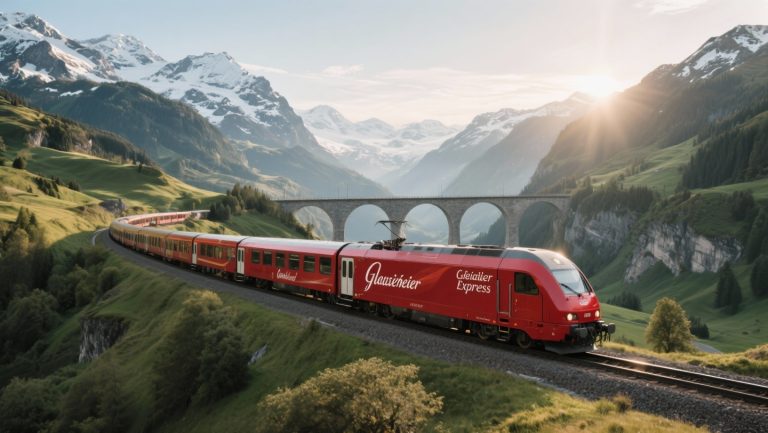
- Glacier Express (Switzerland): On the stretch from St. Moritz to Zermatt, the right-hand side in the direction of travel offers favourable views of the Landwasser Viaduct and later the Rhine Gorge. On the last part of the journey, the left-hand side is better suited for a glimpse of the Matterhorn.
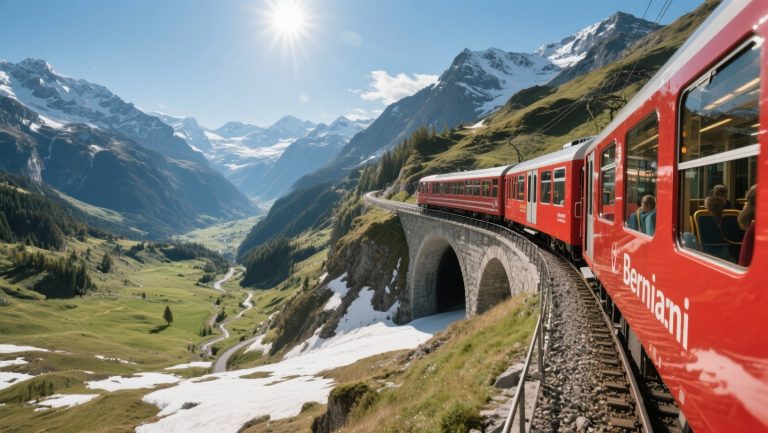
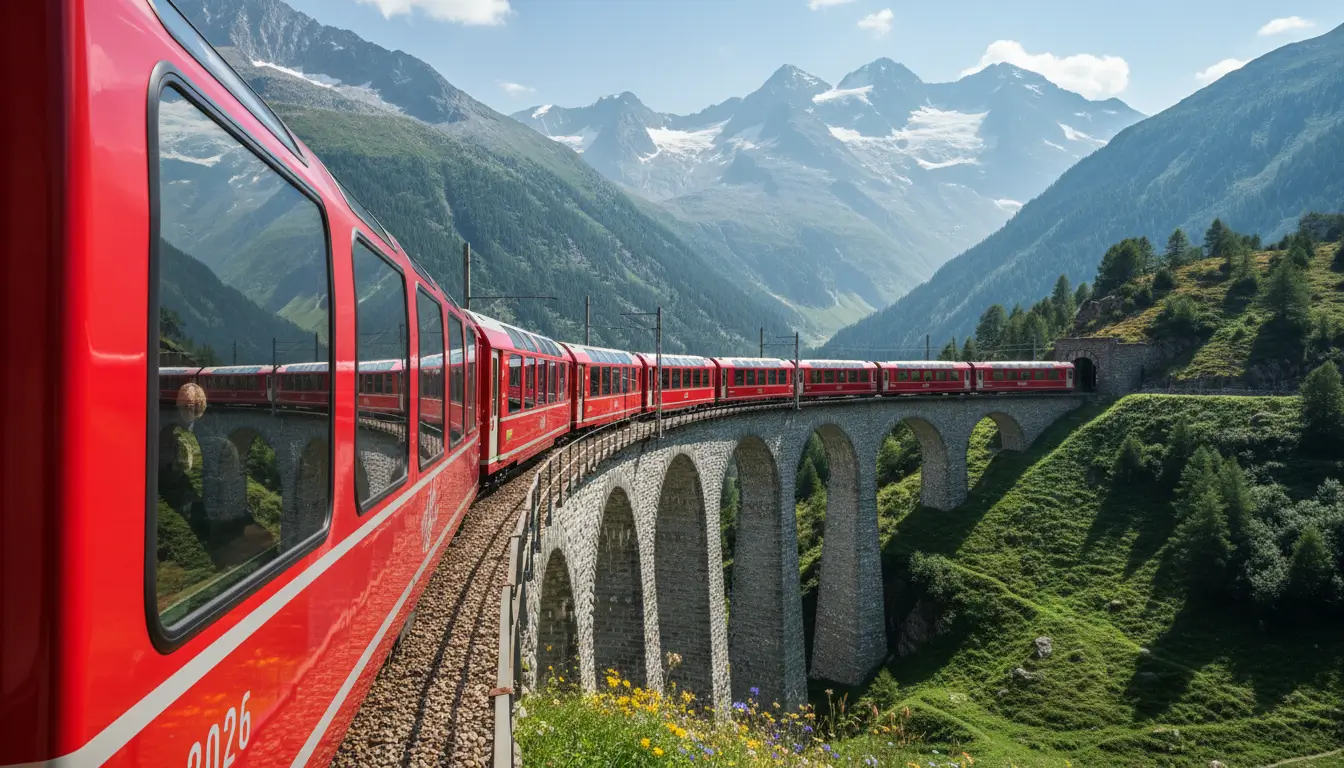
- Bernina Express (Switzerland/Italy): On the route from Chur to Tirano, the right-hand side is preferred. From here, the views of the famous Lago Bianco and the Brusio spiral viaduct are at their best.
- Flåmsbana (Norway): On this steep and winding route, the views change quickly. Even so, seats on the right-hand side (downhill from Myrdal to Flåm) are often recommended for the best view of the Kjosfossen waterfall.
‘ Booking early is therefore an important step. ’
How to reserve suitable seats
Good seats on popular panoramic trains are in high demand and are often fully booked months in advance. Booking early is therefore an important step. As soon as you know your travel dates, it is wise to reserve immediately. This is usually possible three to six months before the departure date.
Ideally, reservations should be made directly via the train company’s website, such as the Rhaetian Railway for the Bernina Express or the official Glacier Express website. During the booking process, you can often indicate a preference for a window seat and sometimes even select a specific seat. When travelling with an Interrail Pass, a separate seat reservation is required for most panoramic trains. It is advisable to arrange this as early as possible via the recommended channels.
Tips for families and groups
When travelling as a family or with a small group, people generally want to sit together. Most booking systems take this into account and automatically allocate seats close to each other. An ideal layout is a group of four seats with a table in between. This combines two window seats with two aisle seats, offering a good balance between views and freedom of movement. Everyone has a place at the table and it is easy to swap seats. Again, the earlier you book, the greater the chance of getting these sought-after seats.
The most suitable spot for photographers
For photographers there is no doubt: a window seat is the logical choice. To minimise reflections in the glass, it is advisable to wear dark clothing. Ideally, hold the lens as close to the window as possible, without touching the glass to avoid vibrations. A polarising filter can also help reduce glare.
Some trains, such as the Bernina Express, have special photo compartments or carriages where the windows can be opened. This offers photographers an excellent opportunity, as it allows you to take razor-sharp photos with no reflections at all. It is advisable to check in advance whether the train offers this option and how to reserve a spot in such a carriage. A useful tip is still to know the route. This allows you to identify the highlights in advance, so that you can take a good photo at exactly the right moment.
Good preparation is essential for a special train journey. Whether it is planning a suitable route, reserving the right seat or packing for a comfortable trip, every detail contributes to the experience. On the Traveler Tips website you will find many more practical guides and articles about train journeys in Europe, from planning a route with Interrail to tips for travelling on night trains. More information will help you prepare for your next holiday.
Frequently asked questions
On panoramic trains, a window seat offers the most unobstructed and dynamic views, especially thanks to the specially designed large windows. Passengers in aisle seats often have to lean over or stand up to get the same view, which can be disruptive. Window seats are essential for taking photos and fully enjoying the ever-changing landscapes. It is advisable to reserve window seats early, especially on popular panoramic trains such as the Glacier Express or Bernina Express.
For panoramic trains such as the Glacier Express and Bernina Express in Switzerland, the window side is strongly recommended for the best views of the breathtaking landscapes. On the Glacier Express towards Zermatt, the right-hand side is recommended for the Matterhorn, and the left-hand side for the Alpine passes. For the Bernina Express from Chur to Tirano, the right-hand window side offers the most beautiful views of Lago Bianco and the viaducts. For general European daytime trains, a two-seat window spot in a quiet carriage is often ideal.
The choice between a window or aisle seat significantly affects comfort and freedom of movement during a long train journey. A window seat offers an unobstructed view, which is essential on panoramic trains, and more peace and quiet. An aisle seat, on the other hand, offers more freedom of movement to stand up and go to the toilet, but can lead to disturbances from fellow travellers and a less direct view. Access to facilities is generally easier from an aisle seat.
The choice of seat has a considerable impact on exposure to sunlight and the level of privacy, especially on panoramic trains. A window seat offers a direct and unobstructed view, but can lead to greater exposure to sunlight. Aisle seats offer more freedom of movement and quicker access to the aisle, which can benefit privacy by reducing direct contact with fellow passengers, but often lack a direct view of the scenery. Traveller experiences show that a window seat is ‘essential’ for photos and enjoyment, while an aisle seat means less contact with others.
Choose a window seat in panoramic carriages for the best views, as these are specifically designed for 360-degree panoramas. The optimal side (right or left) depends on the specific route and the highlights along the way, such as the Matterhorn on the Glacier Express. Check the recommended side of the train for each route so you do not miss any iconic landscapes. Reserve early, especially for window seats, to guarantee the experience you are hoping for.