NL
NL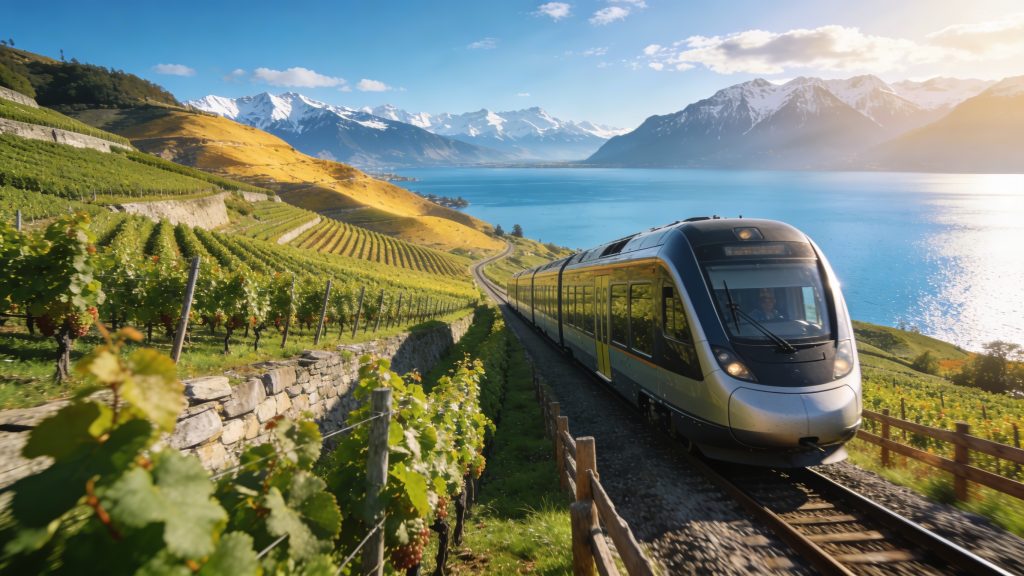
The Lavaux line proves that a train journey doesn’t need to be long to be unforgettable. In just a quarter of an hour you travel through terraced vineyards overlooking Lake Geneva and the snow-capped peaks of the French Alps. The vineyards of Lavaux have been on the UNESCO World Heritage List since 2007 and offer a postcard-perfect panorama you won’t find anywhere else. For anyone looking for other impressive rail routes across Europe, our guide to scenic rail panoramic trains and most beautiful rail routes offers plenty of inspiring options. Discover why this short stretch between Lausanne and Montreux is so popular with train travellers.
Why the Lavaux line is special despite its short duration
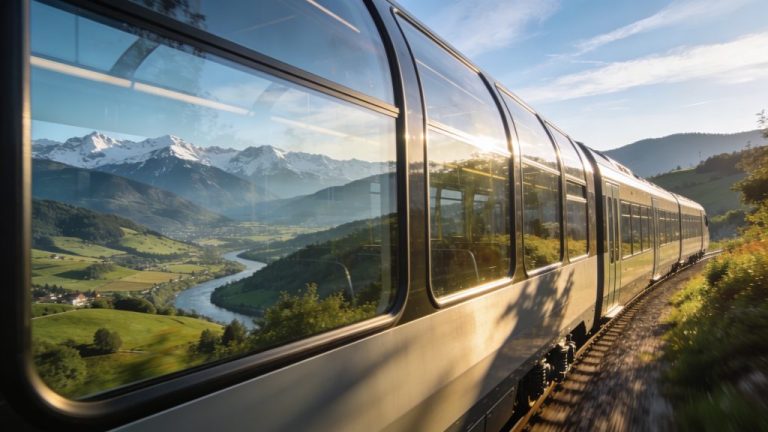
The Lavaux line owes its distinctive character to a combination of three elements that together create a unique travel experience. The route runs through the terraced vineyards of Lavaux, a cultural landscape that has been maintained by hand for centuries and has been granted UNESCO status because of its exceptional historical and aesthetic value. From the train you look out over shimmering Lac Léman and see the snow-covered French Alps in the distance.
What sets this route apart from other train journeys is the altitude at which the line runs through the vineyards. While intercity trains follow the lower route along the water, regional trains wind their way through the terraced slopes. This gives you a sweeping view of the vineyards, the lake and the mountains all at once. The short journey time of 15 minutes makes the route accessible for anyone with limited time who still wants to experience a striking slice of Swiss landscape.
Travellers particularly appreciate the line for the ease with which you can visit this world heritage site. You don’t need to book special tickets or plan a multi-day trip. Regional trains run regularly between Lausanne and Montreux, stopping in small villages such as Chexbres, St. Saphorin and Chardonne. There you can get off for a walk through the vineyards or a visit to a local wine tasting.
‘ They are standard SBB trains without extra facilities, but the panorama speaks for itself. ’
Which trains run on the Lavaux line
The Lavaux line is served by various types of train, each with its own route and speed. Regional trains, also known as S-Bahn services, run along the higher line through the vineyards and stop in the villages. These trains trundle calmly through the landscape and offer the best views of the terraced fields and the lake. They are standard SBB trains without extra facilities, but the panorama speaks for itself.
Intercity trains are faster but follow the lower route along the water. That means you get a different perspective: fewer vineyards, more views of Lake Geneva. For those who specifically want to see the UNESCO vineyards, the regional trains are the best choice. Check in advance in the SBB app or on the platform which train takes the higher or lower route.
Besides the regular trains, there are special tourist options. The Lavaux Panoramic is a small tourist train that runs circular trips through the vineyards from Chexbres, often with a welcome drink. The Lavaux Express is a unique attraction: a tractor with carriages that takes you through the vineyards above the lake. This ride lasts about an hour and a quarter and runs from April to November. Advance booking is recommended.
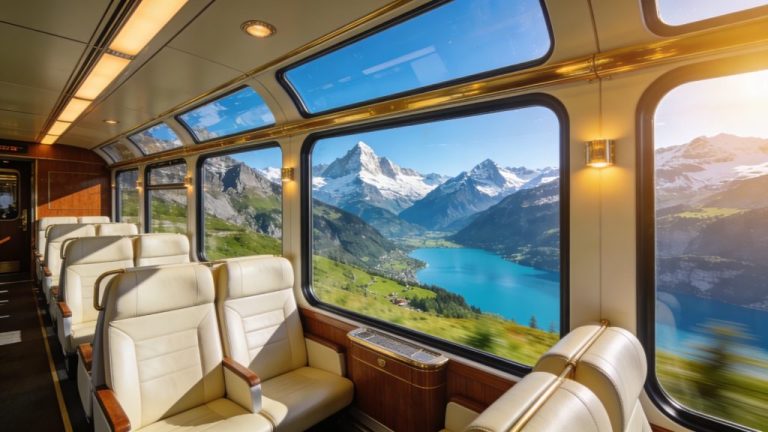
The GoldenPass Express is another option for anyone wanting to combine the Lavaux region with a longer rail journey. This innovative train connects Montreux with Interlaken and uses a world first: a narrow-gauge-to-standard-gauge system so you don’t have to change trains. The train passes through the Lavaux region and offers a comfortable way to link several Swiss highlights.
How the panorama changes with the seasons
The views from the Lavaux line change throughout the year and each season offers a different scene. In spring you see the first green leaves on the vines and flowers blooming in village gardens. The light is clear and soft, ideal for photos of the lake with the Alps in the background. The terraces slowly come back to life after winter.
In summer the vineyards are full and green. The grapes are growing and the sun shines brightly on the water of Lake Geneva. It is the busiest season, but also the time when the landscape looks most lush. The warmth and light give the surroundings a vibrant feel. Travellers often choose an early morning or late afternoon journey to avoid the harsh midday sun.
Autumn is many people’s favourite season. The vine leaves turn yellow, orange and red. Harvest is in full swing and you’ll occasionally see workers in the fields. The light is softer and warmer, casting a golden glow over the terraces. This is when many wine festivals and tastings take place in the villages along the route.
In winter there is sometimes a thin layer of snow on the higher terraces. The vines are bare, but the view of the snow-covered Alps is sharper and clearer thanks to the cold air. The trains are quieter, with fewer tourists. It is a time when the landscape feels more peaceful and restrained, but the contrasts between the terraces, the lake and the mountains remain impressive.
How to reach the Lavaux line and what it costs
The Lavaux line is easy to reach from major Swiss cities. From Geneva you travel by train to Lausanne in about an hour and six minutes. From Zurich the journey to Lausanne takes around two hours and a quarter. Lausanne and Montreux are both starting points for the Lavaux route and lie on SBB’s national rail network.
You can buy tickets for the regional trains via the SBB app, at the ticket counter or from a ticket machine. A single ticket between Lausanne and Montreux costs between CHF 20 and CHF 55, depending on the type of train and any discounts. With an Interrail pass you can use the regional trains on the Lavaux line free of charge. Check in advance whether your train stops in the villages where you want to get off.
Separate fares and reservations apply to the tourist trains. The Lavaux Panoramic and Lavaux Express are not included in standard train tickets. You can book these attractions via the local tourist website or at the tourist office in Chexbres or Lutry. Prices vary according to season and route.
The best time to travel is during daylight hours, when the sunlight falls on the terraces and the lake. A late afternoon journey often gives a beautiful glow over the water and the mountains. Avoid the busiest periods in summer by travelling early in the morning or outside the peak season. The line is accessible all year round and runs to a fixed timetable.
‘ The combination of train, walk and wine makes the day varied and gives you deeper insight into the region’s winemaking tradition. ’
Combining with walks and wine tastings
The Lavaux line is ideal for combining train travel with walking and wine tasting. Get off at St. Saphorin, one of the most beautiful villages along the route, and wander through the narrow streets and between the vineyards. The terraces are linked by footpaths and at various heights you have views of the lake and the Alps. Some routes are short and easy, others require sturdy shoes and a bit of fitness.
In many villages you can visit local winegrowers for a tasting of Chasselas, the local wine of Lavaux. Booking is not always necessary, but is recommended in high season. Some wineries offer guided tours of their cellars and vineyards. The combination of train, walking and wine makes for a varied day out and gives you a deeper insight into the region’s winemaking tradition.
Cycling is another option. SBB trains have bike spaces, but these can be full in summer. Reserve a place for your bike in advance if you want to be sure of getting one. The roads through the vineyards are narrow and sometimes steep, but suitable for cyclists with some experience. It’s an active way to explore the area and offers more freedom than just taking the train.
If you want to combine the Lavaux line with other Swiss rail routes, you can continue on to Interlaken via the GoldenPass Express or towards Geneva for connections to international trains. The region is compact enough for a day trip, but offers enough variety to stay longer. An overnight stay in Lausanne or Montreux gives you the time to discover the area at a more relaxed pace.
Discover more on Traveler Tips
On the Traveler Tips website you’ll find much more information about train journeys across Europe, from practical advice on tickets and trip planning to inspiration for new routes and destinations. Find out how to organise your rail holiday smartly and which routes are really worth it. Get inspired and plan your next journey with confidence.
Frequently asked questions
Include the Lavaux line as a short panoramic stopover between Geneva/Lausanne and Montreux, then continue from Montreux on the GoldenPass Express towards Interlaken for a longer train road trip. For example, plan half a day with a stop in Chexbres or St. Saphorin for walking or wine tasting, and travel on for the rest of the day. For an affordable trip you can use standard SBB day passes, Interrail passes or regional day tickets that are also valid on the Lavaux line. Check in the SBB app which regional trains take the higher panoramic route through the vineyards.
Don’t miss the viewpoint at Chexbres-Village, also called the “Balcon du Léman”, and the terraces around St-Saphorin and Chardonne, where you look directly out over the vineyards and Lake Geneva. Walk part of the Lavaux trail between Lutry – Aran – Grandvaux or between Cully – Epesses – Rivaz for a quiet, authentic walk right through the terraces. Stop for wine tastings at small wineries/caves in St-Saphorin and around Cully/Epesses, where family-run estates serve their own Chasselas in simple tasting rooms. You can also combine with the Lavaux Express or Lavaux Panoramic to cover certain stretches while still travelling through the vineyards.
The best option is to board in Lausanne or Montreux and get off in one of the villages such as Chexbres-Village, St-Saphorin or Lutry to experience both the vineyards and Lake Geneva at a relaxed pace. For the best views, take a regional train on the higher Lavaux line and allow time to walk a section through the terraces. At major stations like Lausanne, Montreux and many intermediate stations along the Lavaux line there are usually P+R facilities or smaller car parks, but in the small wine villages parking space is limited. It’s best to arrive early or outside peak hours there if you want to be sure of a space.
The Lavaux line runs as a regional S-Bahn several times an hour; the most scenic panoramic section through the vineyards takes about 15 minutes between the villages in the hills above Lake Geneva. For the best views, travel on the regional trains (not the intercity services) that use the higher line through the vineyards. Avoid rush hours and weekends in the middle of the day if you want to steer clear of the busiest trains. Ideally travel on a weekday morning or early afternoon and consider getting off in smaller villages such as St. Saphorin or Chexbres for a quiet break.