NL
NL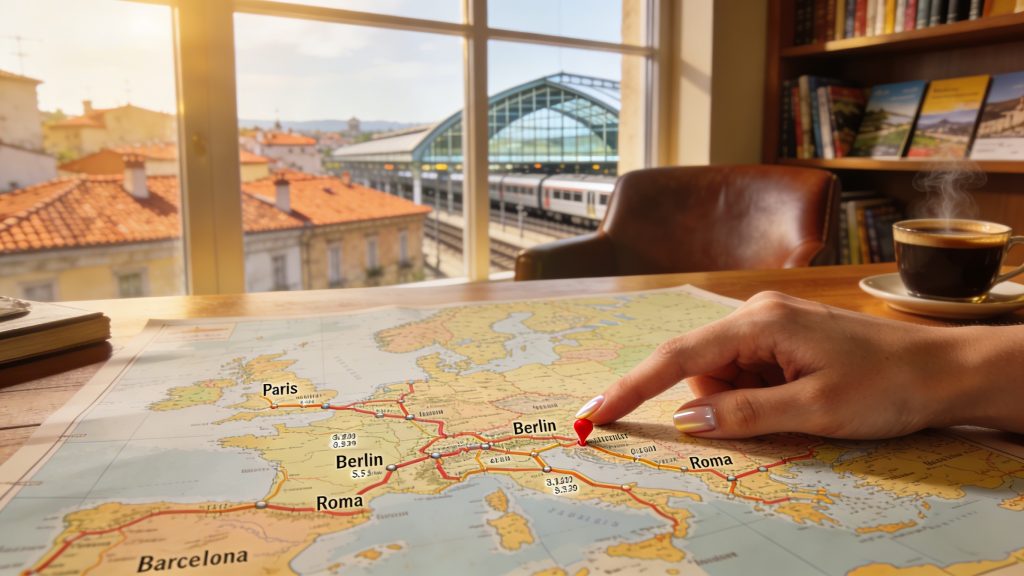
City-hopping by train combines comfort, sustainability and direct access to the heart of European cities. With logical routes and short travel times between destinations such as Paris, Vienna, Prague and Amsterdam, you can create an efficient multi-city tour without the stress of airports. The practical advantages are significant: stations are centrally located, trains offer workspace and views, and you increase the time available for urban exploration. This is how you plan a rail journey that links several cities with minimal travel time.
Why city-hopping by train works
Railway stations are usually located in the centre of European cities. You step off the train and walk to your hotel or first sight in ten minutes. This difference compared with airports saves you hours of transfer time per destination. On a multi-city tour of five cities, this can easily save you a full day.
Shorter distances between major European cities make train journeys practical. Trips of two to four hours allow you to depart in the morning and arrive at your new destination in the afternoon. You lose no time on check-in, security or waiting at baggage carousels. For those planning rail touring holidays, this means more actual holiday time and less travel time.
The environmental impact of travelling by train is considerably lower than that of flying. Modern high-speed trains emit up to ten times less CO2 per passenger than short-haul flights. For conscious travellers who value sustainable tourism, this is an important consideration.
‘ Every city deserves at least two full days for the main sights. ’
Popular multi-city routes across Europe
Certain combinations of cities work extremely well for rail travel thanks to good connections and geographical proximity. These routes allow you to visit several destinations in four to ten days without long travel times.
London, Paris and Amsterdam
This classic route connects three different cultures in four to seven days. The Eurostar runs directly from London to Paris in 2 hours and 15 minutes. From Paris to Amsterdam, the Thalys takes 3 hours and 20 minutes. Every city deserves at least two full days for the main sights. Book tickets early for the best prices on high-speed trains.
Venice, Verona and Milan
For a shorter trip of two to four days, northern Italy offers a compact alternative. Between Venice and Verona you travel for two hours; between Verona and Milan for one and a half hours. The short distances leave room for extensions to Lake Como or Lake Garda. Regional trains are inexpensive and run more frequently than high-speed trains.
Venice, Florence and Rome
This combination requires seven to ten days and showcases the diversity of Italy. High-speed trains link the cities in two to three hours per leg. You see canals, Renaissance art and ancient ruins in a single trip. The logical direction runs from north to south: fly into Venice, depart from Rome.
Strategies for efficient city-hopping
A well thought-out order of cities saves travel time and costs. Start by choosing a hub where you arrive by plane or train. From this hub you plan a circular route or linear route to three to five other cities.
Geographical logic prevents unnecessary backtracking. A circular route through Central Europe could, for example, link Vienna, Prague, Berlin and Munich. A linear route works well if you arrive in one city and depart from another, such as Amsterdam–Brussels–Paris–Lyon–Barcelona.
Practical guidelines for planning
- Choose connections under four hours for maximum efficiency between cities
- Plan two to three nights per city for enough time to explore without feeling rushed
- Preferably depart early in the morning so you can spend full afternoons in new cities
- Build in one flexible day on trips of more than seven days for unexpected changes
- Check whether high-speed trains require reservations and book these in advance
Tickets and passes for multi-city journeys
The choice between single tickets and rail passes depends on your route and flexibility. Individual point-to-point tickets are often cheaper with early-booking discounts and fixed travel dates. Rail passes such as Interrail offer the freedom to adjust routes along the way.
There are regional passes for specific areas. The Italia in Tour pass offers three to five days of unlimited travel on regional trains in Italy. This works well for routes that combine several smaller cities without a focus on high-speed trains. Always compare the total price of single tickets with pass costs for your specific route.
High-speed trains such as Eurostar, Thalys, TGV and ICE often require reservations on top of your rail pass. These reservation costs can add up if you take many international connections. For budget-conscious travellers, it can be cheaper to book single tickets during promotion periods.
‘ Two nights per city is a workable minimum. ’
Practical preparation for a rail tour
Packing light makes changing between trains significantly easier. Limit yourself to hand luggage or one wheeled suitcase that you can easily lift yourself. Trains have luggage racks above the seats and spaces at the beginning and end of carriages, but no baggage staff.
Download offline maps of cities and station layouts for situations without internet. Large international stations such as Paris Gare du Nord or München Hauptbahnhof are well signposted but extensive. Knowing where your platform is saves stress when you have short transfer times.
Time management and pace
Departing between 08:00 and 10:00 gives you the afternoon and evening in your new destination. If you arrive around 13:00 or 14:00, you can check in, explore the centre and get a first impression. You use the following day entirely for sightseeing.
Avoid rushed schedules with daily relocations. Two nights per city is a workable minimum. This gives you one full day for museums, monuments and neighbourhoods, plus half a day for arrival and a morning for departure. Three nights in a highlight city feels more comfortable and less hectic.
Costs and budget considerations
Train journeys between nearby European cities are often cheaper than flights if you book early. Tickets from Paris to Brussels start at €29, from Amsterdam to Cologne at €19. Flights sometimes appear cheaper, but hidden costs for transfers, luggage and meals narrow the gap.
Total travel time from city centre to city centre also plays a role in assessing costs. A two-hour flight effectively means six hours door to door due to check-in, security, transfers and waiting time. A four-hour train takes you directly from city centre to city centre. This time saving translates into more hours available for your holiday.
Budget city-hopping combines night trains with daytime connections. Night trains between, for example, Munich and Rome or Paris and Berlin save a hotel night and maximise daytime in cities. Couchettes are cheaper than private compartments and offer a practical middle ground for budget travellers.
Seasonal choice and timing
Spring and autumn offer the best balance between weather, crowds and prices for city breaks by train. April, May, September and October have milder temperatures and quieter trains than the summer months. Hotel costs in cities are also lower outside peak season.
Avoid travelling during national holidays and school holidays in several countries at the same time. Trains are then busier and more expensive. Key periods are the Christmas holidays, Easter and July–August. Flexibility of a few days in your travel dates can make a significant difference in both price and comfort.
‘ These journeys make the travel itself part of your city break. ’
Scenic routes as an added experience
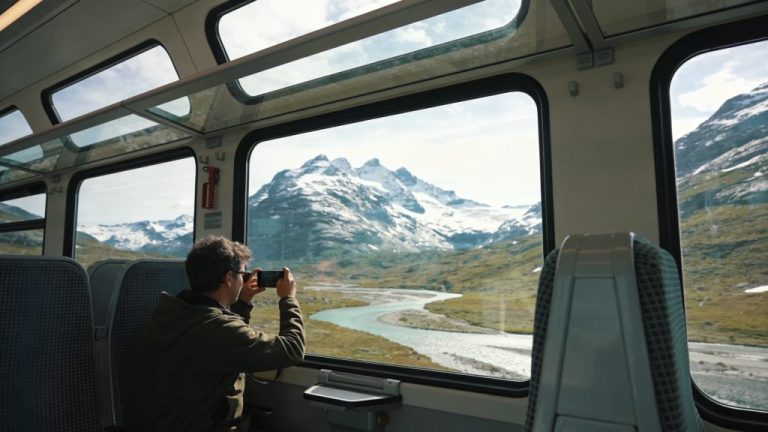
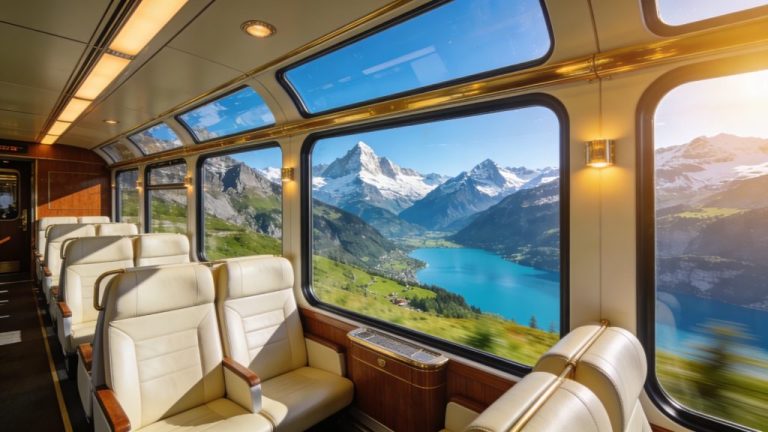
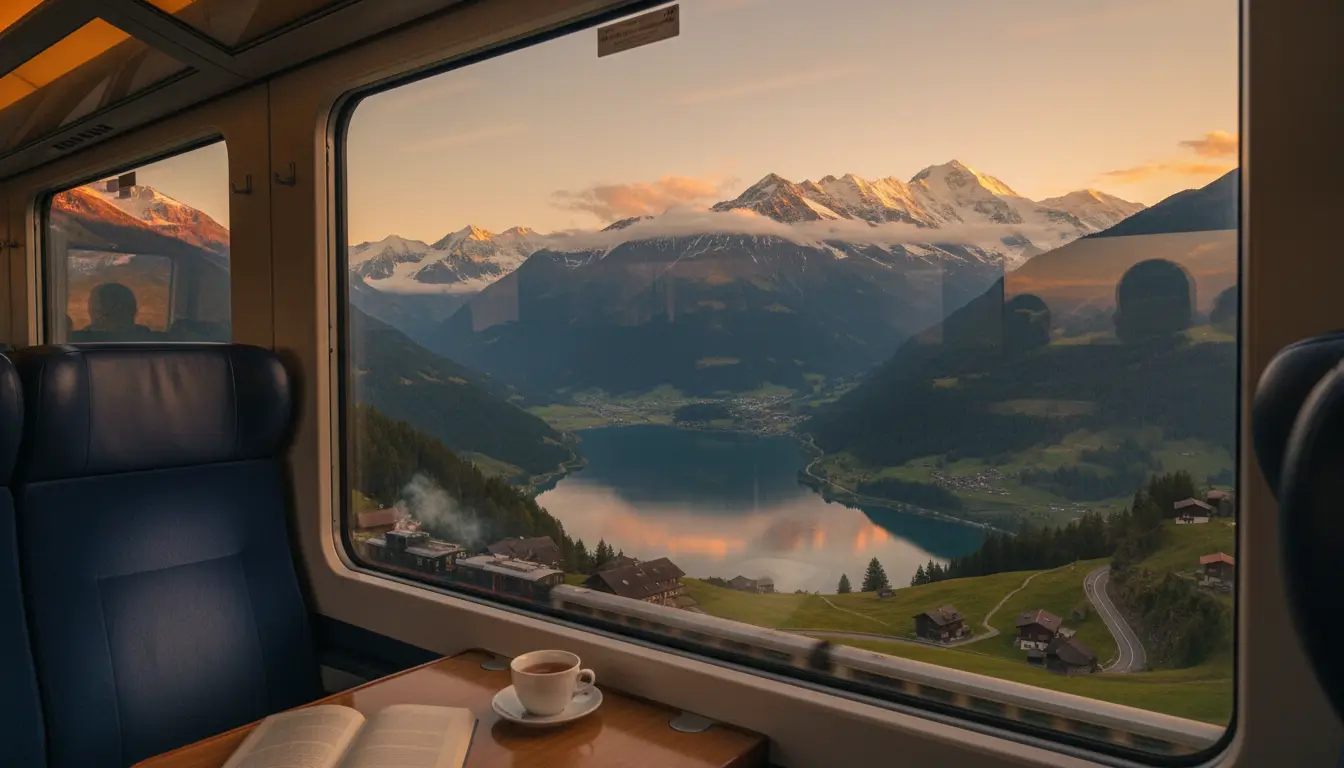
Certain rail connections offer landscape value on top of transport. The route from Zurich to Milan through the Swiss Alps showcases mountain passes, glaciers and Alpine villages. From Salzburg to Ljubljana, you travel past lakes and hills. These journeys make the travel itself part of your city break.
For scenic routes, choose daytime connections rather than night trains where possible. You miss the views in the dark. Book a window seat and opt for slower regional trains instead of fast direct services if the scenery is worth the extra time.
Connections that work well for city-hopping
These cities have frequent and short mutual connections that make multi-city tours practical:
- Brussels, Antwerp and Ghent: each 30 to 60 minutes apart, ideal for a Belgian culture trip
- Barcelona, Valencia and Madrid: two to three hours per leg by AVE high-speed trains
- Copenhagen, Malmö and Gothenburg: linked by the Öresund Bridge and Swedish rail lines
- Vienna, Bratislava and Budapest: one to three hours, three capitals with distinct characters
- Krakow, Prague and Vienna: four to six hours per connection, Central European architecture
What you will find on Traveler Tips
On the Traveler Tips website you will find extensive information on rail travel, route planning and practical preparation for city breaks. From specific destination guides to tips on tickets, accommodation and the best times to travel. Explore more articles and expand your knowledge for a well-planned and comfortable journey.
Frequently asked questions
Choose a logical route with relatively short legs (max. 3–4 hours per journey) and start in a well-connected hub so that your travel time stays low. Plan a fixed rhythm: travel in the morning, check in around midday, then spend the rest of the day in the city. Book at least two nights per city so you have a full day to explore without hurrying. Build in at least one buffer day or a flexible ticket for delays or spontaneous extra stops.
Choose a logical “hub & spoke” route (for example London–Paris–Amsterdam) with mainly direct rail connections under four hours, so you spend more time in cities than on the move. Plan departures in the morning and arrivals around midday for a relaxed travel pace and easy check-ins. Travel in the shoulder season and outside rush hours to avoid crowds and higher prices. Build in flexibility using point-to-point tickets or passes, and travel light so that changes and walking distances at stations are as stress-free as possible.
First decide whether a rail pass is worthwhile by adding up all expected journeys (including high-speed trains) and comparing the total with point-to-point tickets; for a small number of journeys or short distances, buying individual tickets is often cheaper. Reserve high-speed and international services early (such as Eurostar/ICE/Italo), but keep regional trains flexible for last-minute adjustments. Optimise your route by travelling west to east or north to south in a straight line and planning journeys under about four hours so you do not lose whole days. Use route apps (such as national rail planners) to find alternatives with fewer changes or without compulsory reservations, even if they take a bit longer but are cheaper.
Yes, for complex multi-city rail journeys, apps and sites such as Omio, Trainline and the Deutsche Bahn planner (bahn.com) are very useful because they combine international connections and reservations. For specific countries, the national rail websites and apps (such as SNCF, Trenitalia, NS International) remain essential for the best fares and details. For accommodation along the way, Booking.com and Airbnb are the most practical, as you can easily filter by stopover location and date. In addition, Google Maps and Rome2Rio can help to visualise routes and connections clearly.
Combine major cities such as London, Paris or Rome with smaller stops on the same route, for example Verona, Ghent or a small town on Lake Garda. Use direct or short regional rail connections (max. 3–4 hours) so you still have time to wander at leisure off the beaten track. Plan one classic sight (museum, highlight) and one local experience (market, neighbourhood outside the centre, food tour) in each city. Ideally travel in spring or autumn and build in flexible travel days so you can spontaneously add an interesting “hidden” stop.