
 NL
NL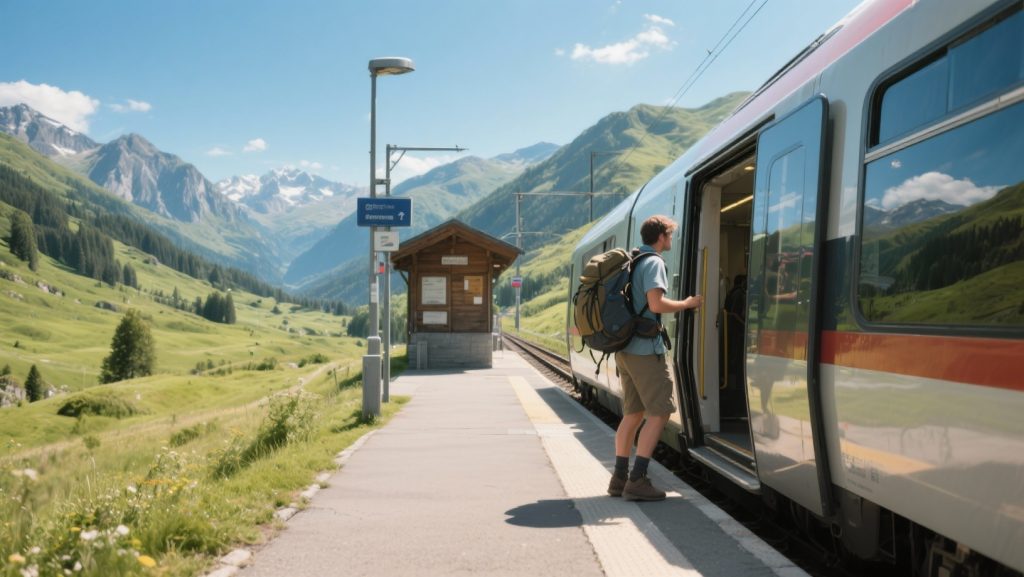
Walking Holidays by Train: The Complete Handbook for Optimal Routes and Planning
Careful preparation makes train travel for walking holidays an efficient and relaxing way to arrive directly in nature. The combination of a comfortable journey with direct access to well-known walking trails offers a freedom that is difficult to achieve with other means of transport. Discover how to reach extensive paths, from the Veluwe to the Swiss Alps, with smart travel planning.
Choosing the train as a mode of transport is a logical step for conscious travellers. It is a sustainable, comfortable, and easy way to get around. Unlike a car journey, where you have to deal with traffic congestion and parking problems, your holiday begins as soon as you board. You have time to read, enjoy the scenery, or review your walking route. This makes walking holidays by train a very peaceful way to reach your destination.
The Benefits of Train Travel for Your Walking Holiday
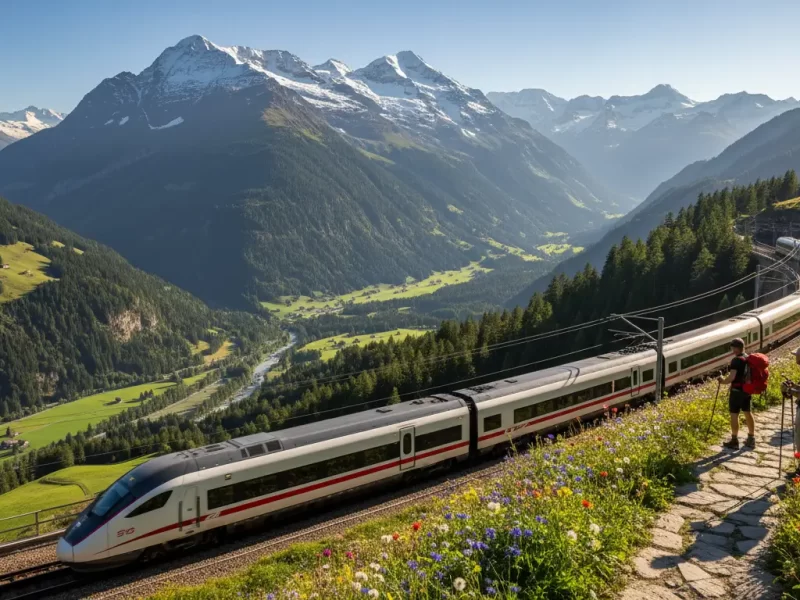
Travelling by train to your walking destination offers tangible benefits that enhance the travel experience. First and foremost, there’s direct access to nature. Many train stations, both in the Netherlands and other European countries, are located within walking distance of national parks and famous walking routes. You step out and start your trek almost immediately, without being dependent on a car. This applies, for example, to stations like Dieren on the edge of the Veluwezoom or Grindelwald in Switzerland, where the mountains are right on your doorstep.
Furthermore, the journey itself is much more pleasant. You avoid the stress of traffic jams and searching for a parking space. You use your travel time effectively: you relax, work, or prepare for the walk. Another important aspect is sustainability. The train has significantly lower CO2 emissions per passenger than a car or plane, which aligns well with the desire to travel consciously and with respect for the environment.
‘ This gives you the flexibility to cover long distances without having to worry about retrieving a car. ’
Choose Your Walking Style: Linear, Basecamp, or Hut-to-Hut
The combination of train travel and walking is suitable for various types of treks. Adapt your travel planning to the walking style that suits you best.
Linear Walking Tours
For a linear trek, also known as a point-to-point hike, you walk to a new location each day. The train is an ideal mode of transport for this. You travel to your starting point and, at the end of your walking holiday, take the train back from your final destination. This gives you the flexibility to cover long distances without having to worry about retrieving a car. Many NS (Dutch Railways) walks in the Netherlands are based on this principle: they start at one station and end at another.
Basecamp Walking
If you opt for a basecamp style, you stay in one fixed location and make day trips from there. You travel by train to your destination, check into your accommodation, and use it as a base. This method is ideal for travellers who desire more comfort and don’t want to walk with their full luggage every day. From your ‘base camp’, you explore the surroundings, often using local public transport to reach various starting points.
Hut-to-Hut Treks
For those who wish to venture deeper into the mountains, a hut-to-hut trek is a good option. You walk from one mountain hut to another and spend the night in nature. The train takes you to a station in the valley, from where you begin your ascent. At the end of the trek, you descend back into another valley, where you take the train again. This type of trip requires careful planning, particularly reserving the mountain huts, but the reward is an unforgettable experience in high-alpine terrain.
Top Regions for Train and Walking Enjoyment
Many regions in Europe are excellently accessible by train and well-equipped for walkers. A good rail infrastructure combined with a network of footpaths makes these areas particularly suitable.
- Netherlands: Veluwezoom and South Limburg
In your own country, from Dieren station, you can walk directly into Veluwezoom National Park, known for its hilly heathlands. In South Limburg, from Valkenburg station, you can start walks through the hilly landscape of the Geul and Guldal valleys. - Germany: The Eifel
Take the train to Gerolstein in the German Eifel, and you’ll be right at the start of routes such as the Gerolsteiner Felsenpfad. This area is characterised by limestone rocks, caves, and forests. - Luxembourg: The Ardennes
From Troisvierges station in northern Luxembourg, walking routes begin, including multi-day treks to Clervaux. You walk through a landscape of dense forests and tranquil valleys. - Switzerland: Bernese Oberland
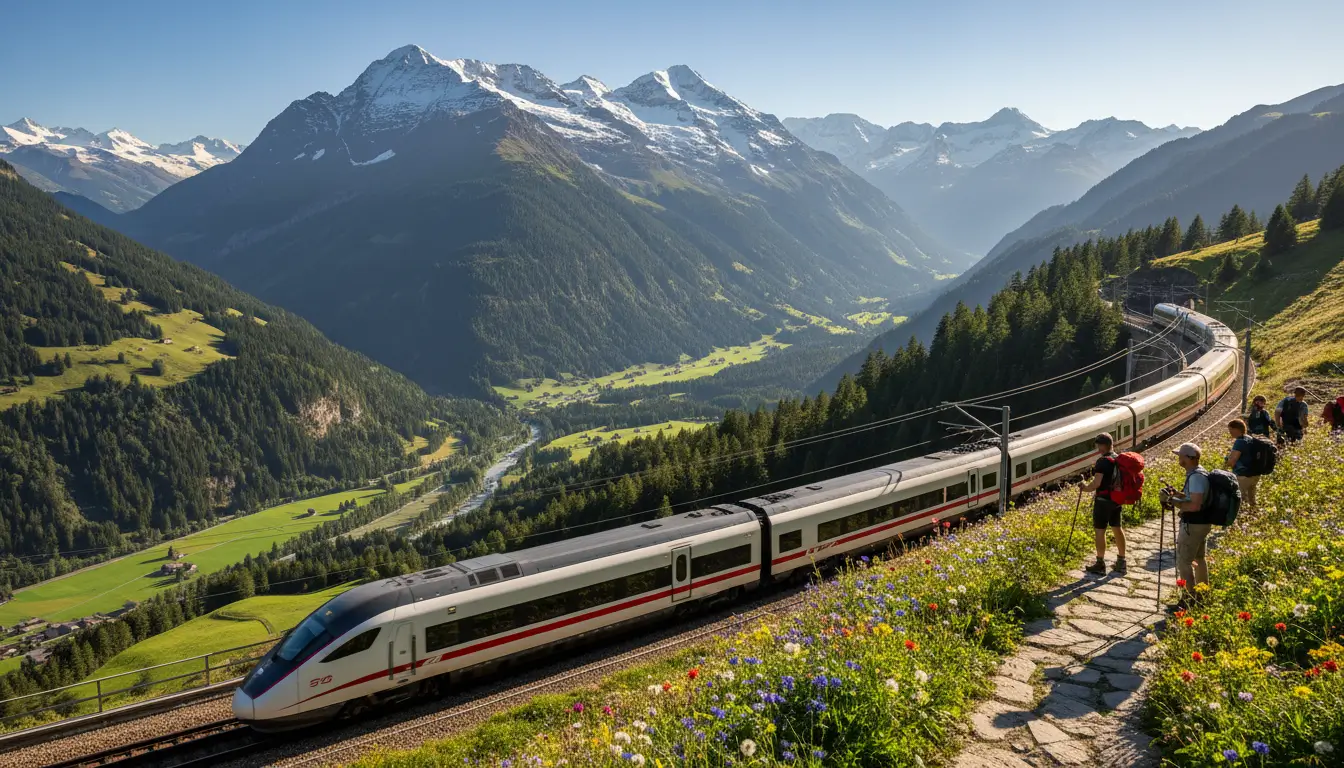
The region around Interlaken, with train stations in villages like Grindelwald and Wengen, is a starting point for walks with views of glaciers and iconic mountains such as the Eiger and the Jungfrau.
Smart Planning: Routes, Tickets, and Luggage
Good preparation is crucial for the success of your walking holiday by train. Start by outlining your general route and researching train connections. International journey planners and the apps of national railway companies are indispensable here. Book train tickets, especially for long distances, as early as possible to benefit from lower fares.
Also, give careful thought to your luggage. Travelling with a backpack is the most practical, as it’s easy to carry. Limit the contents to what you truly need to keep the weight down. Many larger train stations have lockers where you can temporarily store excess luggage, which is useful if you’re planning a multi-day hut-to-hut trek from a valley town.
‘ Each period has its own charm but also places different demands on your planning and equipment. ’
Travel Time by Season
The season has a major influence on your walking experience. Each period has its own charm but also places different demands on your planning and equipment.
- Spring (March-May): Nature awakens. This is a beautiful time, especially in lower-lying areas and hilly landscapes. Think of the blossoming orchards in South Limburg. In the mountains, there may still be snow at higher altitudes.
- Summer (June-August): Ideal for treks in the high mountains, as most paths are then snow-free and the mountain huts are open. It does get very warm in the valleys, so an early start is recommended.
- Autumn (September-November): Enjoy the autumn colours in the forests, such as on the Veluwezoom. The weather is changeable, so be prepared for rain and lower temperatures. The mountains are quieter, and the skies are often clear.
- Winter (December-February): Winter walking has its own atmosphere but requires specific equipment and knowledge. Choose lower-lying, well-marked routes. Some railway lines, particularly in mountainous areas, have a limited timetable.
Preparation and Safety for Your Journey
A safe walking tour begins with good preparation. Ensure you have sturdy, well-worn walking shoes and wear layered clothing so you can adapt to changing weather conditions. A waterproof jacket and trousers are essential, especially in the mountains.
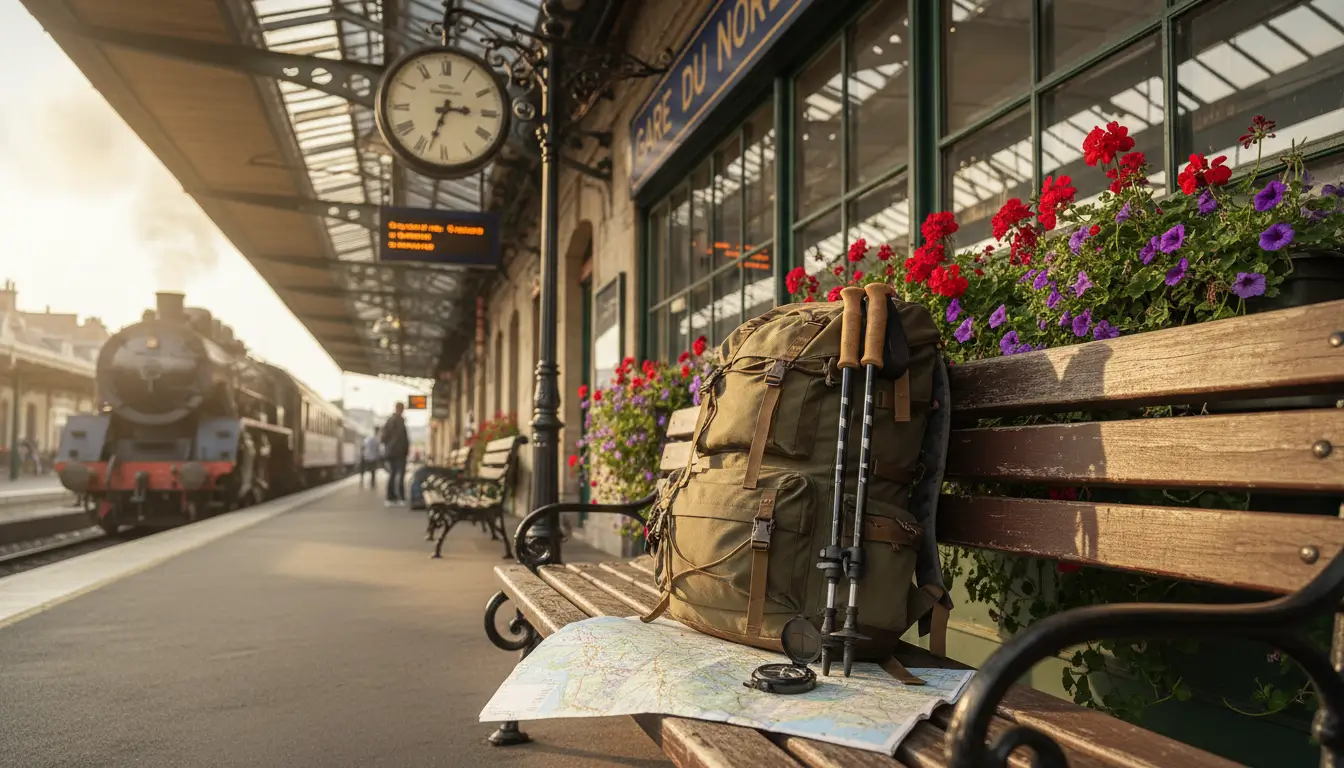
Navigation is another important point. Although many routes are well-marked, it is wise to always carry a physical walking map and a compass. A GPS device or a smartphone with a reliable navigation app and offline maps is a good addition. Ensure your phone is fully charged and you have a power bank. Inform yourself about the local weather forecast before you depart and let someone know your plans.
Local Connections and Extra Conveniences
Once you arrive at your destination, you’re not solely dependent on your walking shoes. Many walking regions have an excellent network of supplementary public transport. Local buses will take you from the train station to higher villages or the starting point of a specific route. In mountainous areas, you often use cable cars and chairlifts to quickly gain altitude and save your energy for the walk itself.
Also inquire about regional tourist cards. In many Alpine countries, when you stay overnight in a hotel or apartment, you receive a guest card that allows you free or discounted use of local public transport and lifts. This makes exploring the area even easier and more affordable.
Planning a walking holiday by train requires a careful approach, but the result is a journey that is both relaxing and fulfilling. By consciously planning your trip, bringing the right equipment, and utilising local infrastructure, you create a smooth and enriching experience. You combine the pleasure of walking in nature with a comfortable and sustainable way of travelling. Step aboard, look outside, and let the landscape pass by, knowing that your destination is the beginning of a beautiful walking trail.