 NL
NL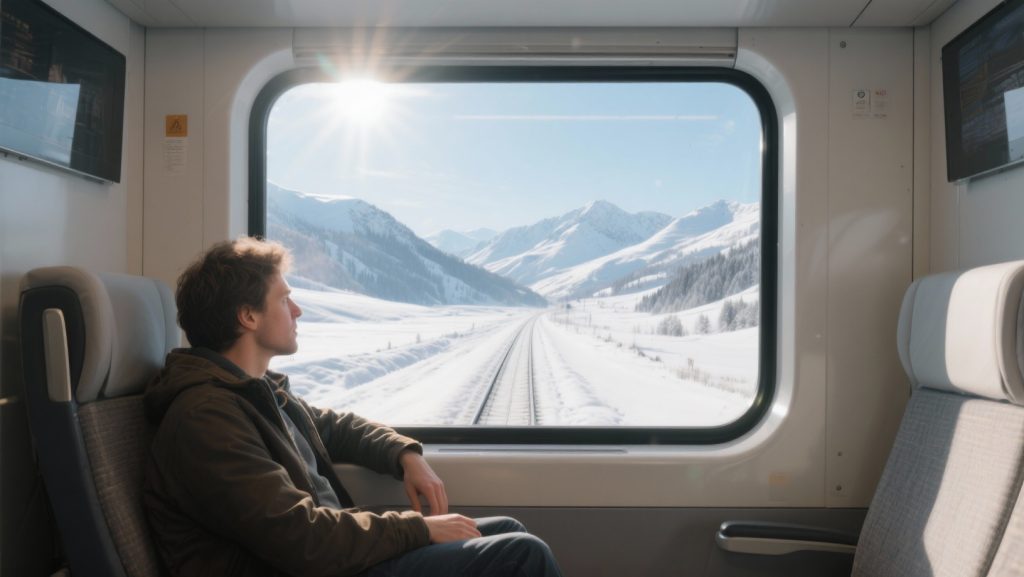
To Winter Sports by Train
Train travel for winter sports is the most comfortable and efficient way to start your holiday in the snow. You avoid traffic jams, save on fuel and toll costs, and gain valuable time on the slopes, all while enjoying a journey with significantly less environmental impact. Good preparation is the key to a carefree trip; discover how to plan it here.
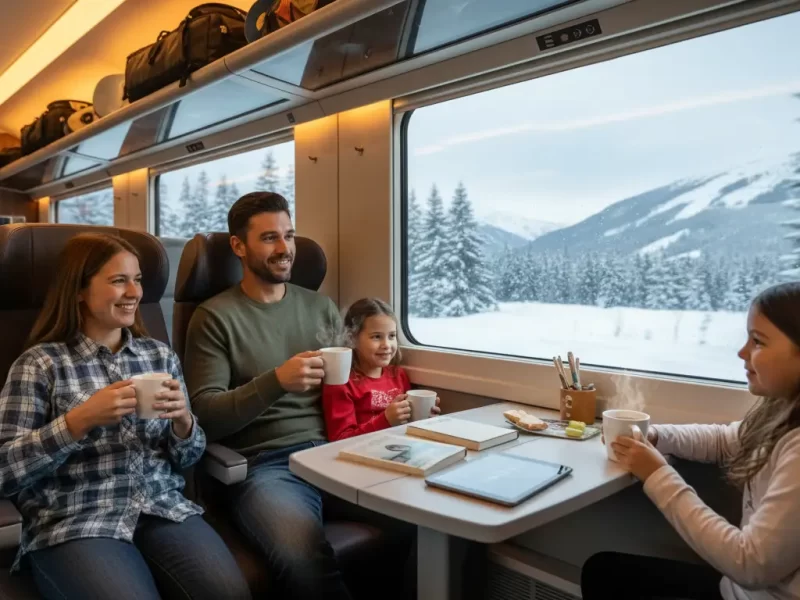
For many, the car is still the default choice, but the popularity of sustainable and comfortable train travel as a holiday option is rapidly growing. More and more winter sports enthusiasts are discovering the benefits of rail. The journey becomes part of the experience rather than a necessary evil. You step aboard, find your seat, and your holiday begins immediately. No stress about slippery mountain roads, snow chains, or mandatory environmental stickers. Instead, you have all the time to read a book, chat with your travel companions, or enjoy the landscapes passing by.
Planning Your Trip: Step by Step to the Snow
A successful train journey to the snow requires structured planning. Demand for tickets, particularly during holiday periods, is high. Therefore, booking early is the most crucial step. Tickets for popular connections such as the Eurostar Snow to France or night trains to Austria often become available in autumn. By booking in advance, you not only secure a seat or couchette but also pay the most affordable fares.
Start by mapping out your route. Determine which train station is closest to your final destination. Then, research the available connections. Websites like NS International offer a good overview of options from the Netherlands to the Alps. For specific routes, it is often advisable to also consult the websites of foreign carriers, such as Eurostar, ÖBB (Austria), or SNCF (France). When booking, pay attention to travel time, the number of transfers, and on-board facilities, especially if you are travelling with children or a lot of luggage.
‘ This makes the train a logical choice for those who want to arrive directly in the heart of the mountains. ’
Top Destinations: Ski Resorts with Excellent Train Access
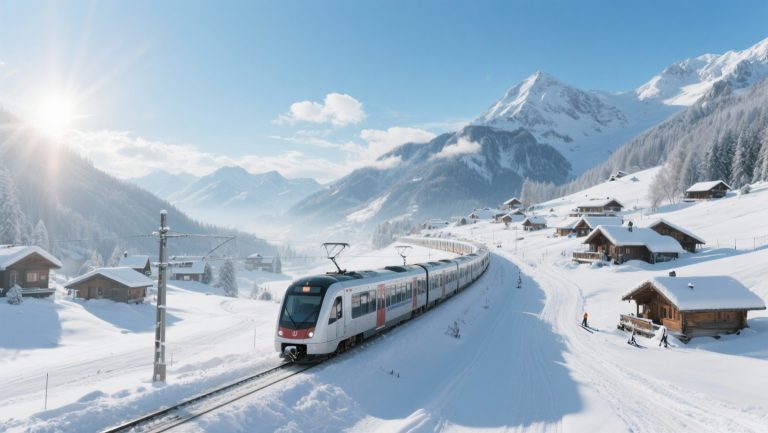
Many of the best ski resorts in the Alps are excellently connected to the European rail network. This makes the train a logical choice for those who want to arrive directly in the heart of the mountains.
French Alps
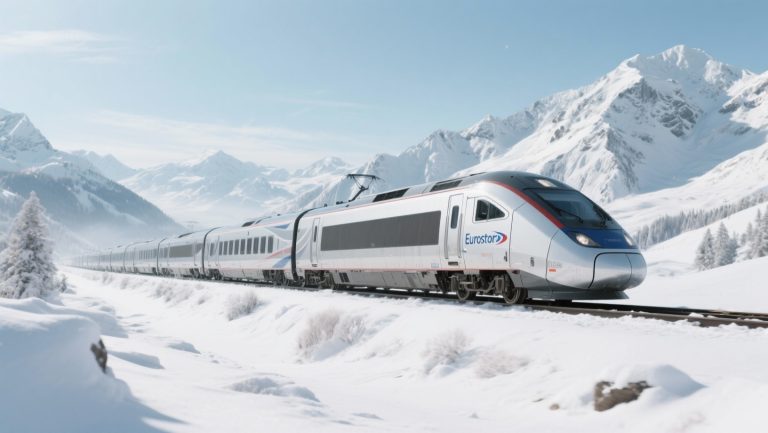
The French Alps are traditionally well accessible. During the winter season, Eurostar Snow runs directly every Saturday from Amsterdam and Rotterdam to the Savoie region. You alight at stations such as Chambéry, Moûtiers, or Bourg-Saint-Maurice. From here, you have direct access to world-famous ski areas. Consider:
- Les Arcs and La Plagne (Paradiski): Alight at Landry or Bourg-Saint-Maurice. From Bourg-Saint-Maurice, a funicular takes you directly to Arc 1600 in less than ten minutes.
- Les Trois Vallées (e.g., Val Thorens, Méribel): Moûtiers station is the gateway to this extensive area. Regular bus connections take you further into the mountains.
- Tignes and Val d’Isère: For these destinations, Bourg-Saint-Maurice is also the final station, from where you continue your journey by bus or taxi.
Austria
Austria is a pioneer in winter sports train travel, particularly thanks to its excellent night train connections. The ÖBB Nightjet runs daily from the Netherlands to Tyrol. You board in the evening and wake up in the mountains the next morning. Another option is the Urlaubs-Express (UEX). Easily accessible ski resorts include:
- SkiWelt Wilder Kaiser – Brixental: Travel to Wörgl or Kufstein. From here, it’s a short bus or taxi ride to villages like Söll, Ellmau, or Westendorf.
- Zell am See – Kaprun: This area has its own train station, meaning you alight practically at the foot of the ski lift.
- St. Anton am Arlberg: St. Anton station is located in the middle of the village. You can easily walk to your hotel or the first ski lift.
Switzerland
Switzerland is renowned for its efficient and punctual public transport, reaching even the smallest mountain valleys. From the Netherlands, you can travel comfortably with the ICE (InterCity Express) to Basel. From there, the Swiss rail network (SBB) offers seamless connections to numerous winter sports resorts such as Zermatt, St. Moritz, and the Jungfrau Region.
The ‘Last Mile’: From Train Station to Valley Station
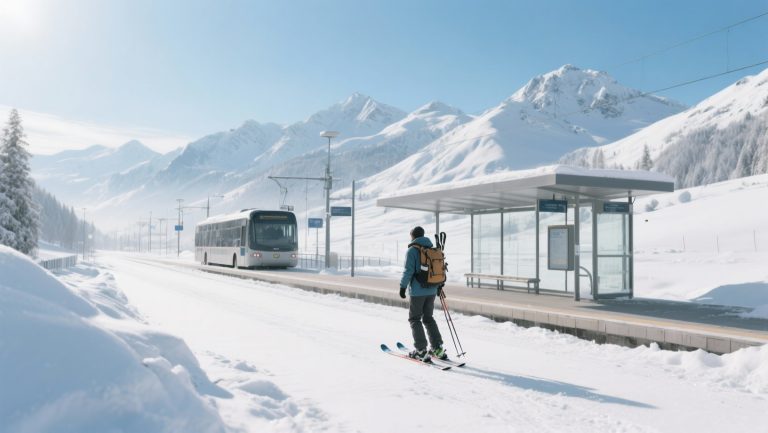
Once you arrive at the international train station, the final leg of your journey begins – the ‘last mile’. This is often the part travellers think about most in advance, but the logistics in the Alps are excellently set up for this. From most major mountain train stations, buses depart at fixed times to take you to the surrounding villages and accommodations. These bus services are coordinated with the train arrival and departure times.
Check the local bus company’s timetable in advance. In many cases, you can book a ticket online. An alternative is a taxi. Although more expensive, this can be a comfortable option if you are travelling with a lot of luggage or have accommodation further from a bus stop. Some hotels also offer their own shuttle service from the nearest station.
Luggage On Board: Skis, Snowboards, and More
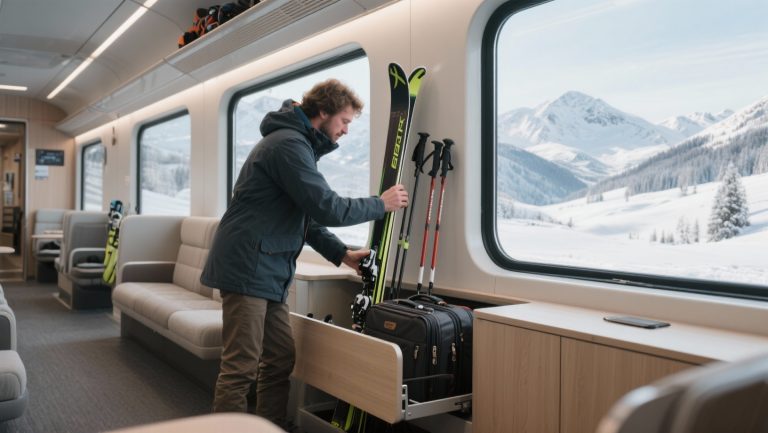
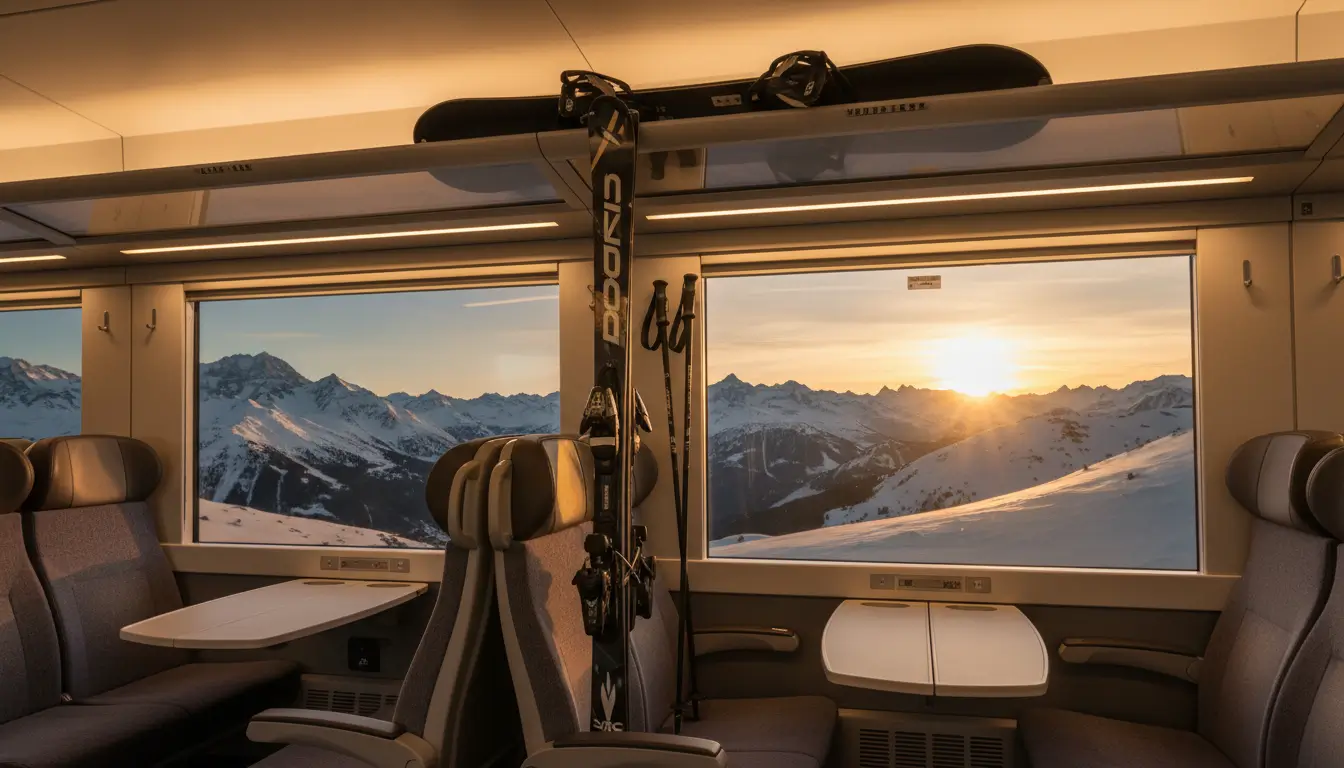
One of the practical questions is how to take your ski equipment on the train. The rules for this are generally flexible. On most international trains, such as Eurostar and the Nightjet, you are allowed to bring one pair of skis or a snowboard free of charge, in addition to your regular luggage (usually two items per person). These must be packed in a suitable ski or snowboard bag.
Luggage space can be limited. Place your ski or snowboard bag in the special luggage racks at the entrance of the carriage. Your suitcases can be stored in the racks above your seat or in the larger racks between seats. Ensure that you keep valuables and travel documents in your hand luggage. Packing efficiently helps to limit the weight and volume of your luggage, which makes boarding and alighting much easier.
‘ Travelling by night train is not only efficient but also a unique experience in itself. ’
Night Train: Sleeping Your Way into the Mountains
The night train is one of the smartest ways to travel to your winter sports destination. It allows you to gain two full holiday days. You depart from the Netherlands in the evening, sleep while the train covers hundreds of kilometres, and arrive early the next morning, well-rested, at your destination. This means you can hit the slopes on your arrival day. On the return journey, you also travel overnight, allowing you to ski fully on your last day.
You can choose from a standard seat, a couchette in a shared compartment for four or six people, or a bed in a private sleeping compartment. The sleeping compartments offer the most privacy and comfort, often with their own washbasin. Travelling by night train is not only efficient but also a unique experience in itself.
Smart Ways to Manage Seasonal Crowds
The winter months, particularly school holidays, are peak periods for winter sports. This is noticeable not only in the crowds on the slopes but also in the availability of train tickets. To avoid the crowds and higher prices, you can take several steps. If possible, try to travel outside of school holidays. The weeks in January and March are often quieter and more affordable.
Another tip is to travel on weekdays instead of weekends. Saturday is the traditional changeover day in many ski resorts, leading to a peak in travel traffic. By travelling on a Thursday or Sunday, you avoid the biggest crowds. This not only increases your travel comfort but often gives you more choice in tickets and accommodations.
Extra Tips for a Hassle-Free Train Journey
With good preparation, you’ll have a relaxed journey. Here are some more practical tips for your trip:
- Food and Drink: Most long-distance trains have a bar or restaurant car. However, it’s always wise to bring your own snacks and drinks for the journey.
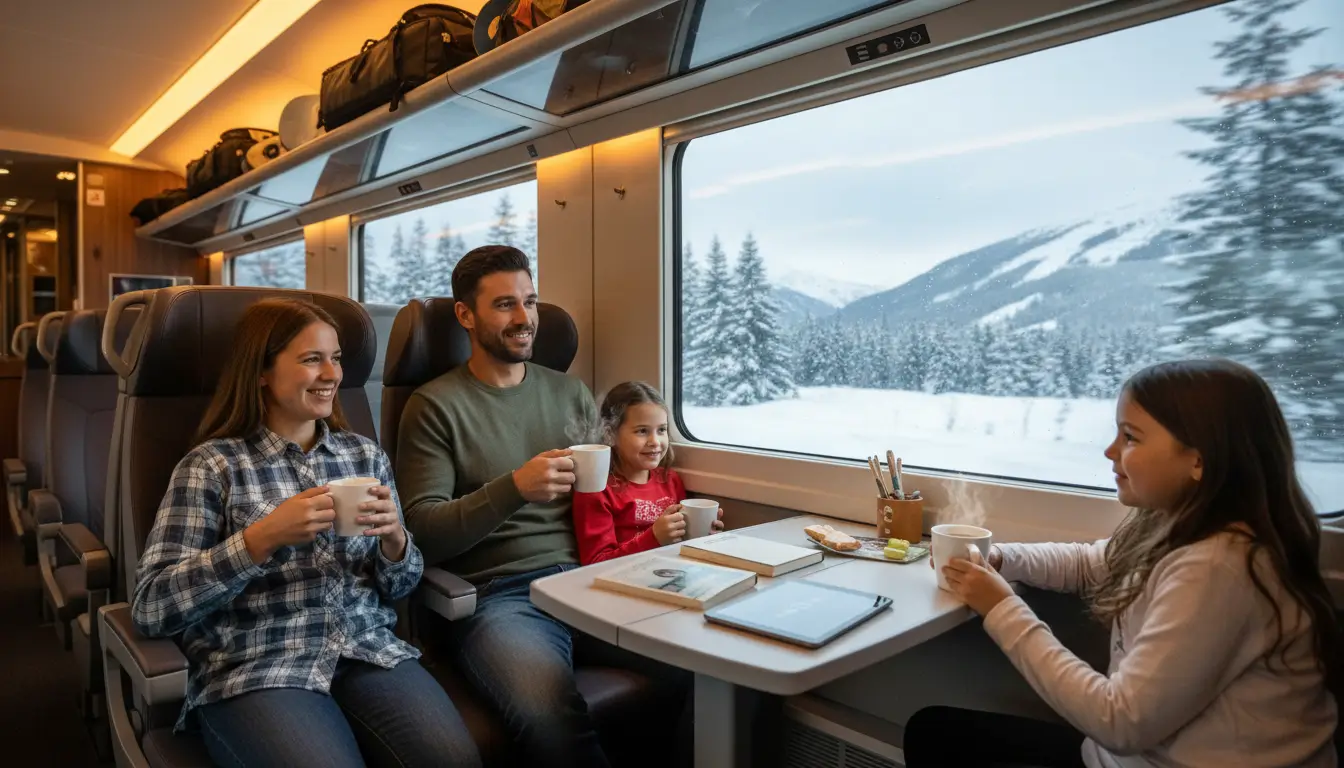
- Entertainment: Bring a good book, a podcast, or download some films to your tablet or phone. Although the views are often stunning, the hours can pass more quickly this way. Don’t forget your headphones and a power bank.
- Comfort: Wear comfortable clothing in layers so you can adjust to the temperature on the train. A neck pillow and earplugs can be pleasant, especially on a night train.
- Transfers: Plan enough time for transfers. Although connections are usually well-organised, a more generous transfer time provides peace of mind and a buffer in case of delays.