 NL
NL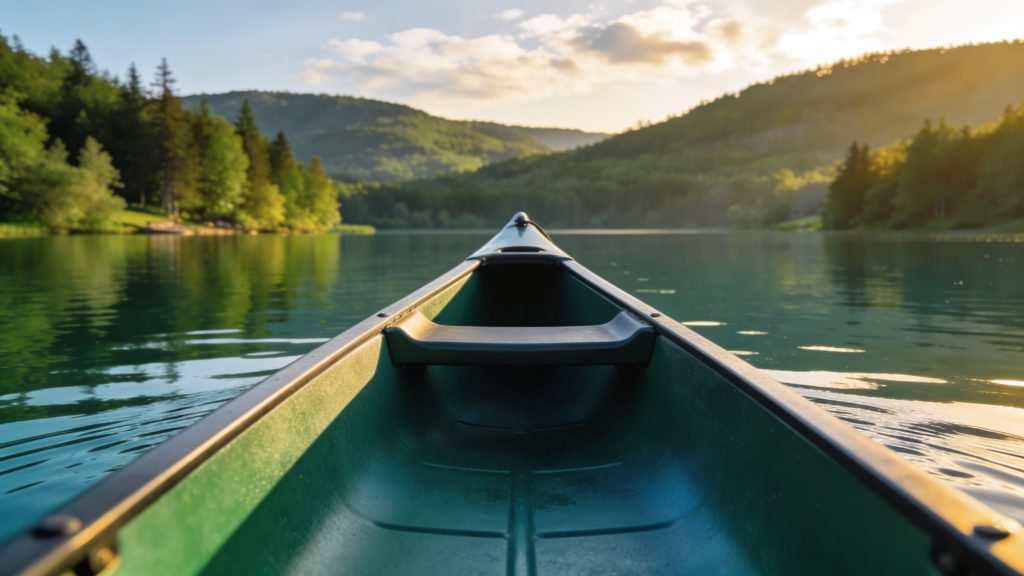
Hiring a canoe is the most accessible way to explore Europe from the water, with prices starting at €10 per afternoon and hire companies in every country with navigable nature. Compare locally based on capacity, routes and extra services such as shuttles, and choose the option that fits your destination and way of travelling. A canoe and kayak holiday offers the perfect combination of nature experience and flexibility. In this article you’ll read how to find the right rental company, what the differences are between countries and when it makes sense to bring your own boat.
Where you can hire a canoe in Europe
In almost every European country with rivers, lakes or coastal areas you’ll find canoe hire companies. The largest concentration of rental providers is in countries with extensive water systems and waymarked routes, such as the Netherlands, Germany, France, Sweden and Poland. In the Netherlands you can hire from as little as €15 per half day, with packages for half or full days. In Southern Europe, such as Croatia or Spain, prices are slightly higher due to seasonal effects and tourist demand.
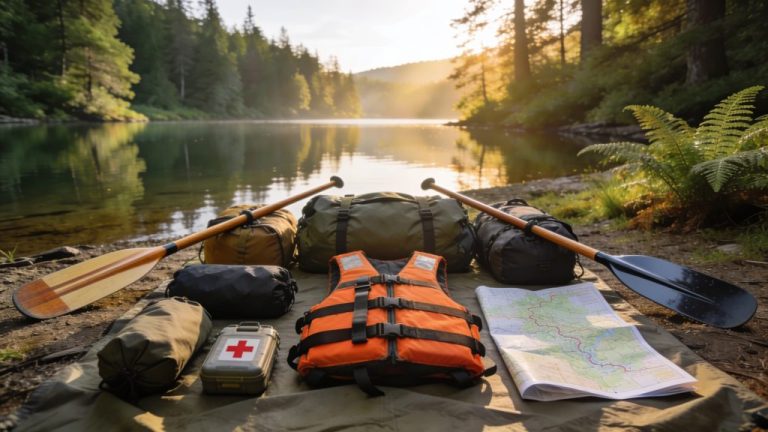
Most hire companies offer standard canoes for 1 to 4 people, including paddles, lifejackets and often waterproof barrels for luggage. In popular watersports areas you’ll also find specialist hire outlets with kayaks, children’s versions and two‑person canoes. Think of the French Ardèche region or Austria’s Salzkammergut. You can usually book online or on the spot, but on sunny weekends in high season it’s wise to book in advance.
‘ For families with young children, a canoe is often the safer choice. ’
Canoe or kayak: which should you hire for your trip
The main difference between a canoe and a kayak lies in the construction and handling. A canoe is an open boat without cockpits. You steer it with a paddle that has a single blade. This type of boat is stable, suitable for groups or families and ideal for calm waters such as lakes, canals and slow‑flowing rivers. You sit or kneel in the boat and have room for extra luggage, picnic baskets or children.
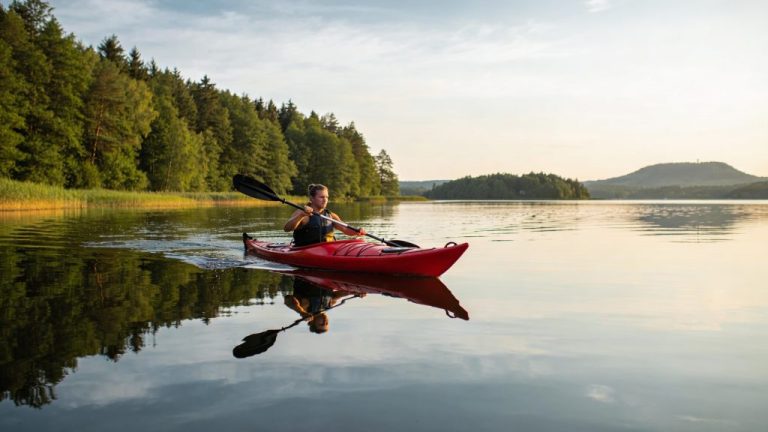
A kayak, on the other hand, has a closed hull with a cockpit and is steered with a double‑bladed paddle. This makes kayaks more manoeuvrable and faster, especially on wider water or in windy conditions. They’re suitable for solo paddling trips or pairs and demand a bit more balance. For families with young children, a canoe is often the safer choice. More experienced paddlers are better off hiring a kayak. For longer distances too, a kayak is the better option.
Hire companies often offer both types. When booking, ask about the water conditions on your route. For narrow peat streams or reed beds a canoe is sufficient; for open lakes or coastal areas a kayak is preferable.
Hire prices per country compared
The costs of hiring a canoe vary widely by country, season and rental company. In the Netherlands you’ll pay on average €10 to €20 per afternoon for a two‑person trip, including paddles, lifejackets and often a route map. For a full day you’re looking at €25 to €40. In Germany and Belgium, prices are similar, with packages starting from €15 for a half day.
In France, Austria and Switzerland, rates are slightly higher due to their location in mountainous areas and the longer routes. Here you should reckon on €30 to €50 per day for a standard canoe. In Scandinavia, such as Sweden and Norway, you often hire per day or for multi‑day packages, with prices from €40 per day. In Eastern Europe, for example Poland and Slovakia, you’ll find the cheapest rentals, sometimes from as little as €8 per half day.
Extra services such as shuttles, pick‑up transport or route guiding usually cost an additional €5 to €15. For multi‑day packages or groups you often get a discount. Always compare what’s included in the price: some hire companies charge extra for lifejackets, dry bags or parking.
Cheapest countries for canoe hire
- Poland: From €8 per half day, popular in the Masurian Lakes region and along the river Krutynia.
- Slovakia: From €10 per day, especially in the Tatra Mountains and along the river Dunajec.
- Czech Republic: On average €12 per half day, with hire companies along the Vltava and Berounka.
- Netherlands: From €10 per afternoon, with the largest network of hire companies in Western Europe.
- Belgium: Comparable with the Netherlands, especially in the Ardennes and along the Lesse.
‘ In the Netherlands and Belgium, taking a full‑size canoe on the train is not permitted. ’
Taking your own canoe by car or train
If you regularly plan canoeing holidays, it may be worthwhile to buy your own boat. Entry‑level models cost a few hundred euros, but you’ll have the freedom to paddle anywhere and at any time without depending on hire companies. However, taking a canoe with you requires good preparation, especially if you’re travelling by car or train.
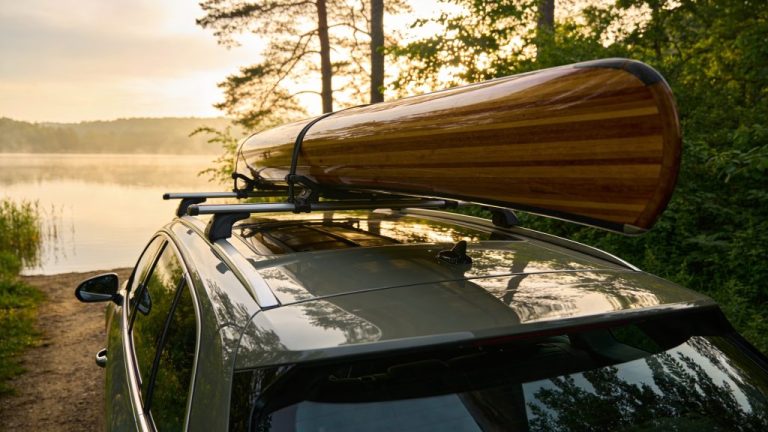
By car, you transport a canoe on a roof rack or trailer. Use strong tie‑down straps and check your car’s maximum roof load. For longer journeys, allow an extra €50 to €100 in fuel costs due to the extra drag of the boat. In some countries, tolls are charged based on vehicle height, which can increase with a boat on the roof.
Taking a canoe on the train is more complicated. Most railway companies only allow folding or inflatable canoes in luggage carriages. Not all trains have this facility. In Germany and Austria you can sometimes use special bike trains, which provide space for small boats. Always reserve this in advance. In the Netherlands and Belgium, taking a full‑size canoe on the train is not permitted.
A practical alternative is a folding canoe or packraft. These models fit into a large rucksack and can be taken on any train. They are more expensive to buy and less stable than hard canoes.
How to choose the right rental company
Search locally in the region where you want to paddle. That way you’ll find the best rental company. Pay attention to the following points when comparing:
- Location: Is the rental base directly on the water or at the starting point of your preferred route? Some hire companies offer shuttles, others expect you to make your own way to the start point.
- Capacity: Check how many people fit in the canoe and whether there is space for luggage. For families with young children, three‑person models are often safer than two‑person boats.
- Extra services: Are route maps, waterproof barrels and lifejackets included? Does the rental company provide a pick‑up service at the end point?
- Booking: Can you book online, or do you have to come by in person? On busy days, advance booking is often essential.
- Maintenance: Check reviews or ask on site about the condition of the boats. Canoes that are hired out intensively show wear and tear more quickly.
Also ask about the duration of standard routes. Some hire companies charge by the hour, others offer set packages of, for example, 2, 4 or 6 hours. Make sure the route matches your fitness level and experience.
Practical tips for your canoe trip
A successful canoe trip starts with good preparation. Make sure you know where you’re going and which route you’ll be paddling. Most hire companies provide maps with estimated paddling times and sights along the way. Always take water, snacks and sun cream, and store valuables in waterproof bags.
Start early in the day if you’re visiting popular areas. In places like Giethoorn or the Ardennes it can get busy with other paddlers and pleasure boats. In nature reserves with birds and reed beds, morning is also the best time for wildlife watching.
Pay attention to the weather conditions. In strong wind or rain, paddling becomes more tiring and less enjoyable. Ask your hire company about safety rules and codes of conduct in nature areas. In quiet zones or during the breeding season there are often special rules to protect wildlife.
For beginners, routes on calm water are the most suitable. Avoid rivers with strong currents or stretches with low bridges if you have little experience. After a few hours of paddling you’ll feel the effort in your shoulders and arms, so build up gradually.
‘ Outside the high season you often benefit from lower prices and quieter routes. ’
The best time to hire
The canoeing season in Europe runs from April to October, depending on the climate in your chosen country. In the Netherlands and Belgium you’re well‑served from April to September, with the busiest period in July and August. In Scandinavia, June to mid‑September are the best months, because the water has warmed up and the days are long.
In Southern Europe, such as the south of France or Croatia, May to June is ideal for avoiding the peak summer crowds. In the Alps and other mountainous regions, the paddling season depends on snowmelt and water levels. Ask local hire companies about the best period for your chosen route.
Outside the high season you often benefit from lower prices and quieter routes. The weather is more changeable though, so take into account colder water and shorter days.
Advantages of hiring over buying
For most recreational paddlers, hiring is the most economical and practical option. You only pay for the time you’re actually on the water, without having to worry about maintenance, storage or transport. Hire companies take care of return transport or provide fixed start and end points with shuttle services, which keeps the logistics simple.
Hiring also gives you the freedom to try out different types of canoes and kayaks. That way you can discover which type of boat suits you best before you consider buying one yourself. For anyone who paddles only a few times a year, hiring remains the smartest choice financially.
The downside is that you’re tied to the opening times, locations and availability of hire companies. With your own equipment you decide for yourself when and where you paddle. Weigh this against the extra costs of purchase, roof racks, storage and fuel.
On the Traveler Tips website you’ll find much more information about nature holidays by canoe and kayak, including inspiration for routes, destinations and tips for planning multi‑day trips. Discover more about active travel and make sure your next trip is well prepared and consciously planned.
Frequently asked questions
Plan your canoe experience as a half‑day stop along the way, preferably in a region you’ll be passing through anyway (for example, Weerribben‑Wieden, Alde Feanen or the Dommel). Choose a rental company directly on the water that offers a shuttle or pick‑up service, so your car or train route still makes sense. Reserve a 2–4 hour trip in advance, in the middle of the day, so you can plan your travel blocks around it. Match the difficulty and distance to your travel pace: short, easy routes on travel days and longer trips on days when you’re covering fewer kilometres.
For relaxed paddling with family or friends, an open canoe (possibly 2‑ or 3‑person) is the most suitable; for sportier or solo paddling, a kayak with a double‑bladed paddle is a better fit. If you’re mainly after nature and tranquillity, look at areas such as Weerribben‑Wieden, the Nieuwkoopse Plassen or the Wormer‑ and Jisperveld. For a varied river experience, Dommel routes between Boxtel and Sint‑Oedenrode are especially scenic. Look for a local hire company that provides routes and, if possible, pick‑up transport, so you can paddle in a relaxed way.
When comparing canoe hire companies, pay attention to the total price per half day or day, any deposit, and surcharges for busy days or transport. Check which equipment is included, such as paddles, lifejackets, waterproof barrels, route maps and possibly drysuits. Also look at the conditions for cancelling or rebooking in case of bad weather or illness, and whether administration fees are charged. Finally, compare extra services such as pick‑up and drop‑off, guiding and the range of available routes.
Always wear a well‑fitting buoyancy aid or lifejacket and take water, snacks, sun cream and, if possible, a dry set of clothes in a waterproof bag. Check the weather, your route and the level of difficulty in advance, and choose calm waters if you don’t have much experience. Stay on the designated canoe routes as much as possible, keep your distance from reed beds and nesting areas and respect other water users. Set off early to avoid crowds and strong afternoon winds, and make clear agreements with your fellow paddlers along the way.
In popular tourist areas, booking in advance is highly recommended, especially on sunny days and at weekends. Find reliable hire companies via regional overviews by province or tourist platforms, and check reviews, photos and available facilities (lifejackets, route maps, possible shuttle service). Compare several providers in terms of price, location and included services such as outbound and return transport. In less busy regions you can sometimes hire on the spot, but even there booking ahead helps avoid disappointment.