 NL
NL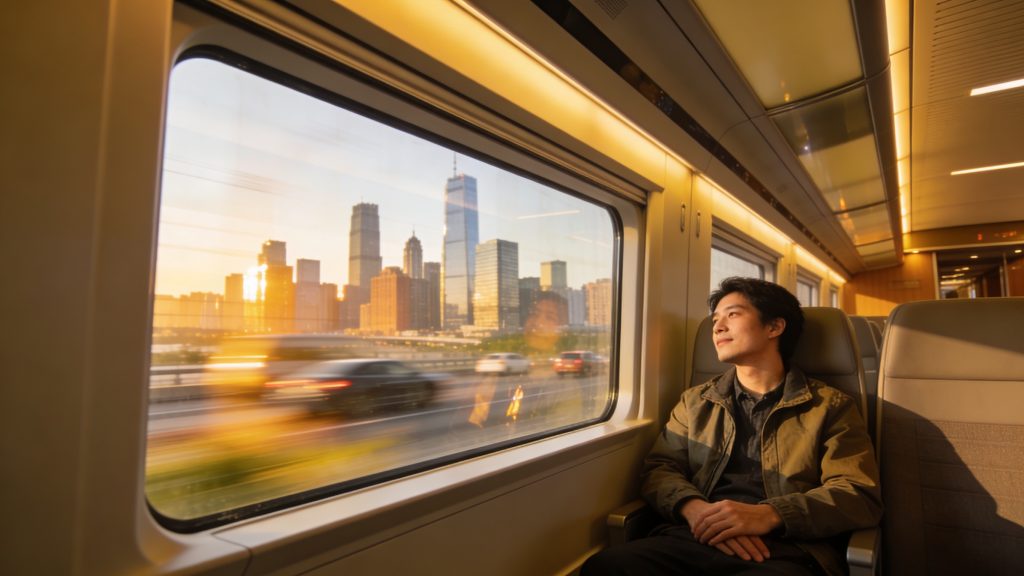
For city breaks within Europe, the train is often the smartest choice. You travel directly from centre to centre, avoid long security checks and baggage rules, and enjoy the scenery along the way. For short distances, the total travel time is comparable to flying, but with more comfort and less stress. Discover why more and more travellers are choosing city breaks by train.
Direct to the heart of the city
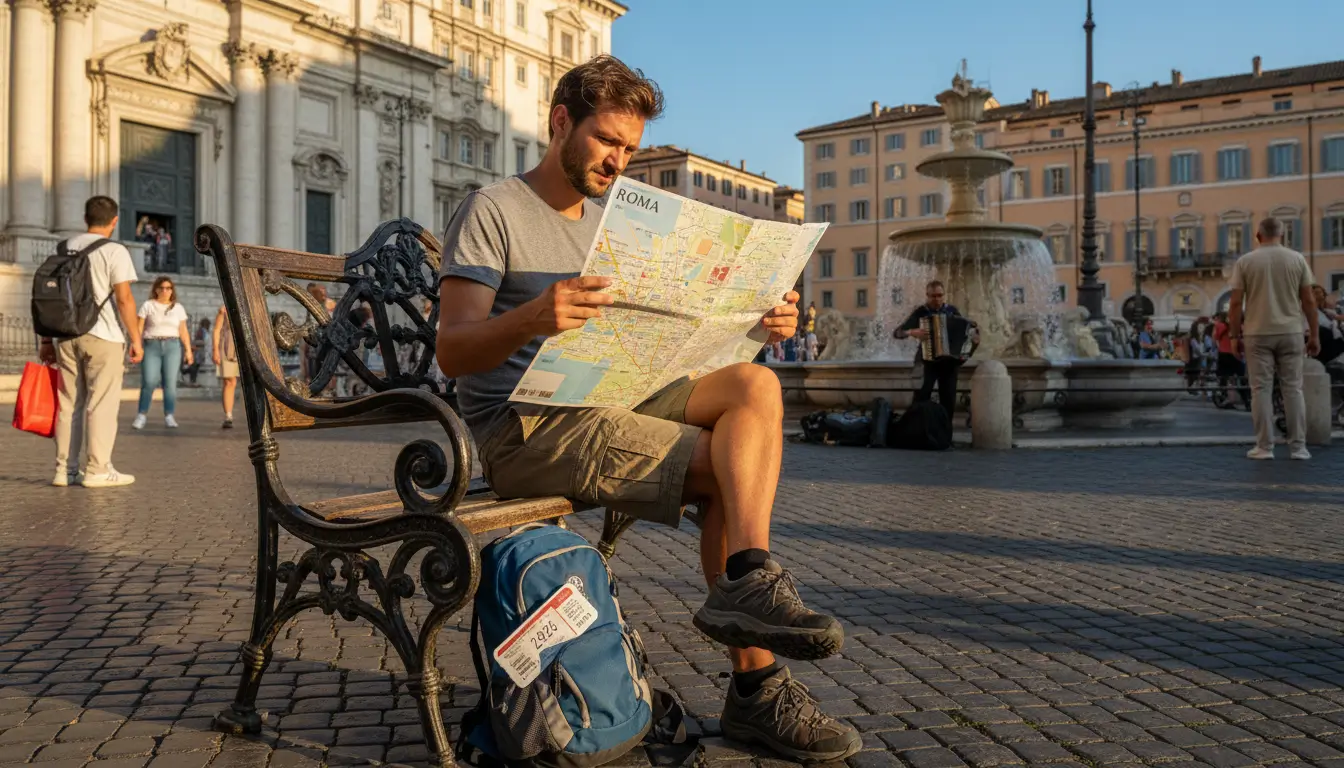
Train stations are usually right in the city centre. You get off and within minutes you are at your hotel, museums or restaurants. When flying, you often spend more time on the transfer from the airport than on the flight itself.
An airport is often ten to fifty kilometres outside the centre. You need extra time and money for a taxi, shuttle bus or train into the city. That can easily take half an hour to an hour and a half. On a two- or three-day city break, that weighs heavily.
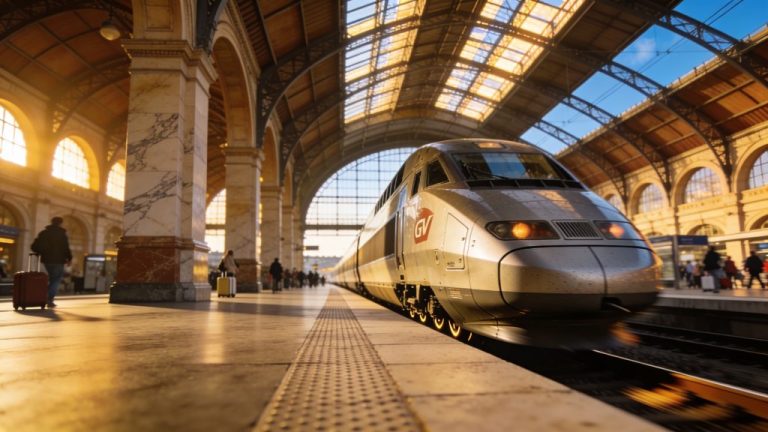
By train you step off at Gare du Nord in Paris, Berlin Hauptbahnhof or Brussels-Central. Your holiday begins the moment you get off.
‘ A four-hour train journey from Amsterdam to Berlin is in practice often faster than a one-hour flight, once you count all the waiting time. ’
Less waiting time and no check-in stress
For a flight you need to be there well in advance. Check-in, baggage drop and security easily take an hour and a half to two hours. Some airlines also charge extra for hold luggage, seat selection or priority boarding.
On the train it’s different. You arrive fifteen minutes before departure, walk to the platform and get on. No long queues, no last-minute gate changes and no compulsory check-in times hours beforehand.
This time saving makes all the difference, especially on short routes. A four-hour train journey from Amsterdam to Berlin is in practice often faster than a one-hour flight, once you count all the waiting time.
Travelling with luggage at no extra cost
On many flights, strict baggage rules apply. Hand luggage may not exceed certain size and weight limits. You pay extra for hold luggage, sometimes ten to thirty euros per suitcase per flight.
On the train, luggage is usually not an issue. You simply take what you want without any surcharge. That makes travelling with a family, sports equipment or a bit more clothing much easier.
This is also pleasant for those without hold luggage. You don’t have to squeeze into the strict size limits of low-cost airlines and can board in a more relaxed way.
Experience the landscape instead of just the clouds
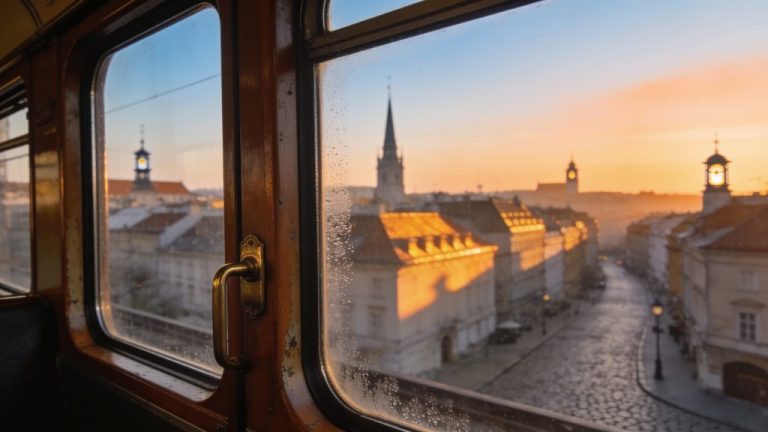
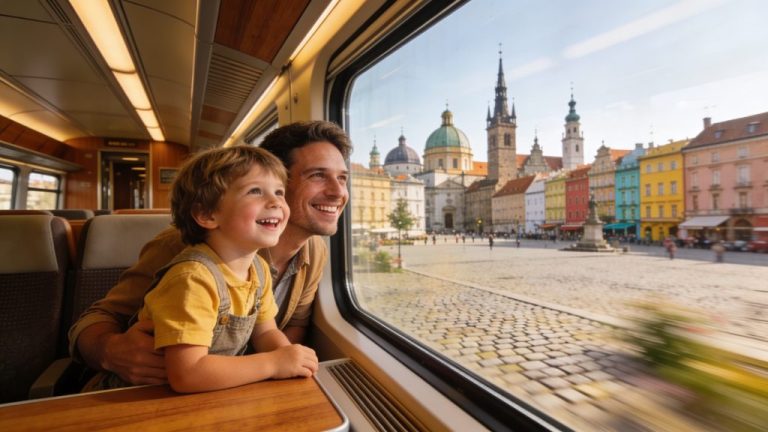
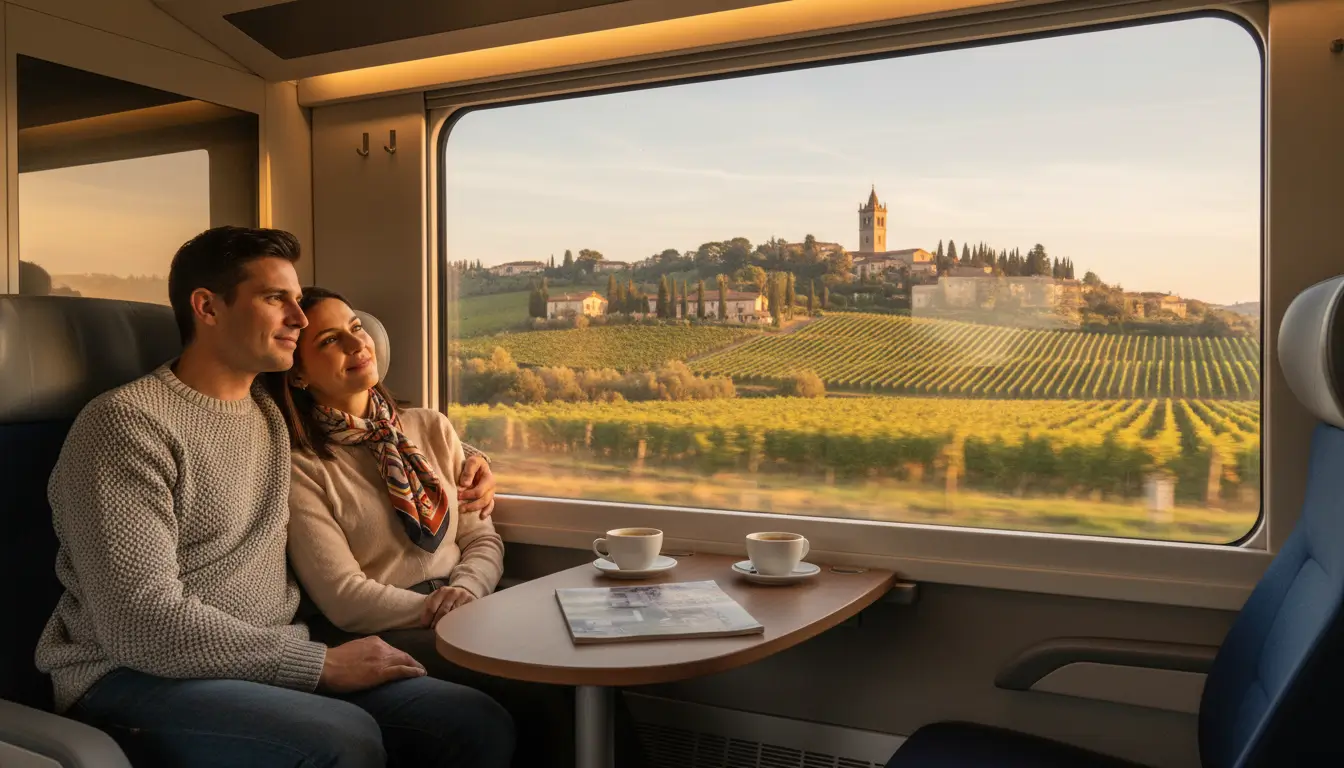
A train journey offers more than just transport. You see the landscape change, pass villages and cities, and experience the journey as part of your holiday.
On a plane you mostly see the inside of the cabin and clouds. The journey is functional, but not an experience. On train journeys you look out over rolling hills, rivers and fields. Especially on routes through the Alps, along the Rhine or through the French Champagne region, that’s a very enjoyable bonus.
This visual experience makes longer train journeys feel less monotonous. You can read, work or simply enjoy the view.
‘ That makes it a logical choice for anyone wanting to limit their climate impact without sacrificing their holiday. ’
Choosing the greener option without compromising
Per passenger kilometre, trains emit on average far less CO2 than planes. On short European distances of up to around 700 kilometres, the difference is greatest. A flight from Amsterdam to Paris emits roughly ten times more CO2 than the same journey by train.
For travellers who want to travel consciously, this is an important argument. You can make your city break more sustainable without sacrificing comfort or travel time.
The train uses less energy and eases pressure on airport infrastructure and surrounding areas. That makes it a logical choice for anyone wanting to limit their climate impact without sacrificing their holiday.
Compare total travel costs for a fair picture
A plane ticket often looks cheaper than a train ticket. But when you add up all the costs, that difference becomes smaller or is sometimes even reversed.
When flying, extra costs are added:
- Hold luggage or extra hand luggage
- Seat reservation or priority boarding
- Transport to and from the airport
- Sometimes parking fees at airports
- Extra charges for check-in or gate changes
With the train, the ticket price is usually more all-inclusive. There are no hidden costs and you travel directly from station to station without expensive transfers.
Train tickets are cheaper if you book several weeks to months in advance. Some international routes offer fares from twenty to forty euros, comparable to cheap flights but with more comfort and convenience.
Work or relax while you travel
On the train you have more space and freedom. You can open your laptop, make calls, walk to the buffet car or simply read a book without cramped seats.
That makes train travel more comfortable for business travellers, but also for families or people who want to be productive on the way. On a plane, space is limited and you have to switch off devices during take-off and landing.
The train often offers Wi-Fi, power sockets and tables. You can work, reply to emails or plan your trip without restrictions.
‘ The total travel time from door to door is comparable to or shorter than flying. ’
When the train is the best choice
For city breaks up to around 700 kilometres away, the train is usually a very strong option. The total travel time from door to door is comparable to, or shorter than, flying.
Destinations with good rail connections are ideal. Think of Paris, Brussels, Cologne, Berlin, Zurich or Milan. These cities have regular direct connections from many European capitals.
Night trains are interesting too. You sleep on the way and gain a whole day. That’s handy for longer distances such as Amsterdam to Vienna or Munich to Rome.
On shorter trips of two to four days, the easy arrival right in the centre counts even more. You lose less time on logistics and have more time for sightseeing.
Tips for a smooth train journey to the city
Book early for the best prices. Train tickets become more expensive the closer you get to the departure date. Booking several weeks to months in advance pays off.
Choose a hotel close to the station. That saves extra travel time and transport costs. Many cities have attractive neighbourhoods around the main station.
Check whether you need to change trains. Direct connections are more comfortable and faster. If you do need to change, allow enough time between connections.
Travel light but efficiently. Although baggage rules are relaxed, packing compactly is still handy for a city break. Choose clothes you can mix and match and take only what you really need.
Discover more on Traveler Tips
For many city breaks, the train offers more comfort, less stress and a better overall experience than flying. Especially on short and medium distances within Europe, the train is a logical choice for conscious travellers.
On the Traveler Tips website you’ll find much more information about train travel, routes, destinations and practical planning tips. Discover useful articles about the best European train cities, booking tips and trip preparation. Explore the website and plan your next city break in a smarter way.
Frequently asked questions
Optimise your travel time by comparing door to door: for flying, also add check-in time, security and transfers to and from the airport, and for the train focus on changes and any delays. For your travel experience, look at comfort (legroom, ability to move around, work), stress levels (airport procedures versus relaxed boarding) and your arrival location (usually the city centre by train). For city breaks of up to around 700 km, the train is often faster in total travel time and more pleasant as an experience. For longer distances, flying can save time, but then weigh up the extra stress, costs and environmental impact when making your choice.
The total costs of a city break by train are often more transparent: you usually only pay for your ticket, baggage is included and you arrive right in the city centre, so extra transfers are limited. A plane ticket can sometimes look cheaper, but you often have to add costs for (hand and hold) baggage, seat selection, transport to and from airports that are often far from the city, and possibly an extra hotel night for an early or late flight. If you include all these hidden costs, the train can work out cheaper, especially on short and medium distances. On top of that, by train you often save time and money on transfers within the city itself.
For the best travel experience and the most comfort on a city break, the train is generally the best choice. You have more legroom, can move around freely and relax while reading, working or walking through the carriage. Baggage rules are also usually more flexible than on a plane. Because you normally arrive in the city centre, the whole journey tends to feel calmer and more pleasant.
For a city break by train you usually need to prepare less: no online check-in, no strict baggage rules and in many cases it’s enough to be at the station on time with your ticket. For flying, you must arrive earlier, check in online, follow baggage and security rules carefully and plan transfers to and from airports that are often far out of town. At your destination, the train is usually easier because you arrive in the city centre and can often transfer directly to the metro, tram or walk to your accommodation. With a flight, you often lose extra time and money on transport from the airport to the centre.
Choosing the train instead of the plane makes your city break more conscious and more sustainable, because CO₂ emissions per passenger kilometre are generally much lower, especially on short and medium European distances. On top of that, with the train you usually arrive right in the city centre, which limits extra transport and therefore the additional environmental impact. Flying can seem faster, but because of transfers, waiting times and extra transport, both your total travel time and your ecological footprint increase. If you want to reduce your environmental impact, the train is in most cases the greener choice for a city break.