 NL
NL
A rail pass opens doors to the whole of Europe, but it does not guarantee you a seat on the Eurostar, TGV or ICE. Especially on international high-speed routes there is often a compulsory reservation with extra costs that are not included in your pass. You therefore pay twice: for your pass and for your seat. This article explains on which trains you are required to reserve, what it costs and how to plan ahead smartly.
What exactly does a compulsory reservation mean?
A compulsory reservation means that, in addition to your rail pass, you must buy a separate seat reservation to be allowed to travel on a specific train. Your pass covers the travel costs, but not automatically your seat. Without a valid reservation you are not allowed to board the train, even if there are empty seats.
This rule mainly applies to high-speed trains. These trains have limited capacity and run on busy international routes. Railway companies want to prevent trains from becoming overcrowded and use reservations to regulate the number of passengers per train.
Reservation fees are never included with Interrail and Eurail rail passes. You pay a surcharge that ranges from a few euros to more than twenty euros per leg, depending on the train, the season and availability. On popular routes in July and August, reserved seats sell out quickly.
Which trains always require a reservation?
Not all high-speed trains apply the same rules. Compulsory reservations differ by country, type of train and sometimes even by period. Below you will find an overview of trains for which you almost always need a reservation.
Always compulsory reservation
- Eurostar on international routes between London, Paris, Brussels and Amsterdam
- TGV and TGV INOUI in France, especially on routes to and from Paris
- AVE in Spain, the high-speed network for domestic routes
- Thalys/Eurostar on routes between Belgium, the Netherlands, France and Germany
- Night trains and international premium services with limited capacity
Often not compulsory, but sometimes recommended
- ICE in Germany, especially at busy times and on international routes
- EuroCity services between Germany, Austria, Switzerland and Italy
- Intercity trains in several countries during school holidays and public holidays
Note: a train without compulsory reservation can still be full. During peak hours you may still end up standing, especially on popular routes.
How do you reserve a seat on TGV and other high-speed trains?
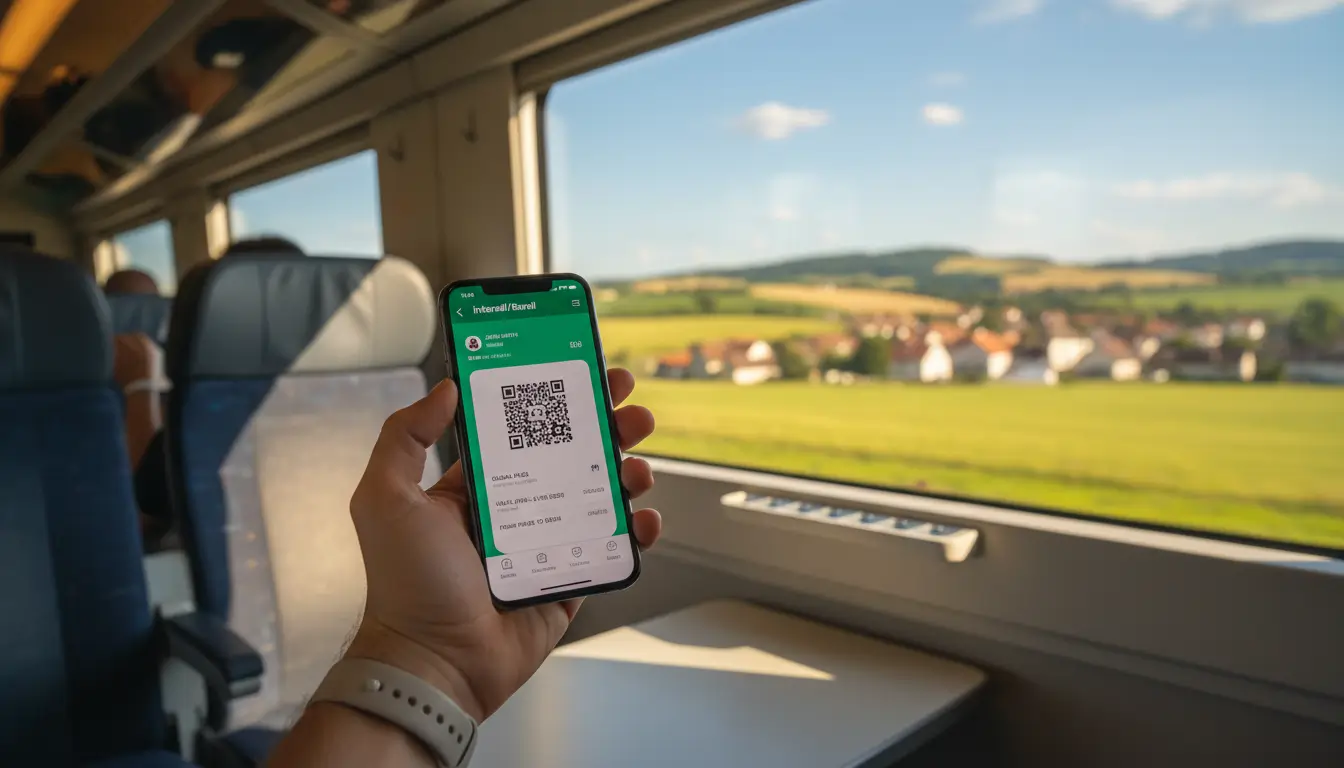
You can make reservations via various channels. Most Interrail and Eurail travellers book via the official Interrail/Eurail website or app. There you can immediately see which trains are available and what the reservation costs are per leg.
You can also reserve via the customer service of railway companies, at ticket counters or via platforms such as Rail Europe. Each channel may charge a different service fee. So compare the costs before you book.
Steps for making a reservation
- Check whether your chosen train requires a reservation
- Choose your date, route and departure time
- Reserve as early as possible, especially in the high season
- Pay the reservation costs separately from your pass
- Receive your reservation confirmation by email or in the app
- Show both your pass and your reservation during ticket inspection on the train
Booking early gives you more choice of departure times and increases the chance of being able to sit together if you are travelling with several people. In popular periods, reservations may sell out weeks in advance.
Are reservations included with a Global Pass?
No. Even with an Interrail Global Pass or Eurail Global Pass, reservations are not included. These passes cover unlimited travel within their validity area, but high-speed trains with compulsory reservations require a separate payment.
This applies to all types of pass, whether you travel with a first-class or second-class pass. Reservation fees remain the same, although first class sometimes costs slightly more to reserve than second class.
This means you need to budget carefully in advance. If you plan to take many high-speed routes, reservation costs can add up to several tens of euros on top of the price of your pass.
‘ France has strict reservation rules. ’
Regional differences in reservation rules
Compulsory reservation rules differ greatly by country. Below is a brief overview of what to expect in Europe’s most popular train countries.
France
France has strict reservation rules. Most TGV services require a compulsory reservation. International routes to and from Paris, Lyon, Marseille and Nice fill up quickly, especially in summer. Reserve at least a week in advance if you are travelling in July or August.
Spain
Spain applies similar rules. AVE trains on routes such as Madrid–Barcelona, Madrid–Seville and Barcelona–Valencia almost always require a compulsory reservation. Regional trains often do not have compulsory reservations, but they run more slowly and stop more often.
Germany
In Germany, reservations on ICE trains are usually not compulsory. However, it is wise to reserve on busy routes such as Berlin–Munich, Frankfurt–Cologne or international connections to Paris or Zurich. Without a reservation, you run the risk of having to stand, especially on Friday afternoons and Sunday evenings.
Switzerland and Austria
Here there is rarely any compulsory reservation. You can use most intercity and fast services without a reservation. Even so, you still have the option to reserve a seat if you want to guarantee one, especially on international services or in the high season.
Benelux
Within the Benelux there is usually no compulsory reservation for domestic trains. On international high-speed services such as Thalys and Eurostar, reservations are always compulsory. These routes are very popular, so book in good time.
Practical tips to avoid problems
With a few smart choices you can avoid sold-out trains and unexpected costs. Flexibility and preparation make all the difference.
Book as early as possible
Reservations for high-speed trains are often available weeks in advance. The earlier you book, the more choice you have of departure times and the greater your chance of getting a good seat. Do not wait until the day itself.
Check for each train whether a reservation is compulsory
Do not rely on country-specific rules. Compulsory reservations differ by train type and sometimes even by route. Check in advance via the Interrail app or website whether you need a reservation.
Choose an alternative route
If a high-speed train is full, there are often alternatives. Regional trains and intercity services usually do not have compulsory reservations and are cheaper. You will travel more slowly and have to change trains more often, but you keep your flexibility and save money.
Travel outside peak hours
Early morning trains and mid-day services are less busy than Friday afternoons. It is also quieter outside school holidays and public holidays. Plan your journey around these periods if you can.
Split your journey
Sometimes it is better to split a long journey into several shorter legs. This allows you to avoid expensive reservations on international high-speed trains. You then combine regional trains with a single fast service where it is really necessary.
Additional costs and budgeting
Reservation costs vary widely. For a TGV reservation you typically pay between 10 and 20 euros. For Eurostar this can rise to 30 euros or more, depending on the route and the season. Night trains often charge a higher surcharge, especially if you reserve a berth.
These costs are on top of the price of your rail pass. If you take four international high-speed routes within two weeks, you can easily pay an extra 60 to 80 euros in reservations. Take this into account when planning your travel budget.
Some travellers deliberately choose routes with fewer compulsory reservations to keep costs down. This does mean longer journey times and more changes, but it makes a big difference to your wallet.
‘ But that speed costs you flexibility. ’
Flexibility versus speed
High-speed trains are ideal for quick journeys between major cities. You can go from Paris to Barcelona in three hours or from Amsterdam to Zurich in four. But that speed costs you flexibility.
With a reservation you are tied to a specific train at a fixed time. If you miss that train, you lose your reservation. You must reserve and pay again, if there are still seats left. Regional trains offer more freedom: you can get on when it suits you.
Which option you choose depends on your travel goal. Do you want to get from A to B quickly and comfortably? Then choose a high-speed train and reserve in advance. Do you want to stay flexible and be able to make spontaneous stops along the way? Then choose regional trains without compulsory reservations.
On the Traveler Tips website you will find more information about rail travel across Europe, from Interrail routes to practical tips for night trains and budget planning. Discover which travel options suit your plans best and get more out of your rail holiday.
Frequently asked questions
The compulsory reservation means that, in addition to your rail pass or ticket, you need a separate, paid seat reservation in order to travel on a particular high-speed train. Without that reservation you are not allowed to board trains with compulsory reservations, even if your pass is valid on that route. This requirement applies mainly to many TGV, AVE and Eurostar services and various international high-speed connections, especially on busy routes and in the high season. For other high-speed trains (such as many ICE services) reservations are often not compulsory, but recommended at busy times.
Reserve seats for high-speed and international trains as early as possible, especially at weekends, during holidays and on popular routes, so that you are sure of a seat and can sit together. For the best prices and availability you should ideally book as soon as sales open (often 3–6 months in advance) and travel outside peak hours and school holidays. Check per train whether reservations are compulsory or strongly recommended and keep an alternative with slower or regional trains in mind. Be flexible about departure time (for example very early or later in the day) to find more options and lower surcharges.
A compulsory seat reservation usually increases your travel budget due to the extra reservation fees on top of your pass or ticket. Your flexibility decreases, because you have to fix a specific train and departure time in advance and find it harder to change plans spontaneously. Travel comfort generally increases because you are guaranteed a seat and often travel more calmly than without a reservation. In busy periods, reserving can also reduce stress because you are less likely to find trains full.
Yes, practical tips include: book as early as possible so that if there are changes or cancellations you still have options for alternative trains and times. Check for each specific train (and not just per country) which conditions apply for rebooking or refunds. Be flexible with route and travel time: if necessary, opt for an earlier or later high-speed train or switch to intercity or regional trains if the reserved train is cancelled or full. Try to avoid peak times so that, if something goes wrong, you can more easily find a replacement seat.
Alternatives usually include slower intercity and regional trains, where there is generally no compulsory reservation and you can board more spontaneously. In countries such as Germany, Switzerland and Austria there are also many fast or intercity services without compulsory reservations. You can additionally split your route into several shorter legs with changes to regional lines. This takes more travel time, but gives you more flexibility and is more budget-friendly because you pay no or fewer surcharges.