NL
NL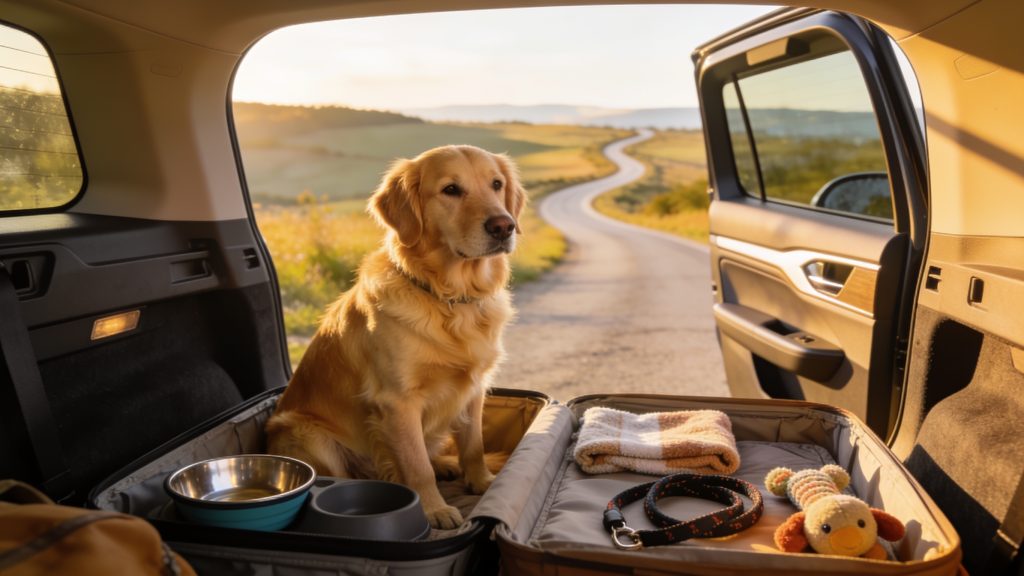
A car holiday with your dog requires more than a full tank and a good playlist. Water, food, medication, a safe travel solution, a first aid kit and a familiar blanket form the basis for a trip without nasty surprises. Smart packing prevents stress on the way and creates comfort for both you and your four-legged friend. Read on for a complete checklist that helps you forget nothing.
Preparing for a car holiday with your dog is different from a regular trip. Your dog has specific needs that vary depending on the duration, destination and climate. A well thought-out packing list makes the difference between a relaxed journey and a chaotic trip full of improvisation.
What should you always take with you?
The basics for any road trip with a dog consist of items that ensure comfort, safety and health. These items belong in every car, regardless of the length of the journey.
Water and a travel water bowl are at the top of the list. Dogs become dehydrated quickly on long car journeys, especially in warm weather or well-heated cars. Take enough water with you and make sure you have a bowl that is easy to use during stops. A collapsible water bowl or travel bottle with anti-leak function is practical.
Food for the whole trip plus a small reserve supply is essential. Delays happen, and you cannot always buy the dog food your dog is used to. A sudden change of food can cause stomach upsets, something you would rather avoid while travelling.
A harness, lead and collar with tag are part of the standard kit. The tag or address capsule helps if your dog runs off in an unfamiliar place. A harness offers more control than just a collar and prevents pressure on the neck while walking or if the dog moves around in the car.
‘ Never secure a dog by its collar; in the event of a sudden stop this can cause serious injury. ’
Safe transport and familiar items
A car-safe travel solution is a legal requirement and protects both the dog and the passengers. Choose from a crate or travel kennel, a dog guard that separates the boot space, or a car harness especially for dogs. Never secure a dog by its collar; in the event of a sudden stop this can cause serious injury.
A blanket, rug or bed from home helps your dog to feel at ease more quickly. Familiar smells reduce stress, especially during the first days of the trip. Put the blanket in the crate or on the spot where your dog sits or lies.
Poo bags are essential for stops, walks and at your accommodation. In many countries and nature reserves there is an obligation to clean up after your dog. Take plenty of bags with you, especially if you are travelling through several regions or countries.
A toy or chew bone provides distraction on long drives and helps to prevent boredom. Choose something your dog knows and can quietly chew or play with, without it leading to over-stimulation.
First aid kit and medication for the road
A first aid kit for dogs belongs in every car. The contents do not have to be extensive, but they should be practical and usable in minor accidents or discomfort.
- Tick remover to remove ticks after woodland walks or stays in grassy areas
- Disinfectant suitable for animals
- Dressings such as gauze pads, bandages and an elastic bandage
- Gloves so you can treat wounds without risk of infection
- Tweezers for removing splinters or small objects
Any medication your dog uses should be taken in sufficient quantity plus a buffer for extra days. Think of remedies for travel sickness, anti-inflammatories, stomach protectors or specific medicines prescribed by your vet. Keep medication cool if required.
Tick and flea treatment is particularly relevant when travelling to areas with a higher parasite risk, such as Southern Europe or forested regions. Check in advance which products are mandatory or recommended locally, such as protection against sandflies in Mediterranean areas.
Extra comfort and safety in hot weather
Road trips through warm regions or in summer require additional measures. Dogs do not cope well with heat and can quickly overheat in a car, even with the windows open.
A cooling mat or cooling vest helps to regulate body temperature. Cooling mats work without pre-cooling and are activated by pressure. A cooling vest can be wetted beforehand or put in the freezer. Both options are compact and easy to take with you.
Spare water in the car is important for emergencies. If the air conditioning fails or you get stuck, you can continue to cool your dog and let them drink. Take at least a few extra litres with you.
A towel has several functions. It dries wet or muddy paws after a stop, provides extra lying comfort and can serve as a cooling cloth in hot weather. Take one large and one small towel for flexibility.
‘ Look up this information before you leave to avoid surprises. ’
Travel documents and destination-specific items
For travel within Europe, a European pet passport is compulsory. The passport contains details about the dog, microchip number, rabies vaccination and other vaccinations. Check before departure whether the rabies vaccination is valid; in most countries it must be at least 21 days old and not past the vaccine’s period of validity.
For travel outside Europe, additional documents may be required, such as health certificates and specific vaccination records. Ask the embassy or consulate of your destination country which requirements apply.
Local rules differ by country and region. In some countries dogs must be kept on a lead in nature reserves, on beaches or in city centres. Certain breeds or dogs above a specific weight must wear a muzzle on public transport or in busy places. Look up this information before you leave to avoid surprises.
It is therefore sensible to always take a muzzle with you, even if your dog does not need one at home. Get your dog used to the muzzle before the trip to avoid stress on the road.
Practical tips for the road trip
A fixed travel routine helps your dog to adapt. Plan regular stops for drinking, toileting and exercise. Dogs need structure while travelling, especially if they are not used to long car journeys.
Keep a separate bag or box in the car with emergency items you can quickly grab. Think of water, a water bowl, poo bags, a towel and a spare lead. That way you do not have to rummage through the whole boot at every stop.
Take a photo of your dog before you set off. If your dog goes missing, a recent photo helps you involve local emergency services or other travellers. Also write down the microchip number and keep this information both digitally and on paper.
In hot weather, plan stops at shaded car parks. Never leave your dog alone in a parked car, even with the windows open. The temperature can rise to dangerous levels within minutes.
Checklist for a complete packing list
Use the checklist below to make sure you do not forget anything. Print it out or save it digitally so you can tick everything off before you leave.
- Water and travel water bowl
- Food and treats
- Harness
- Lead and collar with tag
- Crate, car harness or dog guard
- Blanket or rug from home
- Poo bags
- Toy or chew bone
- Towel
- First aid kit
- Medication and, if needed, travel sickness tablets
- Tick and flea treatment
- Muzzle
- European pet passport and microchip details
- Cooling mat or cooling vest in hot weather
- Spare water
- Photo of your dog
- Brush or comb
‘ Discover what else is possible and plan your next trip with confidence. ’
Find out more about travelling with your dog
A well-prepared packing list is the basis for a successful road trip. On the Traveler Tips website you will find extensive information about routes, accommodation, regulations per country and practical tips for travelling with pets. Discover what else is possible and plan your next trip with confidence.
Frequently asked questions
Make sure your dog is safely restrained in the car (crate, car harness or dog guard) and always has enough water, food and a familiar blanket or bed to reduce stress. Take an ID tag, microchip registration, European pet passport and any medication and first aid kit with you so you are prepared for emergencies. Plan regular stops for exercise, water and toileting, and avoid heat by never leaving a dog in a parked car. Check local rules in advance (lead and muzzle requirements, permitted walking areas) and adapt your activities and pace to your dog’s age, fitness and character.
Practical essentials include a safe transport system (crate, car harness or dog guard), a harness with lead and a collar with ID tag. Take plenty of water, a travel water bowl, food (plus treats) and poo bags with you. For comfort, a familiar rug or bed, toys/chews and a towel are useful. For safety, a small first aid kit, any medication, tick/flea treatment and the European pet passport with microchip details are important.
Have your vet check your dog’s general health before departure and make sure vaccinations, worming and flea/tick treatment are up to date. Check whether you have enough medication and take a small first aid kit with you. Make sure your dog is microchipped, with up-to-date registration, and take a recent photo of your dog. Do not forget the European pet passport and any additional health certificates or vaccination records required for your destination country.
Take familiar items such as your dog’s own blanket, bed or cushion and a few favourite toys so they have something recognisable. Chews (e.g. a chew bone or stuffed Kong) provide calm distraction during the journey. Also plan regular breaks with a short walk so your dog can release tension. A cooling mat or vest in hot weather and a soft surface in the car increase comfort and help your dog to relax.
Yes, there are specific items you will need depending on the type of road trip, destination and climate. For example, at hot destinations a cooling mat or cooling vest, extra water and tick and flea treatments are important, whereas in cold or wet climates you are more likely to take extra towels and warm blankets. If you are travelling to countries with strict rules, a muzzle and specific travel documents (passport, vaccination records) may be required. The length and type of activities on the road trip also determine whether you need extra comfort and safety items, such as a sturdy crate or additional first aid supplies.