 NL
NL
City cards with attraction access combine free entry to dozens of museums and sights with unlimited public transport, letting you save up to 40% if you use them intensively. These passes give you skip-the-line access, extra perks such as canal cruises and the freedom to explore without having to buy a new ticket every time. For city breaks where you want to see a lot in a short time, a city card is often the smartest choice. Find out here how to get the most out of these all-inclusive passes.
In cities such as Amsterdam, Rome and Vienna, more and more European cities are offering city cards that give you access to a wide range of attractions. These passes are designed for travellers who want to make the most of their time and like to know in advance what to expect. You pay a single price for a period ranging from 24 hours to several days. This way, you no longer need to buy separate tickets. You also often get practical extras such as transport options and discounts. Travellers who organise everything themselves can save a considerable amount with these. Especially if you plan to visit several museums and attractions. You can read more about the different options in our overview of city cards and regional passes.
What do you get with a city card including attraction access?
A city card bundles access to typically 25 to 90 attractions, depending on the city and type of pass. With most city cards, unlimited use of public transport is included. Think trams, buses and metro lines. Many passes also offer extras. For example, a free canal cruise, bike rental or access to hop-on hop-off tours.
You usually activate the pass online or on the spot with your first use. From that moment, the validity period starts: 24 hours, 48 hours, 72 hours or longer. Most passes work with consecutive days. So you cannot spread use of the pass randomly over a week. For some attractions you must reserve a time slot online in advance. This mainly applies to popular museums with capacity limits.
Typical benefits of a city card
- Free entry to top attractions such as the Rijksmuseum, Van Gogh Museum or Colosseum
- Unlimited travel on public transport within the city
- Skip-the-line access at busy sights
- Discounts on extra attractions, restaurants or guided tours
- One or more free cruises or bike tours
- Digital or physical pass, both accepted at the entrance
With the I amsterdam City Card, for example, you get access to more than 70 attractions, including the A’DAM LOOKOUT, Zaanse Schans and a free canal cruise. Public transport by GVB is included for the entire validity period. In Rome, the Rome City Pass offers skip-the-line access to the Colosseum and the Vatican, plus a hop-on hop-off bus tour. Each city has its own mix of attractions and benefits.
Do you really save money with a city card versus separate tickets?
A city card is financially worthwhile when you plan to visit several attractions. It also matters whether you use public transport. As a rule of thumb: if you visit three or more paid attractions per day, a city card is usually worth it. Savings can then run to 20% to 50% compared with separate tickets.
Calculate in advance what separate tickets cost. An entrance ticket for the Rijksmuseum costs around €22.50, the Van Gogh Museum about €20 and a GVB day ticket for Amsterdam €9. With three museum visits and two days of public transport, you’ll quickly exceed €80. A 48-hour I amsterdam City Card costs about €89 and gives you access to dozens of extra attractions and facilities. So you not only save money, but also time because you don’t have to keep queuing for tickets.
When is a city card worth it?
A city card is most cost-effective if you:
- Visit at least three to four attractions per day
- Use public transport
- Want to see popular, more expensive museums
- Have little time and want to experience a lot
- Appreciate not having to keep paying separately
For a relaxed city break, a city card is less interesting. Especially if you mainly sit on terraces or just wander through the city. In that case, you’re better off buying separate tickets for the attractions you really want to see. Also consider your travel pace. With young children or a laid-back itinerary, you may get less value from the pass. This is different if you have a packed cultural programme.
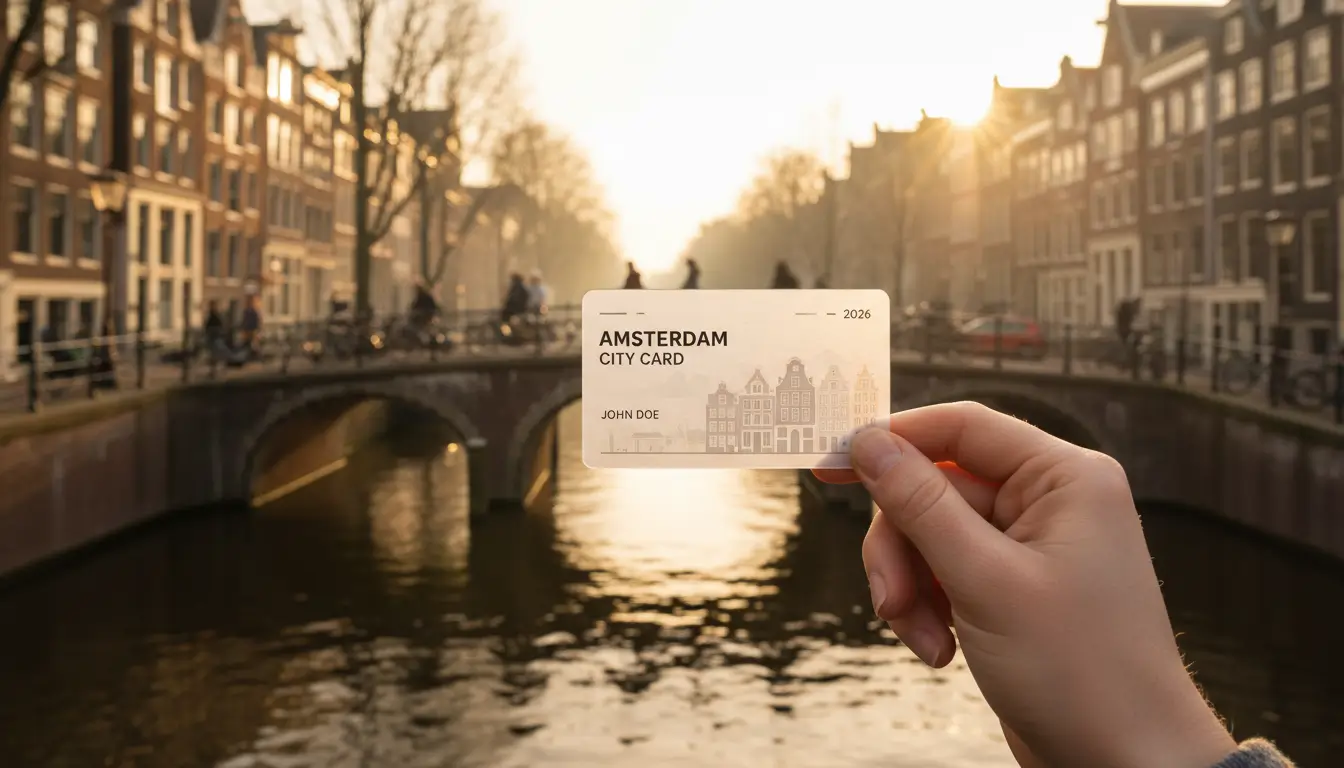
Difference between public-transport-only city cards and all-inclusive passes
Not all city cards are the same. Roughly speaking, there are two main types: public-transport-only cards and all-inclusive passes. Public-transport-only cards give you unlimited access only to public transport, such as the GVB day ticket in Amsterdam or the Berlin Welcome Card without museums. These cards are cheaper, often between €9 and €25 per day, but do not cover entrance fees.
All-inclusive passes combine public transport with free entry to attractions and extra benefits. They are more expensive, usually from €60 per day, but offer far better value for money if you plan to visit several museums and sights. You also save time and effort, as you don’t need to arrange a separate ticket for each museum.
Which type of pass suits you?
| Type of pass | Suitable for | Indicative price per day |
|---|---|---|
| Public-transport-only city card | Travellers who mainly explore the city and visit attractions selectively | €9 – €25 |
| All-inclusive city card | Cultural enthusiasts who want to see multiple museums and attractions | €60 – €100 |
Some cities also offer in-between options, such as discount cards where you don’t get free entry, but do receive 10% to 50% off admission tickets. These are useful if you only want to visit one or two attractions and don’t need unlimited public transport.
Best city card for Amsterdam with Rijksmuseum and Heineken Experience
For Amsterdam there are several city cards available. The most comprehensive option is the I amsterdam City Card. This pass gives you free entry to the Rijksmuseum, Van Gogh Museum, A’DAM LOOKOUT, Artis, the Hermitage and more than 70 other locations. In addition, unlimited travel on GVB trams, buses and metro lines is included, plus a free canal cruise.
Note: the Heineken Experience is not completely free with the I amsterdam City Card, but you do get a discount on the entrance ticket. For the Heineken Experience you pay about €21 for a regular ticket; with the city card you pay a reduced rate. If the Heineken Experience is high on your list, include this reduced rate in your savings calculation.
What makes the I amsterdam City Card appealing?
- Access to more than 70 top attractions, including the Rijksmuseum, Van Gogh Museum and Zaanse Schans
- Unlimited public transport with GVB for 24, 48, 72, 96 or 120 hours
- Free one-hour canal cruise
- Skip-the-line access at many museums after reserving a time slot online
- Discounts on extra attractions, bike rental and guided tours
- Available as a physical card or digital pass via an app
The pass is available in various versions, from 24 hours to 120 hours. A 48-hour pass costs around €89, a 72-hour pass about €104. Buy the pass online in advance for a small saving and only activate it at first use. That way, you decide yourself when the validity period starts.
Handy tips to get the most out of your city card
Make a plan in advance of the attractions you want to visit. Download the app or guide that comes with the pass so you have an overview of all options and opening times. Reserve time slots for popular museums such as the Rijksmuseum and Van Gogh Museum immediately after purchasing the pass. Especially in high season and at weekends, these time slots are quickly fully booked.
Start your day early to get maximum value from the 24-hour period. If you activate the pass at 9:00, you can continue using it until 9:00 the next day. Combine museums that are close together to minimise walking time. Use public transport for longer distances and plan your route in advance.
Additional points to consider
- Check in advance whether the attractions you want to see are on the list; offers may vary by season
- Keep your phone charged if you use a digital pass
- Always take the physical pass or QR code with you to the entrance
- Pay attention to museum closing days; some are closed on Mondays or Tuesdays
- If in doubt, ask at the ticket desk whether your city card is valid; not all staff are familiar with every pass
For families, it’s useful to check whether children need a separate pass or can go free. At many museums, children up to 18 already receive a discount or free entry, meaning a separate children’s pass is sometimes unnecessary.

Regional passes for a wider reach
In addition to city cards for individual cities, there are regional passes that cover a larger area. The I amsterdam City Card, for instance, also offers access to Zaanse Schans, Muiden and Haarlem. This is useful if you want to take a day trip outside the city without buying extra tickets.
In Belgium, the CityCard Gent provides access to museums, a water tram on the canals and bike rental for exploring the region. In Germany and Austria, regional passes are often available. These provide access to public transport and museums in several cities. Ask at the local tourist information office or tourist board which regional options are available in your destination area.
Alternatives for specific needs
If you only want to visit a few museums or are planning a relaxed city break, consider separate tickets or a day ticket for public transport. For some attractions you can buy combination tickets, such as a joint pass for the Rijksmuseum and Van Gogh Museum, which is cheaper than two separate tickets but without the public transport benefit.
Student passes and senior discounts often offer similar savings without you needing a full city card. Check with individual museums whether you are eligible for discounts based on age or student status.
On the Traveler Tips website you’ll find much more information about smart travel tips, destinations and how to plan your city break in the best possible way. Discover handy route planners, information about public transport in different countries and practical checklists to help you prepare. Explore the website and find the tips that will make your trip even better.
Frequently asked questions
The price of a city card is generally cheaper than separate tickets if you visit several attractions per day and make plenty of use of the included public transport. In that case you often save around 20–50% compared with individually purchased entry tickets and public transport tickets. With a relaxed schedule and only a few museums or attractions, separate tickets are usually cheaper. The balance therefore depends on how many and which attractions you visit and how much transport you actually use.
City cards and similar passes usually include access to dozens of museums and attractions, plus unlimited use of local public transport and often extras such as a cruise or bike rental. Parking options are usually not included, except sometimes discounts in designated car parks. They work particularly well with an itinerary where you visit several attractions per day within the city and travel a lot by public transport. If you only want to see a few sights or mainly drive outside the city in your own car, such a pass will fit less well with your planned route and travel time.
Activating a city card is usually straightforward: you buy it online or on the spot and it starts running as soon as you use it for the first time (at an attraction or on public transport). Using it after that is simple: you show the physical card or digital pass in the app at the entrance or on public transport. Flexibility is fairly good, as you can choose yourself which attractions you visit within the valid days. Do bear in mind that the validity runs in consecutive days and that popular attractions sometimes still require a pre-booked time slot.
Yes, many city cards offer extra benefits such as skip-the-line or fast-track access at popular attractions. Some passes also include unique or exclusive experiences, such as an included cruise, hop-on hop-off tour or special guided tours. This can make your visit more comfortable because you spend less time queuing and can travel more easily by public transport. At the same time, the extras often make your visit feel more varied and unique than with separate tickets.