 NL
NL
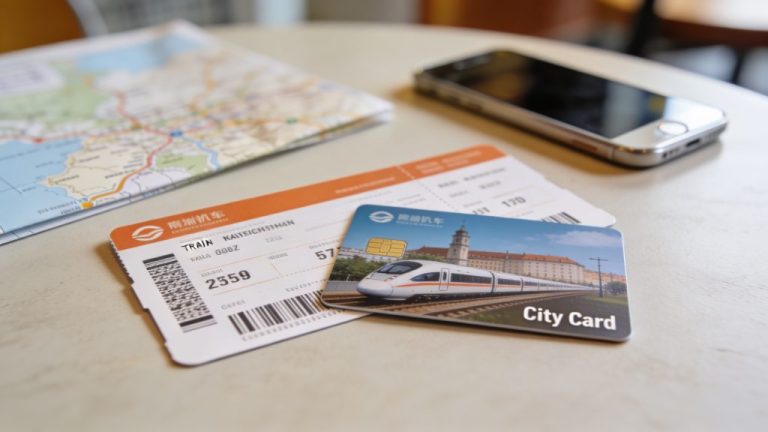
Many travellers lose money on city cards because they forget to check in, travel outside the valid zones or misjudge the validity period. These mistakes are easy to avoid. Check the terms and conditions in advance. Adjust your planning to what the pass actually covers. In this article you will discover which missteps occur most often and how to avoid them.
Forgetting to check in with a day pass
A common mistake is thinking that a city card works automatically as soon as you have bought it. This is not the case. Most city cards have to be activated at first use. You check in at a gate on public transport, or you have the card scanned at a museum or attraction.
If you forget this, your card is officially not yet valid. During a ticket inspection on public transport you can be fined for this, even if you are carrying a valid pass. Activate the card immediately upon arrival or at your first activity. Follow the instructions. Many cards only start their validity period at this first activation.
Always keep your proof of purchase. After activation, check whether the card has been registered correctly. Different cities use different systems. In some cases you have to write your name on the card. Do this before you use the card. Read the terms of use carefully before you leave. For more explanation about how different city passes work, visit city cards and regional passes.
‘ City cards and regional passes are almost always limited to a specific zone or city. ’
Your city card does not work outside the region
Another common mistake: travellers assume that a city card is valid for the whole country or even the entire region. This is rarely the case. City cards and regional passes are almost always limited to a specific zone or city. Many travellers do not properly check which areas are covered by their pass. As a result, they sometimes face unpleasant surprises.
For example, if you board the train from Amsterdam to Haarlem with an Amsterdam Travel Ticket, you may still have to buy a separate train ticket once you leave the valid zone. The same applies to combinations of city and airport. Not all city cards cover the journey to the airport. This also applies if the airport is close by.
Always check in advance on the city card’s website which zones, lines and operators are covered by the pass. Some passes are only valid on the metro and buses. Others do not cover certain commercial operators. Download a map or screenshot of the valid zones if necessary. That way you won’t make mistakes on the road.

Problems with the Amsterdam & Region Travel Ticket
The Amsterdam & Region Travel Ticket is a popular choice for travellers. At the same time, this pass also regularly leads to misunderstandings. The pass gives access to public transport in Amsterdam and surrounding municipalities. Many travellers misjudge its validity.
A common mistake is that travellers think the pass is valid for all train stations in the region. It is not. The ticket is only valid on services of GVB (Amsterdam’s municipal transport company) within Amsterdam and certain regional buses and trams. Trains operated by NS are not included. Even within the region you do not travel free of charge by train.
Travellers use the ticket for a day at the beach in Zandvoort or a visit to Volendam. This creates a problem. Both destinations lie just outside the valid zone. You have to buy a separate ticket. Always check the zone division on the official website or in the app. Do this before you travel with the ticket.
Wrong assessment of the period of validity
City cards have different types of validity periods. This regularly leads to confusion. Some passes are valid for a certain number of consecutive days, such as 2, 3 or 5 days. Other passes work on the basis of hours, such as 24, 48 or 72 hours.
The difference is important. A 3-day card is valid on three calendar days. It does not matter what time you start on the first day. You activate the card at 16:00. It then expires at the end of the third calendar day. A 72-hour pass is valid for 72 hours from the moment of activation. You start at 16:00. You can then use the pass until 16:00 three days later.
Choose a pass that matches your travel schedule. If you arrive late or leave early, an hourly pass is more cost-effective. If you have a full programme spread over several full days, a day pass often makes more sense. Look at more than just the number of days. Calculate how much time you have to use the pass.
‘ Use one system consistently throughout your trip. ’
Combining OVpay and regional passes goes wrong
OVpay (checking in and out with a bank card or phone) makes it possible to check in and out on public transport with your bank card or phone. This system does not always work well alongside regional passes and city cards. Travellers use both systems interchangeably. This sometimes causes problems.
You accidentally check in with OVpay. In fact, you wanted to use your city card. This problem occurs regularly. You hold your bank card or phone to the gate instead of your city card. Then you pay twice: once via OVpay and you have also already bought your city card.
You use a regional pass. Then you switch to OVpay for a journey outside the valid zone. This also causes problems. Some systems do not register this properly. You may find yourself without a valid check-out. This leads to an additional charge.
Use one system consistently throughout your trip. Decide in advance: are you travelling with OVpay or with a city card? You have both options. If you use both, know exactly when you are using which system. Always check that you have checked in and out correctly.

Planning too many attractions in one day
Many travellers think they are getting the maximum out of their city card. That is why they try to visit as many attractions as possible in one day. This often leads to disappointment and stress. An over-full schedule causes problems. You never really have time to enjoy anything. You are constantly rushing to reach the next destination on time.
Travellers often forget to take into account waiting times, travel time between locations and opening hours. You may have free entry via a city card, but you still sometimes need to make a reservation or stand in line. Plan realistically. Choose at most three to four major attractions per day.
Pay attention to the distance between locations. Attractions that are far apart cost extra travel time. Group your visits by area or neighbourhood. This way you move around efficiently. You have more time left to enjoy what you see.
Not checking whether museums are free
In some cities, museums are free to visit on specific days or at certain times. This might be, for example, the first Sunday of the month or on national holidays. You buy a city card without checking this. You may end up paying for entry that you could have had for free.
Research in advance whether museums have any free-access times. Plan your visit for those free moments. Use your city card for other attractions and public transport. Use the free days for the museums.
Free entry often goes hand in hand with crowds. Museums are much busier on those days. This makes the experience less pleasant. Decide what you find more important: saving on the entrance fee or having a quieter visit.
‘ Many travellers do not know this in advance. ’
Not knowing that you can only visit each attraction once
City cards give access to museums and attractions. This access is almost always limited to one visit per location. This is logical from a cost perspective. Many travellers do not know this in advance.
You find a museum so interesting that you want to go back again. Or you have not been able to properly see an attraction because you ran out of time. Then a problem arises. You have to buy a separate ticket after all.
Plan your visits carefully. Allow enough time to explore each attraction at your leisure. Check whether museums have separate departments or buildings. Sometimes departments or buildings count as separate attractions. Some city cards count departments or buildings as one location. Others do not.

Not taking the weather into account
The weather has a major impact on your travel schedule. Many travellers do not factor the weather into their planning. You have a city card that is valid for a fixed number of days. You cannot simply switch to another day if it rains or there is a storm.
Plan flexibly. Check the weather forecast in advance. Schedule outdoor activities for days with good weather. Reserve indoor activities such as museums for rainy days. If you have an hourly pass, start it at a time when the weather is favourable.
Take extreme temperatures into account. In heat or cold, alternate your day with indoor and outdoor activities. This makes your trip more comfortable. That way, you can enjoy your visits.
Discover more tips for smarter travel
On the Traveler Tips website you will find many more practical tips for smart travel. You will find comparisons between different transport options, as well as detailed guides on destinations and planning. You might be travelling by train through Europe, or planning a road trip in your own country. For both, you will find articles that help you further. Discover more information and get the most out of your next trip.
Frequently asked questions
First make a list of all the museums, attractions and public transport journeys you really want to do and add up the individual ticket prices. Compare this total amount with the price and validity of the city card, including any online discounts. Also check whether some museums are free on certain days or are already covered by another pass or discount. Only buy the city card if, with realistic planning (not too packed), it is clearly cheaper than individual tickets.
Travellers often schedule too many attractions in too little time, leaving them rushed and with little opportunity to really experience anything. They do not prepare sufficiently: they do not check which museums are already free, how the validity period works exactly, or that each attraction can usually only be visited once. They also underestimate travel times between sights, which means a lot of time is lost in transit. Finally, some forget to activate the card correctly or to buy it in time, resulting in missed entry or long queues.
Yes, there are pitfalls: some city cards start from the moment of first use (stamp or scan), others work on calendar days, which can disrupt your planning if you start late in the day. The card is often only valid once your name has been filled in and it has been officially activated; without that step you can be refused entry. You can also usually only visit an attraction once, which is awkward if you want to return later. Finally, free museum days or closing days can mean you get less value from your card than expected.
First look at your travel style: if you want to visit many museums and attractions and use public transport frequently, a city card is usually good value; if you mainly like walking, shopping and sitting on terraces, often it is not. Make a list beforehand of the sights you want to visit and their individual entry prices and compare this with the price and duration (24/48/72 hours or 2/3/5 days) of the available city cards. Pay close attention to the type of validity (number of hours vs calendar days), what is exactly included (public transport, museums, discounts) and whether your planning is realistic without being over-packed. Also check museums’ free days and opening times, so you do not buy a card for things you could already visit for free or will not manage to visit in time.
Many people think that all major attractions are automatically included in a city card, while some top museums or highlights may actually be excluded or only offer a discount instead of free entry. There is also often the misunderstanding that all public transport is included without limitation, whereas it is sometimes restricted to certain zones, modes of transport or time periods. In addition, travellers do not always realise that you can usually only visit an attraction once with the card. Finally, some assume that reservations are not necessary for included attractions, even though they are sometimes required.