NL
NL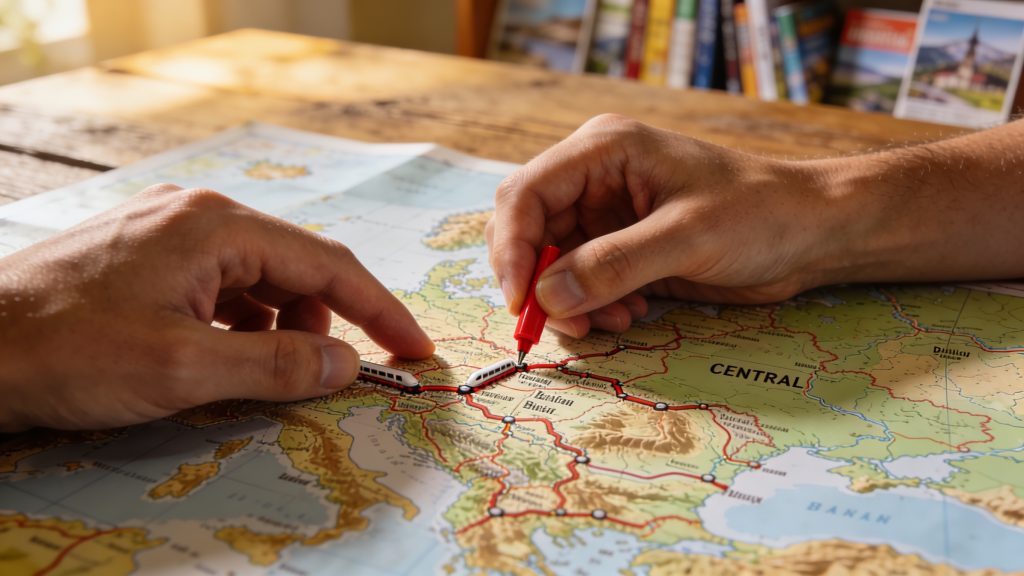
For a ten-day tour through Central Europe you pay between 300 and 600 euros per person. That amount includes train tickets, overnight stays in budget hotels or hostels and sometimes a night train. The price strongly depends on when you book, your travel days and the route you choose. By planning smartly and using local booking sites, you can keep costs under control. Discover below how to draw up a realistic budget. You will read where you can save without sacrificing comfort.
What determines the cost of your train holiday in Central Europe?
The total price of your trip consists of three main components: train tickets, accommodation and other expenses. Train tickets are usually the largest cost item. The price of a ticket depends on the distance, the type of train and the time of booking.
High-speed trains between major cities generally cost more than regional trains. They do, however, get you to your destination faster. Night trains are more expensive than daytime services, but you save on an overnight stay.
Accommodation is the second major expense. In cities such as Prague, Budapest and Bratislava you will find budget hotels and hostels from 15 to 30 euros per night. If you book in a higher segment, costs rise to 50 euros or more per night. A Central Europe train holiday often combines several cities. As a result, you change accommodation regularly. That requires some extra planning, but does provide variety.
Other expenses such as meals, local transport and admission fees for attractions can add up quickly. For a budget trip, allow 20 to 35 euros per day for food and drinks. Local public transport usually costs a few euros per journey. Admission tickets for museums or castles vary by city. They are often between 5 and 15 euros.
‘ Operators use dynamic pricing: the fuller the train, the higher the fare. ’
How booking early saves you money
The cheapest train fares are usually available between three months and three weeks before departure. If you book earlier or later, you often pay more. Operators use dynamic pricing: the fuller the train, the higher the fare. If you are flexible with your departure date, you can sometimes travel for up to half the price. Look for alternative travel days.
Weekend services and peak-season trains are generally more expensive than weekday services. If you travel outside rush hour, you benefit from lower fares. Always compare several dates before booking definitively. Some providers show in a calendar view on which days the lowest prices apply.
Separate tickets or a rail pass
On a tour through Central Europe you choose between separate tickets and a rail pass (a train pass for multiple journeys within a set period). You book separate tickets per leg. They are often cheaper if you are only making a few journeys.
You can sometimes save considerably by buying tickets via local operators. The websites of national rail companies often offer lower fares than resellers.
A rail pass such as Interrail gives access to multiple trains within a certain period. This is especially good value if you want to travel a lot and do not want to fix every stop in advance. For short or tightly planned trips, separate tickets are usually cheaper. Compare the total price of all separate journeys with the price of a rail pass. Then choose which option suits you best.
A rail pass does not always cover all costs. You often pay a supplement for reservations on high-speed trains or night trains. This also applies if you have a valid pass. Those extra costs can really add up. They need to be included in your budget calculation.
Route via Vienna, Budapest, Bratislava and Prague
These four cities form a logical and affordable route through Central Europe. They lie close together and are well connected by train. The distances between the cities are limited, so you lose little travel time and ticket prices remain relatively low.
Prague often serves as a starting point. From there you travel to Vienna in about four hours. The connection between Vienna and Bratislava takes only an hour, making it the shortest international train journey in Europe. From Bratislava you reach Budapest in two to three hours. You can also travel this route in the opposite direction. You can optionally add extra stops in smaller towns.
Because these cities are popular with travellers, you will find a wide choice of budget accommodation. Hostels with mixed dormitories often start at 12 euros per night. Double rooms in simple hotels are available from 25 euros. Book your accommodation early to benefit from the best rates.
‘ You travel while you sleep and therefore save the cost of a hotel room. ’
Night trains to save on accommodation costs
A night train combines transport and accommodation. You travel while you sleep and therefore save the cost of a hotel room. A couchette in a shared compartment usually costs between 25 and 50 euros, depending on the route and demand. That is comparable to a budget hotel, but you also arrive straight at your next destination.
Well-known night train connections in Central Europe run, for example, between Prague and Budapest or between Vienna and Krakow. Facilities on night trains vary. In a couchette you share the compartment with other travellers. For more privacy you can book a private compartment, but that costs more. Take earplugs and a sleep mask for a better night’s rest.
Reservations on night trains are compulsory and incur extra costs. This also applies if you have a rail pass. Check the conditions and book in good time, as places on night trains are limited and sell out quickly.
What food and drink cost on the road
The cost of meals differs per country. In the Czech Republic and Hungary you generally eat more cheaply than in Austria. A simple meal in a local restaurant costs between 6 and 10 euros. This applies for Prague or Budapest. In Vienna you often pay 12 to 18 euros for the same thing.
Save money by having lunch in supermarkets or bakeries. A sandwich or salad there usually costs 3 to 5 euros. Tap water is safe and free in the cities mentioned. Fill up a reusable bottle at your hotel or hostel. Coffee in a café costs between 2 and 4 euros, depending on the location.
If you cook for yourself, you save the most. Many hostels and some budget hotels have a shared kitchen. Buy fresh produce at local markets and prepare simple meals. That keeps costs down and gives you a feel for the local food culture.
Extra costs that are often overlooked
In addition to the major items, there are smaller expenses that quickly add up. Think of luggage lockers at stations, tips in restaurants, tourist tax in hotels and admission tickets for attractions. Tourist tax varies by city and is usually 1 to 3 euros per night.
Some train stations charge a small fee for using toilets, often around 50 cents to 1 euro. Preferably pay in cash, as not all facilities accept card payments. Keep some loose change handy for this type of expense.
On package holidays or pre-booked arrangements you sometimes pay additional surcharges. Check whether the following costs are included in the price: cancellation fees, change fees and surcharges for specific types of accommodation. A low starting price by no means covers all costs.
Practical checklist for your budget calculation
Add up all the costs. Allow for a margin for unexpected expenses. Use the following items as a guide:
- Train tickets or rail pass, including reservation fees
- Overnight stays in hostels, budget hotels or night trains
- Daily meals and drinks
- Local public transport or taxis
- Admission tickets for museums, castles or other attractions
- Tourist tax and any station charges
- Travel insurance and cancellation cover
Add a buffer of 10 to 15 per cent for unforeseen costs. That way you keep financial room if a train is cancelled and you have to stay an extra night, or if an activity costs more than expected.
When it is best to travel
The cheapest months for a train journey through Central Europe fall outside the high season. In April, May, September and October prices for both trains and accommodation are lower. In summer they are higher. The weather is often still pleasant enough for sightseeing in these months.
Avoid school holidays and public holidays, as prices then rise sharply. If you book in winter, you benefit from the lowest prices. Do take into account shorter days and cooler weather. Christmas markets attract many visitors in November and December, which pushes prices back up in popular cities.
Trains and hotels are often cheaper if you travel during the week. Check whether there are any major events or festivals during your trip that increase demand for accommodation.
Compare several booking platforms
Use different websites to compare prices. International platforms such as NS International offer clarity and convenience. Local operators sometimes have more keenly priced tickets. If you book directly with the national rail operator, you avoid reseller surcharges.
Watch out for hidden costs such as booking fees, postage for paper tickets or supplements for specific train times. Some platforms charge extra for changing or cancelling tickets. Read the conditions before you pay.
For those who prefer everything to be arranged, specialist train travel companies offer packages. These are generally more expensive than booking yourself, but usually include support and a fully worked-out route. Compare whether the difference justifies the added value for you.
On the Traveler Tips website you will find practical guides on routes in Central Europe, budget tips for other train journeys and step-by-step explanations on how to plan a tour. You will also find information about rail passes, booking platforms and what you need on the road.
Frequently asked questions
Book your tickets 3 months to 3 weeks in advance and avoid rush hour and peak days, because that is when journeys through Central Europe are often cheapest without you having to compromise on good trains. Always compare several providers (e.g. NS International and specialist train platforms) and also check whether separate tickets are cheaper than an Interrail or other rail pass. Combine high-speed trains with well-rated regional trains or night trains for more comfort at a lower price. Finally, pay attention to what is included (seat reservation, luggage, rebooking fees) so you do not end up paying more after all.
In popular cities such as Prague, Budapest, Bratislava and Vienna you can roughly allow €30–€50 per day per person for food and free or inexpensive sights. In the cheaper cities (Prague, Budapest, Bratislava) a thrifty traveller will be closer to €25–€35 per day, while in Vienna a more realistic figure is €35–€50. This is based on simple to mid-range meals, coffee/the occasional drink, local transport and admission tickets for a few key attractions. Fine-dining restaurants, nightlife and expensive tours are on top of this.
The best balance between price, comfort and location is usually found at small-scale guesthouses and B&Bs just outside the immediate centre, within walking distance or a short tram ride from the station. In Central Europe, well-reviewed 2- to 3-star hotels around public transport hubs often offer sharp prices with sufficient comfort. Hostels with private rooms combine a low price with more peace and quiet than dormitories and are often very central. Apartments (e.g. via rental platforms) are attractive if you stay longer in one place and cook for yourself, but in that case pay extra attention to the distance to the station and public transport.
Watch out for hidden costs such as compulsory seat reservations (especially on high-speed and night trains), supplements for certain routes or reservation platforms, and surcharges for luggage or bikes. Also take into account tourist tax at accommodation, bed linen and cleaning fees in hostels/apartments and the cost of local public transport passes in cities. You can save by using regional trains without compulsory reservations where possible, comparing multiple booking sites and clearly checking what is and is not included in a package trip. Also compare separate tickets with an (Interrail) pass and avoid expensive travel dates and rush hours to keep surprises to a minimum.
A flexible itinerary (with scope to shift dates and connections) often makes it easier to find the cheapest services, which means your total train costs can sometimes be up to half lower. As soon as you want very specific “experiences” – such as a particular night train, a direct high-speed line or an extra stopover – costs usually rise due to compulsory reservations, supplements and less price choice. Night trains can save on a hotel night, but the train tickets themselves are often more expensive than an ordinary seat during the day. It therefore pays to decide in advance which experiences are really a priority and to plan the rest of your budget and route around them.