 NL
NL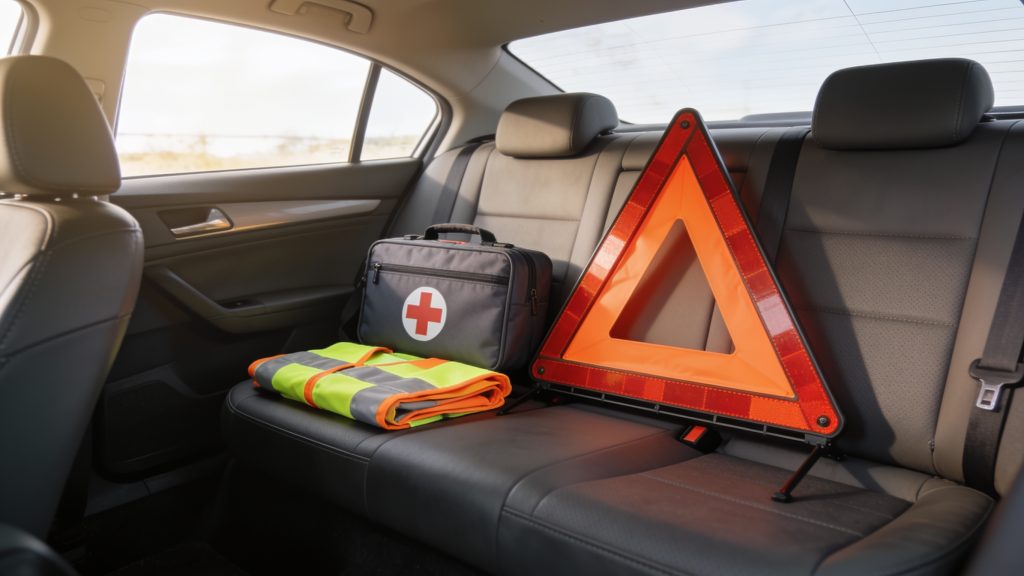
If you are going on holiday by car, you must make sure that high-visibility vests, warning triangle, first-aid kit, spare wheel and navigation are within easy reach. This is important to comply with legal requirements abroad and to ensure you are safe and prepared on the road in case of breakdowns or emergencies. What seems optional in the Netherlands may be mandatory just across the border, or even lead to a fine if you do not have it with you.
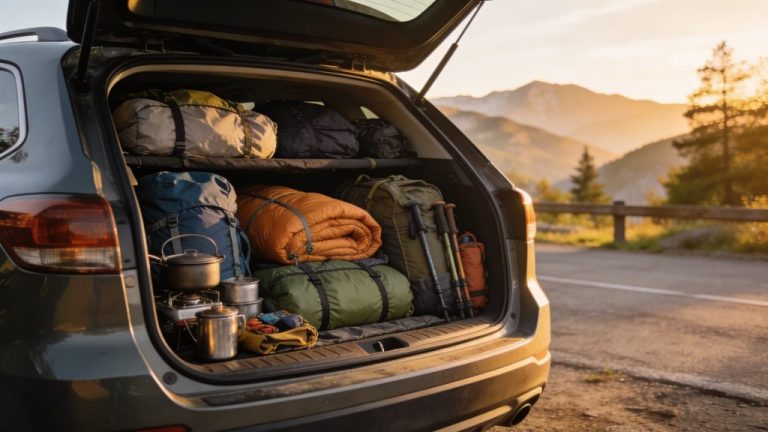
Smart preparation starts with packing your car. Safety depends on having the right items and on how you store them. You can read how best to do this in our article on packing and organising luggage in the car. There you will find targeted tips for loading your luggage safely and in an organised way, so you can drive calmly and always reach your emergency supplies quickly.
Below you can read which items you absolutely must take with you, what is useful to have on board and what you need to pay attention to when crossing borders.
What must you legally have in the car?
In the Netherlands, only a few safety items are legally required. For example, you do not have to take high-visibility vests or a warning triangle with you if you stay in the country. But as soon as you cross the border, the rules change.
In many European countries you do have to carry specific equipment. Always check in advance which requirements apply to your destination. The following items are expected or mandatory in many countries:
- Driving licence, registration certificate and insurance certificate: you must always have these documents with you. They are often checked at border crossings or by the police.
- Warning triangle: mandatory in countries such as France, Spain, Italy and Germany. In case of breakdown or an accident, place it at least 50 metres behind your car.
- High-visibility vests: in many countries, everyone in the car must wear a vest as soon as you get out along the road. So take one vest per passenger.
- First-aid kit: recommended in some countries, mandatory in others. Check whether the contents are still up to date and not expired.
- Spare wheel or tyre repair kit: not mandatory everywhere, but very sensible. Especially if you are driving through sparsely populated areas or over mountain passes.
- Fire extinguisher: required in certain countries, such as France and Poland. Also check whether it is still within its service date.
Keep these documents and items in a place where you can grab them quickly. That prevents delays at checks or in emergencies.
What is smart to take for safety?
In addition to the mandatory items, there are a number of practical things that can make all the difference on the road. These items may not be compulsory everywhere, but they will help you in case of breakdown, delays or unexpected situations.
- Torch: handy if you break down in the dark or need to check damage to your vehicle.
- Jump leads: if your battery is flat, you can often get going again quickly with the help of another driver.
- Spare bulbs: recommended or mandatory in some countries. Check whether your car has modern LED lighting, as the requirement sometimes does not apply then.
- Tow rope: useful if you need to move a short distance after a breakdown.
- Emergency blanket: provides warmth in cold weather, traffic jams or long waits by the roadside.
- Phone charger or power bank: ensures you can always be reached for breakdown assistance and navigation.
- Water and snacks: especially pleasant during traffic jams, delays or when travelling with children.
- Spare car key: prevents problems if you lose your key or accidentally leave it inside the car.
- Pen, paper and European accident statement form: useful in case of damage or a collision to record details.
These items take up little space but can save you a lot of stress and delay. Ideally, keep them in a separate bag or box that you keep easily accessible.
Which country-specific rules do you need to know?
The mandatory equipment varies greatly from country to country. What is optional in the Netherlands can lead to fines or extra costs abroad. Here are a few examples:
- France: one high-visibility vest for every passenger, a warning triangle, first-aid kit and spare bulbs are strongly recommended. Some sources state that a fire extinguisher is compulsory.
- Germany: warning triangle and high-visibility vest are mandatory. A first-aid kit is expected.
- Spain and Italy: similar requirements apply here for vests and triangle.
- Austria and Switzerland: you need a vignette to use motorways. You must buy this in advance.
- Low-emission zones: in cities such as Paris, Milan and Barcelona you need an environmental sticker to be allowed to drive into the city.
Take the time to check the rules for each country before you leave. That will save you surprises, fines and delays on the road.
How do you pack emergency items safely?
It is not only important what you take, but also where you put it. Items that are stored unsafely can fly through the car if you brake hard and cause injuries.
Follow these steps for a safe layout:
- Put heavy luggage at the bottom and against the backrest: this lowers the centre of gravity and prevents shifting.
- Place light items on top: this keeps the load stable and more fragile luggage is less likely to be damaged.
- Fill open spaces with soft items: think of coats, blankets or cushions. This prevents loose items from sliding around.
- Keep emergency items within easy reach: high-visibility vests, warning triangle, torch and first-aid kit must be easy to grab. Do not put them right at the bottom.
- Use a luggage net or roof box for high stacks: if your luggage sticks up above the backrest, prevent danger with a net or partition grille.
By packing cleverly you not only drive more safely, but you also have more overview and comfort during the journey.
What do you take with you in case of breakdown on the road?
Breaking down is annoying, but with the right items you can solve many problems quickly or prevent dangerous situations. These items are specifically aimed at breakdown assistance and roadside safety:
- High-visibility vests: put these on before you get out, especially on busy or poorly visible roads.
- Warning triangle: place it sufficiently far behind your car so that other road users see you in time.
- Torch: indispensable if you break down in the dark or in poor visibility.
- Jump leads: often the simplest solution when your battery is flat.
- Spare wheel or tyre repair kit: before leaving, check whether your tools are complete and whether you know how to change a tyre.
- Phone with breakdown assistance number: store your breakdown service’s phone number in your mobile and make sure you can always charge it.
Experienced travellers say that vests, torch, water and jump leads are the emergency items they use most often. They solve simple problems quickly and prevent unnecessary waiting time.
First aid and safety: complete checklist for car holidays
A car holiday requires preparation for medical emergencies and accidents. In addition to the mandatory first-aid kit, there are a number of extra items you might consider taking with you:
- First-aid kit with up-to-date contents: check that plasters, bandages, gloves and disinfectant are present and not expired.
- Medicines: take enough of any prescribed medication, plus painkillers and anti-nausea remedies.
- Insect repellent and after-sun: especially for warm destinations or when camping.
- Sun cream: protects during stops, walks and activities on the way.
- Cool bag for medicines: if you have medication that must be kept cool.
- Papers with medical details: write down allergies, medication and emergency contacts.
This checklist helps you stay ahead of both minor and major setbacks. It is reassuring to know that you can act immediately if necessary.
Additional items for longer journeys
If you are going on a long drive or travelling through several countries, there are a few more practical things that can make a real difference:
- Cash and credit card: useful for toll roads, parking and emergencies in areas where using a bank card is difficult.
- Vignette or toll pass: some countries require a vignette to use motorways. Buy this online in advance or at the border.
- Environmental sticker: compulsory in many city centres in France, Germany and Italy. Without a sticker you risk a fine or may not enter the city.
- Extra blankets or warm clothing: especially useful when travelling in winter or through cooler mountain areas.
- Navigation system or offline maps: make sure you can navigate even without an internet connection.
By thinking ahead and taking these items with you, you avoid surprises and stay flexible during your trip.
On the Traveler Tips website you can find more information about trip preparation and routes across Europe. Discover which destinations best suit your travel style and read how to plan your journey properly from start to finish.
Frequently asked questions
As standard you should always have your driving licence, registration certificate and insurance certificate with you, preferably supplemented with a warning triangle, high-visibility vests, first-aid kit and basic emergency items (such as torch, jump leads and tyre repair kit). Before you leave, check your glove compartment and folder with car documents, then go through the boot to make sure that warning triangle, vests and emergency kit are present and accessible. If you like, make a fixed checklist (on paper or on your phone) and tick it off before every drive or trip.
The mandatory safety items (such as warning triangle, high-visibility vests, fire extinguisher, first-aid kit and spare bulbs) differ per European country; what is not compulsory in the Netherlands may be mandatory in, for example, France, Germany or Italy, and sometimes this also depends on the type of vehicle (car, caravan, trailer). For a reliable and up-to-date overview per country and route, it is best to use a combination of the ANWB or Touring website (or your own national motoring organisation), the official tourist or government websites of the countries you are travelling through, and possibly the route planner of your breakdown service or insurance company. On those sites, check specifically the pages on “mandatory equipment” or “safety equipment in the car” for each country, and pay attention to additional requirements such as environmental stickers and vignettes. Repeat this check shortly before departure, as rules are sometimes changed in the meantime.
Recommended extra safety and comfort items for a carefree road trip include a first-aid kit, emergency blanket(s), torch and jump leads, even if they are not compulsory. In addition, a tow rope, spare wheel or tyre repair kit and a fire extinguisher are useful extras. For comfort and practical peace of mind, a phone charger/power bank, water and snacks, cash/credit card and a spare car key are strongly recommended. A pen and paper plus a (European) accident statement form are also useful to have with you.
If you are missing mandatory travel items such as documents, safety vests, warning triangle or environmental sticker, you may be fined at checks, denied access to certain areas or forced to interrupt your trip in the event of a breakdown. In some countries, the absence of mandatory equipment can also affect your liability in the event of an accident. You can avoid fines by checking for each country before you leave what is compulsory (via official sites or reliable travel organisations) and by using a fixed checklist. Keep all mandatory items visible and immediately accessible in the car, so you do not have to search for anything during checks or in case of breakdown.
First create two columns: “Mandatory” and “Recommended”, and fill these with basic items (documents, warning triangle, vests, first aid, jump leads, spare wheel, fire extinguisher, torch) based on the rules of your destination country or countries. Then add rows for each travel situation: short drive, long holiday, winter trip, with children, through remote areas, and note which extras are needed in each case (water/snacks, blankets, power bank, tow rope, environmental sticker/vignette, cash). Finally, create a column “Accessibility” in which you indicate which items must always be kept at the front/on top (documents, vests, warning triangle, phone charger, accident statement form). Print the checklist or save it digitally and review it briefly before every new trip so that it grows along with the nature and duration of your journeys.